

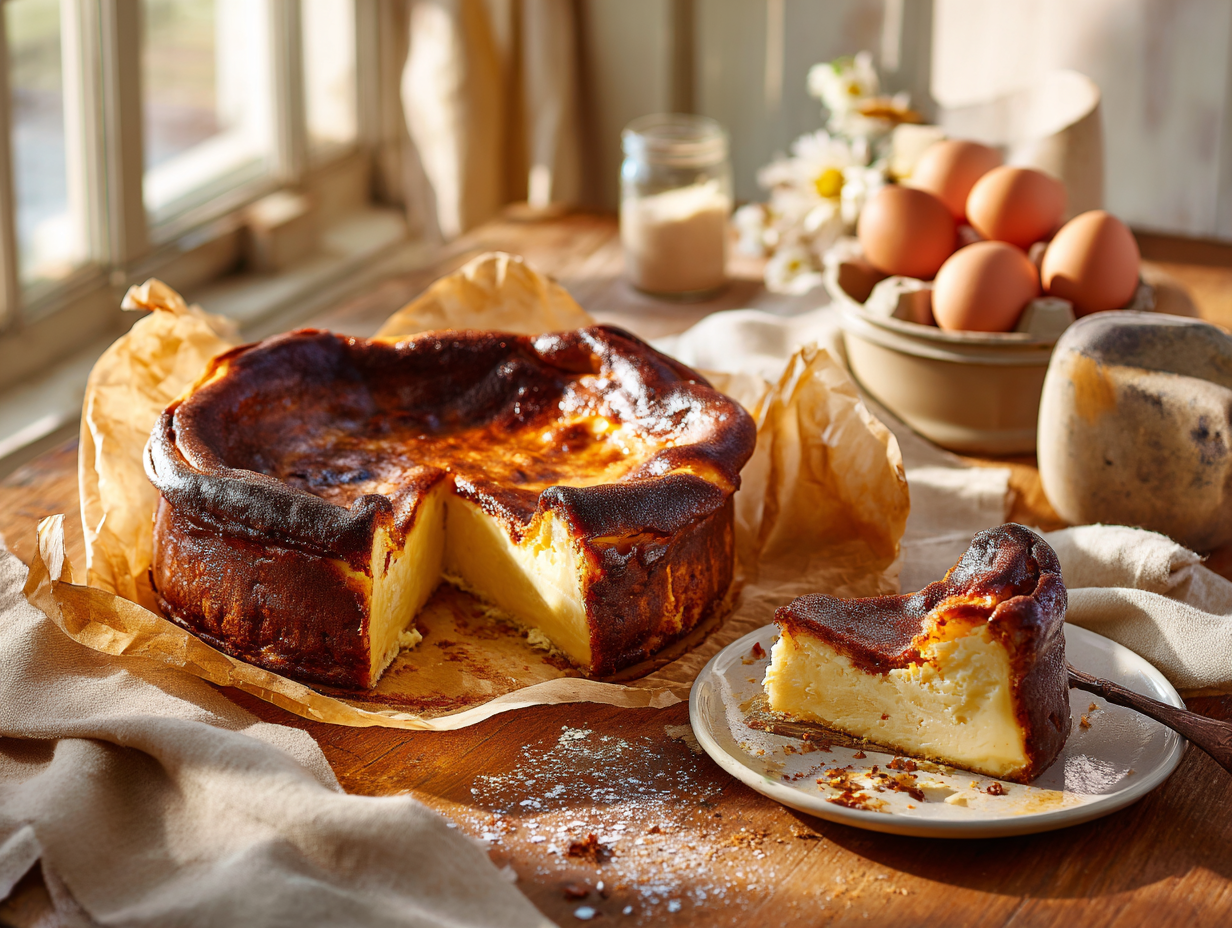
Basque burnt cheesecake is a crustless, oven-baked cheesecake with a deeply caramelized top and a soft, almost pudding-like center. It uses seven ingredients, one pan, and no water bath — which makes it one of the most straightforward cheesecakes you can bake at home. The honest reason to make it: the dramatic look does most of the work for you, and the batter comes together in about 15 minutes.
The technique that matters
Two things determine whether this cheesecake works. First, your ingredients need to be genuinely at room temperature — cold cream cheese will leave lumps that don’t bake out, and cold eggs can cause the batter to curdle slightly when the cream goes in. Pull everything from the fridge at least an hour before you start. Second, trust the jiggle. At 50 minutes, the outer two inches of the cheesecake should look set while the center wobbles like firm Jell-O when you nudge the pan. That wobble is not underbaking — it’s exactly what gives you the creamy interior once the cheesecake cools and firms up. Pulling it too late means a dense, dry slice all the way through, which defeats the whole point.
Troubleshooting
- The top is dark but the center is still liquid after cooling: The cheesecake wasn’t baked long enough, or the oven runs cool. Next time, use an oven thermometer to verify your actual temperature. A fully baked cheesecake will still jiggle in the center when hot but will hold a clean slice once it has cooled completely to room temperature — at least 2 hours.
- The batter overflows the pan during baking: Your parchment wasn’t tall enough. The paper needs to extend at least 2 inches above the rim of the pan because the batter puffs significantly before it settles. Crumpling the parchment before lining the pan helps it conform to the round shape without folding awkwardly.
- The top is pale and barely colored after 50 minutes: Fan-forced ovens vary more than expected. Move the pan to the upper third of the oven for the last 10 minutes, or switch to broil for 2 to 3 minutes — watch it constantly if you do. Skip the garnish of powdered sugar on top; it dissolves immediately and adds nothing worth the extra dish.
- The cheesecake sticks to the parchment when slicing: It wasn’t fully cooled before removing the paper. Let it cool completely in the pan, then refrigerate for at least an hour before peeling the parchment away. A warm cheesecake is too soft to handle cleanly.
- Lumpy batter after adding the cream: The cream cheese wasn’t soft enough, or it was mixed too briefly before the eggs went in. If you spot lumps after all the ingredients are combined, press the batter through a fine-mesh sieve before pouring it into the pan.
Keeping it fresh
Once fully cooled, cover the cheesecake loosely with plastic wrap and refrigerate it. It keeps well for up to 4 days. The texture actually improves after an overnight rest in the fridge — the center firms up and the flavors settle. You can also make it a full day ahead, which is genuinely useful if you’re serving it for a dinner. For freezing, slice the cooled cheesecake, wrap individual slices tightly in plastic wrap, and freeze for up to 6 weeks. Thaw slices in the fridge overnight rather than at room temperature, which keeps the texture from getting watery. Serve it cold or let it sit at room temperature for 20 minutes before eating — both work, though the cold version has a firmer, denser bite.
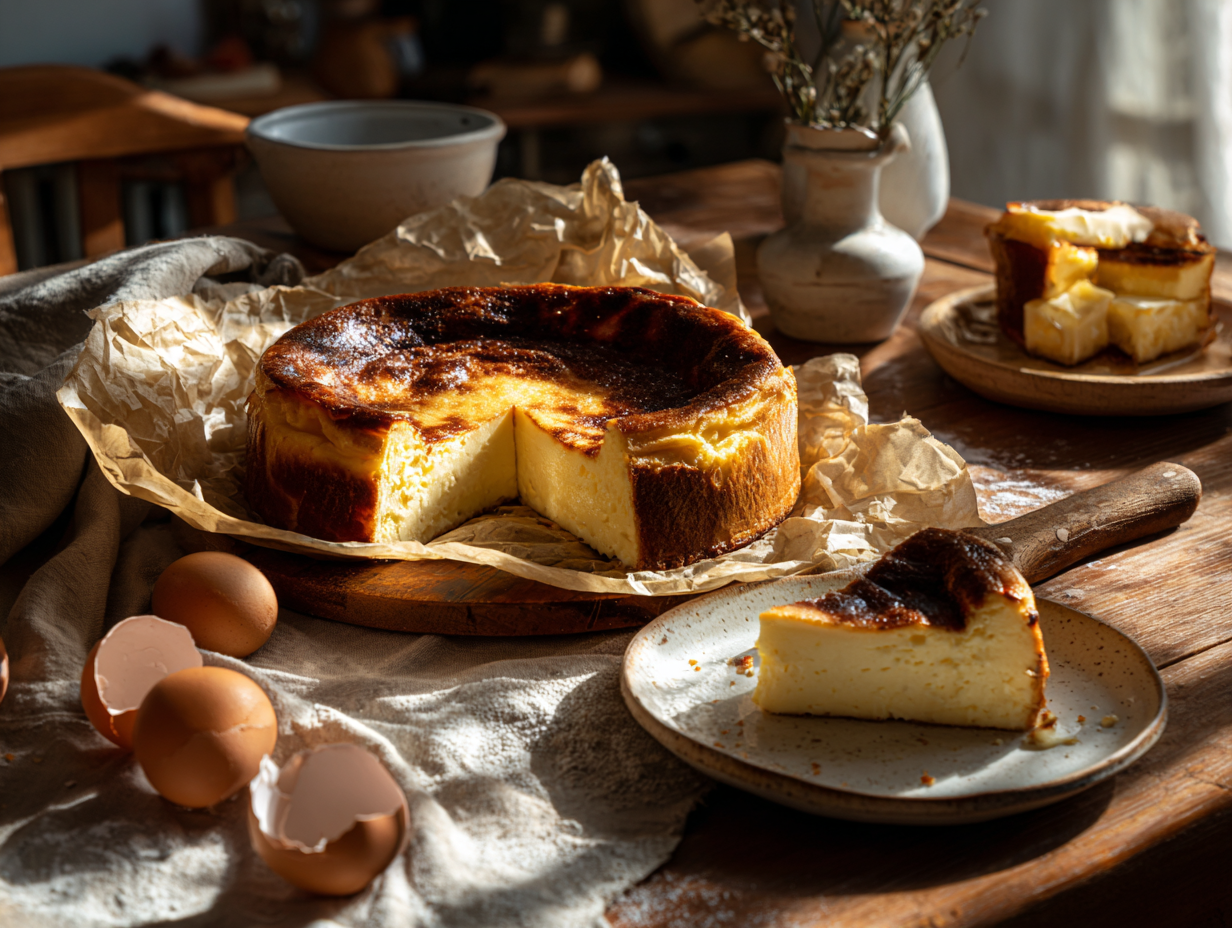
Basque Burnt Cheesecake

Equipment
- Springform pan (9-inch)
- Parchment Paper
- Mixing Bowls
- Electric Mixer
- Spatula
Ingredients
- 2.2 pounds cream cheese at room temperature
- 1 cup granulated sugar
- 5 large eggs at room temperature
- 2 cups heavy cream
- 1 teaspoon vanilla extract
- ¼ cup all-purpose flour sifted
- ¼ teaspoon salt
Instructions
- Preheat your oven to 400°F (205°C). Make sure your oven is hot for the best caramelization.
- Line a 9-inch springform pan with parchment paper, allowing the paper to extend above the sides of the pan for easy removal.
- In a large mixing bowl, beat the cream cheese and sugar together with an electric mixer on medium speed until smooth and creamy, about 2-3 minutes.
- Add in the eggs, one at a time, mixing well after each addition until fully incorporated.
- Pour in the heavy cream and vanilla extract, mixing until smooth and well combined.
- Sift in the flour and salt; fold gently until no lumps remain.
- Pour the batter into the prepared pan, spreading it evenly.
- Bake for 50-55 minutes until the top is burnt and deeply bronzed, and the center still jiggles slightly. This color and texture are key to the cheesecake's authentic character.
- Allow the cheesecake to cool in the pan at room temperature before removing it and slicing it.
Notes
- For a deeper burnt flavor, you can extend the bake time slightly, but keep a close eye to prevent overburning.
- If using a fan-forced oven, reduce the temperature to 375°F (190°C).
Nutrition
Frequently asked questions
Can I use low-fat or reduced-fat cream cheese?
No — use full-fat cream cheese. Reduced-fat versions have a higher water content, which throws off the texture and produces a looser, less stable center that may not set properly even after cooling.
Does the cheesecake need to be refrigerated before serving?
Not strictly, but it slices much more cleanly after at least an hour in the fridge. Straight from the oven it’s very soft and will collapse when cut, which is fine for a rustic presentation but messy if you want neat slices.
My oven only goes to 450°F — is that too hot?
It’s fine, but start checking at 40 minutes rather than 50. A hotter oven will caramelize the top faster, so you need to watch the color and the jiggle rather than relying on time alone.
Can I make this in a smaller pan, like a 7-inch?
Yes, but reduce the recipe by roughly half and start checking for doneness around 35 minutes. A smaller, deeper cheesecake takes longer to set in the center relative to how quickly the top colors, so watch the jiggle carefully.
Is the very dark top supposed to taste bitter?
It has a mild bittersweet edge, similar to dark caramel — not harsh or acrid. If yours tastes sharply burnt rather than caramelized, the oven was too hot or the bake time ran too long; pull it a few minutes earlier next time.
What can kids help with when making this?
Younger kids can measure and pour the sugar, crack eggs into a separate bowl for checking, and pour the finished batter into the lined pan. Mixing the cream cheese and sugar with a hand mixer is a good job for older kids who can hold the bowl steady — just keep them away from the hot oven.
Try these next
- Italian Ricotta Honey Cheesecake
- Pistachio Honey Baklava Cheesecake
- Almond Joy Cheesecake Bars
- Lavender Honey Panna Cotta