

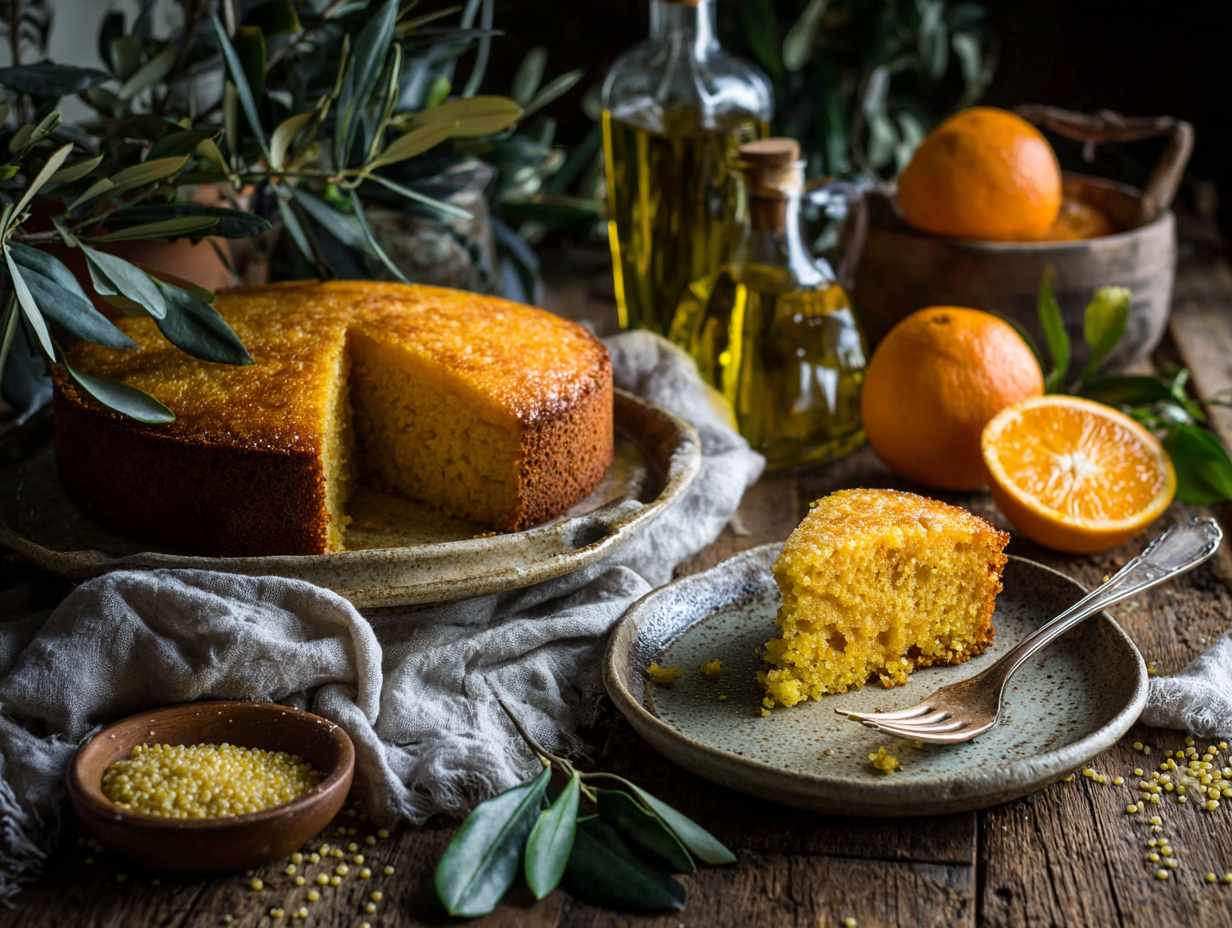
This is a one-bowl cake built around fine polenta, fresh orange, and extra virgin olive oil — no butter, no stand mixer, no fuss. The polenta gives the crumb a slightly coarse, golden texture that sets it apart from a standard sponge, and the orange juice and zest keep it bright without being cloying. It bakes in under an hour and holds up well for days, which makes it genuinely useful rather than just interesting.
Smart swaps
- Polenta vs. cornmeal: Fine-ground polenta is what you want here. Coarse polenta will make the crumb gritty in a way that isn’t pleasant. If your bag just says “cornmeal,” check that it’s finely milled before using it.
- Olive oil: Use an oil you’d be happy drizzling on bread. A bland or stale oil will flatten the flavor of the whole cake. You don’t need the most expensive bottle, but quality matters more here than in most baking.
- Gluten-free swap: The recipe card notes that almond flour works in place of all-purpose flour. Use a 1:1 swap by weight for best results, and expect a slightly denser, moister crumb — both are fine qualities in this cake.
- Orange juice: Freshly squeezed only. Bottled juice is too sweet and lacks the brightness that makes this cake work.
The technique that matters
The alternating method — adding dry ingredients and the orange mixture in turns, starting and ending with the dry — is the one step worth doing carefully. It prevents the batter from becoming too wet at any point, which keeps the gluten from overdeveloping and the emulsion from breaking. Mix gently with a wooden spoon or a whisk used lightly; you’re not trying to build structure here, just combine. Stop as soon as you no longer see dry streaks. Overmixing is the most common reason this style of cake turns out tough rather than tender.
Common problems and fixes
- Cake sinks in the center: Usually means it came out of the oven too early. The skewer test is reliable here — if it comes out with wet batter (not just a few moist crumbs), give it another 5 minutes and test again.
- Top browns too fast before the center sets: Tent the pan loosely with foil after the first 25 minutes. This is more likely if your oven runs hot or you’re using a dark pan.
- Cake sticks to the pan: Parchment on the bottom is essential, but also make sure you grease the sides of the pan well with olive oil. Run a thin knife or offset spatula around the edge before turning it out.
- Crumb is too dense: Check that your baking powder is fresh — polenta cakes rely on it more than flour-only cakes do. If the powder is more than 6 months open, test it in hot water before using.
- Flavor tastes flat: This almost always comes down to the zest. Make sure you’re zesting only the outer orange layer, not the white pith, and that you’re using the full tablespoon called for. Skip the garnish of powdered sugar — not worth the extra dish — and serve with Greek yogurt instead if you want something alongside.
Storage and make-ahead
Store the cooled cake wrapped tightly at room temperature for up to 3 days — the olive oil actually helps it stay moist longer than a butter-based cake would. For longer storage, wrap individual slices in plastic wrap and freeze for up to 2 months; thaw at room temperature for about an hour. If you want to get ahead, you can mix the dry ingredients and the wet ingredients separately the night before, keep them covered, and combine them just before baking. The fully baked cake also tastes better on day two once the orange flavor has had time to settle into the crumb.
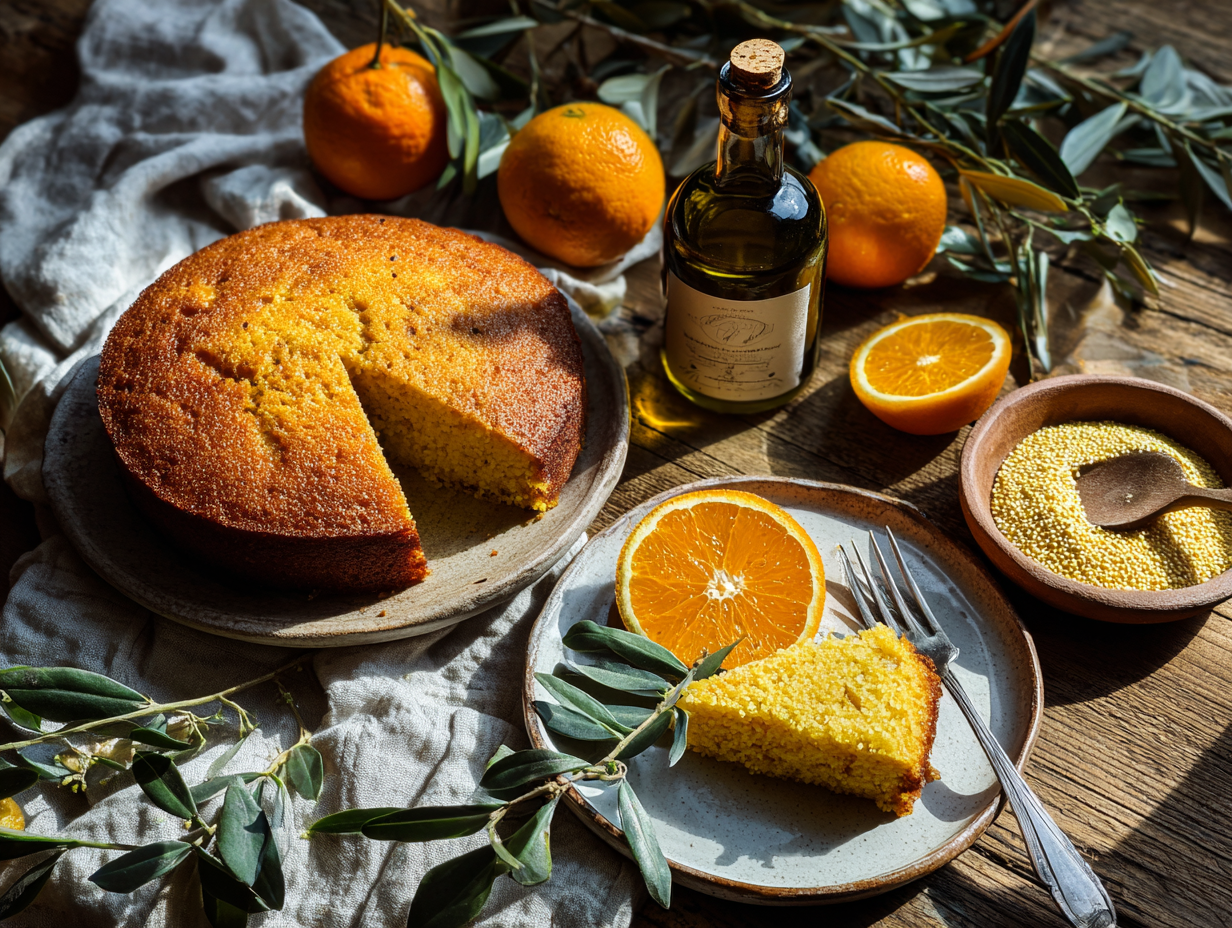
Olive Oil Orange Polenta Cake

Equipment
- 9-inch round cake pan
- Mixing Bowls
- Whisk
- Microplane Zester
- Wooden spoon
Ingredients
For the Dry Components:
- 1 cup polenta fine-ground
- 1 cup all-purpose flour
- 1 tsp baking powder
- ½ tsp salt
For the Wet Components:
- ¾ cup extra virgin olive oil high quality
- 1 cup granulated sugar
- 3 large eggs room temperature
- ½ cup fresh orange juice about 2 oranges
- 1 tbsp orange zest preferably organic
Instructions
- Preheat your oven to 350°F (175°C). Grease a 9-inch round cake pan with olive oil and line the bottom with parchment paper.
- In a medium bowl, whisk together the polenta, flour, baking powder, and salt. Set aside.
- In a large bowl, whisk the olive oil and sugar until well combined. Add the eggs one at a time, mixing well after each addition, until the mixture is smooth and light.
- Combine the orange juice and zest in a small bowl.
- Alternately add the dry ingredients and the orange mixture into the olive oil mixture, beginning and ending with the dry ingredients. Mix gently until just combined; do not overmix.
- Pour the batter into the prepared cake pan, smoothing the top with a spatula.
- Bake for 35-40 minutes, or until the top is golden brown and a skewer inserted into the center of the cake comes out clean.
- Allow the cake to cool in the pan for 10 minutes, then turn out onto a wire rack to cool completely.
Notes
- For added flavor, sprinkle a pinch of sea salt over the batter just before baking.
- To make it gluten-free, substitute the all-purpose flour with almond flour.
Nutrition
Frequently asked questions
Can I taste the olive oil in the finished cake?
Yes, mildly — and that’s intentional. It reads as a subtle richness rather than a savory note, especially once the orange flavor is present. If you use a very robust, peppery oil the flavor will be more noticeable, so a medium-intensity oil is a safe choice for your first bake.
Can I use a different pan size?
An 8-inch round pan works, but your bake time will increase by roughly 8 to 10 minutes since the batter will be deeper. Start checking at 40 minutes and go by the skewer, not the clock.
Do the eggs really need to be at room temperature?
It makes a real difference here. Cold eggs can cause the olive oil mixture to look curdled or separated, which affects the final texture. Set them out 30 minutes before you start, or place them in a bowl of warm water for 10 minutes if you forgot.
My polenta bag says “quick-cooking” — is that okay?
Quick-cooking polenta is pre-cooked and will absorb liquid differently, which can make the crumb gummy rather than pleasantly coarse. Stick with raw, fine-ground polenta for this recipe.
Try these next
- Mediterranean Lemon Olive Oil Cake
- Sweet Mediterranean Honey Almond Semolina Cake
- Rustic Blackberry Almond Cake
- Zesty Mediterranean Lemon Yogurt Loaf with Syrup