

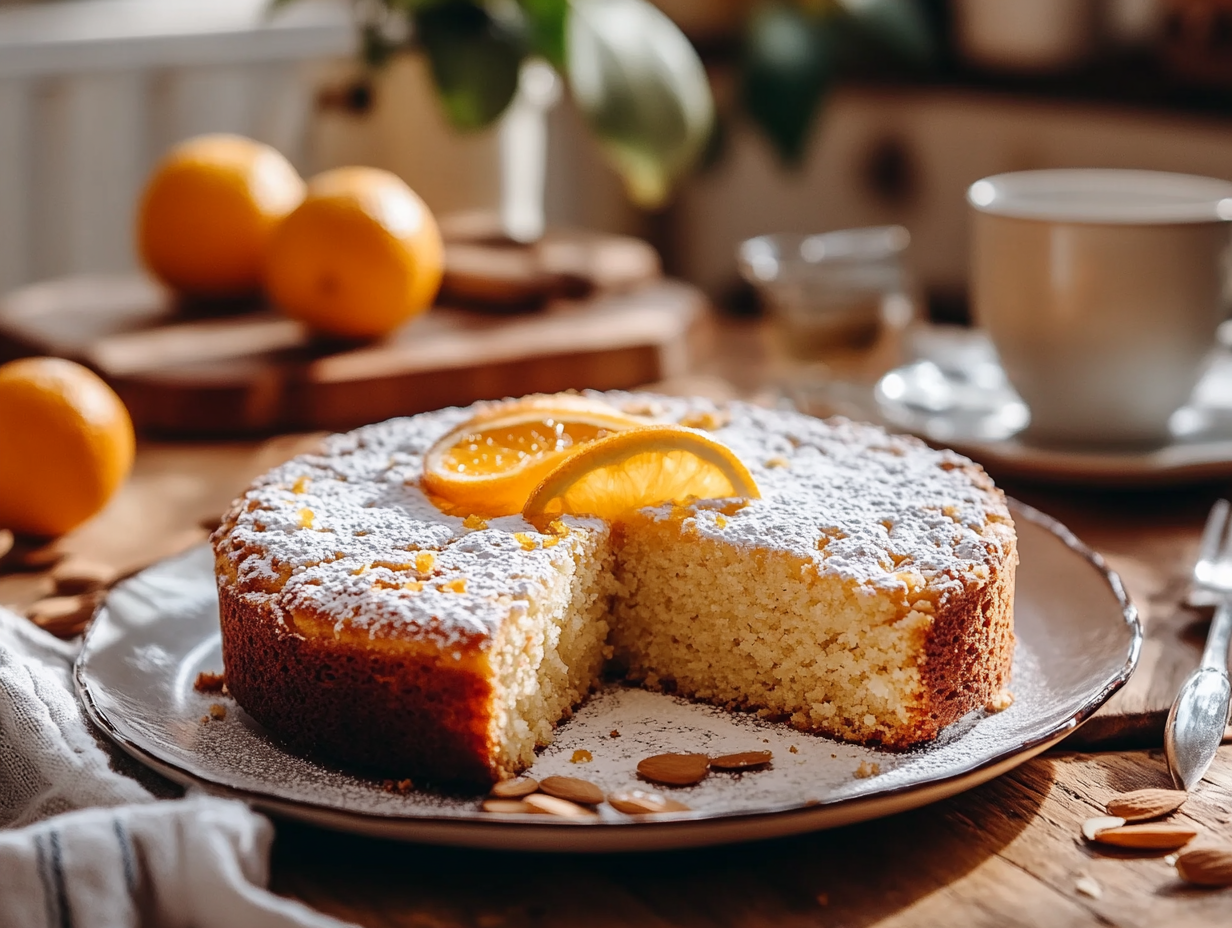
This orange almond cake is a single-layer, 9-inch round that comes together in about 70 minutes with one bowl of wet ingredients and one of dry. The almond meal keeps the crumb genuinely moist for days, and the combination of fresh orange zest and juice means the citrus flavor is real — not faint. If you want a cake that looks unfussy but tastes like you put in more effort than you did, this is a reliable choice.
What makes this version work
Two things matter most here. First, beating the almond meal and sugar together with an electric mixer before adding the eggs builds a base that holds air, which stops the dense almond meal from making the cake heavy. Second, folding — not stirring — the dry ingredients in at the end preserves that lightness. Overmixing at this stage develops gluten in the flour and tightens the crumb noticeably. A gentle hand with the spatula, stopping the moment you see no dry streaks, is the difference between a tender slice and a rubbery one.
Mistakes to avoid
- Using cold eggs. Cold eggs don’t incorporate as smoothly into the almond-sugar mixture and can make the batter look curdled. Pull them from the fridge 30 minutes before you start.
- Skipping the parchment on the bottom. Almond-based cakes stick more than standard flour cakes. Greasing alone is not enough — line the base or you risk leaving half the cake in the pan.
- Not checking at 40 minutes. Ovens vary. If the top is already deep brown at 40 minutes, tent it loosely with foil immediately. A dark top with a raw center is the most common failure with this cake.
- Zesting too deep. Only the outer orange layer has flavor. The white pith underneath is bitter. Use a light hand on the zester and stop when you see white.
- Cutting before it’s fully cool. The crumb needs time to set. Cutting a warm almond cake produces crumbly, uneven slices. Give it the full cool on the wire rack.
Substitutions that actually work
- Almond meal vs. almond flour: Almond meal (made from unblanched almonds) gives a slightly coarser, more rustic crumb with visible brown flecks. Almond flour (blanched, finer) produces a paler, more delicate texture. Either works — use whichever you have.
- Melted butter substitute: A neutral oil like sunflower or light olive oil works in equal measure and keeps the cake dairy-free. The crumb will be very slightly less rich but still moist.
- Orange variety: Navel oranges are fine year-round, but blood oranges in season give a deeper, slightly berry-tinged flavor worth trying. Avoid bottled juice — the zest is where most of the flavor lives anyway, and you need fresh fruit for that.
Make-ahead notes
This cake actually improves overnight. The moisture from the orange juice continues to distribute through the crumb, and the flavor deepens. Bake it the day before, cool it completely, then wrap it tightly in plastic wrap and leave it at room temperature — it keeps well for up to 3 days this way. For longer storage, wrap individual slices and freeze them for up to 2 months; thaw at room temperature for about an hour. Skip the powdered sugar garnish until just before serving — it absorbs into the surface and disappears within a few hours, so dusting ahead of time is not worth the extra step.
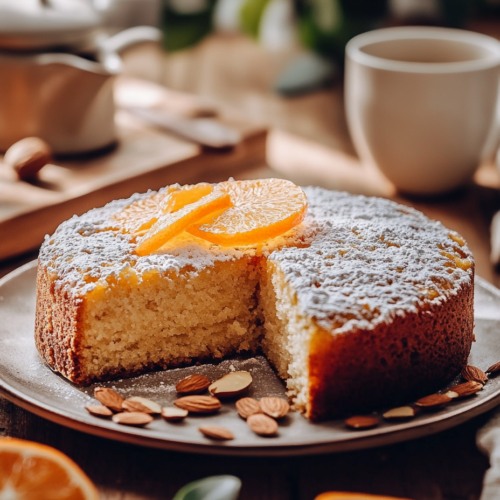
Orange Almond Cake

Equipment
- 1 Springform pan (9-inch)
- 1 Mixing Bowls
- 1 Electric Mixer
- 1 Zester
- 1 Juicer
- 1 Spatula
Ingredients
Dry Ingredients
- 1 cup All-purpose flour sifted
- 1 teaspoon Baking powder
- 1 pinch Salt
Wet Ingredients and Flavorings
- 1 cup Almond meal
- 1 cup Granulated sugar
- 3 large Eggs room temperature
- ½ cup Unsalted butter melted and cooled
- 2 pcs Oranges zested and juiced
- 1 teaspoon Vanilla extract
Instructions
- Preheat your oven to 180°C (350°F). Grease a 9-inch springform pan and line the bottom with parchment paper.
- In a medium bowl, whisk together the flour, baking powder, and salt. Set aside.
- In a large mixing bowl, blend the almond meal and sugar using an electric mixer on medium speed. Add eggs one at a time, beating well after each addition until the mixture is light and fluffy.
- Slowly incorporate the melted butter, adding a little at a time and mixing well until fully combined.
- Stir in the orange juice, orange zest, and vanilla extract until well mixed.
- Gradually add the dry ingredients to the wet mixture, folding gently with a spatula until just combined to maintain the batter's lightness.
- Pour batter into the prepared springform pan, smoothing the top with a spatula. Tap the pan gently to release any air bubbles.
- Bake for 45-50 minutes or until a toothpick inserted into the center comes out clean and the top is golden brown. Check after 40 minutes and cover with foil if the top is browning too quickly.
- Let cake cool in the pan for 10 minutes before releasing the springform for cooling completely on a wire rack.
Notes
Nutrition
Your questions, answered
Can I use store-bought almond flour instead of almond meal?
Yes, either works in this recipe. Almond flour is finer and blanched, giving a lighter, paler crumb, while almond meal is coarser with a slightly nuttier look. The difference is texture and appearance, not flavor.
How do I know when the cake is actually done?
A toothpick inserted in the center should come out clean, and the top should be golden brown and feel set — not wobbly — when you gently shake the pan. Because almond meal retains moisture, the toothpick test is more reliable here than visual color alone.
My batter looks curdled after adding the butter — is it ruined?
No, keep going. This sometimes happens if the butter is slightly warm or the eggs are cold, and the batter usually comes back together once you add the orange juice. The finished cake will be fine.
Can I make this in a regular round pan instead of a springform?
You can, but line the sides with parchment as well as the base, and run a thin knife around the edge before inverting. A springform makes unmolding much easier with an almond-based batter, which is stickier than a standard cake.
How many oranges do I actually need?
Two medium navel oranges give you enough zest and juice for this recipe. Zest both before juicing — it’s much harder to zest a squeezed orange.
Can I reduce the sugar if I prefer less sweet desserts?
You can reduce it by up to 2 tablespoons without affecting the structure. Going further than that risks a drier crumb, since sugar contributes to moisture retention in this batter.
More sweet things to bake
- Rustic Blackberry Almond Cake
- Mediterranean Olive Oil Orange Polenta Cake
- Pear and Almond Cake
- Mediterranean Honey Almond Semolina Cake