

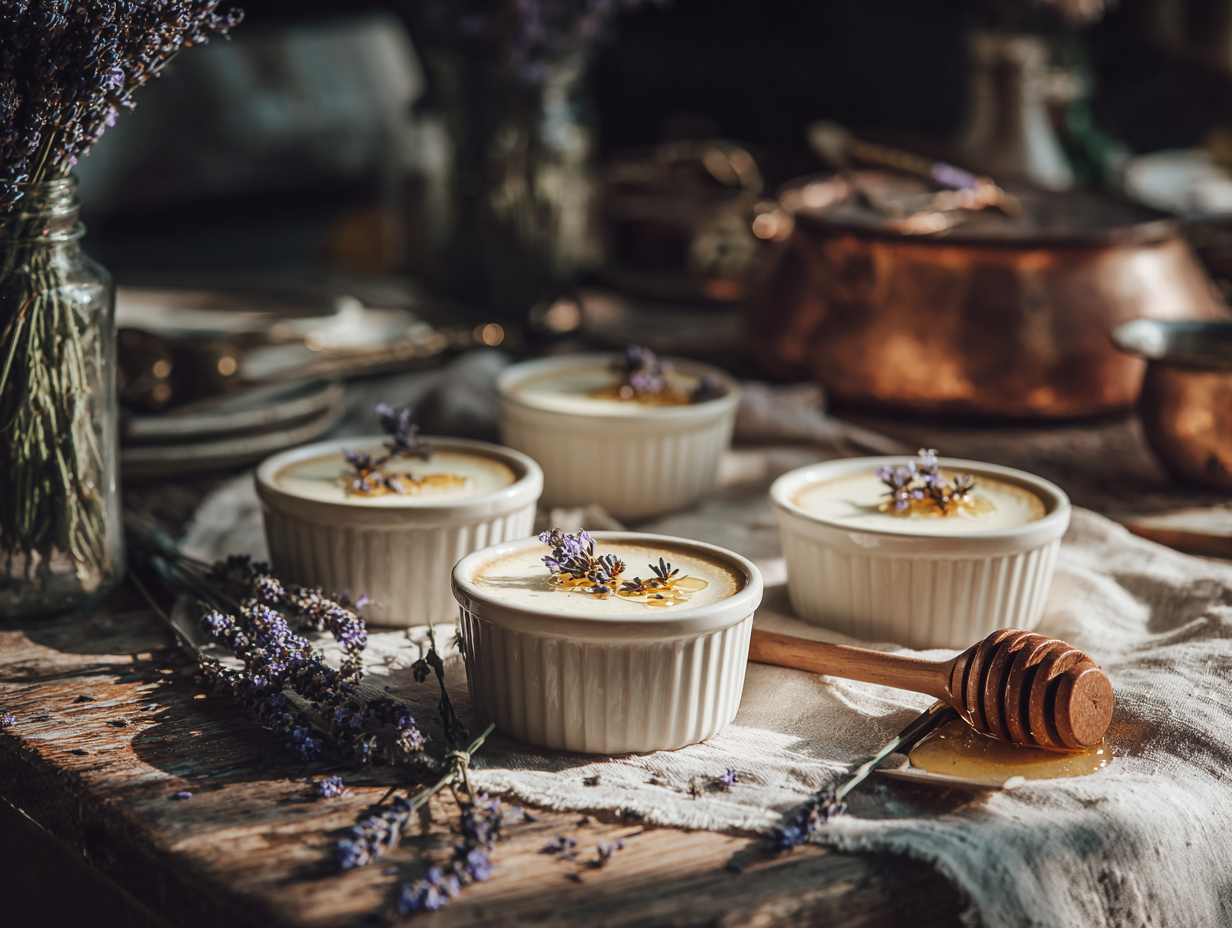
The Lavender Honey Panna Cotta is a dessert that elegantly bridges rustic pastoral beauty with refined culinary tradition. Rooted in the classic Italian panna cotta, which means “cooked cream” in Italian, this version elevates the traditional recipe with a gentle infusion of dried culinary lavender and wildflower honey—two ingredients that evoke scenes of the French countryside, particularly Provence.
Panna cotta itself has been a staple of Italian cuisine for centuries, treasured for its creamy texture and understated elegance. Traditionally made with sweetened cream set with gelatin, it provides the perfect canvas for an array of flavors. The simplicity of the base allows for nuanced ingredients like lavender and honey to shine without overwhelming the palate. The addition of milk lightens the texture slightly, making it a little more delicate, while the use of honey instead of refined sugar introduces a subtle depth and warmth that pairs naturally with the floral scent of lavender.
The inspiration for this dessert lies in the sun-soaked valleys and rolling lavender fields of Provence, where local beekeepers harvest golden honey from wildflowers and lavender blooms that sway lazily under the summer sun. Lavender is an herb that commands careful handling in the kitchen. Too much, and the flavor can turn soapy or medicinal; too little, and it fades into the background. In this recipe, precisely measured dried culinary lavender partners beautifully with the honey to create a soft, aromatic undertone—an herbaceous whisper rather than a shout.
The use of gelatin as a setting agent is traditional and efficient; it gently firms the cream mixture without making it rubbery. It allows the panna cotta to have that signature wobble—a luxurious jiggle that teases the spoon and beckons with each bite. For those with dietary restrictions, agar agar can be substituted to make the dessert vegetarian-friendly, although it’s important to follow separate instructions as agar sets differently than gelatin.
The process of making this dessert is intentionally simple yet sensory-rich. As the cream gently warms with lavender buds infusing in it, the kitchen fills with an aroma reminiscent of a Mediterranean garden just after dawn. There’s something romantic and calming in this process—a slow pace that encourages mindfulness and anticipation.
Once set, the panna cotta can be served plain or lightly adorned. A drizzle of honey, a few edible flowers, or even seasonal fruit like macerated berries pair wonderfully, playing off the floral notes and creamy texture. The result is a dish that is as visually delightful as it is on the tongue—smooth, subtly floral, and rich without being heavy.
Ideal for dinner parties or a quiet evening indulgence, Lavender Honey Panna Cotta embodies the philosophy of thoughtful, seasonal cooking. It reminds us that sometimes, the most beautiful creations come from the simplest ingredients—inspired by nature, elevated by tradition, and crafted with care.
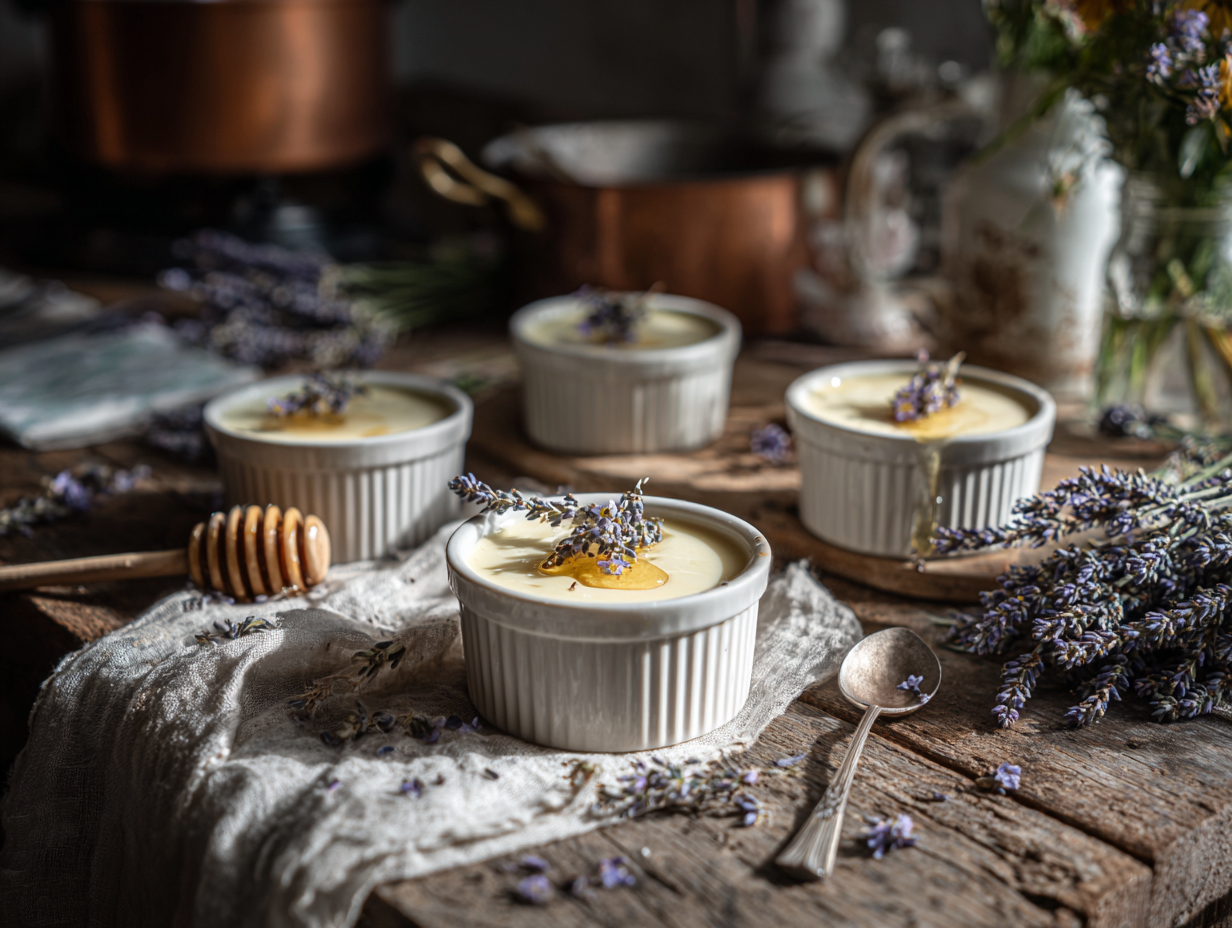
Lavender Honey Panna Cotta

Equipment
- Saucepan
- Mixing Bowl
- Whisk
- Fine mesh strainer
- Ramekins
Ingredients
- 2 cups heavy cream preferably organic
- 1 cup whole milk organic for purity
- ⅓ cup honey wildflower honey for best flavor
- 2 teaspoons culinary lavender buds dried
- 2 ½ teaspoons unflavored gelatin from about 1 sachet
- ¼ cup cold water
Instructions
- In a saucepan, combine the heavy cream, whole milk, honey, and lavender buds. Gently heat over medium-low, stirring occasionally, until the mixture is just about to simmer and aromatic.
- While the cream mixture is heating, place the cold water in a small bowl, sprinkle the gelatin over it, and allow it to bloom for about 5 minutes until spongy.
- Remove the cream mixture from heat and strain through a fine mesh strainer to remove the lavender buds. Stir in the bloomed gelatin until fully dissolved.
- Pour the panna cotta mixture into ramekins and refrigerate until set, at least 2 hours or overnight for best results.
Notes
- If lavender is too strong, reduce quantity to 1 teaspoon.
- For a vegetarian option, consider agar agar instead of gelatin.