

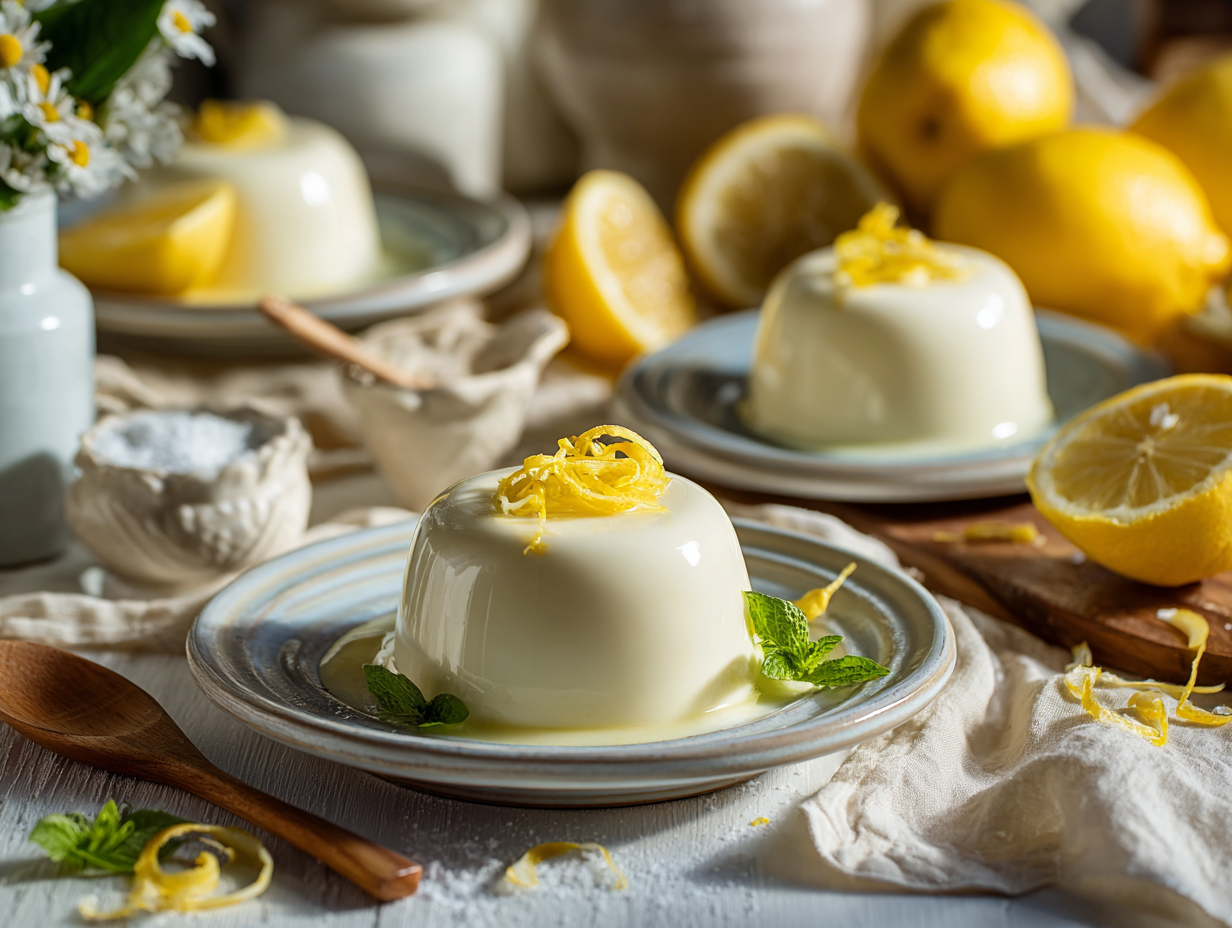
Lemon buttermilk panna cotta is a no-bake, gelatin-set cream dessert — silky, lightly tangy, and genuinely refreshing. The whole thing takes about 25 minutes of active work, then the fridge does the rest. It’s one of the most make-ahead-friendly desserts you can serve, which makes it a smart pick any time you want something impressive without last-minute stress.
What makes this version work
Two steps carry most of the weight here. The first is blooming the gelatin properly — sprinkling it over cold water and letting it sit a full 5 minutes before adding it to the warm cream. Rushed or skipped, the gelatin won’t dissolve evenly, and you’ll end up with a grainy or rubbery texture instead of a smooth set. The second is straining the mixture through a sieve before pouring it into the ramekins. The zest has already done its job infusing the cream with flavor during heating; leaving it in creates an uneven, slightly bitter texture in the finished dessert. Strain it out and you get a clean, consistent result every time.
Ingredient notes
- Powdered gelatin: This recipe uses powdered gelatin, not sheets. If you only have sheet gelatin, one sheet is roughly equivalent to one teaspoon of powder, so you’d need about two sheets. Bloom sheets in cold water the same way.
- Buttermilk: Full-fat buttermilk gives the best texture. Low-fat works but the result is slightly less rich. Don’t substitute regular milk — you’ll lose the tang that balances the sugar.
- Lemon: Use a fresh lemon for both the zest and the juice. Bottled lemon juice is flat and won’t give you the same brightness. One medium lemon yields about a tablespoon of juice and enough zest for this recipe.
- Heavy cream: Don’t swap in half-and-half. The fat content in heavy cream is what gives panna cotta its characteristic body.
Keeping it fresh
Panna cotta keeps well in the fridge for up to 3 days, covered tightly with plastic wrap pressed directly onto the surface to prevent a skin from forming. You can make it up to 2 days ahead, which is one of its best qualities as a dinner party dessert. Freezing is not recommended — the texture turns grainy and watery once thawed. If you’re planning to unmold the panna cotta onto plates rather than serve in the ramekins, wait until just before serving; unmolded panna cotta weeps if it sits out more than 10–15 minutes.
Mistakes to avoid
- Heating the cream too high: If the cream comes to a full boil, it can affect how the gelatin sets and may cause the mixture to separate. Keep the heat at medium and pull the pan as soon as the sugar is dissolved and the cream is steaming — not bubbling.
- Adding buttermilk while the mixture is too hot: Buttermilk can curdle if it hits very hot liquid. Let the cream mixture cool for a minute or two off the heat before stirring in the buttermilk, vanilla, and lemon juice.
- Skipping the cooling step before refrigerating: Pouring hot liquid straight into the fridge can raise the internal temperature and affect other food. Let the filled ramekins sit at room temperature until they’re no longer warm to the touch — about 20 to 30 minutes — before moving them to the fridge. Skip the garnish — not worth the extra dish; the panna cotta is good enough on its own.
- Under-setting and unmolding too early: Four hours is the minimum. If you try to unmold at three hours, it will likely collapse. When in doubt, give it the full overnight. To test the set, give the ramekin a gentle shake — the center should wobble as one piece, not slosh.
- Uneven portions: The recipe makes 4 cups total. Use a liquid measuring cup to pour equal amounts into each ramekin so they all set at the same rate and look consistent when served.
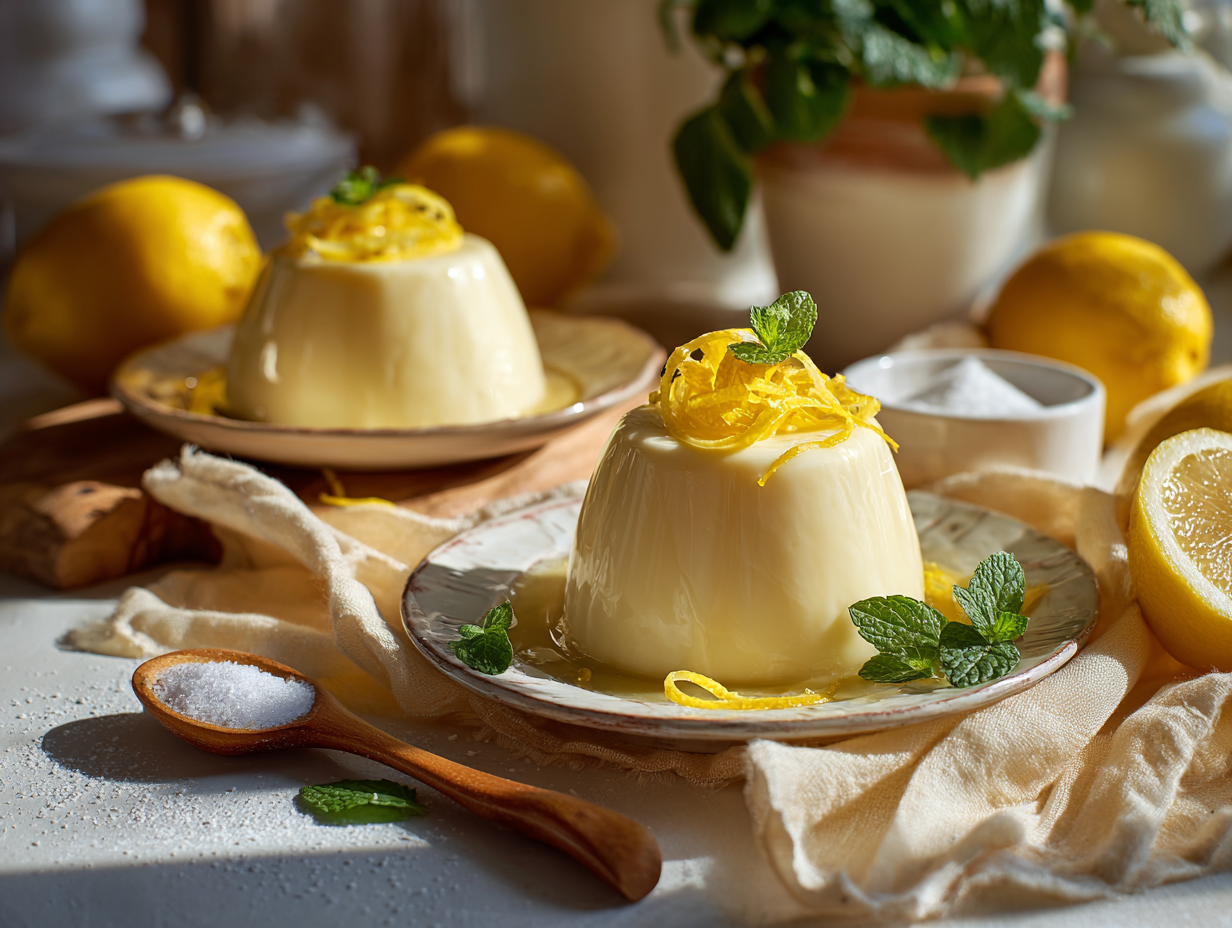
Luscious Lemon Buttermilk Panna Cotta

Equipment
- Saucepan
- Whisk
- Mixing Bowl
- Ramekins or dessert molds
- Sieve
Ingredients
- 1 cup heavy cream high quality
- 1 cup buttermilk fresh
- ½ cup granulated sugar
- 1 medium lemon, zest fresh from 1 lemon
- 1 teaspoon vanilla extract
- 1 tablespoon lemon juice freshly squeezed
- 2 teaspoons powdered gelatin
Instructions
- In a small bowl, sprinkle the gelatin over two tablespoons of cold water and let it bloom for about 5 minutes.
- In a saucepan over medium heat, combine the heavy cream, sugar, and lemon zest. Stir until the sugar dissolves and the mixture is hot but not boiling, about 5-6 minutes.
- Remove the saucepan from the heat and add in the bloomed gelatin, stirring until completely dissolved.
- Mix in the buttermilk, vanilla extract, and lemon juice. Stir well to combine the flavors thoroughly.
- Strain the mixture through a sieve into a large mixing bowl to remove the lemon zest, ensuring a smooth panna cotta.
- Divide the mixture evenly among four ramekins or dessert molds. Allow them to cool slightly before transferring to the refrigerator to set for at least 4 hours or overnight.
Notes
- For a unique twist, try infusing the cream with a sprig of fresh mint during the heating process for an added layer of flavor.
- Alternatively, swap lemon zest for orange zest if preferred.
Nutrition
FAQ
Can I make this without a sieve?
You can, but the texture will be noticeably less smooth. A fine-mesh strainer is the best tool here; if you don’t have one, a piece of cheesecloth over a regular colander will do the job in a pinch.
How do I unmold panna cotta without it breaking?
Run a thin knife or offset spatula around the edge of the ramekin, then place your serving plate face-down on top and flip quickly. If it doesn’t release, set the bottom of the ramekin in warm water for about 10 seconds and try again — the gentle heat loosens the gelatin from the sides.
My panna cotta didn’t set — what went wrong?
The most likely cause is that the gelatin didn’t fully dissolve before the buttermilk was added, or the blooming step was cut short. Make sure the bloomed gelatin is completely smooth and lump-free when you stir it into the warm cream, and confirm the cream was hot enough to dissolve it fully before you removed the pan from the heat.
Can I use silicone molds instead of ramekins?
Yes, and they actually make unmolding easier since you can peel the mold away from the panna cotta rather than inverting it. Just make sure the molds are stable enough to sit flat in the fridge without tipping.
If you liked this one
- Lavender honey panna cotta
- Black tea panna cotta
- Zesty lemon thyme shortbread bars
- Tropical lime bars with toasted coconut