

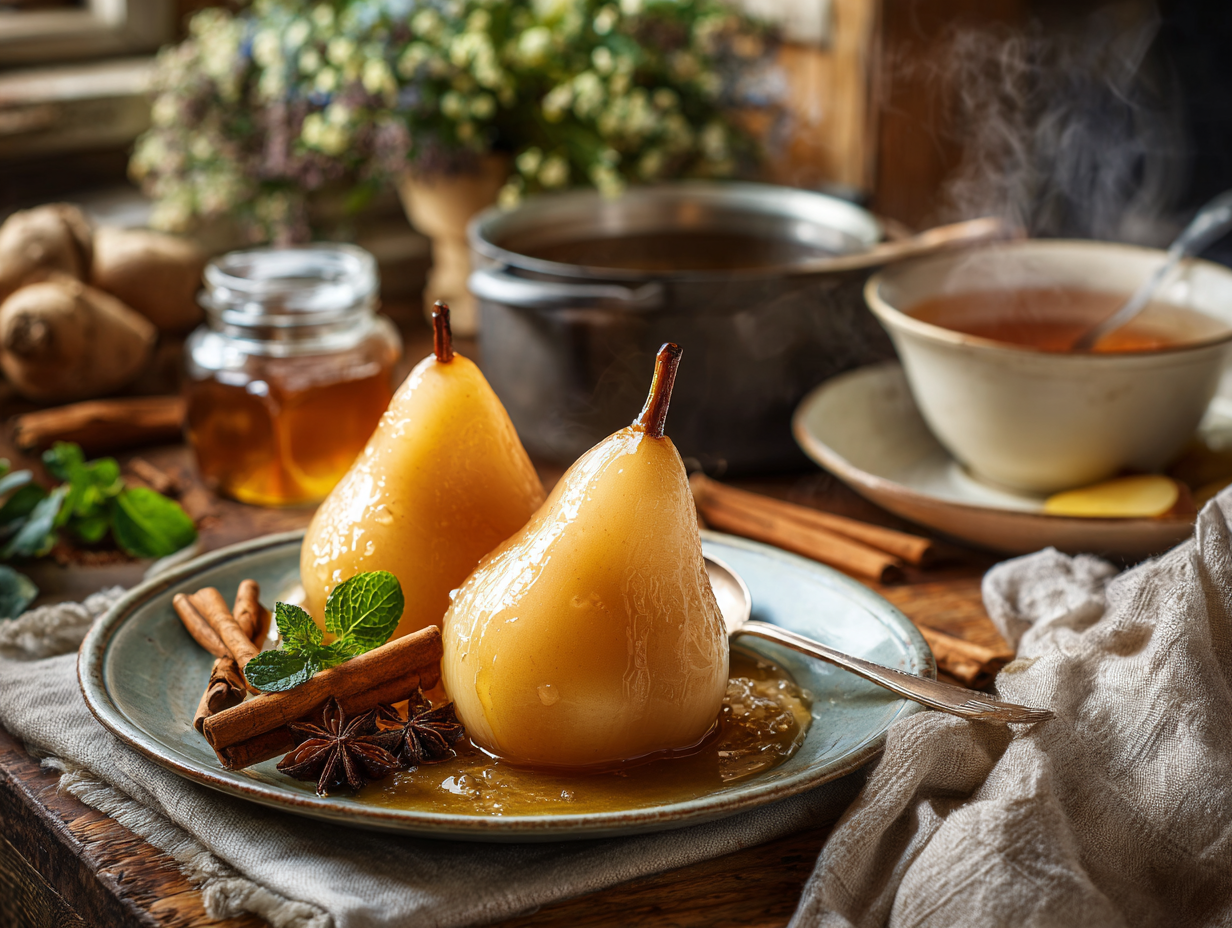
Honey Ginger Poached Pears are whole pears simmered in a honey, ginger, cinnamon, and vanilla syrup until tender, then served with the reduced poaching liquid drizzled over the top. The prep is straightforward and the ingredient list is short, but the result looks impressive enough to put in front of guests. If you need a dessert that scales easily, requires no oven, and can be made well ahead of time, this is a reliable one to keep in your rotation.
What makes this version work
Two things matter most here. First, using honey instead of plain sugar gives the poaching liquid a natural body that reduces into a glossy syrup without much effort — granulated sugar produces a thinner, flatter result. Second, keeping the heat at a gentle simmer rather than a boil is what prevents the pears from turning mushy. A rolling boil breaks down the fruit too fast; a quiet simmer lets the pears cook through evenly while holding their shape, which matters a lot when you’re plating multiple pears at once.
Troubleshooting
- Pears are still hard after 30 minutes: Fruit ripeness varies. If a knife meets resistance, keep poaching in 5-minute increments. Underripe pears can take up to 45 minutes.
- Syrup won’t thicken when reduced: Make sure you’re reducing at a steady medium-high heat with the lid off. If you’ve added extra water to submerge the pears, the liquid will take longer — give it more time before assuming something is wrong.
- Pears tip over in the pan: They float and lean. A small heatproof plate or lid slightly smaller than the pan set directly on the pears keeps them submerged and upright during poaching.
- Syrup tastes flat or too sweet: A small squeeze of lemon juice stirred in at the end of reduction sharpens the flavor without changing the character of the dish.
- Pears are unevenly colored after poaching: Any part that wasn’t submerged will look pale. Rotate the pears halfway through cooking, or add just enough water to cover them fully before you start.
Ingredient notes
- Honey: A mild, floral variety like acacia or orange blossom works best — strongly flavored honeys like buckwheat can overpower the ginger. Skip the fancy single-origin stuff here; a good mid-range floral honey does the job.
- Fresh ginger: Don’t substitute ground ginger. Ground ginger makes the syrup cloudy and gives a dusty, sharp heat rather than the clean warmth you want. One inch of fresh ginger, sliced thin, is the right amount for four pears — double it if you’re scaling to eight.
- Pear variety: Bosc holds its shape the best and is the first choice. Anjou works well too. Bartlett pears are too soft and will fall apart before they’re fully flavored.
Make-ahead notes
This dessert is genuinely better made ahead. Poach the pears, let them cool in the liquid, then transfer everything — pears and syrup together — to an airtight container and refrigerate for up to 3 days. The pears continue to absorb flavor as they sit, so a pear poached the day before tastes noticeably better than one served immediately. When you’re ready to serve, remove the pears from the fridge about 20 minutes before plating if you prefer them at room temperature, or serve them cold straight from the fridge — both work. Reduce the syrup separately just before serving if you want it thick; it will have thinned slightly in the fridge. For larger batches, the pears freeze reasonably well for up to 1 month submerged in their syrup, though the texture softens slightly after thawing.
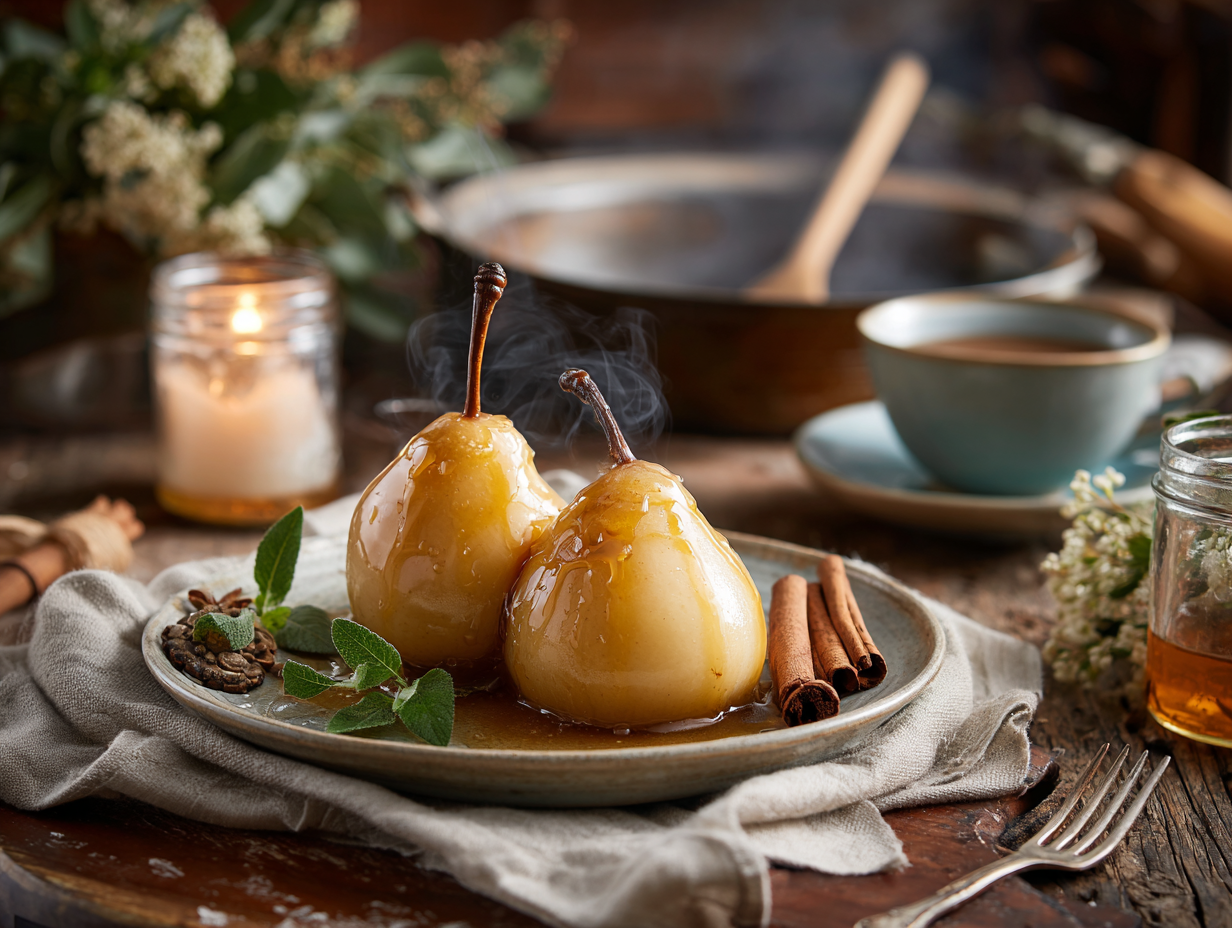
Honey Ginger Poached Pears

Equipment
- Large saucepan
- Peeler
- Knife
- Ladle
Ingredients
For the Pears:
- 4 medium ripe but firm pears Bosc or Anjou preferred
For the Poaching Liquid:
- 3 cups water
- 1 cup honey high-quality, floral honey
- 1 inch fresh ginger sliced
- 1 stick cinnamon
- 1 teaspoon vanilla extract pure
Instructions
- Begin by peeling the pears gently, leaving the stems intact, and core from the bottom if desired for a more elegant presentation.
- In a large saucepan, combine the water, honey, sliced ginger, cinnamon stick, and vanilla extract. Bring the mixture to a gentle simmer over medium heat.
- Carefully place the pears into the poaching liquid, ensuring they are fully submerged. Adjust with more water if necessary.
- Cover the saucepan and let the pears poach for approximately 25-30 minutes, until tender when pierced with a knife. The aroma should be of sweet honey and spicy ginger.
- Using a ladle, carefully remove the pears from the liquid and allow them to cool on a plate. Reduce the poaching liquid over medium-high heat if a thicker syrup is desired.
- Serve the pears drizzled with the poaching syrup.
Notes
- For an added twist, consider adding a splash of white wine or a few cardamom pods to the poaching liquid for additional depth of flavor.
Nutrition
Your questions, answered
Can I double or triple this recipe for a party?
Yes — this recipe scales up cleanly. Use a wide, deep pot so the pears can sit upright without crowding, and make sure there’s enough liquid to fully submerge all of them. The poaching time stays the same regardless of how many pears you’re cooking.
Do the pears need to be perfectly ripe?
Ripe but firm is the target — fruit that gives very slightly when pressed near the stem. Overripe pears will turn mushy during poaching; underripe pears will take longer and may stay slightly grainy in texture even when tender.
Can I serve these warm, or do they have to be cold?
Either works. Warm pears with the syrup are comforting; cold pears straight from the fridge are refreshing and a bit more refined-looking. If serving warm, reheat gently in the syrup over low heat for about 10 minutes — don’t boil them again.
What’s the best thing to serve alongside them?
Vanilla ice cream is the most practical pairing — it melts into the syrup and balances the ginger heat. Skip the crème fraîche garnish if you’re serving a crowd; it requires an extra dish and most people won’t notice the difference.
My honey has crystallized in the jar. Can I still use it?
Yes, crystallized honey works fine here. Spoon it directly into the warm water in the saucepan and stir — it dissolves completely within a minute or two of gentle heat.
What to bake next
- Pear and Almond Cake
- Rustic French Countryside Fig Dessert
- Caramelized Honey Frozen Dessert
- Sweet Mediterranean Bites with Mascarpone and Honey