

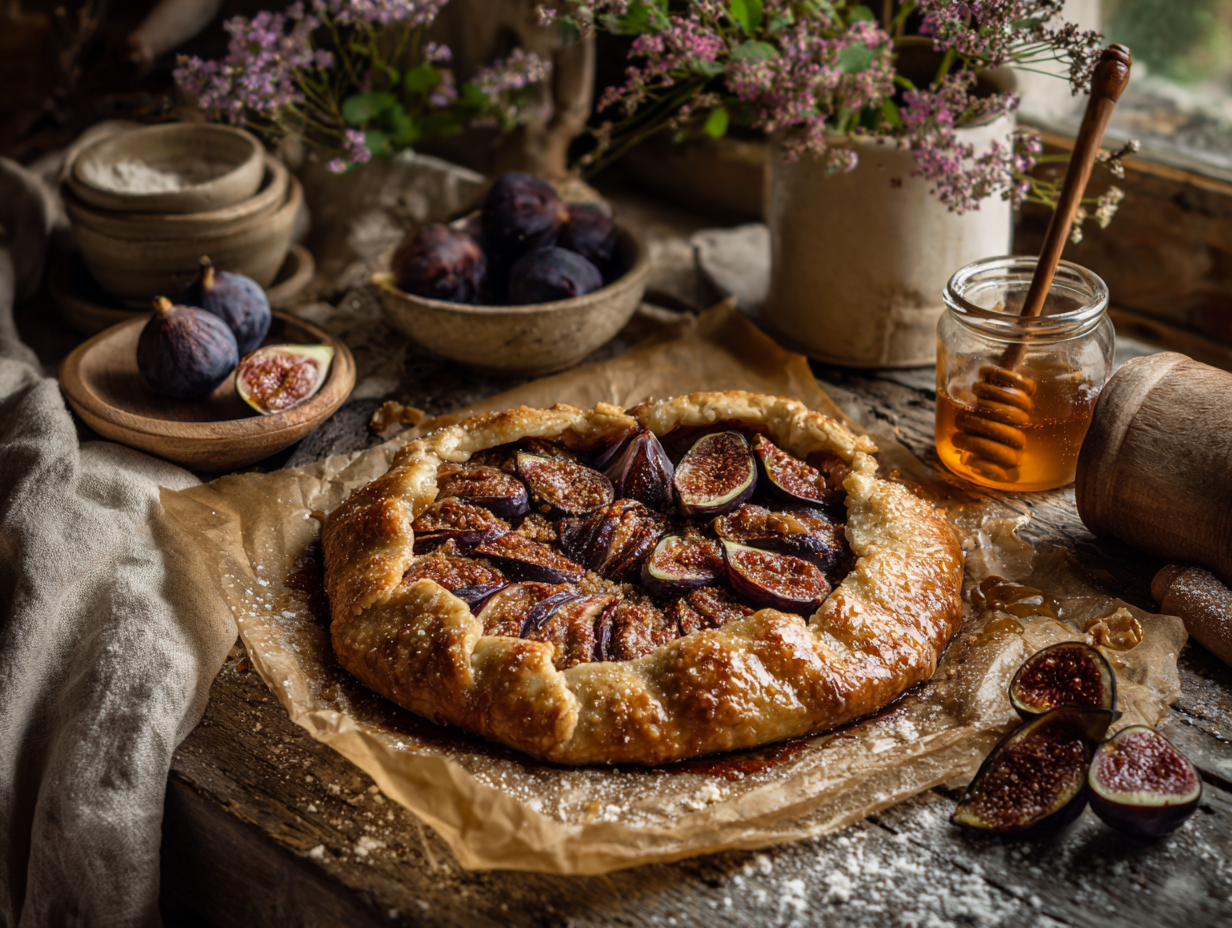
This is a free-form pastry filled with sliced fresh figs, a thin layer of almond flour, and two tablespoons of honey, all wrapped in a basic butter crust. No tart pan, no special equipment — just a baking sheet and about 85 minutes start to finish. The honest reason to make it: fresh figs are one of the few fruits that bake beautifully with almost no prep, and this recipe keeps them front and center without burying them in sugar or spice.
What makes this version work
Two things actually matter here. First, the butter must be genuinely cold when it goes into the dough — not cool, cold. Warm butter blends into the flour instead of staying in small pieces, and those pieces are what create flaky layers when the fat hits the oven heat. If your kitchen runs warm, cut the butter and stick it back in the freezer for ten minutes before you start. Second, the tablespoon of almond flour spread under the figs does real structural work: it absorbs the juice that figs release as they cook, which is the main reason galette crusts turn soggy on the bottom. Don’t skip it or reduce it, even if almond flour feels like an odd pantry item — a small bag goes a long way and keeps for months in the freezer.
Storage and freezing
The baked galette keeps at room temperature, loosely covered, for up to one day. After that, move it to the fridge where it will hold for another two days — the crust softens slightly but the flavor is still good. To reheat, ten minutes in a 325°F oven brings the crust back. For make-ahead prep, the dough disk can be wrapped tightly and refrigerated for up to three days, or frozen for up to one month; thaw it overnight in the fridge before rolling. The fully baked galette can also be frozen: cool it completely, wrap it well, and freeze for up to six weeks. Reheat straight from frozen at 350°F for about 15 minutes.
Common problems and fixes
- The folded edges crack when you pleat them: The dough dried out slightly during chilling. Dampen your fingers with a little cold water and gently press cracked edges back together before baking — they’ll seal fine.
- The bottom crust is pale and a little doughy: Your oven may run cool, or the galette was on a high rack. Move the baking sheet to the lower third of the oven for the last ten minutes of baking to get direct heat on the bottom.
- The figs release so much liquid that the filling looks soupy: Very ripe figs hold more water. Next time, pat the sliced figs dry with paper towel before arranging them, and add a second teaspoon of almond flour to the base layer.
- The honey burns on top before the crust is done: Honey scorches faster than sugar. If the top is darkening too quickly after 25 minutes, lay a loose sheet of foil over the filling — not the edges — and let the crust finish browning. Skip adding extra honey as a garnish after baking; it just makes the slices sticky and doesn’t add enough flavor to justify the mess.
- The dough tears when you transfer it to the baking sheet: Roll the dough onto the parchment paper directly on the baking sheet rather than rolling it on the counter and then lifting it. It’s easier and avoids the transfer problem entirely.
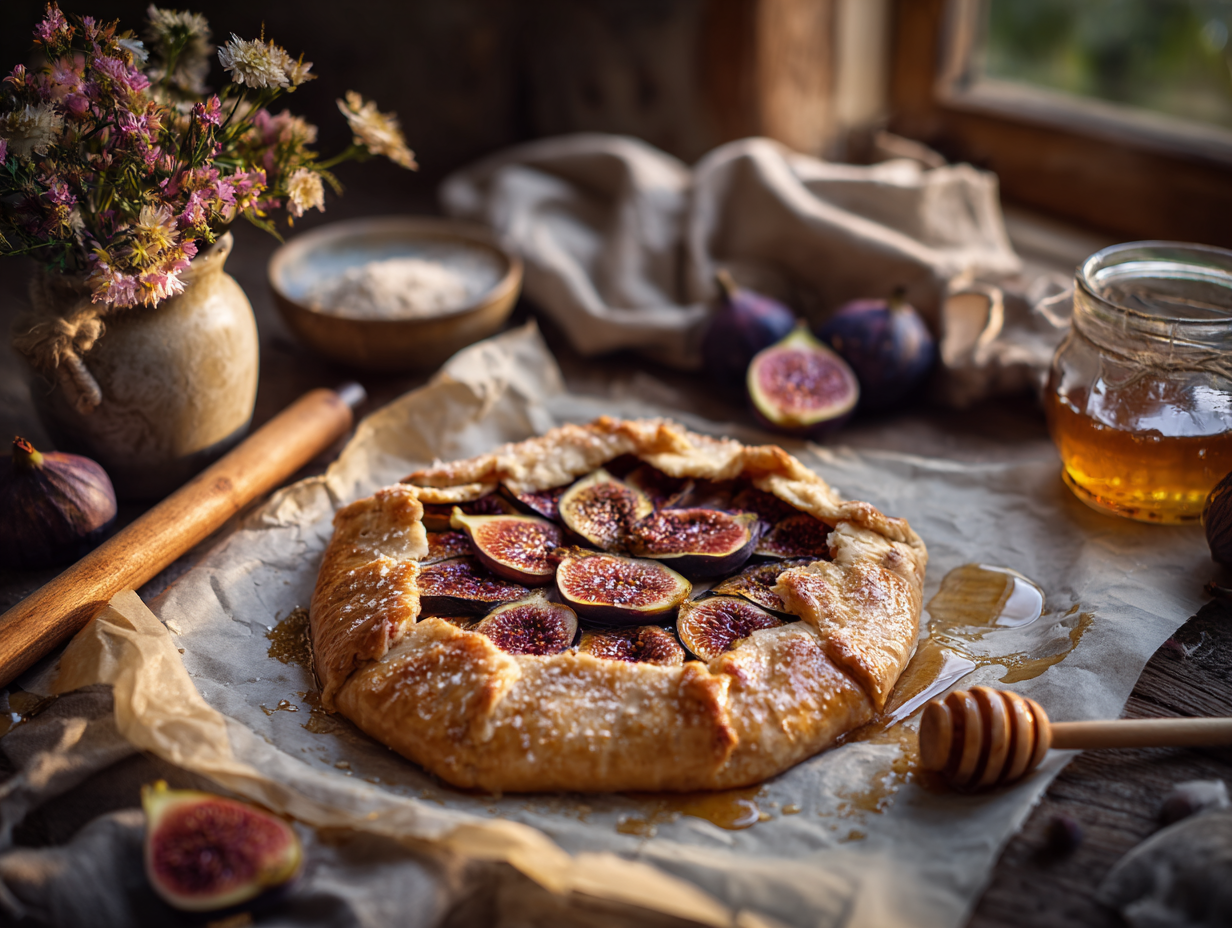
Fig and Honey Galette

Equipment
- Mixing Bowl
- Rolling pin
- Baking sheet
- Parchment Paper
- Pastry brush
Ingredients
For the Galette Dough:
- 1 ¼ cups all-purpose flour preferably organic
- ½ cup unsalted butter cold and diced
- ¼ teaspoon salt
- 3 tablespoons ice water
For the Galette Filling:
- 8 medium fresh figs sliced
- 2 tablespoons honey preferably local
- 1 tablespoon almond flour
- 1 large egg yolk for egg wash
- 1 teaspoon sugar turbinado or raw for sprinkling
Instructions
- For the dough, combine the all-purpose flour and salt in a mixing bowl. Add the cold, diced butter and use a pastry cutter or your fingers to break it down until the mixture resembles coarse crumbs. Drizzle in the ice water, starting with 2 tablespoons, and mix until the dough comes together. If needed, add the remaining tablespoon of ice water.
- Shape the dough into a disk, wrap it in plastic wrap, and refrigerate for at least 30 minutes.
- Preheat your oven to 400°F (200°C).
- On a floured surface, roll out the dough to a 12-inch circle. Transfer the dough to a baking sheet lined with parchment paper.
- In a small bowl, combine the almond flour and 1 tablespoon of honey. Spread this mixture over the dough, leaving a 2-inch border.
- Arrange the sliced figs over the almond mixture, then drizzle 1 tablespoon of honey over the figs.
- Fold the edges of the dough over the figs, pleating as necessary to secure.
- In a small bowl, whisk the egg yolk. Brush the dough edges with egg yolk and sprinkle with turbinado sugar.
- Bake the galette in the preheated oven for 35-40 minutes, or until the crust is golden brown and the figs are tender.
Notes
- For a vegan adaptation, replace the egg yolk with non-dairy milk for the wash, and butter with a vegan alternative.
- The galette dough can be prepared a day ahead and stored in the fridge.
Nutrition
FAQ
Can I use dried figs instead of fresh?
Dried figs won’t work well here — they don’t soften the same way and the texture will be chewy and dense rather than jammy. If fresh figs aren’t available, ripe plums or nectarines sliced to a similar thickness are the most reliable substitutes.
I don’t have almond flour. What can I use instead?
Finely ground plain breadcrumbs or crushed digestive biscuits work as a direct swap in the same quantity. Their job is purely to absorb juice, so the flavor difference is minor — the honey and figs dominate either way.
Can I use salted butter instead of unsalted?
Yes. Just leave out the quarter teaspoon of salt called for in the dough. The crust will taste essentially the same.
Does the type of honey matter much?
Any runny honey you have on hand will do the job. Strongly flavored varieties like buckwheat can compete with the figs, so a mild clover or wildflower honey is a better choice if you have options, but it’s not worth buying something special.
Can I make the dough without a pastry cutter?
Yes — your fingers work fine. Rub the cold butter into the flour quickly using your fingertips, stopping as soon as the mixture looks like coarse crumbs. The key is speed so your hands don’t warm the butter too much.
What can I serve with this instead of vanilla ice cream or crème fraîche?
Plain full-fat Greek yogurt is a practical alternative that most people already have, and its slight tang balances the sweetness well. Whipped cream or even a spoonful of ricotta also work without any additional shopping.
If you liked this one
- Caramelized Banana Tart
- Pear and Almond Cake
- Provence-Inspired Blackberry Lavender Crumble
- Sweet Elegance Blackberry Mascarpone Tart