

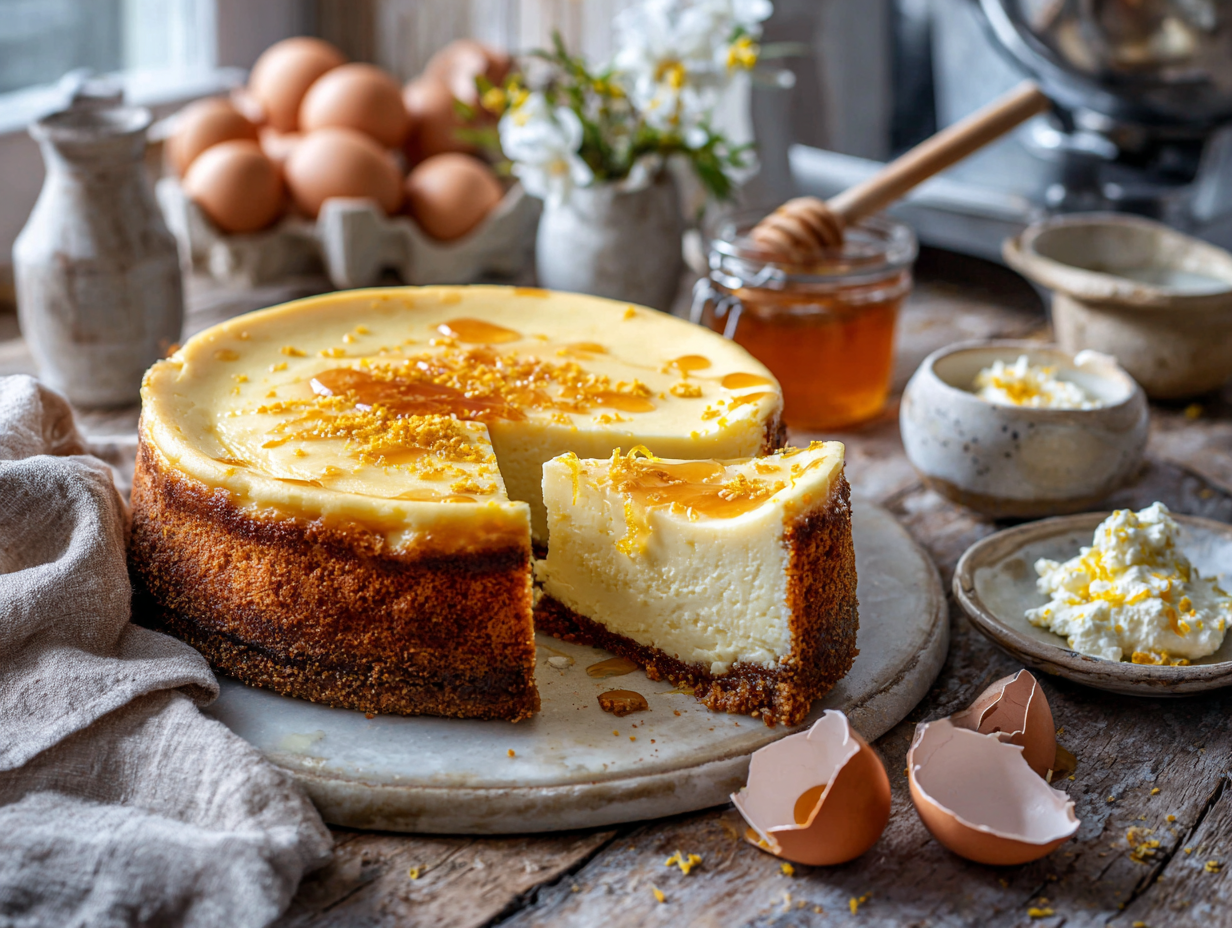
This is a ricotta and honey cheesecake with a graham cracker crust — lighter and less dense than a standard cream-cheese cheesecake, with a slightly grainy, soft texture that sets it apart. The filling uses whole-milk ricotta as the main base, honey instead of most of the sugar, and lemon zest to keep it from tasting flat. It takes about 30 minutes of hands-on work, and the overnight chill does the rest.
The short version of why this works
Two things matter most here. First, beating the ricotta and cream cheese together thoroughly before adding anything else breaks down the ricotta’s grainy curds and gives you a smooth, cohesive filling — skip this step and you’ll have visible lumps in the finished slice. Second, pulling the cheesecake when the center still jiggles (rather than waiting for it to look fully set) is what keeps the texture creamy rather than rubbery. The filling continues to firm up as it cools and then chills, so what looks underdone at the oven door is exactly right by the time you slice it the next day.
What can go wrong
- Crust crumbles when you slice: The butter-to-crumb ratio is tight. If your crumbs are coarse or you’re using a drier brand of graham crackers, add an extra teaspoon of melted butter. Press the crust firmly with the flat bottom of a measuring cup, not just your fingers, to compact it properly.
- Filling cracks across the top: This usually means the oven ran hot or the cheesecake baked too long. An oven thermometer is worth using here — many home ovens run 15–25°F hotter than the dial says. A crack doesn’t affect flavor, but if it bothers you, a drizzle of honey over the top before serving covers it completely.
- Watery layer under the filling: Ricotta holds moisture, and some brands are wetter than others. If your ricotta looks loose in the container, drain it in a fine-mesh strainer for 20–30 minutes before mixing. Skipping this step is the most common reason the filling doesn’t set cleanly.
- Cheesecake sticks to the springform collar: Run a thin knife or offset spatula around the inside edge of the pan before releasing the latch. Do this while the cheesecake is still cold — warm cheesecake tears more easily.
- Honey flavor disappears after baking: Baking mellows honey noticeably. Use a honey with a strong character — wildflower or buckwheat — if you want it to come through clearly in the finished cheesecake. Mild clover honey tends to fade into the background.
Keeping it fresh
Covered in the fridge, this cheesecake keeps well for up to 4 days — the flavor actually improves on day two once everything has had time to settle. For longer storage, freeze individual slices on a baking sheet until solid, then wrap each one tightly in plastic wrap and store in a freezer bag for up to 6 weeks. Thaw slices overnight in the fridge rather than at room temperature, which can make the texture weep. You can bake this up to two days ahead of serving; skip the garnish until just before you bring it to the table — not worth the extra dish.
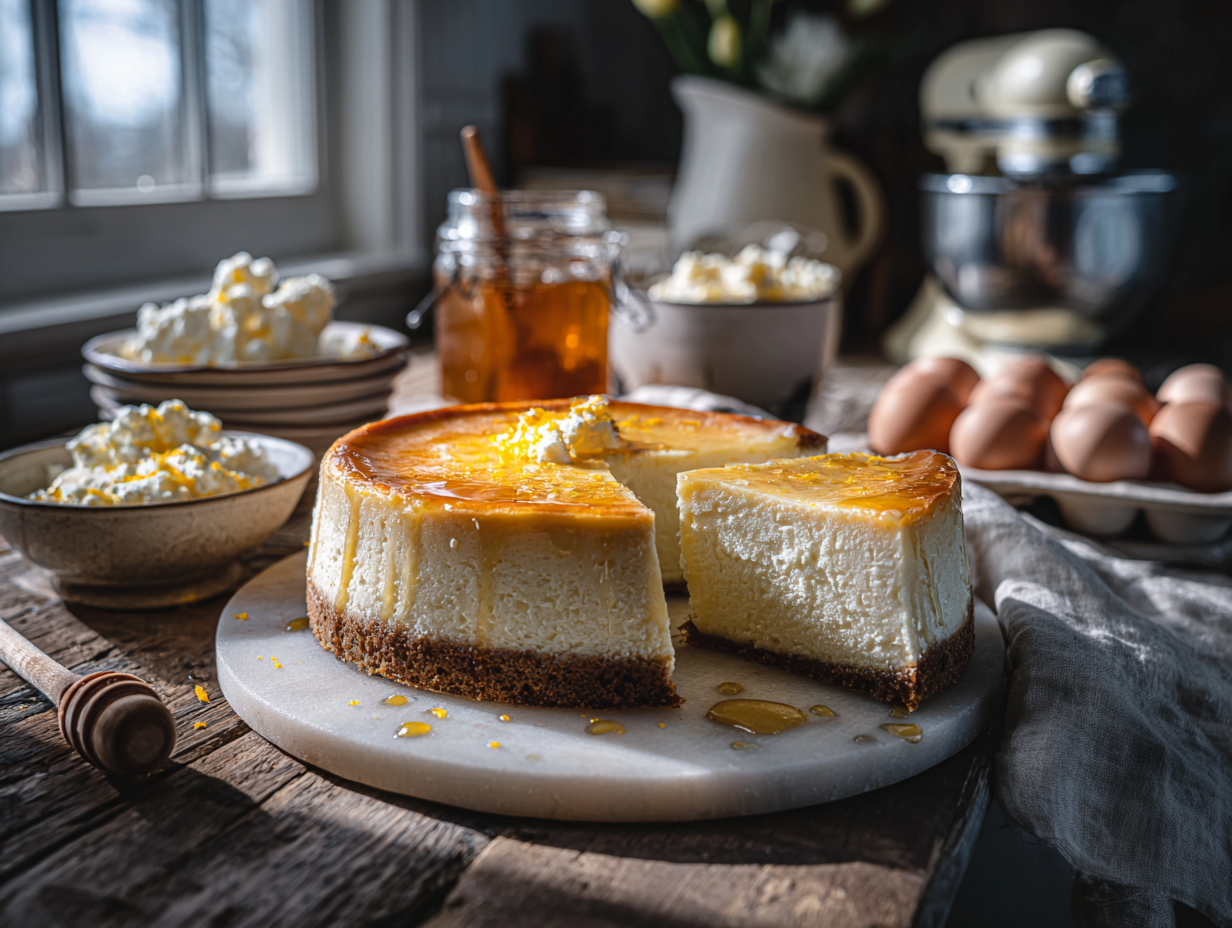
Ricotta Honey Cheesecake

Equipment
- Springform pan
- Mixing Bowl
- Electric Mixer
- Spatula
- Measuring cups and spoons
- Oven
Ingredients
For the Crust:
- 1 ½ cups graham cracker crumbs
- ½ cup unsalted butter melted
- 1 tablespoon honey
For the Filling:
- 2 cups ricotta cheese preferably fresh
- 1 cup cream cheese softened
- ½ cup honey
- 3 large eggs room temperature
- 2 teaspoons vanilla extract
- 1 medium lemon zest only
Instructions
- Preheat the oven to 325°F (163°C). Grease a 9-inch springform pan lightly using butter or a non-stick spray.
- In a mixing bowl, combine graham cracker crumbs, melted butter, and 1 tablespoon of honey. Press this mixture firmly into the bottom of the prepared springform pan to form the crust.
- Bake the crust for 10 minutes, then remove and allow it to cool while preparing the filling.
- For the filling, blend ricotta and cream cheese together in a mixing bowl until creamy, using an electric mixer on medium speed.
- Add the 1/2 cup of honey, eggs, vanilla extract, and lemon zest to the cheese blend. Beat until fully incorporated and smooth.
- Pour the filling over the cooled crust in the springform pan, smoothing the top with a spatula.
- Bake in the oven for about 1 hour, or until the edges are set and the center has a gentle jiggle.
- Cool the cheesecake to room temperature before refrigerating for at least 3 hours, or overnight for best results.
- Remove from the springform pan and serve chilled.
Notes
Tammy’s Tips:
- Ingredient Substitution: You can substitute graham cracker crumbs with digestive biscuits for a different taste and texture.
- Dietary Adaptation: For a gluten-free option, use gluten-free graham cracker crumbs.
- Professional Tip: To enhance the lemon flavor, add a teaspoon of freshly squeezed lemon juice to the cheese filling.
Nutrition
Common questions
Can I use part-skim ricotta instead of whole-milk?
You can, but the filling will be noticeably less rich and may have a slightly drier texture after baking. Whole-milk ricotta has enough fat to keep the filling creamy through the full bake and chill time — part-skim versions can turn a little chalky.
Do I need a water bath for this cheesecake?
No. This recipe does not call for one, and the ricotta-based filling is more forgiving than a pure cream-cheese cheesecake. Keeping the oven temperature at 325°F and not overbaking are the two things that matter most for texture.
My ricotta filling looks lumpy after mixing — is that okay?
Keep mixing. Ricotta takes longer to smooth out than cream cheese, and a hand mixer on medium speed needs about 2 full minutes before the curds break down properly. If lumps persist, the ricotta may be too cold — let it sit at room temperature for 20 minutes and try again.
Can I make this without cream cheese?
Not without changing the texture significantly. The cream cheese provides structure and fat that ricotta alone doesn’t have — without it, the filling tends to be too soft and may not hold a clean slice. If dairy-free cream cheese is a concern, a firm cashew-based cream cheese substitute works reasonably well as a swap.
How do I know when the cheesecake is done baking?
The edges should look set and slightly puffed, while the center 2–3 inches should still wobble like firm Jell-O when you gently shake the pan. If the whole surface moves as one liquid mass, give it another 5 minutes and check again.
What to bake next
- Pistachio Honey Baklava Cheesecake
- Mediterranean Honey Almond Semolina Cake
- Mediterranean Ricotta Toast with Honey and Berries
- Burnt Basque Cheesecake