

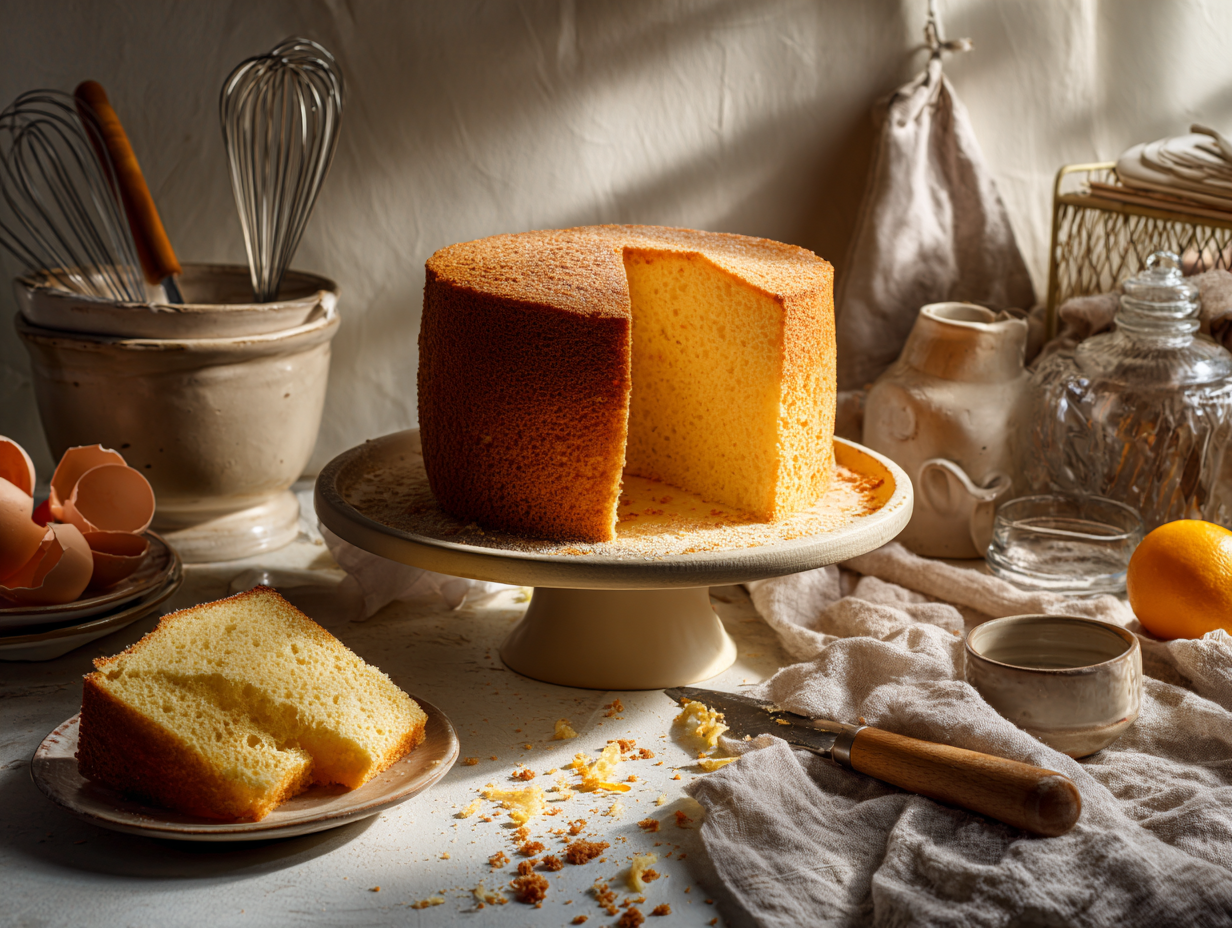
Chiffon cake sits between a butter cake and an angel food cake — it has the moist, tender crumb of one and the tall, light structure of the other. Vegetable oil does the heavy lifting here: it keeps the cake soft even after a day or two, which makes it a genuinely practical choice when you need to bake ahead for a crowd. One batch yields 8 generous slices from a single tube pan, and the recipe scales cleanly.
The technique that matters
Everything in this recipe depends on your egg whites. Beat them to stiff but glossy peaks — if they look dry or clumpy, the structure of the cake will be uneven and the crumb will be dense in patches. Then fold the meringue into the batter in thirds, using a wide spatula and slow, deliberate strokes from the bottom of the bowl up and over. Speed kills the air you just built. The second thing that matters is the inverted cooling step: the cake must hang upside down until completely cool, or gravity will compress that open crumb before it sets. If your tube pan doesn’t have feet, set it over a wine bottle or a tall jar — this is not optional.
Mistakes to avoid
- Greasing the pan: Don’t. The batter needs to grip the sides of the tube pan to climb as it bakes. A greased pan gives you a shorter, denser cake that may slide out before it’s fully cooled.
- Any trace of yolk in the whites: Even a small amount of fat prevents the whites from whipping properly. Separate each egg over a small bowl before adding to the main bowl, so one broken yolk doesn’t ruin the whole batch.
- Opening the oven early: The structure is fragile in the first 35 minutes. Opening the door before the cake has set can cause it to sink in the center and not recover.
- Skipping the sift on the flour: Cake flour clumps. Unsifted flour creates streaks in the batter and uneven pockets in the finished crumb, especially noticeable when you’re cutting the cake into many slices for a group.
- Cutting before fully cooled: The crumb needs time to set completely. Slice a warm chiffon cake and it compresses and tears — skip the garnish and wait the full cooling time instead of rushing to plate it.
Storage and freezing
Stored at room temperature under a cake dome or wrapped loosely in plastic, chiffon cake stays moist for up to 3 days — the oil in the batter is what makes that possible. Refrigerating it is fine if your kitchen is warm, but cold air dries the crumb faster, so wrap it tightly and bring it back to room temperature before serving. For make-ahead baking, the fully cooled, unglazed cake freezes well for up to 2 months: wrap the whole cake or individual slices in plastic wrap, then a layer of foil. Thaw overnight at room temperature still wrapped, so condensation forms on the outside of the foil rather than on the cake itself.
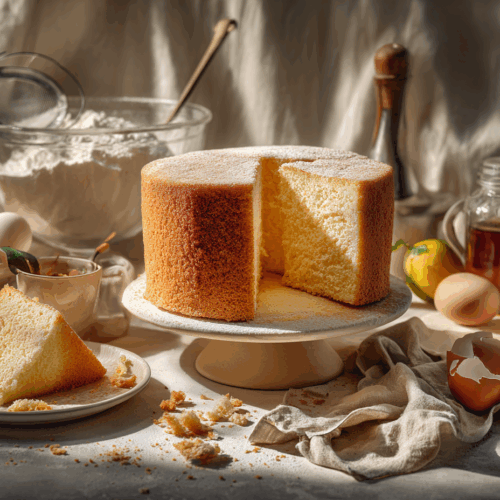
Classic Chiffon Cake

Equipment
- Mixing Bowls
- Electric Mixer
- 9-inch tube pan
- Spatula
Ingredients
- 2 ¼ cups cake flour sifted
- 1 ½ cups granulated sugar divided
- 1 tbsp baking powder
- ½ tsp salt
- 7 large eggs separated
- ¾ cup water at room temperature
- ½ cup vegetable oil preferably canola
- 2 tsp vanilla extract
- ¼ tsp cream of tartar
Instructions
- Preheat your oven to 325°F (163°C). Ensure that your 9-inch tube pan is clean and ungreased for optimum rising.
- Combine Dry Ingredients: In a large mixing bowl, sift together the cake flour, 1 cup of the sugar, baking powder, and salt. This ensures a fine crumb and even bake.
- Create the Batter: In a separate bowl, whisk together the egg yolks, water, oil, and vanilla extract until smooth. Slowly incorporate the liquid mixture into the dry ingredients until a smooth batter forms.
- Prepare the Egg Whites: In a meticulously clean bowl, beat the egg whites with the cream of tartar using an electric mixer on medium speed until soft peaks form. Gradually add the remaining 1/2 cup of sugar while increasing the speed to high. Continue to whisk until stiff but not dry peaks form.
- Combine and Pour: Gently fold the meringue into the batter in thirds, being careful to maintain the airiness of the mixture. Pour the completed batter into the tube pan and smooth the top with a spatula.
- Bake and Cool: Bake the cake in the preheated oven for 50 minutes, or until the top springs back when lightly pressed and a skewer inserted comes out clean. Once done, invert the pan (place the center tube over a bottle if necessary to elevate it) and allow the cake to cool completely.
- Remove the Cake: Carefully run a knife around the edges to release the cake from the pan.
Notes
- For a citrus twist, try adding the zest of one lemon or orange to the batter.
Nutrition
Frequently asked questions
Can I double this recipe to make two cakes at once?
Yes, but bake them in two separate tube pans rather than trying to use a larger pan. Doubling the batter in one pan throws off the bake time and the structure — two standard 9-inch tube pans baked on the same rack (or on separate racks with pans offset) is the reliable approach for a party or bake sale.
Can I use all-purpose flour instead of cake flour?
You can, but the crumb will be noticeably denser and slightly chewier. If cake flour isn’t available, substitute by replacing 2 tablespoons per cup of all-purpose flour with cornstarch — it’s not identical, but it gets you closer to the fine, tender crumb cake flour produces.
My cake pulled away from the sides before I inverted it — is that a problem?
It means the cake is likely overbaked or the oven runs hot. A properly baked chiffon cake clings to the pan walls while cooling inverted, which is what holds it up. Use an oven thermometer to check your actual temperature, and start checking for doneness at the 45-minute mark.
Do I need a tube pan specifically, or will a bundt pan work?
A tube pan is strongly preferred. The flat-bottomed tube pan allows you to invert and rest the cake on its collar feet (or over a bottle), which a bundt pan’s ridged shape makes difficult. A bundt pan also can’t be run with a knife cleanly along the center tube, so releasing the cake without tearing it is much harder.
How far in advance can I bake this for an event?
Baking the day before is ideal — the crumb actually settles and slices more cleanly after resting overnight. If you need more lead time, bake up to 2 days ahead and store tightly wrapped at room temperature, or freeze up to 2 months out and thaw the night before.
Why did my cake sink in the middle after cooling?
The most common cause is underbaking — the center wasn’t fully set when you inverted the pan. Make sure a skewer inserted into the thickest part comes out completely clean, not just mostly clean, before you pull it from the oven. A second cause is over-folding the meringue, which deflates the structure before it ever gets to bake.
Try these next
- Fluffy Castella Cake
- Brown Sugar Pavlova with Roasted Fruit
- Nutty Brown Butter Vanilla Bean Cupcakes
- Mediterranean Lemon Olive Oil Cake