

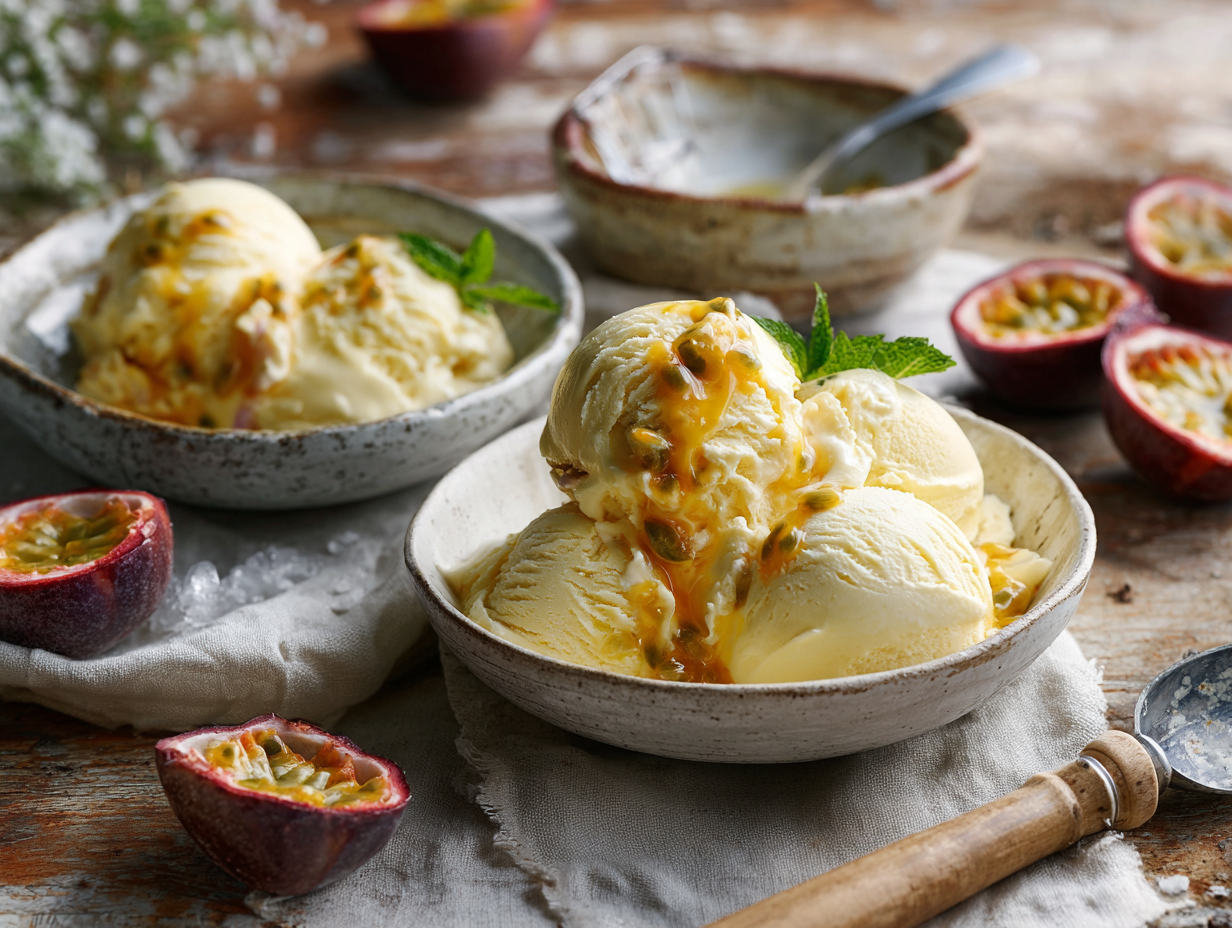
This is a custard-based passionfruit ice cream made with egg yolks, heavy cream, whole milk, and half a cup of passionfruit puree. The custard method takes a little more attention than a no-churn recipe, but it gives you a genuinely smooth, scoopable result that holds up in the freezer. If you can find good passionfruit puree — fresh or quality canned — this is one of the most straightforward ways to turn it into something worth serving.
What makes this version work
Two things matter most here. First, tempering the egg yolks properly: adding the hot cream mixture to the yolks slowly, while whisking constantly, is what keeps the eggs from scrambling. Rush it and you get sweet, lumpy eggs instead of a custard. Second, chilling the base completely before churning — at least 4 hours, overnight if you can manage it. A warm base churned too soon produces icy, grainy ice cream rather than a creamy one. The passionfruit puree goes in after cooking, not before, which protects its bright flavor from dulling under heat. Those three steps — careful tempering, full chilling, puree added off the heat — are what separate a good batch from a disappointing one.
Common problems and fixes
- Custard smells or tastes eggy: This usually means the heat was too high or the mixture wasn’t stirred constantly. Next time, keep the heat on low after returning the custard to the pan and stir continuously. Straining through a fine-mesh strainer helps catch any cooked egg bits, but it won’t fix a fully scrambled batch.
- Ice cream is icy or grainy after freezing: The base probably wasn’t cold enough before churning, or it sat in the freezer too long without an airtight seal. Transfer to a container with a tight lid and press a piece of plastic wrap directly onto the surface before sealing to reduce ice crystals.
- Passionfruit flavor is faint: Canned puree varies a lot in intensity. Taste it before you use it — if it’s mild, add an extra tablespoon or two. Skip the garnish of fresh seeds on top; not worth the extra dish, and the flavor is already in the ice cream.
- Ice cream is rock hard straight from the freezer: Pull it out and let it sit at room temperature for 8 to 10 minutes before scooping. The high cream content means it firms up more than store-bought. This is normal and not a sign anything went wrong.
- Custard curdled before reaching 170°F: The heat was too high. If you catch it early — small lumps just forming — strain it immediately through a fine-mesh strainer and whisk vigorously. If it’s fully curdled, the batch is best discarded and started again on lower heat.
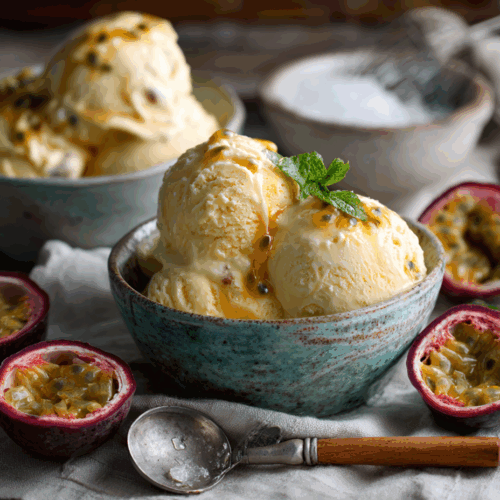
Passionfruit Ice Cream

Equipment
- Ice Cream Maker
- Medium saucepan
- Mixing Bowls
- Whisk
- Fine mesh strainer
Ingredients
- 2 cups heavy cream preferably organic
- 1 cup whole milk
- ¾ cup granulated sugar
- ¼ teaspoon salt
- 5 large egg yolks
- ½ cup passionfruit puree fresh or quality canned
- 1 teaspoon vanilla extract
Instructions
- In a medium saucepan over medium heat, combine the heavy cream, milk, sugar, and salt. Heat until the edges begin to bubble, but do not let it come to a boil, stirring occasionally to dissolve the sugar.
- In a mixing bowl, whisk the egg yolks until smooth. Gradually add the warm cream mixture to the yolks, whisking constantly to prevent the eggs from cooking.
- Return the mixture to the saucepan. Cook over low heat, stirring constantly, until the custard thickens and coats the back of a spoon, about 170°F (77°C).
- Remove from heat and strain through a fine-mesh strainer into a clean bowl to ensure a silky texture. Stir in the passionfruit puree and vanilla extract. Let the mixture cool to room temperature.
- Chill the mixture in the refrigerator for at least 4 hours, or overnight for maximum flavor infusion.
- Pour the chilled mixture into an ice cream maker and churn according to the manufacturer’s instructions, until it reaches a soft-serve consistency. Transfer the ice cream to an airtight container and freeze for at least an additional 2 hours to set fully.
Notes
- For a tangier flavor, add a teaspoon of fresh lime juice before churning.
- To create a layered effect, swirl in a passionfruit jam or coulis just before the final freeze.
Nutrition
Your questions, answered
Can I use fresh passionfruit instead of puree?
Yes, but you’ll need to strain out the seeds and pulp first to get a smooth result. Scoop the flesh from about 8 to 10 ripe passionfruits, press it through a fine-mesh strainer, and measure out half a cup of the strained juice — that’s your puree.
Do I really need an ice cream maker?
For this recipe, yes — the churning step is what gives it a creamy texture rather than a solid, icy block. A no-churn method would require a different recipe built around whipped cream or sweetened condensed milk, which would change the flavor and texture significantly.
How do I know when the custard is thick enough if I don’t have a thermometer?
Dip a spoon into the custard and run your finger across the back of it — if the line stays clean and doesn’t fill in, the custard is ready. A thermometer is more reliable, but the spoon test works well as a backup check.
What to bake next
- Tropical Coconut Cardamom Ice Cream
- Honeycomb Ice Cream
- Tropical Bliss Toasted Coconut Custard Pie
- Elegant Strawberry Champagne Sorbet