

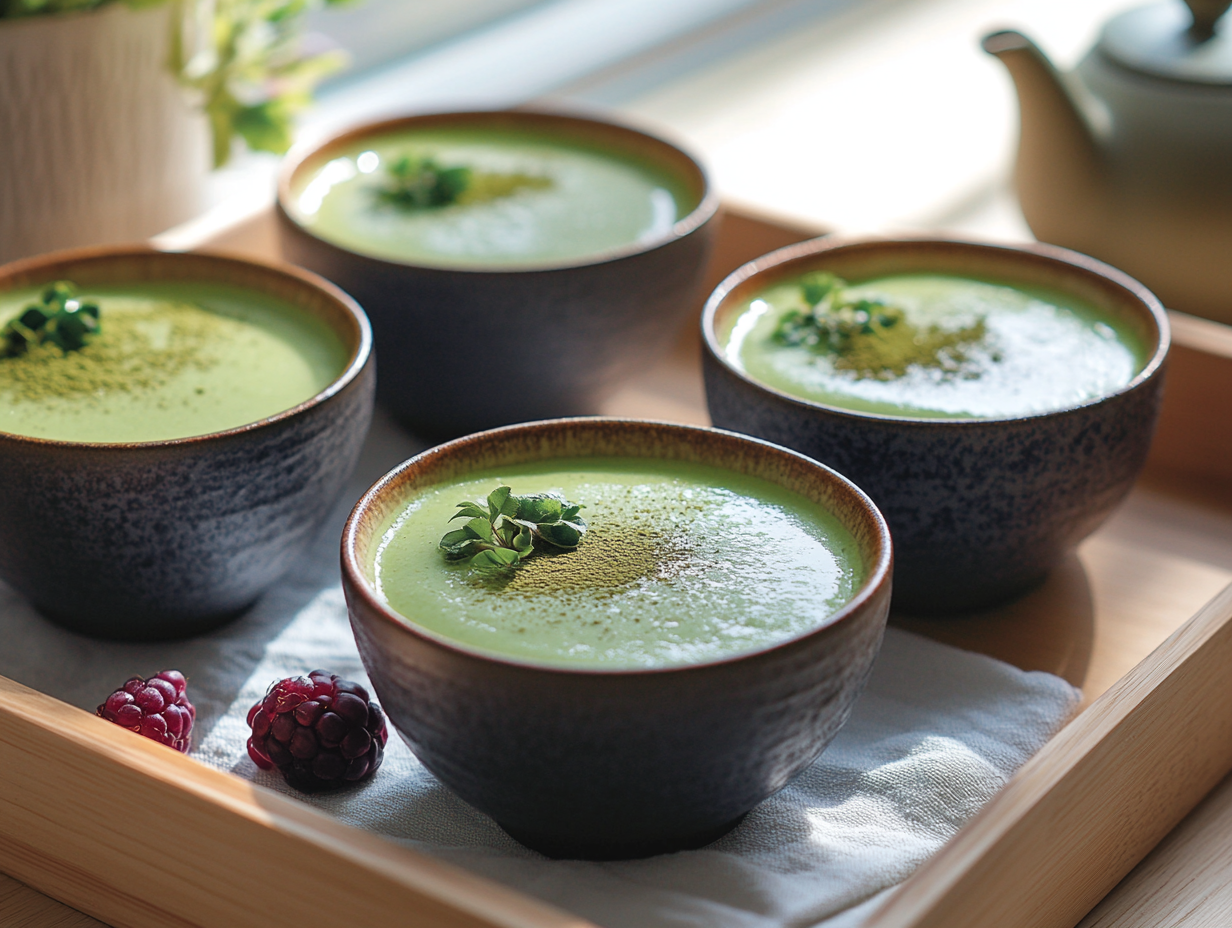
Matcha pudding is a stovetop milk pudding set with cornstarch — smooth, lightly sweet, and distinctly earthy from green tea powder. It takes about 30 minutes of active work, then the fridge does the rest. If you want a make-ahead dessert that looks clean in individual cups and holds its shape when covered and transported, this is a genuinely practical choice.
Substitutions that actually work
- Matcha grade matters more than brand. Ceremonial-grade matcha gives you a brighter green color and a smoother, less bitter flavor. Culinary-grade works but can taste sharper and may dull the color slightly.
- Cornstarch vs. other thickeners: Cornstarch gives a soft, spoonable set. Agar-agar (about 1 teaspoon powder) produces a firmer, sliceable result that unmolds cleanly — useful if you want to turn the pudding out of a mold rather than serve it in the cup.
- Dairy-free swap: Full-fat coconut milk is the most reliable substitute — it has enough fat to keep the texture creamy. Oat milk also works but produces a slightly looser pudding; reduce it by about 2 tablespoons or add an extra half-teaspoon of cornstarch to compensate.
What makes this version work
Two things actually matter here. First, whisking the matcha into a smooth paste with warm water before it touches the milk prevents dry clumps that no amount of later stirring will fully break up — once matcha seizes in hot milk, it stays lumpy. Second, straining the finished pudding through a fine-mesh strainer isn’t optional fussiness; it catches any starch skin that forms on the bottom of the pan and any matcha granules that escaped the paste stage. Those two steps are the difference between a pudding that looks polished in the cup and one that doesn’t.
What can go wrong
- Pudding doesn’t set firmly enough: This usually means the mixture didn’t get hot enough for the cornstarch to fully activate. It needs to reach a gentle boil and hold there for at least a minute while you stir. If it’s still loose after chilling, it can’t be fixed after the fact — reheat gently, whisk in a cornstarch slurry (1 teaspoon cornstarch dissolved in 1 tablespoon cold milk), bring back to a simmer, then re-chill.
- Skin forms on top during chilling: Press a piece of plastic wrap directly onto the surface of the pudding before refrigerating. This is especially important if you’re covering cups to transport them — a skin makes the surface look uneven when you peel the wrap off.
- Color turns dull or yellowish: Prolonged high heat degrades the chlorophyll in matcha. Keep the heat low once the matcha goes in and don’t let it boil again after that point.
- Grainy or gritty texture: Usually caused by undissolved sugar rather than matcha. Make sure the sugar is fully dissolved before you add the matcha paste — stir the milk and sugar mixture over medium heat until you can no longer feel any graininess when you rub a drop between your fingers.
- Pudding weeps liquid after a day or two: This is syneresis — normal with cornstarch-set puddings after about 48 hours. Serve within two days for the cleanest texture, and keep cups sealed until serving.
Keeping it fresh
Covered tightly in the fridge, individual cups keep well for up to two days — after that, the texture starts to weep slightly and the matcha color fades. For gifting or making ahead, pour the pudding into small jars with lids while it’s still warm, let it cool uncovered to room temperature, then seal and refrigerate. The jars travel well and look presentable without any extra packaging. Skip the garnish until just before serving — not worth the extra dish, and fresh berries or a dusting of matcha on top don’t survive more than an hour in the fridge anyway. This pudding does not freeze well; the cornstarch breaks down and the texture turns grainy on thawing.
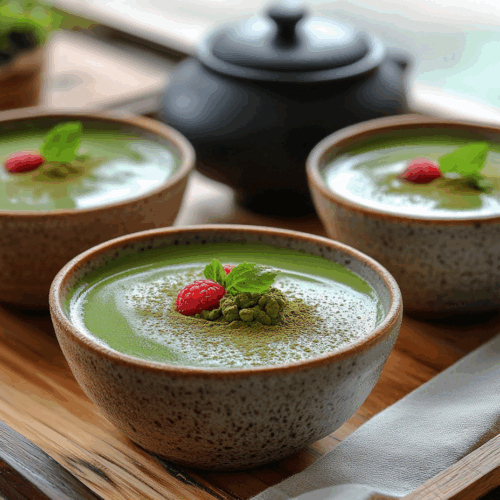
Matcha Pudding
Equipment
- Saucepan
- Whisk
- Mixing Bowl
- Strainer
- Serving bowls
Ingredients
- 2 tablespoons matcha powder look for high-quality ceremonial grade if possible
- 3 cups whole milk organic for a richer flavor
- ½ cup granulated sugar
- 1 tablespoon cornstarch for thickening
- 1 teaspoon vanilla extract pure vanilla enhances the matcha's flavor
Instructions
- In a small bowl, combine the matcha powder with a few tablespoons of warm water. Whisk until smooth and free of lumps.
- In a saucepan over medium heat, combine the milk, sugar, and cornstarch. Stir continuously until the sugar dissolves and the mixture begins to thicken, approximately 5-7 minutes.
- Reduce the heat to low, then whisk in the prepared matcha mixture and vanilla extract. Continue to cook for an additional 3 minutes, ensuring the mixture remains smooth.
- Strain the pudding through a fine mesh strainer into a mixing bowl to remove any clumps. This ensures a silky pudding texture.
- Divide the strained pudding into serving bowls and let it cool to room temperature. Once cooled, refrigerate for at least 2 hours before serving.
Notes
- For a dairy-free version, substitute whole milk with almond or coconut milk, but note the taste and texture may vary slightly.
- Enhance your pudding by garnishing with a dusting of matcha or fresh berries.
Nutrition
Common questions
Can I make this pudding the night before?
Yes — it’s actually better made the night before. It needs at least two hours to set, and overnight chilling gives it a firmer, cleaner texture. Just keep the cups sealed with plastic wrap pressed to the surface until you’re ready to serve.
What’s the difference between ceremonial and culinary matcha, and does it matter here?
Ceremonial-grade matcha is finer, greener, and less bitter — it gives the pudding a more vibrant color and a smoother flavor. Culinary-grade is cheaper and works fine, but the pudding may taste slightly more astringent and look a duller green.
My pudding has lumps even after straining. What happened?
The most common cause is adding matcha powder directly to hot milk instead of making a paste first. Matcha clumps on contact with hot liquid and those clumps are very hard to break down. Always whisk the matcha with a small amount of warm water until completely smooth before combining it with the milk mixture.
Can I use a different sweetener instead of granulated sugar?
Honey works but add it off the heat — boiling honey can introduce a slightly bitter note. Maple syrup also works and pairs well with matcha’s earthiness, though it will shift the color slightly toward brown. Use the same quantity by volume as the sugar.
How do I know when the pudding is thick enough on the stove?
It should coat the back of a spoon thickly enough that a line drawn through it with your finger holds its shape. Keep in mind it will firm up considerably more as it chills, so don’t wait for it to look fully set in the pan.
Can I double the recipe for a larger batch?
Yes, it scales up reliably. Use a wider saucepan so the mixture heats evenly and stir continuously — a larger volume takes longer to come to temperature and is more prone to scorching on the bottom if left unattended.
Try these next
- Elegant White Chocolate Matcha Brownies
- Black Tea Panna Cotta
- Lavender Honey Panna Cotta
- Creamy Cardamom Pistachio Rice Pudding