

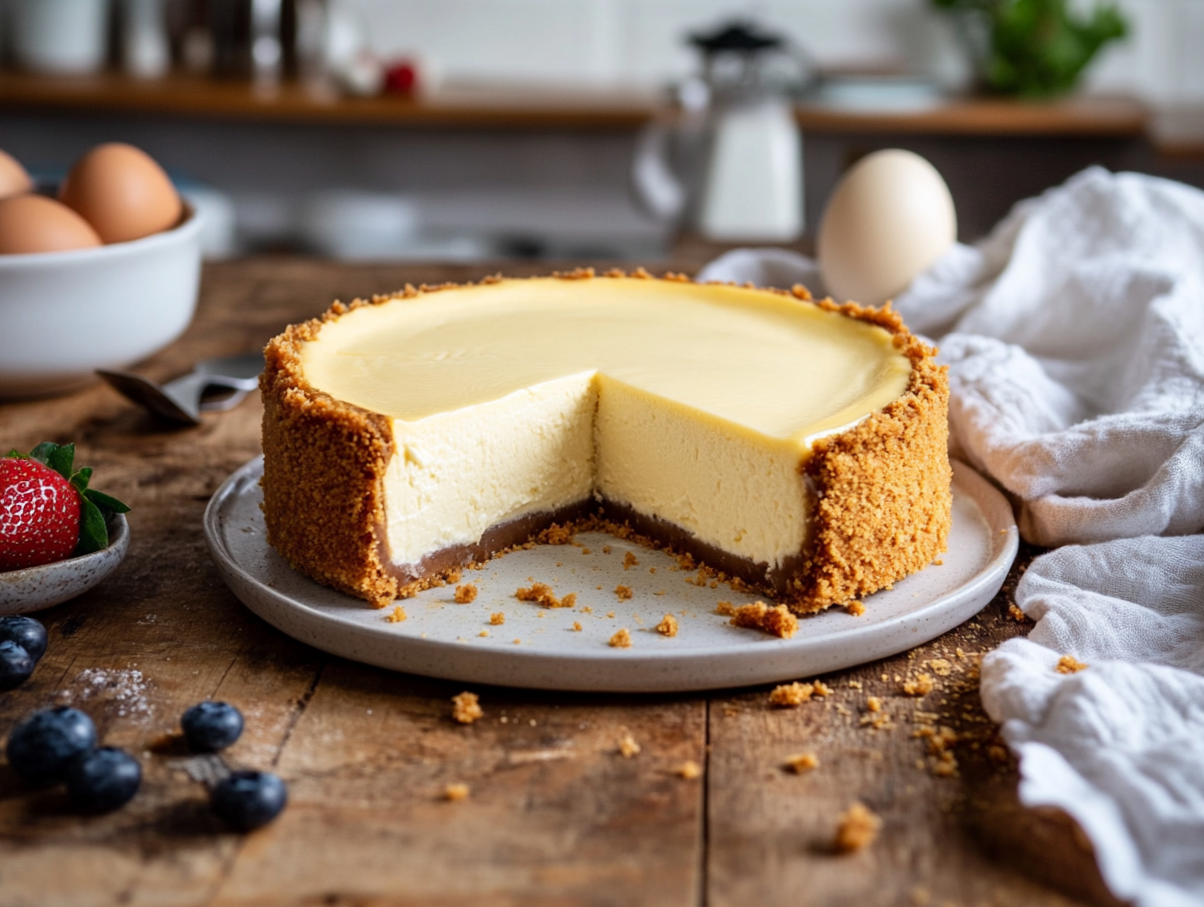
This is a classic New York-style cheesecake: dense, creamy, and built on a buttery graham cracker crust. It uses 32 ounces of cream cheese, which gives it the thick, rich texture that sets it apart from lighter baked cheesecakes. If you need a dessert that slices cleanly, travels well, and pleases almost everyone at a table, this is the one to make.
What makes this version work
Two things matter most here. First, the water bath: surrounding the springform pan with boiling water keeps the oven environment humid and the heat gentle, which is what produces that smooth, crack-free surface and even texture all the way through. Second, the slow cool-down in a turned-off oven with the door ajar — this prevents the sudden temperature drop that causes the filling to contract and split. Skip either step and you can still get a good-tasting cheesecake, but the texture and appearance will suffer. Both steps add time, not skill, so they’re worth doing every time.
Mistakes to avoid
- Foil that leaks: A single layer of foil around the springform pan is often not enough. Use two layers, or wrap tightly with heavy-duty foil. Water seeping into the crust is the most common reason for a soggy bottom.
- Overmixing after adding the eggs: Once the eggs go in, mix on low and stop as soon as each one is incorporated. Overmixing at this stage adds too much air, which causes puffing and then cracking as the cheesecake cools.
- Cutting before it’s fully chilled: Four hours in the fridge is the minimum; overnight is better. A cheesecake that hasn’t fully set will smear when sliced rather than cutting into clean portions — a real problem if you’re serving a crowd.
- Running a knife around the edge too late: Run a thin knife or offset spatula around the inside edge of the springform pan as soon as it comes out of the oven. If you wait until it’s cool, the filling may have already pulled away unevenly and cracked.
- Cold cream cheese: The recipe notes this, but it’s worth repeating because it’s the most skipped step. Cold cream cheese will leave lumps no matter how long you beat it, and those lumps don’t disappear in the oven.
Ingredient notes
Full-fat block cream cheese is non-negotiable — the kind sold in 8-ounce bricks, not whipped cream cheese in a tub, which has too much air and water. For the sour cream, full-fat works best; reduced-fat versions can make the filling slightly looser. If you’re buying graham crackers to crush yourself, about 10–12 full sheets gets you to 1½ cups of crumbs — skip the garnish and any flavored graham varieties, since plain ones give you the most neutral, balanced crust. Vanilla extract can be swapped for vanilla bean paste at a 1:1 ratio if you want visible specks in the filling, but it won’t change the flavor enough to justify the cost difference for a large batch.
Storage and make-ahead
This cheesecake keeps well in the refrigerator for up to 5 days, covered tightly with plastic wrap or stored in an airtight container. It also freezes beautifully, which makes it a strong choice when you’re baking ahead for an event: freeze the whole cheesecake or individual slices on a baking sheet until solid, then wrap each piece in plastic wrap and place in a zip-top freezer bag for up to 2 months. Thaw overnight in the refrigerator — never at room temperature, which can make the texture weepy. For parties or bake sales, baking it 1–2 days ahead actually improves the texture, since the filling firms up and the flavors settle as it chills.
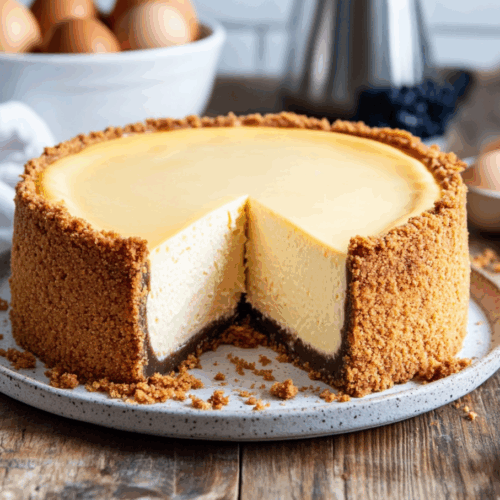
Classic New York Cheesecake

Equipment
- 9-inch Springform Pan
- Large Mixing Bowl
- Electric Mixer
- Medium saucepan
- Spatula
- Aluminum foil
Ingredients
For the Crust:
- 1 ½ cups graham cracker crumbs about 10-12 full sheet graham crackers
- ¼ cup granulated sugar
- ½ cup butter melted
For the Filling:
- 32 ounces cream cheese room temperature
- 1 ¼ cups granulated sugar
- ½ cup sour cream
- 1 tbsp vanilla extract
- 4 large eggs room temperature
Instructions
- Preheat your oven to 325°F (163°C). Wrap the outside of a 9-inch springform pan with aluminum foil to prevent leaks.
- In a large mixing bowl, combine the graham cracker crumbs, 1/4 cup of sugar, and melted butter. Mix until well combined and press the mixture into the bottom of the prepared pan to form an even crust.
- In a large bowl, using an electric mixer, beat the cream cheese on medium speed until smooth. Gradually add 1 1/4 cups of sugar, and continue beating until the mixture is creamy and light.
- Add the sour cream and vanilla extract to the cream cheese mixture, beating until well combined. Add the eggs one at a time, mixing on low speed after each addition until just blended.
- Pour the filling over the crust in the springform pan, spreading it evenly with a spatula.
- Place the springform pan into a larger pan and fill the larger pan with boiling water to reach halfway up the sides of the springform pan, creating a water bath for the cheesecake.
- Bake in the preheated oven for approximately 70-90 minutes, or until the center is set and a slight jiggle remains.
- Turn off the oven and leave the cheesecake inside with the door slightly ajar for another hour. This helps prevent cracking.
- Remove the cheesecake from the oven and water bath, and let it cool to room temperature. Refrigerate for at least 4 hours or overnight before serving.
Notes
- For best results, ensure all your ingredients are at room temperature before beginning.
- For a flavor twist, consider adding a strawberry or blueberry topping just before serving.
Nutrition
Frequently asked questions
Can I make this cheesecake without a springform pan?
You can, but it’s difficult to serve neatly. A deep 9-inch cake pan lined with parchment will work in a pinch, though you’ll need to scoop portions rather than slice clean wedges — fine for a casual setting, not ideal if presentation matters.
How do I know when the cheesecake is done baking?
The edges should look set and slightly puffed, while the center 2–3 inches should still have a gentle wobble when you nudge the pan. An instant-read thermometer inserted in the center reading 150–155°F is the most reliable check if you’re unsure.
My cheesecake cracked. Can I fix it?
A cracked cheesecake tastes exactly the same. If appearance matters, press the crack gently closed while the cheesecake is still slightly warm, then cover the surface with a layer of fresh berries or a simple sour cream topping before serving — skip the garnish if you’re boxing individual slices, since it’s not worth the extra step.
Can I double this recipe to make two cheesecakes at once?
Yes — simply make two separate batches of filling and crust rather than doubling into one bowl, which can be hard to mix evenly with a standard mixer. Bake both pans in the same water bath if your oven and roasting pan are large enough, or bake them sequentially.
Do I have to use a water bath, or can I just bake it directly?
You can skip the water bath, but expect a denser texture and a higher chance of cracking on the surface. Baking directly at 325°F still produces an edible cheesecake; it just won’t have the same smooth, even consistency that makes this style distinctive.
What to bake next
- Sweet Italian Ricotta Honey Cheesecake
- Burnt Basque Cheesecake
- Almond Joy Cheesecake Bars
- Pistachio Honey Baklava Cheesecake