

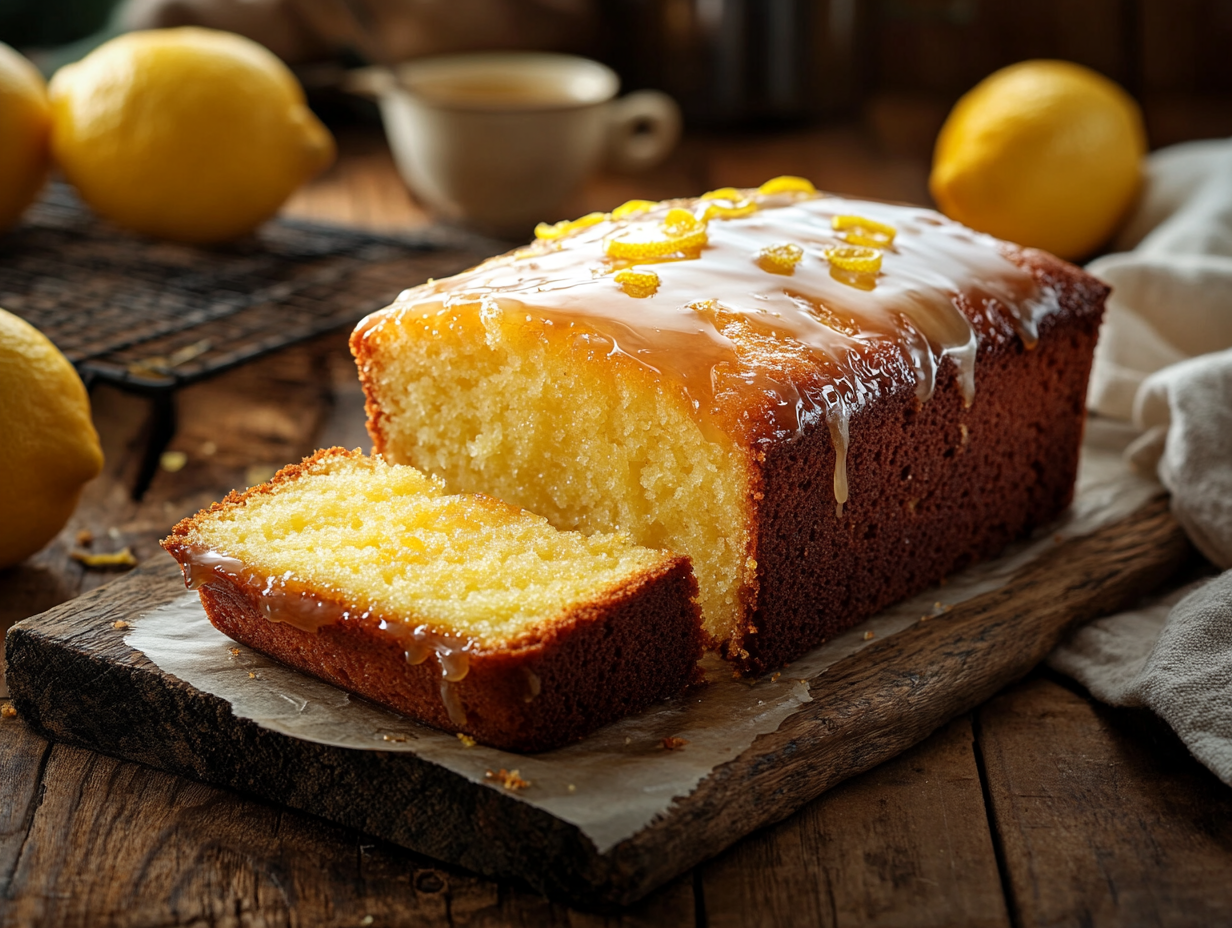
Lemon drizzle cake is a British loaf cake with a soft, buttery crumb and a sharp lemon-sugar glaze that soaks in while the cake is still warm, leaving a lightly crisp top. It takes about an hour start to finish, uses ingredients you likely already have, and slices cleanly — which makes it one of the most reliable bakes to produce in quantity. If you need something that travels well, holds up for a couple of days, and pleases a wide crowd, this is a strong choice.
What makes this version work
Two things matter most here. First, the glaze goes on while the cake is still warm and freshly skewered — not hot out of the oven, but warm enough that the sponge is still open and will draw the syrup down into the holes rather than letting it pool on the surface. Give it exactly 10 minutes in the pan before you move it, then glaze immediately. Second, creaming the butter and sugar until the mixture is genuinely pale — not just combined — builds the air structure that keeps the crumb tender rather than dense. An electric mixer makes this easy, but if you’re mixing by hand, plan for a solid 4 to 5 minutes of real effort. Both steps are quick, but skipping or rushing either one shows up in the finished cake.
Common problems and fixes
- Glaze sits on top instead of soaking in: The holes weren’t deep enough or the cake had cooled too much. Use a skewer all the way to the bottom of the loaf, and pour the glaze slowly in stages rather than all at once.
- Cake sinks in the middle: The batter was overmixed after the flour went in, or the oven door was opened too early. Add flour just until no dry streaks remain, and don’t open the oven before the 35-minute mark.
- Rubbery texture: Usually means the eggs or milk were cold when they went in. Cold liquid causes the batter to curdle slightly, which tightens the crumb. Room-temperature dairy makes a real difference.
- Pale, thick top crust with no crunch: The glaze sugar didn’t have enough lemon juice to dissolve fully, or the ratio was off. Stick to equal parts by volume — ¼ cup juice to ¼ cup sugar — and heat gently just until the sugar dissolves before pouring.
- Loaf sticks to the pan: Butter alone can be unreliable with a sticky glaze. Line the pan with parchment and leave an overhang on the long sides so you can lift the cake out cleanly — especially useful when baking multiple loaves.
Ingredient notes
Use unwaxed lemons if you can find them; the zest from waxed lemons can taste slightly bitter and the wax doesn’t wash off completely. Organic lemons are usually unwaxed — check the label. Whole milk gives a slightly richer crumb than lower-fat alternatives, but 2% works fine. If you’re scaling this recipe up for a larger batch, weigh your flour rather than scooping — a packed cup of all-purpose flour can add 20% more than intended, which throws off the texture across multiple loaves. Skip any powdered sugar glaze as a finishing garnish on top of the drizzle — not worth the extra dish, and it muddies the clean lemon flavor.
Storage and freezing
Once fully cooled and glazed, the cake keeps well at room temperature in an airtight container for up to 3 days — the crumb actually improves slightly on day two as the glaze continues to hydrate it. Refrigerating is not recommended; it dries the sponge out faster than leaving it at room temperature. For longer storage, freeze the unglazed loaf tightly wrapped in plastic and then foil for up to 2 months. Thaw at room temperature for 2 to 3 hours, then warm it briefly in a 300°F oven for 8 minutes before applying the glaze fresh — this gives you the same soaking effect as baking day. If you’re baking ahead for an event, the unglazed loaves freeze particularly well in batches, and glazing them the morning of keeps everything tasting freshly made.
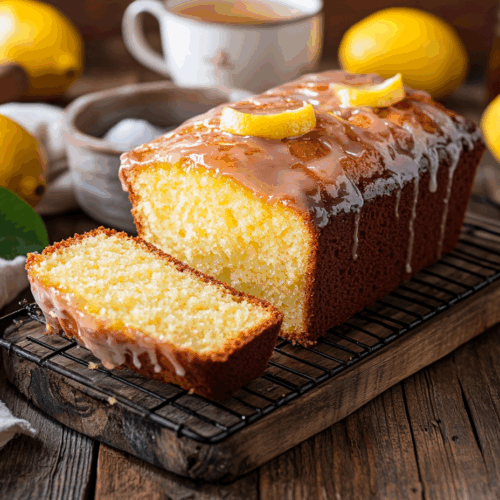
Lemon Drizzle Cake

Equipment
- Mixing Bowls
- Electric Mixer
- 9-inch loaf pan
- Zester
- Sifter
- Cooling Rack
Ingredients
For the Cake Base:
- ½ cup unsalted butter softened to room temperature
- 1 cup granulated sugar
- 2 large eggs at room temperature
- 1 cup all-purpose flour
- 1 ½ teaspoons baking powder
- ½ cup milk whole milk preferred
- 1 tablespoon lemon zest from organic, unwaxed lemons
For the Lemon Glaze:
- ¼ cup lemon juice freshly squeezed
- ¼ cup granulated sugar
Instructions
- Preheat your oven to 350°F (175°C). Grease a 9-inch loaf pan with butter or line it with parchment paper for easier removal.
- In a mixing bowl, cream the butter and sugar until light and fluffy. The mixture should become pale in color.
- Beat in the eggs one at a time, ensuring each is fully incorporated before adding the next.
- Sift together the flour and baking powder, then add it to the wet ingredients alternately with the milk, starting and ending with the flour. Stir in the lemon zest.
- Pour the batter into the prepared loaf pan, smoothing the top with a spatula. Bake for 45 minutes, or until a toothpick inserted into the center comes out clean.
- While the cake is baking, prepare the glaze by gently heating the lemon juice and sugar in a saucepan until the sugar has dissolved. Do not let it boil.
- Once the cake is done, allow it to cool in the pan for about 10 minutes before transferring it to a cooling rack. While the cake is still warm, use a skewer to poke holes all over the top, then slowly pour the lemon glaze over, allowing it to soak in.
Notes
Lori’s Tips:
- For a more intense lemon flavor, use Meyer lemons for their aromatic zest and juice.
- If a lighter cake is desired, use a combination of cake flour and all-purpose flour.
- This cake pairs beautifully with a dollop of whipped cream or a scoop of vanilla ice cream.
Nutrition
Frequently asked questions
Can I double or triple this recipe to make multiple loaves?
Yes, this recipe scales up reliably. Mix each double batch separately rather than combining everything into one giant bowl — overfilling a stand mixer bowl makes it harder to cream the butter properly, and the batter can deflate.
Can I use bottled lemon juice instead of fresh?
Fresh juice is strongly preferred for both the batter and the glaze. Bottled lemon juice is more acidic and lacks the aromatic compounds that make the glaze taste bright rather than sharp.
My batter looks curdled after I add the eggs — is it ruined?
No, it will usually come back together once you add the flour. To prevent it next time, add the eggs more slowly and make sure both the butter mixture and eggs are at room temperature before you start.
Can I bake this in a round or square pan instead of a loaf pan?
Yes, but reduce the bake time. An 8-inch round or square pan will bake in roughly 30 to 35 minutes at the same temperature — start checking at 28 minutes with a toothpick.
How do I know the glaze sugar has dissolved enough before pouring?
Tilt the saucepan — if you can see gritty sugar crystals moving around in the liquid, keep heating. The mixture should look clear and feel smooth when you rub a drop between your fingers.
Can I make the glaze ahead of time and store it?
Yes, up to 24 hours in a sealed jar in the fridge. Give it a quick stir before using, and if the sugar has recrystallized, warm it gently in a small saucepan for a minute before pouring.
What to bake next
- Zesty White Chocolate Lemon Truffles
- Zesty Mediterranean Lemon Yogurt Loaf with Syrup
- Mediterranean Sunshine Lemon Crumble Bars
- Pistachio Raspberry Loaf Cake