


Lemon drizzle cake is a British loaf cake where a hot lemon-sugar syrup gets poured over the warm crumb right out of the oven, soaking in and leaving a lightly crisp, sugary top as it cools. It takes about 70 minutes start to finish, slices cleanly, and stays moist for several days — which makes it one of the more practical cakes you can bake. If you need something that travels well and holds up without refrigeration, this is a reliable choice.
The short version of why this works
Two things make this cake what it is. First, beating the butter and caster sugar until genuinely pale and fluffy — not just combined — builds the airy crumb that absorbs the syrup without turning soggy. Second, the syrup goes on while the cake is still warm and in the tin. That timing matters: a hot cake pulls the liquid in rather than letting it pool on the surface. The result is a moist interior and a slightly crunchy top, and you get both only if you don’t wait too long after pulling it from the oven.
Common problems and fixes
- Syrup sits on top instead of soaking in: The cake cooled too much before you poured. Pierce the holes while the cake is still hot and pour immediately — the syrup should visibly absorb within a minute or two.
- Dense, heavy crumb: This usually means the butter and sugar weren’t beaten long enough, or the eggs were cold and caused the batter to curdle. Both butter and eggs should be at room temperature before you start. If the batter does look curdled after adding eggs, fold in a tablespoon of the measured flour before continuing.
- Cake sinks in the middle: The oven door was opened too early, or the baking powder was old. Don’t open the oven before 40 minutes, and check your baking powder — if it’s been open more than six months, replace it.
- Pale, gummy top after cooling: The syrup was over-reduced before pouring, making it too thick to soak in evenly. Heat it only until the sugar dissolves — skip the garnish of extra sugar on top, not worth the extra dish — and pour it while still fluid.
- Weak lemon flavor: Bottled lemon juice won’t give you the same result. Use fresh lemons and make sure you’re getting the zest from the outer layer only; the white pith underneath is bitter and dulls the flavor.
Storage and make-ahead
Wrapped tightly in cling film or stored in an airtight tin at room temperature, this cake keeps well for up to four days — the crumb actually improves on day two once the syrup has fully settled. Avoid the fridge; it dries the sponge out faster than leaving it at room temperature. For longer storage, freeze the unglazed loaf (before the syrup step) wrapped in two layers of cling film and a layer of foil for up to three months. Thaw at room temperature, then warm it briefly in a low oven and apply the syrup fresh — you’ll get the same result as baking day. If you’re packaging it as a gift, wrap the fully cooled, syrup-soaked loaf in parchment, then cling film, and it will hold its texture for two to three days without any container needed.
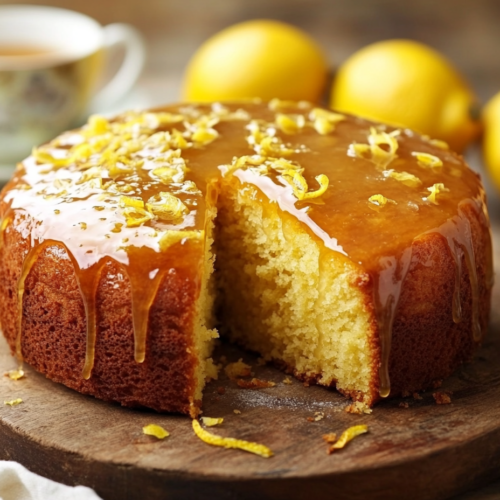
Lemon Drizzle Cake

Equipment
- 1 Mixing Bowls
- 1 Electric Mixer
- 1 Loaf tin
- 1 wire rack
Ingredients
Lemon Drizzle Cake Ingredients
- 1 cup unsalted butter softened to room temperature
- 1 cup caster sugar
- 4 large eggs at room temperature
- 1 ½ cups all-purpose flour sifted
- 1 teaspoon baking powder
- ¼ cup whole milk room temperature
- 2 pcs lemons zested and juiced
Lemon Syrup
- ½ cup granulated sugar
- ¼ cup fresh lemon juice
Instructions
- Preheat oven to 180°C (350°F). Grease and line a loaf tin with baking paper.
- In a large bowl, beat the softened butter and caster sugar with an electric mixer until pale and fluffy.
- Add the eggs one at a time, mixing well after each addition.
- Gently fold in the sifted flour and baking powder, followed by the milk, lemon zest, and juice.
- Pour the mixture into the prepared loaf tin and smooth the top with a spatula.
- Bake for 45-50 minutes until a skewer inserted into the center comes out clean.
- While the cake is baking, prepare the lemon syrup by heating granulated sugar and lemon juice in a saucepan over low heat until the sugar dissolves.
- Remove the cake from the oven. While still warm, pierce several holes into the cake and pour over the lemon syrup. Allow to cool in the tin before transferring to a wire rack.
Notes
Nutrition
FAQ
Can I use regular granulated sugar instead of caster sugar in the batter?
You can, but the texture will be slightly coarser. Caster sugar dissolves faster during creaming, which helps build a finer, more even crumb — if granulated is all you have, just cream the butter and sugar for an extra minute or two.
How do I know when the cake is actually done?
A skewer inserted into the center should come out clean, but also check that the edges have pulled away slightly from the tin and the top is a deep golden brown. If the top is browning too fast before the center is set, lay a loose piece of foil over it for the last 10 minutes.
Can I bake this in a round tin instead of a loaf tin?
Yes, an 8-inch round tin works. Reduce the baking time — start checking at 30 to 35 minutes since a shallower cake bakes faster. The syrup step stays the same.
Does the cake need to be refrigerated if I’m giving it as a gift?
No — refrigeration actually works against it by drying out the crumb. Wrapped well in parchment and cling film, it stays in good condition at room temperature for two to three days, which gives you a comfortable window for gifting.
Try these next
- Zesty Lemon Thyme Shortbread Bars
- Zesty Mediterranean Lemon Yogurt Loaf with Syrup
- Pistachio Raspberry Loaf Cake
- Pear and Almond Cake