

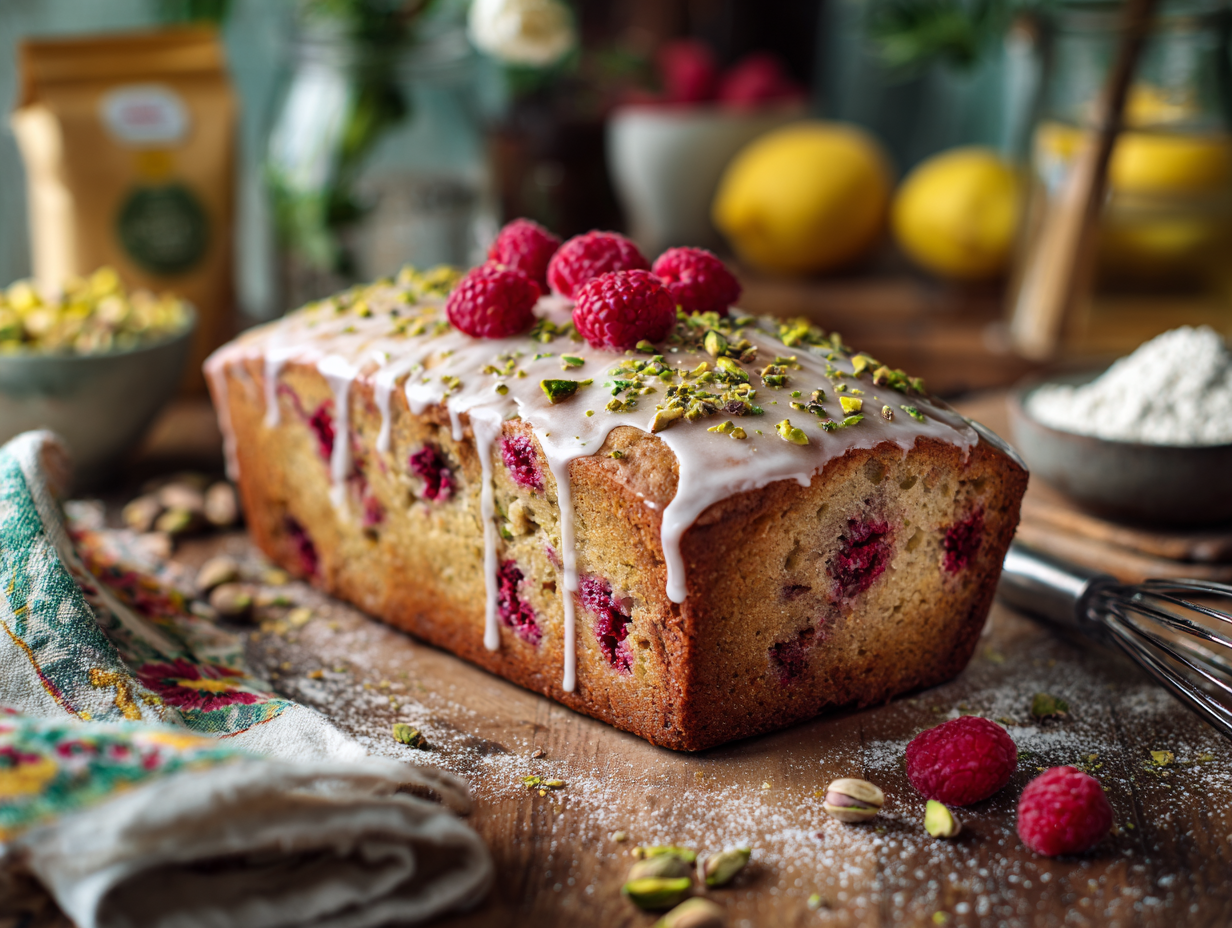
This pistachio raspberry loaf is a butter cake built around two ingredients that genuinely work together: the mild richness of chopped pistachios and the sharp pop of fresh raspberries. It bakes in about an hour, slices cleanly, and holds up well over a few days — which makes it one of the more practical things you can bake when you need something to give away. A simple lemon-powdered sugar glaze goes on at the end and sets firm enough to wrap without smearing.
Why this recipe works
Two things matter most here. First, the batter uses the creaming method — butter and sugar beaten until pale and fluffy before anything else goes in. That step builds air into the structure, which is what keeps a dense, nut-loaded loaf from turning into a brick. Second, the dry ingredients and milk are added alternately, starting and ending with flour. This keeps the gluten from overdeveloping and the batter from curdling when the liquid hits the fat. Get those two steps right and the crumb stays tender even after the pistachios and raspberries weigh it down.
Ingredient notes
- Raw shelled pistachios: Roasted and salted pistachios will throw off both the salt balance and the texture. Stick with raw. Chop them by hand rather than in a food processor — you want irregular pieces, not dust.
- Fresh raspberries: Frozen raspberries release too much water and will streak the batter purple. Fresh only, and make sure they are dry before folding in.
- Pistachio extract (glaze): Skip the garnish — not worth the extra dish. The extract in the glaze does more for pistachio flavor than any decoration would, and it is optional but genuinely noticeable if you use it.
- Powdered sugar for the glaze: Sift it before whisking. Unsifted sugar leaves lumps that won’t dissolve in two tablespoons of lemon juice.
Storage and make-ahead
Once the glaze has fully set — give it at least 45 minutes at room temperature — the loaf wraps well in plastic wrap and keeps at room temperature for up to 3 days without drying out. For gifting, wrap it tightly in plastic, then a layer of parchment or foil, and it travels cleanly. It also freezes well: wrap individual slices in plastic, seal in a zip bag, and freeze for up to 2 months. Thaw slices at room temperature for about an hour. If you want to bake ahead, the unglazed loaf freezes better than the glazed one — add the glaze after thawing.
Troubleshooting
- Raspberries all sank to the bottom: The batter was probably too thin, or the berries were wet. Make sure the butter and eggs are at room temperature so the batter emulsifies properly and holds the fruit in suspension. Dry the raspberries thoroughly before folding.
- Loaf is done on the outside but gummy in the middle: This usually means the oven ran hot and the outside set before the center cooked through. Use an oven thermometer — 325°F is lower than most ovens default to. Tent the top loosely with foil after 40 minutes if it is browning too fast.
- Glaze stayed sticky and never set: Too much lemon juice relative to sugar, or the cake was still warm when you glazed it. Let the loaf cool completely on the rack before glazing, and measure the lemon juice carefully.
- Cake stuck to the pan despite greasing: Parchment on the bottom and up the long sides is non-negotiable with a fruit-loaded batter. Grease the short ends of the pan where parchment doesn’t reach.
- Dense, flat loaf with no rise: Check the age of your baking powder — it loses potency after about 6 months. Test it by dropping a teaspoon into hot water; if it doesn’t bubble immediately, replace it.
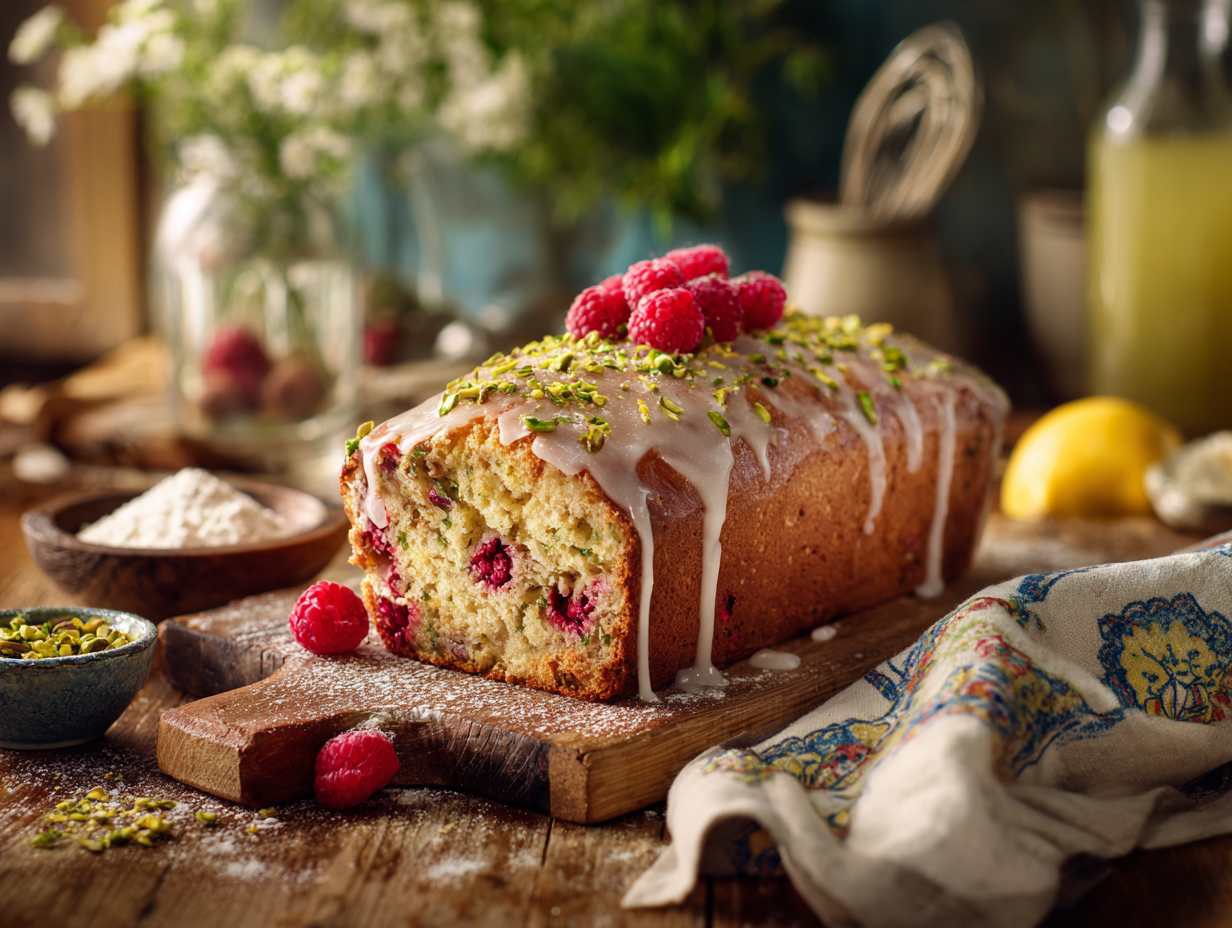
Pistachio Raspberry Loaf Cake

Equipment
- loaf pan
- Mixing Bowls
- Whisk
- Spatula
- Food Processor
Ingredients
For the Cake:
- 1 ½ cups all-purpose flour preferably unbleached
- 1 teaspoon baking powder ensure freshness
- ½ teaspoon salt
- 1 cup unsalted butter softened to room temperature
- ¾ cup granulated sugar
- 3 large eggs preferably free-range
- 1 teaspoon vanilla extract pure
- ½ cup whole milk room temperature
- ⅔ cup raw pistachios, shelled chopped
- 1 cup fresh raspberries washed and lightly dried
For the Glaze:
- 1 cup powdered sugar sifted
- 2 tablespoons fresh lemon juice
- 1 teaspoon pistachio extract optional for more flavor
Instructions
- Preheat your oven to 325°F (160°C). Grease a standard loaf pan and line it with parchment paper for easy removal.
- In a mixing bowl, whisk together the flour, baking powder, and salt. Set aside.
- In a separate bowl, cream the softened butter and granulated sugar until light and fluffy. The mixture should turn a pale yellow and increase in volume.
- Add eggs one at a time, beating well after each addition. Stir in vanilla extract.
- Alternately add the dry ingredients and milk to the wet ingredients, beginning and ending with the flour mixture. Mix until just combined.
- Gently fold in the chopped pistachios and raspberries, being careful not to smash the berries.
- Pour the batter into the prepared loaf pan, smoothing the top with a spatula.
- Bake for about 60 minutes or until a toothpick inserted into the center comes out clean. Let the cake cool in the pan for about 15 minutes, then transfer to a wire rack.
- For the glaze, whisk together the powdered sugar, lemon juice, and pistachio extract, if using, until smooth. Drizzle over the cooled cake.
Notes
Lori’s Tips:
- You can substitute almond flour for a portion of the all-purpose flour for a more pronounced nutty flavor.
- For a vegan version, use flax eggs and plant-based milk.
- Ensure raspberries are dry to prevent additional liquid in the batter.
- Garnishing Tips: Top with additional fresh raspberries and a sprinkle of chopped pistachios for an eye-catching presentation. For a touch of elegance, serve with a dollop of whipped cream infused with vanilla.
Nutrition
Your questions, answered
Can I use frozen raspberries instead of fresh?
No — frozen raspberries release too much liquid as they bake and will turn the batter purple and wet. Fresh raspberries, thoroughly dried after washing, are the only reliable option here.
Can I make this loaf a day or two before gifting it?
Yes, and it actually slices more cleanly on day two once the crumb has settled. Bake, cool completely, glaze, let the glaze set fully, then wrap tightly in plastic wrap and store at room temperature.
My batter looks curdled after I added the eggs — is it ruined?
Not at all. A slightly curdled-looking batter at the egg stage usually comes from cold eggs hitting room-temperature butter. It will come back together once you start adding the flour and milk alternately.
Can I double the recipe to make two loaves?
Yes. Mix in two separate bowls rather than one large one — a doubled batter is hard to fold evenly without overworking it. Bake both pans at the same time on the same oven rack if they fit, or expect the second pan to need a few extra minutes.
How do I know when the loaf is actually done?
A toothpick inserted into the center should come out clean or with a few dry crumbs — no wet batter. Because raspberries create moist pockets, test in two or three spots near the center to be sure.
Can I use salted butter if that’s all I have?
You can, but reduce the added salt to a pinch rather than the full half teaspoon. Salted butter varies by brand, so the loaf may taste slightly saltier than intended.
What to bake next
- Mediterranean Pistachio Cream Éclairs
- Delicate Pistachio Rose Shortbread
- Zesty Mediterranean Lemon Yogurt Loaf with Syrup
- Sweet and Tart Raspberry White Chocolate Scones