

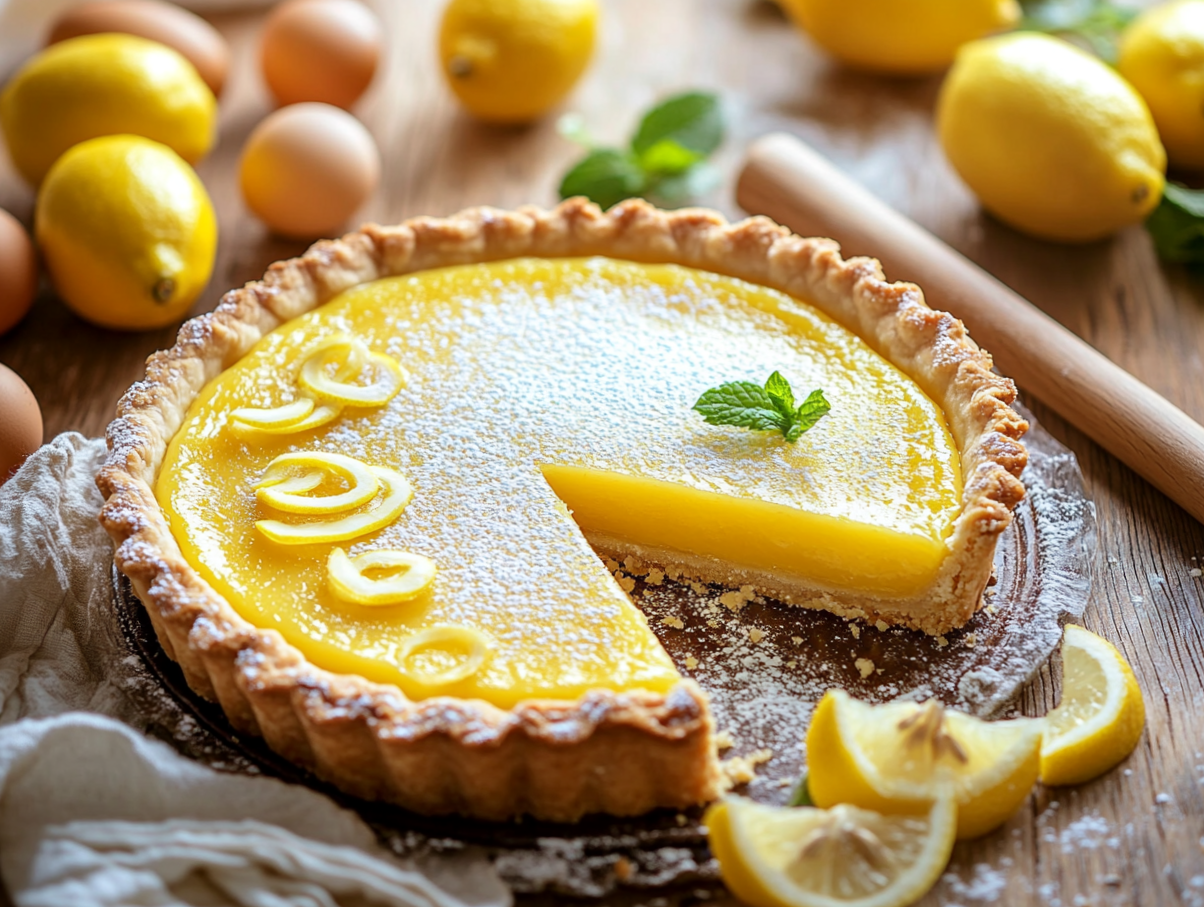
Tarte au Citron is a French lemon tart built on two components: a crisp, buttery shortcrust shell and a smooth, set lemon curd filling. It takes about 1 hour 15 minutes start to finish, serves 8, and comes in at around 399 calories per slice. The real reason to make it is that the filling is bright and sharp without being harsh — it tastes like a lot of effort but the technique is genuinely straightforward once you understand what you’re watching for.
The technique that matters
Two things decide whether this tart succeeds or disappoints. First, the lemon curd needs constant, patient whisking over medium heat — not high heat, not occasional stirring. Pull it off too early and it stays runny; let it scorch and you’ll taste egg. You’re looking for a curd that coats the back of a spoon and holds a clean line when you drag a finger through it, which takes about 8 minutes. Second, the dough must stay cold right up until it goes into the pan. Warm butter means the crust spreads and loses its structure during blind baking. If the dough softens while you’re rolling it, slide it onto a baking sheet and refrigerate it for 10 minutes before pressing it into the pan — that one pause makes a real difference to the final texture.
Substitutions that actually work
- Limes instead of lemons: A straight swap works well — use the same volume of juice (¾ cup) and zest. The flavor is sharper and slightly more floral. This is the tarte au citron vert variation noted in the recipe.
- Meyer lemons: If you can find them, Meyer lemons produce a noticeably sweeter, less acidic curd. You may want to reduce the sugar by 2 tablespoons to keep the balance right.
- Salted butter in the filling: Fine to use if that’s what you have — just skip any added salt elsewhere and taste as you go.
- Unbleached vs. bleached flour: Either works for the crust. Unbleached gives a very slightly nuttier flavor, but the difference is minor.
Common problems and fixes
- Filling cracks after baking: The oven was too hot or the tart baked too long. The center should still have a slight wobble when you pull it. Residual heat finishes the job as it cools.
- Curd is grainy or scrambled: The heat was too high and the eggs curdled. Keep the burner at medium and whisk continuously. If you catch it early, strain the curd through a fine-mesh sieve before pouring it into the shell.
- Crust shrinks badly during baking: The dough wasn’t chilled long enough after lining the pan, or it was stretched rather than pressed into the corners. Always let the lined pan rest in the fridge for 15 minutes before filling.
- Filling weeps or looks wet after slicing: The tart wasn’t cooled completely before cutting. It needs to reach room temperature, then ideally chill in the fridge for at least an hour before you slice it.
- Crust is soggy on the bottom: The filling was poured in while still very hot, or the tart underbaked. Let the curd cool to warm before filling the shell, and make sure the base looks set and dry before you remove it from the oven.
Storage and make-ahead
The baked tart keeps well in the fridge, covered loosely, for up to 3 days — the filling actually firms up nicely overnight and slices more cleanly on day two, which makes it a good candidate for baking the day before you need it. If you’re packaging slices as a gift, wrap each piece individually in parchment, then place in a rigid container; the curd is stable and won’t weep through the paper for several hours at room temperature. Skip the powdered sugar garnish if you’re gifting — it dissolves in transit and isn’t worth the extra step. The dough disk can be made up to 2 days ahead and kept wrapped in the fridge, or frozen for up to a month; thaw overnight in the fridge before rolling. The curd can also be made a day ahead and stored in a sealed jar in the fridge — just give it a good stir before pouring it into the shell.
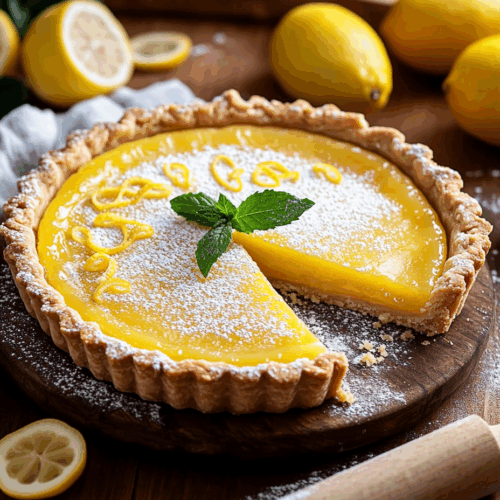
Tarte au Citron (Lemon Tart)

Equipment
- 9-inch tart pan
- Rolling pin
- Mixing Bowl
- Whisk
- Saucepan
- Oven
Ingredients
For the Tart Dough:
- 1 ¼ cups all-purpose flour preferably unbleached
- ½ cup unsalted butter cold, cut into cubes
- ¼ cup granulated sugar
- 1 large egg beaten
For the Lemon Filling:
- ¾ cup freshly squeezed lemon juice approximately 4-5 lemons
- 1 cup granulated sugar
- 3 large eggs
- 2 large egg yolks
- ¼ cup unsalted butter cut into pieces
- 1 teaspoon lemon zest finely grated
Instructions
For the Tart Dough:
- In a mixing bowl, combine the flour and sugar. Add cold butter cubes and rub them into the flour using your fingertips until the mixture resembles a coarse meal.
- Add the beaten egg and mix until the dough just comes together. Form into a disk, wrap in plastic, and refrigerate for at least 30 minutes.
For the Lemon Filling:
- In a saucepan, combine lemon juice, sugar, eggs, and egg yolks. Whisk over medium heat until the mixture thickens and coats the back of a spoon, about 8 minutes.
- Remove from heat and add butter and lemon zest, stirring until smooth. Let it cool slightly.
Assembling the Tart:
- Preheat the oven to 350°F (175°C). Roll out the dough on a lightly floured surface to fit a 9-inch tart pan. Press into the pan and trim excess dough.
- Fill with the lemon mixture and bake for 25-30 minutes until the filling is set but still slightly wobbly in the center.
- Cool completely before serving, enhancing the tart's texture and flavor.
Notes
Tammy’s Tips:
- You may substitute limes to create a tarte au citron vert.
- Ensure the butter is cold when making the tart dough for a flaky crust.
- To save time, prepare the dough a day ahead and chill overnight.
Nutrition
Common questions
Do I need to blind bake the crust before adding the filling?
This recipe skips blind baking — the raw dough and filling go into the oven together. That works here because the filling sets relatively quickly at 350°F, but if you find your crust is consistently underdone on the bottom, blind bake it for 12 minutes with pie weights before adding the curd.
Can I use bottled lemon juice instead of fresh?
Fresh juice is strongly worth the effort here. Bottled juice is more acidic and lacks the volatile oils that give the curd its rounded flavor — the difference is noticeable in a filling this simple.
How do I know the lemon curd is thick enough before I pour it into the shell?
Dip a spoon and drag your finger across the back — the line should hold cleanly without the curd running back together. It will also look slightly glossy and feel noticeably heavier on the whisk than when you started.
My tart pan doesn’t have a removable bottom — will it still work?
It will bake fine, but getting clean slices out is harder. Grease the pan well and run a thin offset spatula around the edge before serving directly from the pan rather than trying to unmold it.
Can I freeze the finished tart?
You can freeze it, but the texture of the curd changes slightly on thawing — it can become a little grainy or weep some liquid. If you need to freeze it, wrap tightly and thaw slowly in the fridge overnight, then blot any surface moisture gently with a paper towel before serving.
What to bake next
- Mediterranean Sunshine Lemon Crumble Bars
- French Brown Butter Chocolate Tart
- Zesty Lemon Thyme Shortbread Bars
- Tropical Lime Bars with Toasted Coconut Crunch