

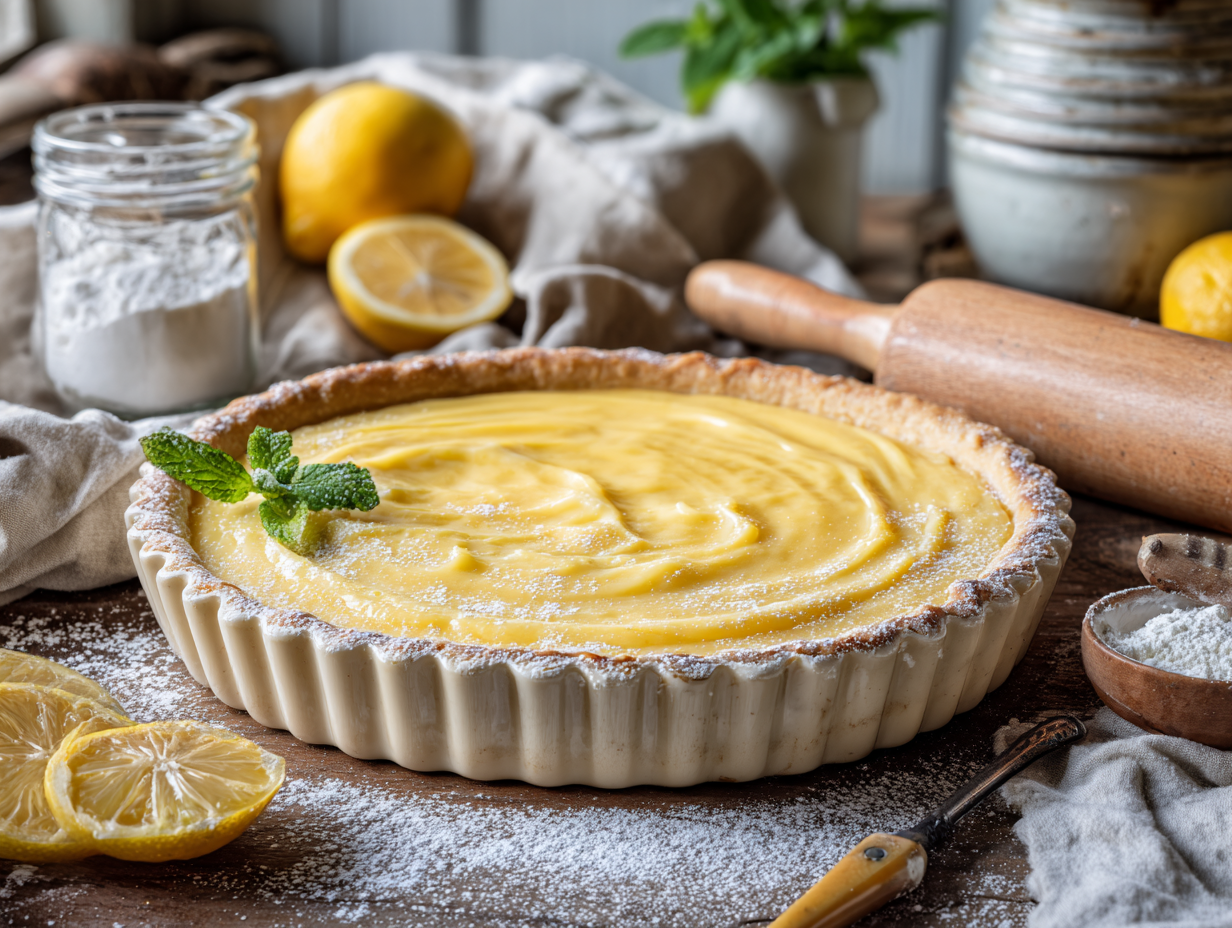
The French Lemon Tart, or tarte au citron as it’s known in its native Provence, is a luminous gem in the world of French pâtisserie. Fragrant, vibrant, and beautifully balanced, this dessert captures the essence of refinement with its sweet-yet-tart lemon custard nestled in a crisp, buttery pastry shell. Its simple ingredients—flour, butter, sugar, eggs, and lemons—belie the sophistication of the final result, which is celebrated both for its visual appeal and satisfying contrast of textures and flavors.
Tart citrus desserts have been a part of European culinary traditions since at least the medieval period, but it was in France—particularly in the southern regions like Provence and the Côte d’Azur—that the lemon tart began to take on its iconic form. The climate there, perfect for growing citrus, supplied aromatic, sun-ripened lemons that chefs used to create desserts meant to cleanse the palate and refresh the senses. Today, the tarte au citron remains a staple offering in patisseries across France, as common in a rustic countryside kitchen as it is in a high-end Parisian bakery.
What truly sets the French Lemon Tart apart is the harmony it maintains between its two essential components: the pâte sucrée and the lemon filling. The pâte sucrée, or sweet pastry dough, is a rich, tender crust made with butter and just a touch of sugar. Unlike many basic pie crusts that aim for flakiness, the pâte sucrée is more delicate and cookie-like, designed to give just beneath the pressure of a fork. This textural distinction complements the smoothness of the filling while providing a sturdy base that doesn’t become soggy under the moisture of the lemon curd.
The filling is where the magic lies—a custard made with fresh lemon juice, zest, eggs, and sugar, gently cooked to achieve a silky, yielding consistency. It’s tempered with just enough butter to add richness and shine, but the star remains the lemon. Its brightness and natural acidity are the heart and soul of the dessert, resulting in a tart that is at once indulgent and refreshingly light.
Modern adaptations, like the recipe provided, stay true to tradition while offering subtle enhancements. A suggested pinch of sea salt to deepen flavor, or swirls of lime juice for layered citrus complexity, give contemporary bakers permission to personalize. Additionally, using a tart pan with a removable bottom ensures sharp, clean edges—a visual hallmark of fine patisserie.
This tart is often served chilled, allowing the flavors to meld and intensify. It can stand alone as a refined finish to a multi-course meal or pair beautifully with a dollop of whipped cream, a sprinkle of powdered sugar, or fresh berries for added color and contrast.
Whether enjoyed in a sunlit café on the French Riviera or baked at home for a special occasion, the French Lemon Tart is more than a dessert—it’s an edible postcard from France, capturing the charm and elegance of one of the world’s most beloved culinary cultures.

French Lemon Tart

Equipment
- Tart pan
- Mixing Bowls
- Whisk
- Rolling pin
- Pastry brush
- Oven
Ingredients
For the Pastry Crust:
- 1 ½ cups all-purpose flour preferably organic
- ½ cup unsalted butter cold, cut into cubes
- ¼ cup granulated sugar
- 1 piece egg yolk
- 2 tablespoons cold water
For the Lemon Filling:
- ¾ cup freshly squeezed lemon juice about 3-4 lemons
- 1 tablespoon lemon zest grated finely
- ¾ cup granulated sugar
- 3 large eggs
- ¼ cup unsalted butter softened
Instructions
- Preheat the oven to 350°F (175°C).
- To make the pastry crust, combine flour, sugar, and butter in a bowl. Use a pastry cutter or your fingers until the mixture resembles coarse crumbs.
- Add the egg yolk and water, mixing until a dough forms. Knead lightly until smooth, wrap in plastic, and refrigerate for 30 minutes.
- Roll out the dough on a floured surface to fit the tart pan. Gently press into the pan, trim the edges, and line with parchment and pie weights.
- Bake the crust for 15 minutes, remove weights, and bake for another 5-7 minutes until golden.
- For the lemon filling, whisk together lemon juice, zest, sugar, and eggs in a saucepan over medium heat. Stir until thickened, about 10 minutes. Remove and stir in butter until melted.
- Pour the filling into the baked crust, smoothing the top. Bake for an additional 5-10 minutes until just set.
- Cool to room temperature, then refrigerate before serving.
Notes
- For an extra burst of flavor, try adding a pinch of sea salt to the filling.
- Feel free to substitute lime juice for a tart twist, or mix with lemon for a citrus blend.
- If you’re short on time, a store-bought pastry shell is a convenient alternative.