

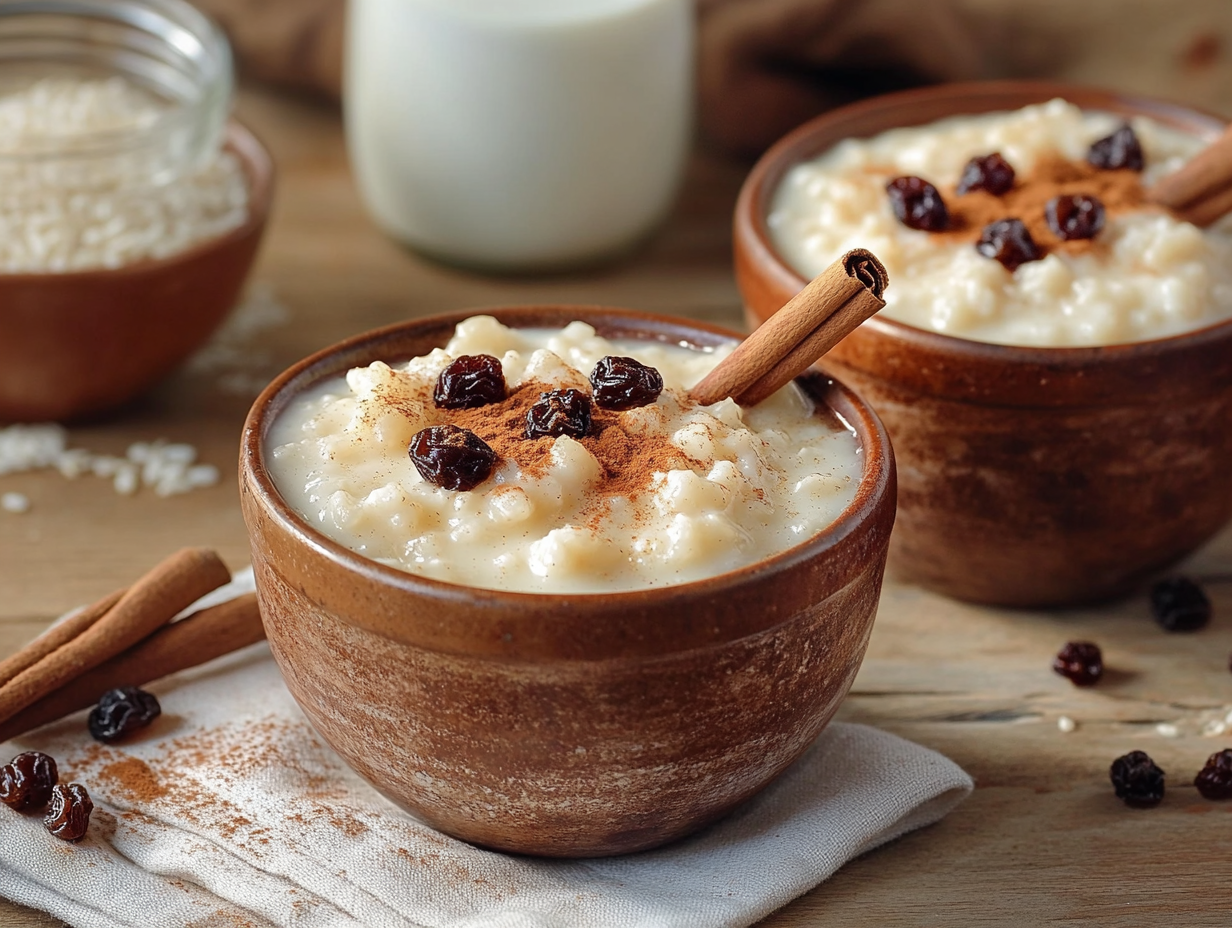
This is a stovetop rice pudding made with Arborio rice, whole milk, cinnamon, vanilla, and butter — ready in under an hour with no special equipment. It comes together in one saucepan, and the result is thick, creamy, and genuinely satisfying. If you want a homemade dessert that requires almost no skill and delivers every time, this is a good place to start.
What makes this version work
Two things matter here. First, the rice choice: Arborio is a short-grain rice that releases starch as it cooks, which is what gives the pudding its creamy texture without any cream or thickener. Long-grain rice won’t do the same job — the result will be thinner and less cohesive. Second, the heat level: you want a low, steady simmer for the full 35 minutes, not a rolling boil. High heat scorches the milk on the bottom of the pan before the rice is fully cooked. Keep the heat low, stir regularly, and the pudding thickens gradually and evenly. That’s really all there is to it.
Common problems and fixes
- Pudding is grainy or the milk has curdled: The heat was too high. Whole milk can scorch and separate if it boils hard. Start over on lower heat, or next time use a heavy-bottomed saucepan which distributes heat more evenly and gives you more margin for error.
- Rice is still firm after 35 minutes: Different brands of Arborio vary slightly in density. Give it another 5–10 minutes on low heat and add a splash of warm milk if the mixture has gotten too thick to stir easily.
- Pudding looks too thin when you take it off the heat: Don’t panic — it thickens significantly as it cools. If it still looks loose after the 5-minute rest, it needed a few more minutes on the stove. A properly cooked batch should coat the back of a spoon before you remove it from heat.
- Skin forming on top while it cools: This is normal with milk-based puddings. Press a piece of plastic wrap directly onto the surface of the pudding while it cools if you want to prevent it.
- Pudding is stiff and gluey after refrigerating: Arborio continues absorbing liquid as it sits. Stir in a few tablespoons of warm milk before serving to loosen it back to a spoonable consistency — skip the garnish at that point, not worth the extra dish.
Storage and make-ahead
Store leftovers in an airtight container in the fridge for up to 4 days. The pudding will thicken considerably overnight, so stir in a splash of milk before eating — warm or cold, both work fine. You can make this a full day ahead; it actually tastes a little better the next day once the cinnamon has had time to settle into the rice. Freezing is possible but not ideal: the texture turns slightly grainy after thawing because the starch structure breaks down. If you do freeze it, store in individual portions, thaw overnight in the fridge, and stir in warm milk to bring it back together.
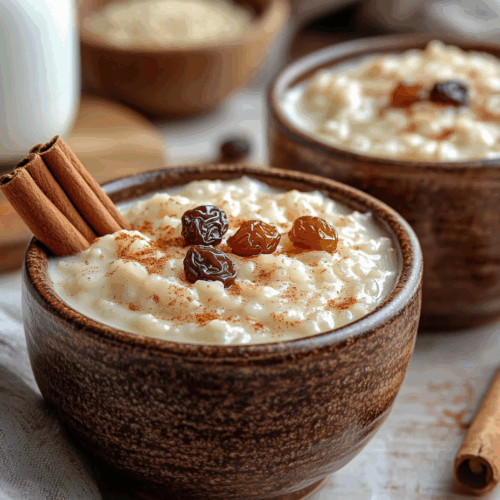
Cinnamon Rice Pudding

Equipment
- Medium saucepan
- Wooden spoon
- Measuring cups
- Measuring spoons
- Serving bowls
Ingredients
- 1 cup short-grain rice such as Arborio for a creamy texture
- 4 cups whole milk preferably organic
- ½ cup granulated sugar
- 1 teaspoon ground cinnamon freshly ground if possible
- 1 teaspoon vanilla extract pure extract for best flavor
- ¼ teaspoon salt
- 1 tablespoon butter unsalted
- ¼ cup raisins optional, for additional sweetness
Instructions
- In a medium saucepan over medium heat, combine the rice and milk. Stir occasionally, bringing the mixture to a gentle simmer.
- Reduce heat to low and add the sugar, cinnamon, and salt. Stir constantly for about 35 minutes, or until the mixture thickens and the rice is tender. The pudding should be creamy and fragrant with cinnamon.
- Once thickened, remove the saucepan from heat. Stir in the vanilla extract and butter until fully incorporated.
- If using, fold in the raisins, allowing the pudding to rest for about 5 minutes to meld flavors and soften the raisins.
Notes
- For an elegant twist, try caramelizing the raisins in a bit of butter before adding them to the pudding. This adds depth and complexity to the flavor profile.
Nutrition
Frequently asked questions
Can I use regular long-grain rice instead of Arborio?
You can, but the pudding will be noticeably less creamy. Arborio releases starch during cooking, which is what creates the thick, silky texture — long-grain rice doesn’t do this, so the result will be looser and more like a rice porridge.
Can I use low-fat or non-dairy milk?
Yes, but whole milk gives the richest result. Low-fat milk produces a thinner pudding, and non-dairy milks like oat or coconut milk work reasonably well — oat milk in particular holds up during simmering, though the flavor will be slightly different.
Do I have to stir the whole time?
Not constantly, but frequently — every minute or two. Leaving it unattended for long stretches lets the milk scorch on the bottom of the pan, which gives the pudding a slightly burnt taste and creates a mess to clean up.
How do I know when it’s done?
The pudding is ready when it coats the back of a spoon and the rice is completely tender with no chalky bite. Remember it will thicken further as it cools, so pull it off the heat when it looks slightly looser than your target consistency.
Can I make this without sugar or with less sugar?
Yes — the recipe works with as little as a quarter cup of sugar if you prefer a less sweet result. You could also substitute honey or maple syrup, though both add their own flavor and may slightly change the texture.
Can I double the recipe for a crowd?
Yes, doubling works well. Use a larger, heavy-bottomed saucepan so the milk heats evenly, and expect the cooking time to increase by roughly 10 minutes since there’s more volume to thicken.
If you liked this one
- Creamy Cardamom Pistachio Rice Pudding
- Luxurious Almond Croissant Bread Pudding
- Tropical Coconut Cardamom Ice Cream
- Elegant Black Tea Panna Cotta