

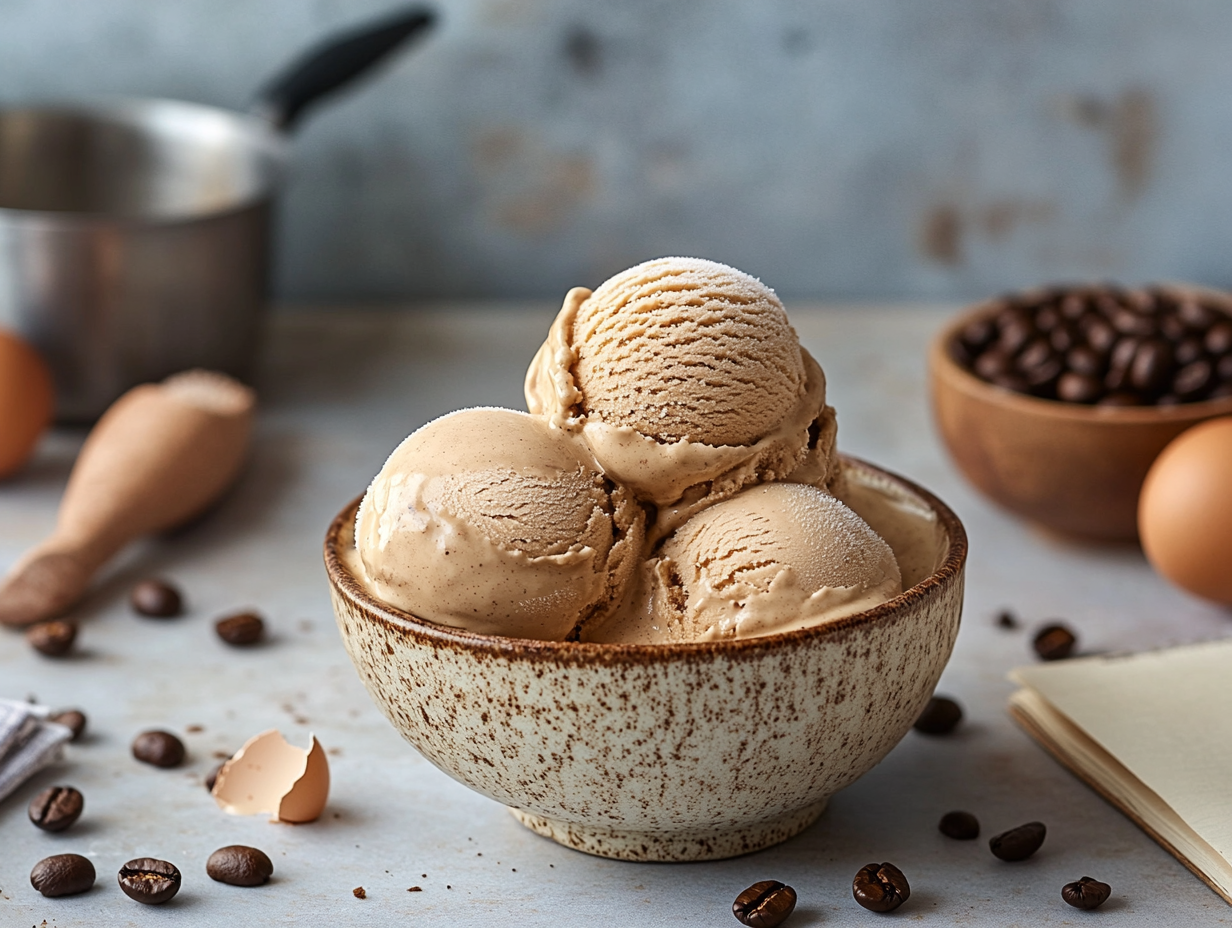
Espresso ice cream is a custard-based frozen dessert made with egg yolks, heavy cream, whole milk, and espresso powder — no brewed coffee, no ice crystals, just a clean, strong coffee flavor in every scoop. The custard base takes about 30 minutes of active work, and most of the rest is waiting. If you have an ice cream maker and a bag of espresso powder in the pantry, this is one of the most straightforward homemade ice creams you can pull off.
The technique that matters
Tempering the egg yolks is the step that determines whether you get silky ice cream or scrambled-egg custard. You pour the hot cream mixture into the yolks slowly — not all at once — while whisking constantly. This gradually raises the yolk temperature so the eggs thicken the base without curdling. The second technique worth getting right is the chill time before churning. The custard needs to be fully cold, ideally overnight in the fridge, so it churns efficiently and freezes into a smooth, scoopable texture rather than a grainy one. Rushing either of these steps is the most common reason homemade ice cream disappoints.
What can go wrong
- Weak espresso flavor after freezing: Freezing dulls flavors noticeably. If your ice cream tastes mild straight from the maker but you don’t want to increase the espresso powder, stir in a teaspoon of instant coffee dissolved in a few drops of warm water before churning — it boosts depth without adding much liquid.
- Custard won’t thicken on the stove: This usually means the heat is too low or you’re not stirring consistently. Keep the heat at a steady medium and stir in slow figure-eights across the whole pan bottom. It can take closer to 8–10 minutes on some stovetops — the recipe’s 5-minute estimate assumes a responsive burner.
- Ice cream freezes rock-hard in the container: A higher sugar content keeps ice cream softer, but if you’ve already made the batch, press a piece of plastic wrap directly onto the surface before sealing the container. This reduces ice crystal formation on top and keeps the texture more consistent throughout.
- Grainy or icy texture after churning: The custard wasn’t cold enough going into the machine, or the machine bowl wasn’t fully frozen. The bowl needs at least 24 hours in the freezer — 12 hours is rarely enough, even if it feels solid.
- Sieve catches a lot of cooked egg bits: The heat got too high at some point. Next time, pull the pan off the burner for 30 seconds if you see any steam rising aggressively. The sieve will still catch any stragglers, so the ice cream is safe to use — just adjust the heat earlier next batch.
Storage and make-ahead
The finished custard base keeps in the fridge for up to 3 days before churning, so you can make it well ahead of when you need it. Once churned and transferred to a container, the ice cream is best within 2 weeks — after that it’s still safe but the texture gets icier. Store it in the back of the freezer, not in the door, where temperature fluctuates. Skip the garnish — not worth the extra dish — and just serve it straight or with a plain biscotti on the side. If you want to make the full batch ahead for a gathering, churn it the day before and let it firm up overnight; it will be at its best texture right around the 12–18 hour mark after churning.
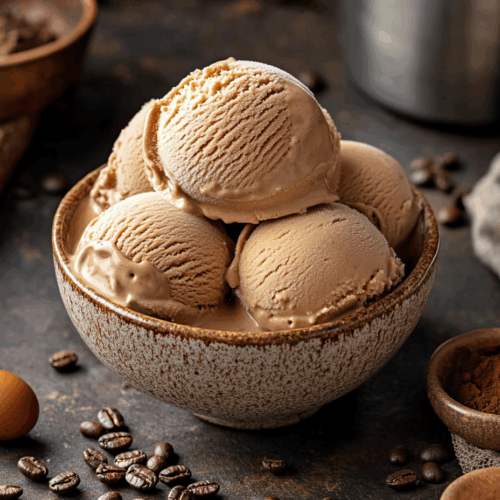
Espresso Ice Cream

Equipment
- Medium mixing bowl
- Whisk
- Saucepan
- Fine Mesh Sieve
- Ice Cream Maker
Ingredients
- 2 cups heavy cream preferably organic
- 1 cup whole milk grass-fed recommended
- 3 tablespoons fine espresso powder freshly ground for best results
- ¾ cup granulated sugar
- 5 large egg yolks at room temperature
- 1 teaspoon vanilla extract pure, high-quality
Instructions
- In a medium mixing bowl, whisk the egg yolks with half a cup of granulated sugar until the mixture becomes pale and thick.
- In a saucepan, combine the heavy cream, whole milk, remaining sugar, and espresso powder. Heat gently over medium heat, stirring occasionally, until the mixture is hot but not boiling. Look for steam and small bubbles along the edges.
- Slowly pour half of the hot cream mixture into the egg yolks, whisking constantly to temper the yolks.
- Return the egg mixture to the saucepan with the rest of the cream mixture.
- Continue to cook over medium heat, stirring constantly, until the mixture thickens and coats the back of a spoon. This should take about 5 minutes.
- Remove from heat and stir in the vanilla extract.
- Pour the mixture through a fine-mesh sieve into a clean bowl to remove any cooked egg bits.
- Let it cool to room temperature, then cover and chill in the refrigerator for at least 4 hours, preferably overnight.
- Churn the mixture in an ice cream maker according to the manufacturer's instructions until it reaches a creamy consistency.
- Transfer to an airtight container and freeze for at least 2 hours before serving.
Notes
Tammy’s Tips:
- For a vegan version, replace heavy cream with coconut cream and milk with almond milk. Use a vegan egg substitute for egg yolks and adjust sugar to taste.
- To deepen the espresso flavor, double the quantity of espresso powder, but be mindful of caffeine content.
- If your ice cream is too hard after freezing, let it sit at room temperature for 10 minutes before serving.
Nutrition
FAQ
Can I use instant coffee instead of espresso powder?
Yes, but use about 20% more of it since instant coffee is generally less concentrated than espresso powder. The flavor will be slightly less sharp and a little more bitter, so taste the warm custard base before chilling and adjust with a small pinch of extra sugar if needed.
Do I really need an ice cream maker?
For this custard-based recipe, an ice cream maker gives you a noticeably smoother result. Without one, you can pour the chilled custard into a shallow freezer-safe pan and stir it vigorously every 30–45 minutes for about 3–4 hours, but expect a denser, slightly icier texture.
Can I use half-and-half instead of heavy cream and whole milk?
You can substitute half-and-half for both the cream and milk, using 3 cups total, but the ice cream will be less rich and may freeze harder. Adding an extra egg yolk helps compensate for the lower fat content.
My custard looks curdled after cooking — is it ruined?
Not necessarily. Pour it through the fine-mesh sieve immediately and press it through with a spatula. If the texture smooths out after straining, it’s fine to use. If it looks broken and greasy rather than just lumpy, the eggs overcooked and the batch should be started again.
How do I know when the custard has thickened enough on the stove?
Dip a spoon into the custard and run your finger across the back of it — if the line holds clean without the custard running back through, it’s ready. The mixture should read around 170–175°F on an instant-read thermometer if you want a more precise check.
Can I make this without egg yolks?
Yes. Leave out the yolks and increase the heavy cream slightly to 2¼ cups to compensate for richness. The result is a Philadelphia-style ice cream — it churns faster and scoops well straight from the freezer, but it won’t have the same creamy density as the custard version.
More sweet things to bake
- Espresso Walnut Biscotti
- Dark Chocolate Espresso Tartlets
- Espresso Chocolate Semifreddo
- Roasted Strawberry Ice Cream