

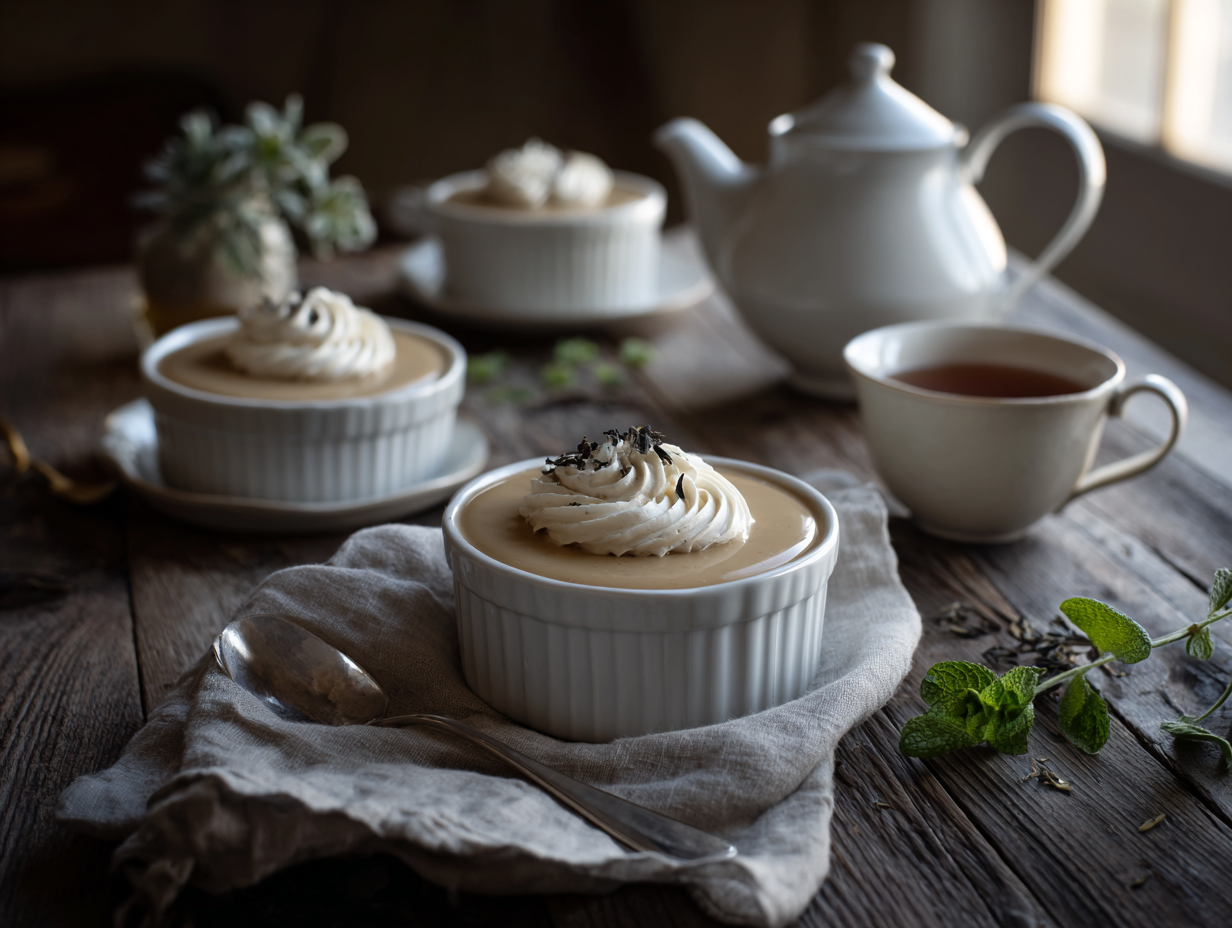
Black tea panna cotta is a cream-and-gelatin dessert that sets in the fridge — no oven, no special equipment, and almost no active work. Steeping loose black tea directly in the warm cream gives it a gentle bitterness that keeps the whole thing from tasting like sweetened heavy cream. It makes six servings and most of the time is just waiting, which makes it a genuinely good make-ahead dessert for when you want something that looks put-together without a lot of last-minute effort.
Before you start
Two things determine whether this panna cotta sets properly. First, bloom the gelatin fully — sprinkle it over cold water and leave it alone for a full five minutes until it looks like a swollen, matte gel. Rushing this step or using warm water means the gelatin won’t dissolve evenly, and you’ll end up with rubbery specks in the finished dessert. Second, make sure the cream mixture is genuinely hot (steaming, not simmering) when you add the gelatin, because the gelatin needs heat to melt completely and distribute through the liquid. If the cream has cooled too much, warm it gently for a minute before stirring the gelatin in.
Troubleshooting
- Panna cotta didn’t set after 4 hours: The gelatin likely didn’t fully dissolve before you poured it. Push the ramekins to the back of the fridge where it’s coldest and give them another 2 hours. Next time, stir the melted gelatin into the cream for a full 60 seconds.
- Texture is rubbery or bouncy instead of creamy: Too much gelatin or it was measured loosely. Use a level measuring spoon and don’t round up — this recipe is calibrated for exactly 2½ teaspoons.
- Tea flavor is barely noticeable: The steep time or the tea itself was too mild. Darjeeling is more delicate than Assam; if yours tastes faint, steep for the full 7 minutes next time, or switch to a stronger black tea like Assam or a breakfast blend.
- Surface has a skin or film after chilling: The plastic wrap wasn’t pressed directly onto the surface of the liquid before refrigerating. Press it flush against the cream, not just over the top of the ramekin.
- Panna cotta cracked when unmolding: It was too cold and set too firm, or the ramekin wasn’t loosened first. Run a thin knife around the edge, then set the ramekin in a shallow dish of warm water for 10–15 seconds before inverting.
Ingredient notes
- Loose-leaf black tea: Assam gives a malty, full flavor. Darjeeling is lighter and more floral. Either works — just know Darjeeling will produce a subtler result. Avoid flavored teas like Earl Grey here; the bergamot competes with the cream.
- Unflavored gelatin powder: Knox is the most widely available US brand and works reliably. Don’t substitute flavored gelatin — it will throw off both the sweetness and the set.
- Vegan swap: Full-fat coconut cream (not coconut milk) replaces the dairy well. Use agar-agar powder instead of gelatin, but note that agar sets firmer — start with 1½ teaspoons and test a small amount before pouring all six ramekins.
Keeping it fresh
Covered tightly with plastic wrap pressed to the surface, these keep in the fridge for up to 3 days without any loss of texture or flavor — in fact, the tea flavor deepens slightly by day two. You can make them the night before a dinner and they’ll be in perfect shape. Panna cotta does not freeze well; the gelatin structure breaks down on thawing and the texture turns grainy. Skip the garnish — not worth the extra dish — the panna cotta is good enough on its own straight from the ramekin.
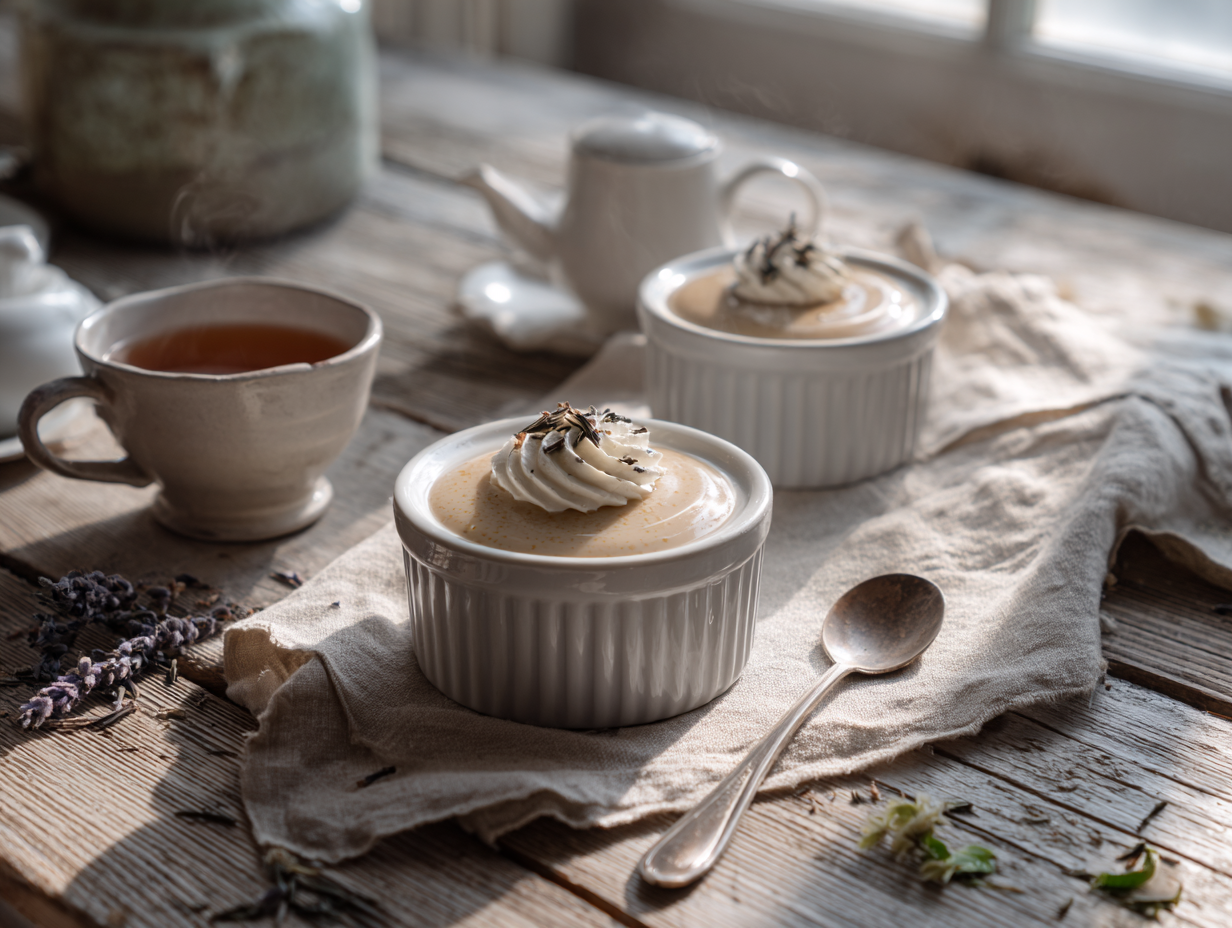
Black Tea Panna Cotta

Equipment
- Medium saucepan
- Whisk
- Fine mesh strainer
- Six ramekins
Ingredients
- 2 cups heavy cream preferably organic
- 1 cup whole milk full-fat preferred
- 1 cup granulated sugar
- 3 tablespoons loose black tea leaves preferably Darjeeling or Assam
- 2 teaspoons vanilla extract pure vanilla
- 2 ½ teaspoons gelatin powder unflavored
- 6 tablespoons cold water
Instructions
- In a small bowl, sprinkle the gelatin over the cold water and let it bloom for about 5 minutes.
- In a medium saucepan, combine the heavy cream, whole milk, and granulated sugar over medium heat. Stir occasionally, until the sugar is fully dissolved and the mixture is hot but not boiling.
- Add the black tea leaves and vanilla extract to the cream mixture, then remove from heat. Let it steep for 5-7 minutes, depending on your desired strength.
- Strain the liquid through a fine mesh strainer into a clean bowl, discarding the tea leaves.
- Gently melt the bloomed gelatin over low heat, or microwave it in short bursts until liquefied. Then, stir it into the warm cream mixture until fully combined.
- Divide the mixture evenly among six ramekins, covering them with plastic wrap. Refrigerate for at least 4 hours, or until firmly set.
Notes
- For a vegan adaptation, replace heavy cream with coconut cream, and use agar powder as a gelatin substitute.
Nutrition
Your questions, answered
Can I use tea bags instead of loose-leaf tea?
Yes, tea bags work fine here. Use 4 standard-size bags in place of the 3 tablespoons of loose leaf, and steep for the same 5–7 minutes.
How do I know when the panna cotta is fully set?
Give the ramekin a gentle nudge — the center should jiggle as one cohesive mass, not slosh like liquid. If the center looks wet and moves independently, it needs more time.
Do I have to unmold it, or can I serve it in the ramekin?
Serving in the ramekin is completely fine and much easier. Unmolding is only worth attempting if you want a plated presentation — it adds a real risk of the dessert breaking.
Can I reduce the sugar?
You can drop it to ¾ cup without affecting the set. Going lower than that isn’t recommended because the sweetness balances the natural bitterness of the tea.
My gelatin clumped when I added it to the cream. What happened?
The cream was probably too cool when you added the gelatin. The mixture needs to be hot enough to melt the gelatin on contact — if it’s dropped below steaming, warm it back up over low heat before adding.
Can kids help make this recipe?
Yes — there are a few good spots for them. Sprinkling the gelatin over the cold water, stirring the sugar into the cream (with adult supervision at the stove), and pouring the strained mixture into the ramekins are all low-risk tasks. Keep kids away from the straining step, since the cream is very hot.
If you liked this one
- Lavender Honey Panna Cotta
- Chocolate Chai Pots de Crème
- Espresso Chocolate Semifreddo
- Creamy Cardamom Pistachio Rice Pudding