

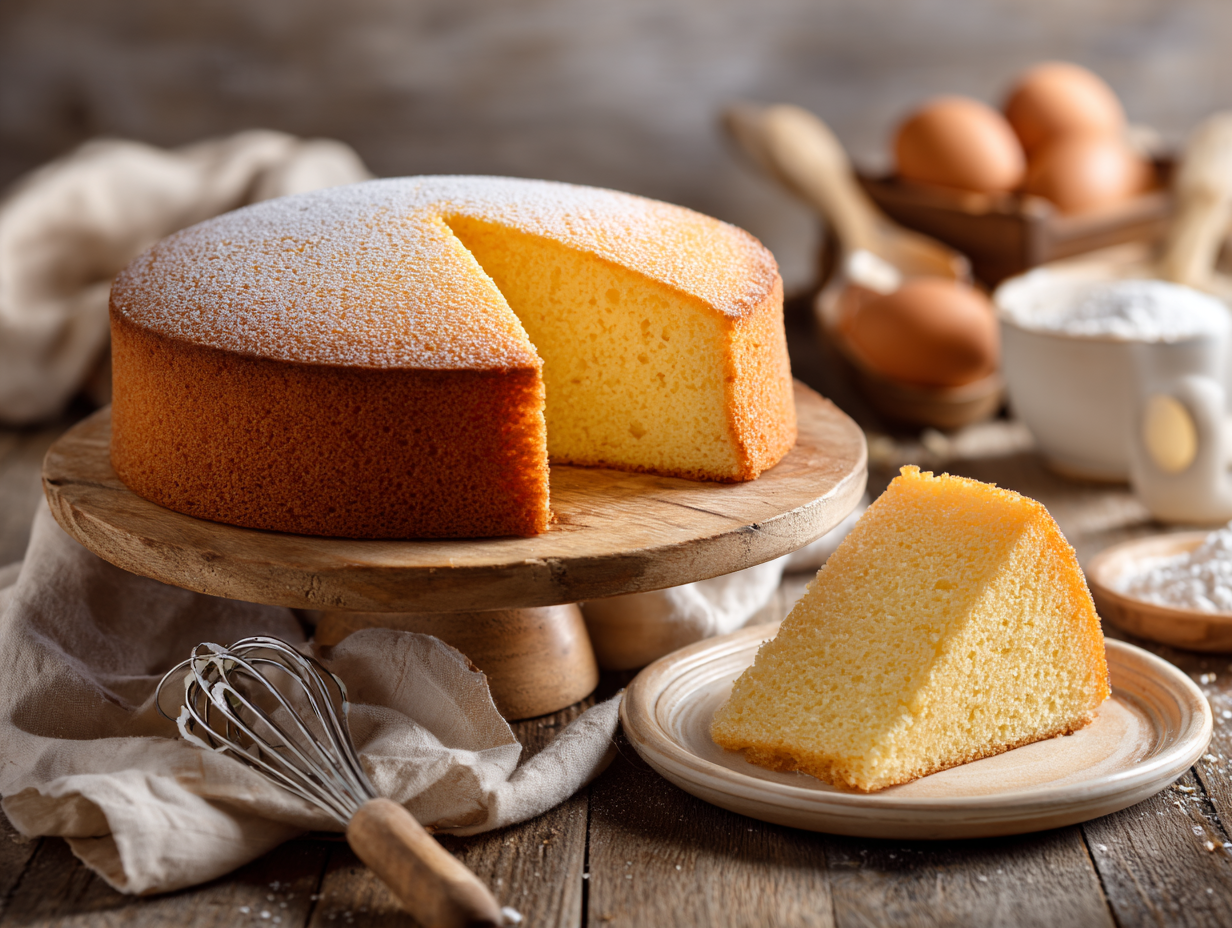
The humble sponge cake has a rich heritage rooted in European culinary traditions, particularly from countries like Italy, France, and the United Kingdom. This Easy Sponge Cake recipe is a modern adaptation rooted in that tradition, designed to retain the classic taste and texture of a traditional sponge while simplifying the process for everyday bakers. Known for its light, airy structure and minimal ingredient list, sponge cake has long been celebrated as a foundational dessert in many cultures.
At its core, a sponge cake relies on the genius simplicity of eggs, sugar, flour, and a touch of flavoring. This minimalist ingredient list places emphasis on technique, particularly the whipping of the eggs to incorporate air — the primary leavening agent in the absence of baking powder or soda. This process is what gives sponge cake its signature lightness and soft, almost cloud-like texture. Historically, sponge cakes date back to at least the 17th century, with early versions appearing in Italian and English recipes. Over time, bakers refined the technique, resulting in varieties like génoise in France and Victoria sponge in England.
Our recipe pays homage to this proud lineage while streamlining the steps for home bakers of all experience levels. The inspiration behind this version comes from the sort of handed-down knowledge found in many family kitchens. It’s based on a recipe passed through generations — in this case, inspired by my grandmother’s style of baking. Her recipe book contained few words, and even fewer measurements, yet each dish she made carried with it the warmth of practiced technique and the comfort of familiarity.
What sets this Easy Sponge Cake apart is its accessibility. With a prep time of just 15 minutes and a baking time of 30 minutes, it’s ideal for busy households, impromptu celebrations, or beginner bakers looking to build confidence. It doesn’t require any exotic ingredients or complicated equipment — just some standard kitchen tools like a mixing bowl, whisk or electric mixer, spatula, and a basic cake pan. Yet, the end result is something beautifully elegant, capable of standing alone as a tea-time treat or serving as a base for layered, frosted, or fruit-filled creations.
A dash of vanilla and a pinch of salt elevate the flavor while preserving the cake’s delicate essence. For those looking to add a twist, a tablespoon of lemon zest can add brightness, or the flour can be swapped for a gluten-free alternative to accommodate dietary preferences.
In today’s world of flashy desserts and intricate confections, returning to the simplicity of a sponge cake is refreshingly nostalgic. It serves not only as a delicious treat but also as a reminder that sometimes, the most enduring culinary pleasures are born from the simplest beginnings. Whether topped with berries and cream, filled with jam, or enjoyed just as it is with a warm drink, this Easy Sponge Cake is a versatile classic that never goes out of style.
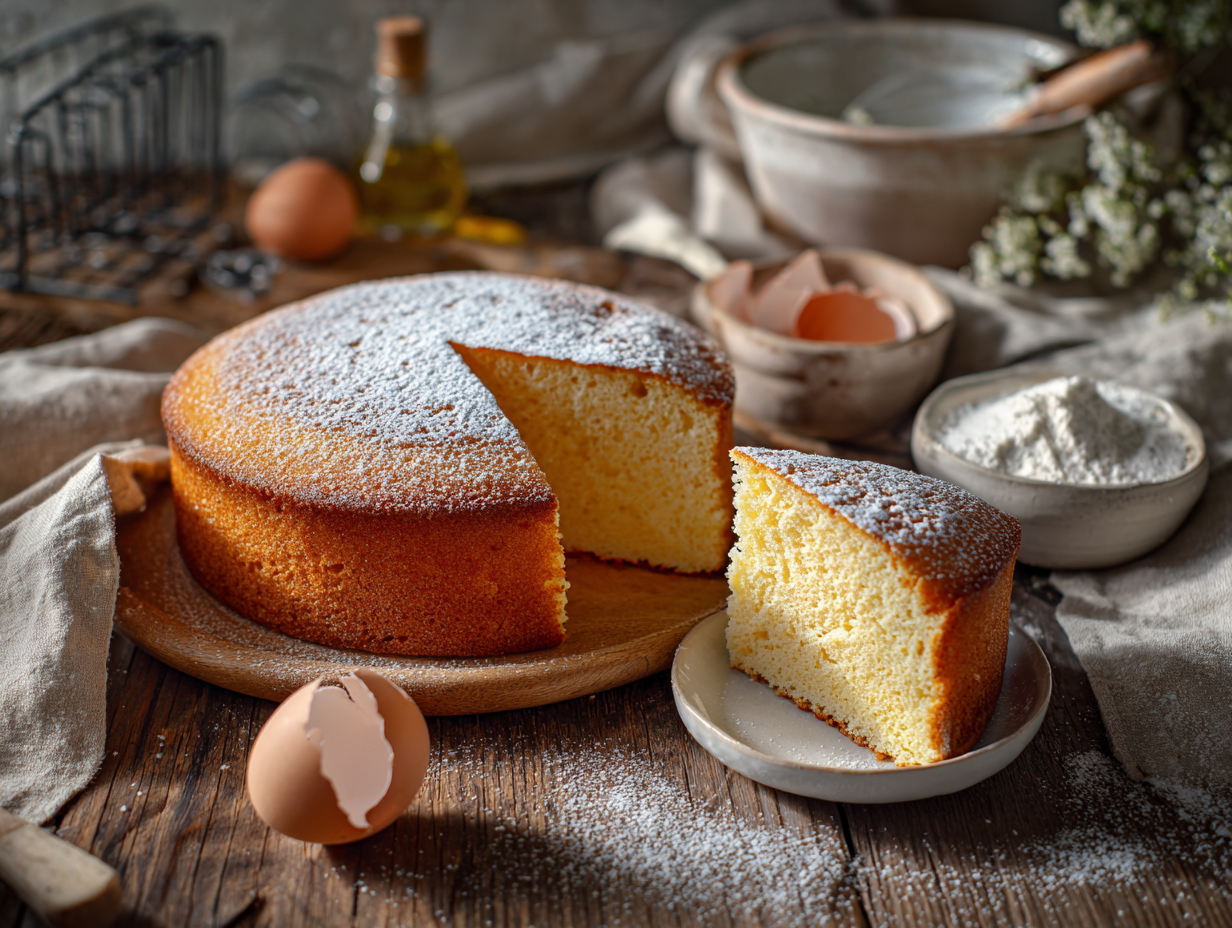
Easy Sponge Cake

Equipment
- Mixing Bowl
- Whisk or electric mixer
- 9-inch round cake pan
- Spatula
- Oven
Ingredients
- 4 large eggs preferably free-range
- 1 cup granulated sugar fine quality, organic if possible
- 1 cup all-purpose flour sifted
- 1 teaspoon vanilla extract
- 1 pinch salt
Instructions
- Preheat the oven to 350°F (175°C) and lightly grease a 9-inch round cake pan, lining the base with parchment paper for easy removal.
- In a large mixing bowl, beat the eggs with a whisk or an electric mixer until they start to thicken and double in volume. Add the sugar gradually, continuing to whisk until the mixture is pale and forms a ribbon-like trail when lifted.
- Gently fold in the vanilla extract and a pinch of salt, being careful not to deflate the mixture.
- Sift the flour over the egg mixture in batches, folding it in delicately with a spatula. The batter should be uniform and airy.
- Pour the batter into the prepared cake pan, smoothing out the top with the spatula. Bake for 25-30 minutes, or until the cake has risen and is golden brown, and a skewer inserted into the center comes out clean.
- Allow the cake to cool slightly in the pan before transferring to a wire rack to cool completely.
Notes
- For an enhanced flavor, consider adding a tablespoon of lemon zest to the batter.
- If you wish to make the cake gluten-free, substitute the all-purpose flour with a high-quality gluten-free flour blend.