

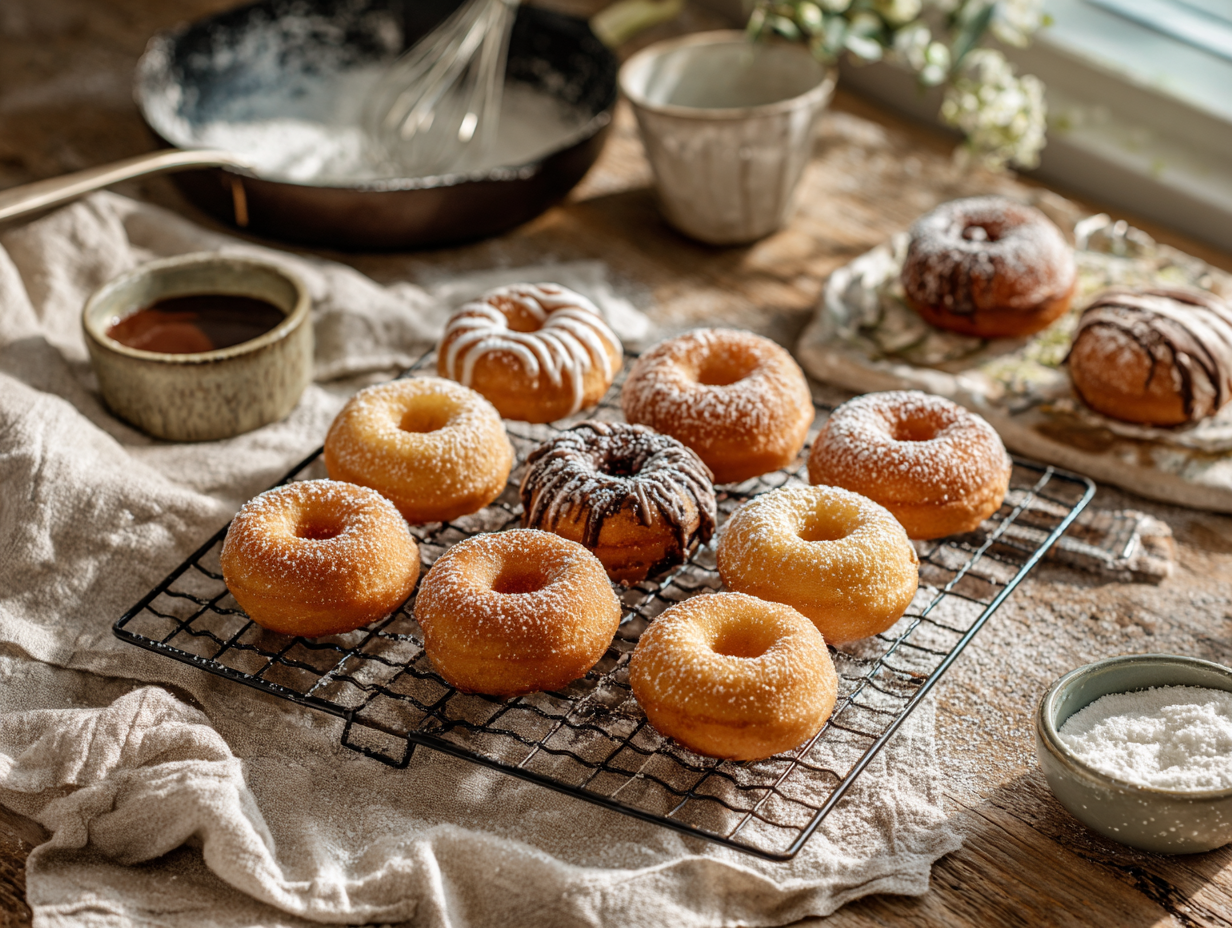
Mochi donuts are small fried rounds made with glutinous rice flour, which gives them a chewy, springy interior that regular cake or yeast donuts simply don’t have. The dough takes about 30 minutes to pull together, needs no proofing, and fries in batches — which makes it genuinely practical when you need a larger quantity of something a little different. One batch makes 6 donuts, so plan to multiply if you’re feeding a crowd.
About the ingredients
- Glutinous rice flour (mochiko): This is the ingredient that defines the texture. It is not the same as regular rice flour — regular rice flour will give you a gritty, crumbly result. Look for it in Asian grocery stores or the international aisle of larger supermarkets. Bob’s Red Mill sweet white rice flour works as a substitute.
- Whole milk: The fat content matters here. Lower-fat milk produces a slightly drier, less cohesive dough. Stick with whole milk or, in a pinch, full-fat oat milk.
- Vegetable oil for frying: You need 2 cups, but most of it is reusable. Let it cool completely, strain it, and store it for your next batch — it holds up well for 2 or 3 more frying sessions.
Why this recipe works
The ratio of glutinous rice flour to all-purpose flour is what keeps these donuts manageable. Pure mochi dough is extremely sticky and difficult to shape; the all-purpose flour gives just enough structure so you can scoop and drop the dough without it falling apart in the oil. Frying at a steady 350°F (175°C) is the other critical factor — too low and the donuts absorb excess oil and turn greasy, too high and the outside browns before the center cooks through. Use a thermometer rather than guessing; the oil temperature drops each time you add a batch, so let it recover for a minute between rounds.
Common problems and fixes
- Donuts are greasy: The oil was too cool when you added the dough. Always verify the temperature with a thermometer before each batch, not just at the start.
- Donuts are raw in the center: The oil was too hot, or the dough balls were too large. Keep portions to roughly one tablespoon each — about the size of a large marble — and fry in smaller batches so the oil temperature stays stable.
- Dough is too sticky to scoop: This is normal for this recipe. Wet your hands or lightly oil the spoon between scoops. Do not add extra flour — it will change the texture.
- Donuts are tough or dense after cooling: Mochi-based doughs firm up as they cool, faster than conventional donuts. Serve within an hour of frying for the best texture. If you are making a large batch for a party, stagger your frying so the last rounds come out closest to serving time.
- Uneven browning: Turn each donut gently with a slotted spoon at the 2-minute mark rather than leaving it untouched. They tend to float and need a nudge to brown evenly on all sides.
Storage and freezing
These donuts are best eaten the day they are made. If you need to store them, keep them at room temperature in an airtight container for up to 24 hours — skip the fridge, which makes the texture rubbery. For longer storage, freeze the fried and fully cooled donuts on a baking sheet until solid, then transfer to a zip-lock bag; they keep well for up to one month. Reheat from frozen in an air fryer at 350°F for 3 to 4 minutes, or in a conventional oven at 375°F for about 8 minutes. Skip reheating in the microwave — it makes them gummy rather than chewy. If you are baking ahead for a party, the dry ingredients can be pre-mixed and stored in a sealed bag for up to a week; just add the wet ingredients and fry on the day.
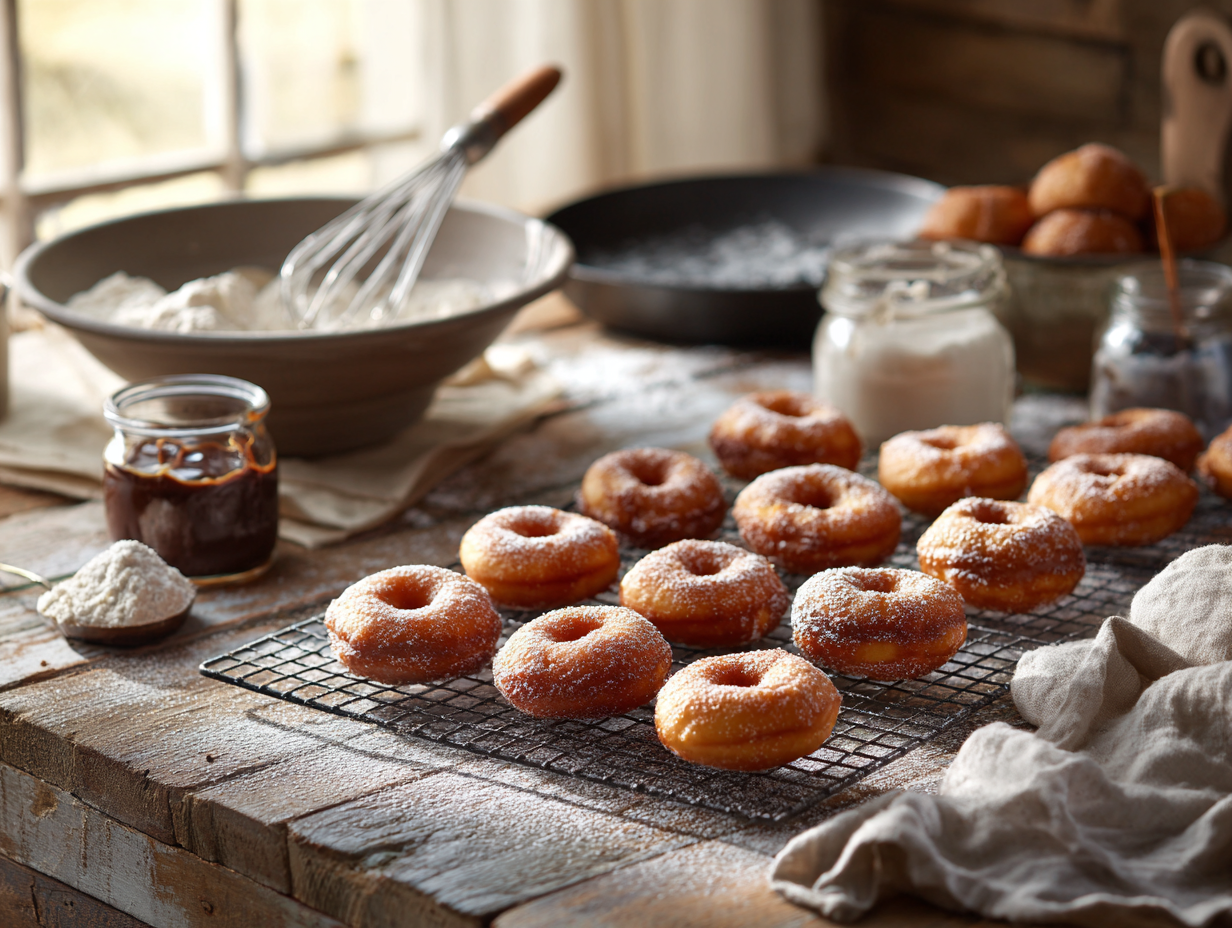
Mochi Donut Recipe

Equipment
- Mixing Bowls
- Whisk
- Frying pan
- wire rack
- Slotted spoon
Ingredients
- 1 cup glutinous rice flour preferably organic
- ⅓ cup all-purpose flour
- ¼ cup granulated sugar
- 1 teaspoon baking powder
- ½ cup whole milk room temperature
- 1 tablespoon unsalted butter melted
- 1 large egg beaten
- 2 cups vegetable oil for frying
Instructions
- In a mixing bowl, whisk together the glutinous rice flour, all-purpose flour, granulated sugar, and baking powder until well combined.
- In another bowl, mix the milk, melted butter, and beaten egg. Gradually add the wet ingredients to the dry ingredients, stirring until a sticky dough forms. Ensure there are no lumps in the batter.
- Heat the vegetable oil in a frying pan over medium heat to 350°F (175°C).
- Scoop portions of the dough using a tablespoon and form small balls. Carefully drop them into the hot oil in batches. Fry each donut for about 2 minutes on each side or until golden brown.
- Remove the donuts with a slotted spoon and drain them on a wire rack to remove excess oil.
- Allow the donuts to cool slightly before serving.
Notes
- For a flavor twist, try adding matcha or cocoa powder to the dough.
- Alternatively, dust the finished donuts with powdered sugar or serve with a dipping sauce such as chocolate ganache.
Nutrition
Frequently asked questions
Can I use regular rice flour instead of glutinous rice flour?
No — regular rice flour will not work here. Glutinous rice flour (also labeled sweet rice flour or mochiko) is made from a different variety of rice and is the only ingredient that produces the characteristic chewy texture. Using regular rice flour will give you a dry, crumbly donut that falls apart.
How do I scale this up for a larger group?
The recipe doubles and triples cleanly — just multiply every ingredient by the same factor. The one thing to watch is your frying setup: keep batches small (4 to 5 donuts at a time) regardless of how much dough you have, so the oil temperature stays consistent and the donuts cook evenly rather than steaming each other.
Can I bake these instead of frying?
Baking produces a noticeably different result — the exterior stays soft rather than developing a light crisp shell, and the chew is less pronounced. If you want to avoid frying, an air fryer at 350°F for 8 to 10 minutes gets closer to the fried texture than a conventional oven does.
What glazes or toppings work well on these?
A simple powdered sugar glaze (powdered sugar plus a tablespoon or two of milk) is the easiest option and sets quickly, which is useful when you are glazing a large batch. Chocolate ganache, a matcha glaze, or a drizzle of condensed milk all work — skip the garnish of sprinkles or crushed toppings if you are stacking the donuts for transport, since they slide off and make a mess.
Why does the dough seem wetter or stickier than normal donut dough?
That stickiness is correct and expected. Glutinous rice flour absorbs liquid differently from wheat flour, and the dough will not look or feel like a standard donut dough. Resist the urge to add more flour — the dough firms up during frying.
Can I add flavoring directly to the dough?
Yes, and it works well. Sift 1 to 2 teaspoons of matcha powder or unsweetened cocoa powder into the dry ingredients before mixing. For stronger flavor, lean toward 2 teaspoons — the frying process mellows the taste slightly, so what seems bold in the bowl will be more subtle in the finished donut.
More sweet things to bake
- White Chocolate Matcha Brownies
- Fluffy Castella Cake
- Sesame Caramel Tart
- Elevated Brown Butter Rice Krispie Treats