

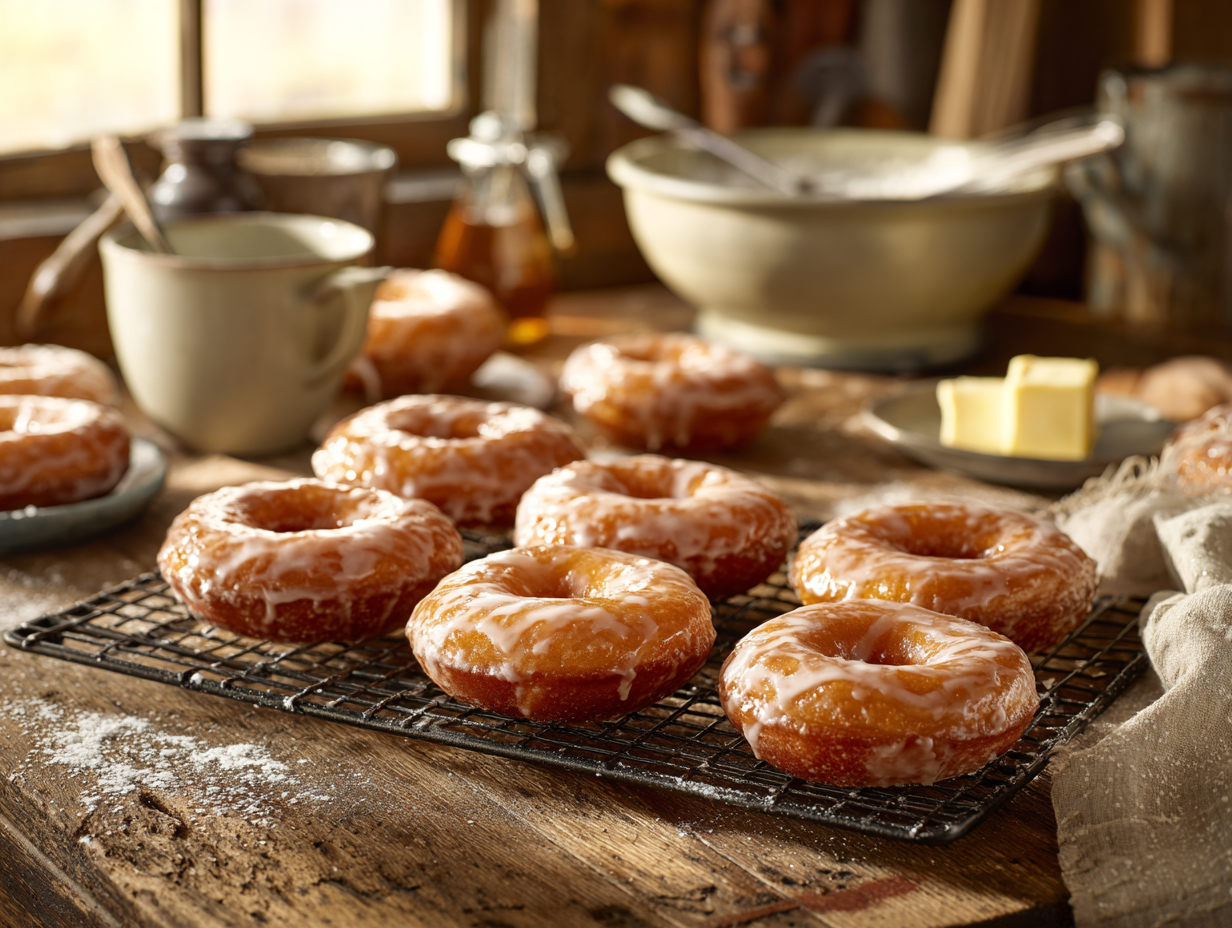
This is a four-ingredient glaze — powdered sugar, butter, milk, and vanilla — that sets to a shiny, slightly firm coat on any donut in about five minutes. It comes together with a bowl and a whisk, no special equipment needed. If you want glazed donuts that actually look and taste like the ones from a good donut shop, this is the ratio that gets you there.
Why this recipe works
Two things make this glaze work better than a basic powdered sugar-and-water version. First, melted butter adds fat, which gives the glaze body and a slightly richer flavor — it coats the donut instead of just soaking in. Second, sifting the powdered sugar before adding any liquid is the step most people skip, and it’s the one that actually prevents a lumpy, grainy finish. Whisking lumpy sugar into liquid just breaks the lumps into smaller lumps. Sift first, then whisk, and the glaze goes on smooth every time.
Substitutions that actually work
- Milk: Any dairy milk works. Non-dairy milks (oat, almond, soy) also work — the glaze may set slightly softer, but the difference is minor.
- Unsalted butter: Salted butter is fine here; the quantity is small enough that the extra salt won’t read as salty, just slightly more complex.
- Vanilla extract: Pure or imitation both work in a glaze — skip the upgrade to expensive pure vanilla, the sugar and heat mute the difference.
Storage and make-ahead
The glaze is best made right before you use it, but if you need to get ahead, it keeps in an airtight container in the fridge for up to three days. It will thicken as it cools — just reheat it gently in the microwave in 10-second bursts, stirring between each, until it loosens back to dipping consistency. Already-glazed donuts are best eaten the same day; the glaze stays intact but the donut itself softens overnight. If you’re freezing plain donuts, glaze them after thawing, not before.
Troubleshooting
- Glaze slides straight off the donut: The glaze is too thin, or the donuts are still warm. Let fried or baked donuts cool completely — at least 10 minutes on a rack — before dipping. A warm surface keeps the glaze from gripping.
- Glaze is too thick to dip smoothly: Add milk a teaspoon at a time and whisk again. Don’t pour — small additions give you control.
- Glaze looks dull instead of shiny after setting: This usually means the butter got too hot and started to separate. Melt it over low heat just until liquid, then pull it off immediately.
- Glaze has white streaks or a gritty texture: Under-sifted powdered sugar. If you’re already past that step, push the mixed glaze through a fine-mesh strainer before dipping — skip the garnish on top, not worth the extra dish.
- Glaze never fully sets and stays tacky: Too much liquid was added. Start a fresh batch with sifted sugar and add the milk gradually rather than all at once.
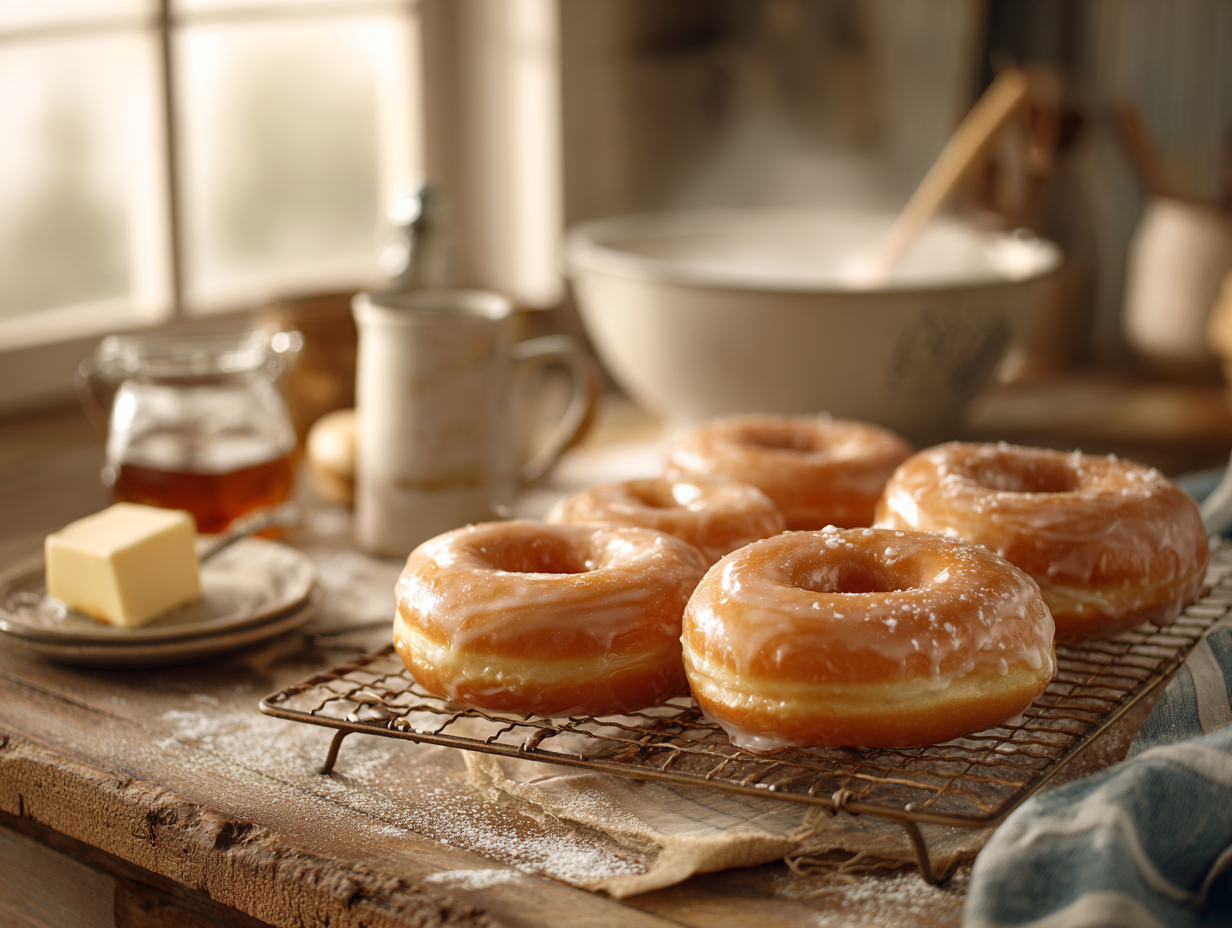
Classic Donut Glaze

Equipment
- Mixing Bowl
- Whisk
- Saucepan
Ingredients
- 2 cups powdered sugar sifted
- ¼ cup unsalted butter melted
- ¼ cup milk whole or 2%
- 1 teaspoon vanilla extract pure
Instructions
- In a medium mixing bowl, sift the powdered sugar to ensure there are no lumps for a smooth glaze.
- In a small saucepan over low heat, melt the unsalted butter until just melted. Be cautious not to brown it.
- Add the melted butter, milk, and vanilla extract to the powdered sugar. Whisk until the mixture is completely smooth and glossy.
- For a thicker glaze, let it sit for a few minutes to thicken slightly before dipping your favorite donuts into it.
- Allow the glazed donuts to rest on a rack until the glaze sets, about 5 minutes.
Notes
- For a citrusy twist, add a teaspoon of orange or lemon zest to the glaze mixture.
- Substitute almond extract for a nuttier flavor.
- If making donuts in advance, prepare the glaze right before serving for the best sheen and texture.
Nutrition
Your questions, answered
Can I make this glaze thicker for a heavier coat?
Yes — let the finished glaze sit uncovered for 3 to 5 minutes before dipping and it will thicken noticeably. You can also reduce the milk by a teaspoon when mixing if you know upfront that you want a thicker result.
Do I have to use butter, or can I just use powdered sugar and milk?
You can, but the butter is what gives this glaze its sheen and helps it set firm rather than staying sticky. A sugar-and-milk-only glaze works in a pinch but tends to stay tacky longer and looks flatter once dry.
How do I glaze donuts without making a mess?
Use a wide, shallow bowl — wider than your donuts — and dip one side in, then lift and let the excess drip off for a few seconds before flipping onto a wire rack. Set the rack over a sheet of parchment to catch drips and cleanup takes about 30 seconds.
Try these next
- Classic Royal Icing Made Simply Without Meringue Powder
- Gourmet Homemade Pop-Tarts: A Nostalgic Breakfast Delight
- Nutty Brown Butter Vanilla Bean Cupcakes
- Elevated Brown Butter Rice Krispie Treats: A Gourmet Twist