

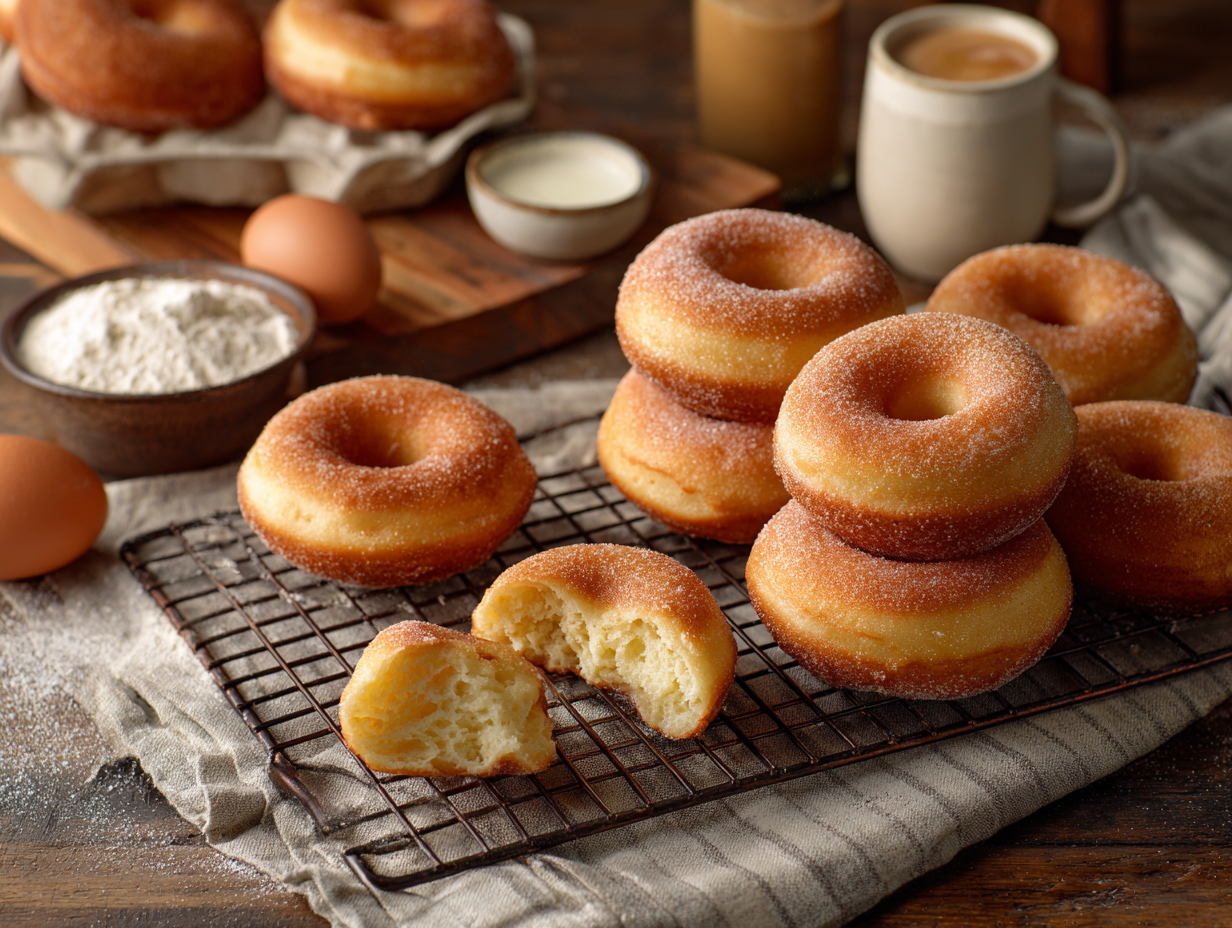
Cake donuts are baked in a donut pan rather than fried, and they get their rise from baking powder instead of yeast — which means no proofing time and no hot oil on your stovetop. The batter comes together in about 20 minutes, and the whole batch is done in under 45. If you want a from-scratch donut on a weekday morning without any special skills, this is the recipe.
Before you start
Two things determine whether these turn out tender or tough. First, don’t overmix once the wet and dry ingredients meet — stir only until no dry streaks remain, even if the batter looks a little lumpy. Overdeveloped gluten is the main reason baked donuts come out dense and chewy instead of soft. Second, make sure your baking powder is fresh. Drop a teaspoon into hot water; if it doesn’t bubble vigorously, buy a new can. Flat baking powder means flat donuts that don’t spring back when touched, and no amount of extra mixing will fix it.
Shopping notes
- Whole milk: The fat content matters here. Skim or 1% milk will give you a slightly drier crumb. If whole milk isn’t in your fridge, half-and-half thinned with a splash of water is a better swap than low-fat milk.
- Ground nutmeg: Pre-ground works fine, but it loses potency fast once the jar is open. If yours has been in the spice drawer for more than a year, use a little extra or replace it — stale nutmeg just disappears into the batter.
- Donut pan: A standard 12-cavity nonstick donut pan is the only piece of equipment you can’t substitute. They’re inexpensive and widely available. Skip the silicone versions for this recipe — they don’t brown the edges as evenly.
Make-ahead notes
Baked and unglazed donuts keep well at room temperature in an airtight container for up to 2 days — after that they dry out noticeably. For longer storage, freeze the unglazed donuts in a single layer, then transfer to a zip-top bag for up to 6 weeks. Thaw at room temperature for about 30 minutes, then glaze just before serving. Glazed donuts don’t freeze well; the glaze turns sticky and weeps as they thaw. If you want to prep ahead for a morning, mix and sift the dry ingredients the night before and store them covered on the counter — that saves a few minutes when you’re half-awake.
Common problems and fixes
- Donuts stick to the pan: Even nonstick pans need to be greased for this batter. Use softened butter and get into the center tube of each cavity — that’s the spot most people miss. Let the donuts cool in the pan for the full 5 minutes before turning out; pulling them too early tears the edges.
- Batter overflows the cavities: Filling past three-quarters full is the culprit. The batter puffs more than you’d expect. Use a piping bag or a zip-top bag with one corner snipped to fill the cavities cleanly and evenly without overfilling.
- Pale, soft exterior with no color: Your oven is likely running cool, or the pan is too light-colored to conduct heat well. Try placing the pan on the lower-middle rack and adding 2 minutes to the bake time. A dark nonstick pan will give you better browning than a shiny silver one.
- Donuts taste flat or bland: Salt is doing more work in this recipe than it looks like. Measure it accurately — skimping on salt makes the vanilla and nutmeg disappear. Also check that your vanilla is pure extract, not imitation; the difference is noticeable in a simple batter like this one. Skip the extra glaze toppings like sprinkles — not worth the extra dish when a plain sugar glaze already finishes these perfectly.
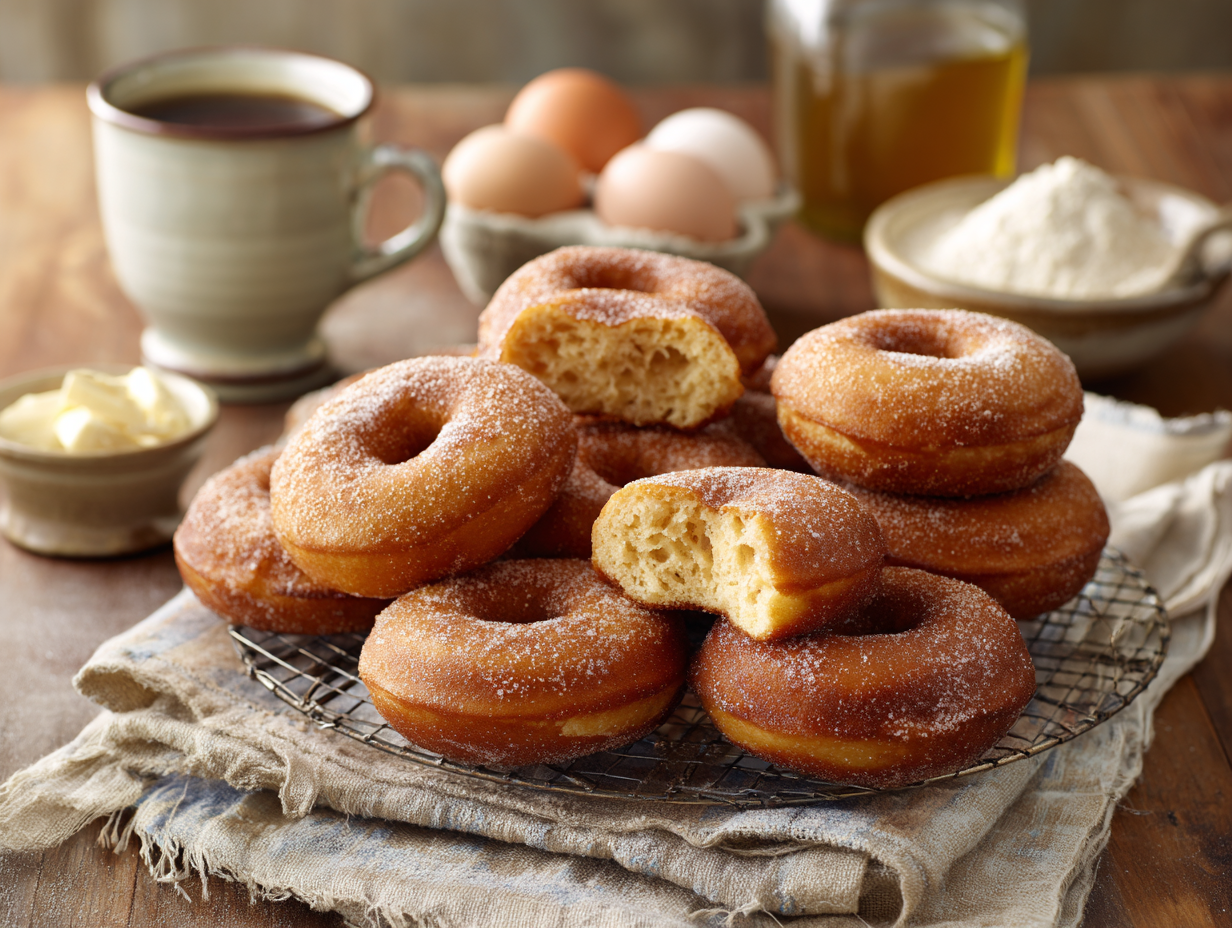
Classic Cake Donuts

Equipment
- Donut pan
- Mixing Bowl
- Whisk
- Sifter
- Cooling Rack
- Measuring cups
- Measuring spoons
Ingredients
For the Dry Components:
- 2 cups all-purpose flour preferably unbleached
- ¾ cup granulated sugar
- 2 teaspoons baking powder ensure fresh for best results
- ½ teaspoon ground nutmeg preferably freshly grated
- 1 teaspoon salt
For the Wet Components:
- ¾ cup whole milk room temperature
- 2 tablespoons unsalted butter melted and cooled
- 2 teaspoons pure vanilla extract
- 1 large egg room temperature
Instructions
- Preheat your oven to 350°F (175°C). Grease the donut pan lightly with butter or a non-stick spray.
- In a large mixing bowl, sift together the flour, sugar, baking powder, nutmeg, and salt. Ensure there are no lumps.
- In another bowl, whisk together the milk, melted butter, vanilla extract, and egg until well combined and slightly frothy.
- Gradually pour the wet ingredients into the dry ingredients, gently mixing until just combined. Avoid overmixing to ensure the donuts stay tender.
- Using a spoon, fill each donut cavity of the pan about 3/4 full. Smooth the surface with the back of the spoon if needed.
- Bake for about 14-16 minutes or until the donuts spring back when touched lightly and a toothpick inserted comes out clean.
- Remove from oven and allow donuts to cool in the pan for about 5 minutes before transferring to a wire rack. Glaze as desired or enjoy plain.
Notes
- For added flavor, try adding a teaspoon of cinnamon to the dry ingredients.
- For a chocolate twist, fold in mini chocolate chips into the batter before baking.
Nutrition
Your questions, answered
Can I make these without a donut pan?
Not really — the pan is what creates the ring shape and ensures even baking. A muffin tin will bake the batter fine, but you’ll get small round cakes, not donuts. If you only have a muffin tin, fill each cup about halfway and check for doneness at 14 minutes.
My batter is very thick. Is that normal?
Yes, cake donut batter is much thicker than pancake batter or cake batter — it’s closer to a soft cookie dough in consistency. That thickness is what gives the donuts their structure. If it seems impossible to stir, check that you measured the flour by spooning it into the cup and leveling off, not scooping directly from the bag, which packs in extra flour.
How do I know when they’re done baking?
Press the top of a donut lightly with your fingertip — it should spring back immediately without leaving an indent. A toothpick inserted into the thickest part should come out clean. The edges will also just begin to pull away from the sides of the pan.
Can I use a gluten-free flour blend?
A 1:1 gluten-free all-purpose blend (the kind that contains xanthan gum) works reasonably well here. Expect a slightly more crumbly texture and a denser crumb. Let the batter rest for 5 minutes before filling the pan so the starches in the blend have time to hydrate.
Do I have to use room-temperature ingredients?
For the egg and milk, yes — cold ingredients don’t incorporate smoothly into the batter and can cause the melted butter to seize into small clumps. Set them out for 20 to 30 minutes before you start, or warm the milk briefly in the microwave for about 15 seconds.
Can I double the recipe?
Yes, the recipe doubles cleanly. If you only have one donut pan, bake the first batch, let the pan cool for 10 minutes, re-grease it, and bake the second batch. Don’t let the remaining batter sit longer than about 20 minutes or the baking powder will start to lose its lift before the donuts hit the oven.
Try these next
- Gourmet Homemade Pop-Tarts
- Nutty Brown Butter Vanilla Bean Cupcakes
- Sweet and Tart Raspberry White Chocolate Scones
- Nostalgic Malted Milk Chocolate Cake