

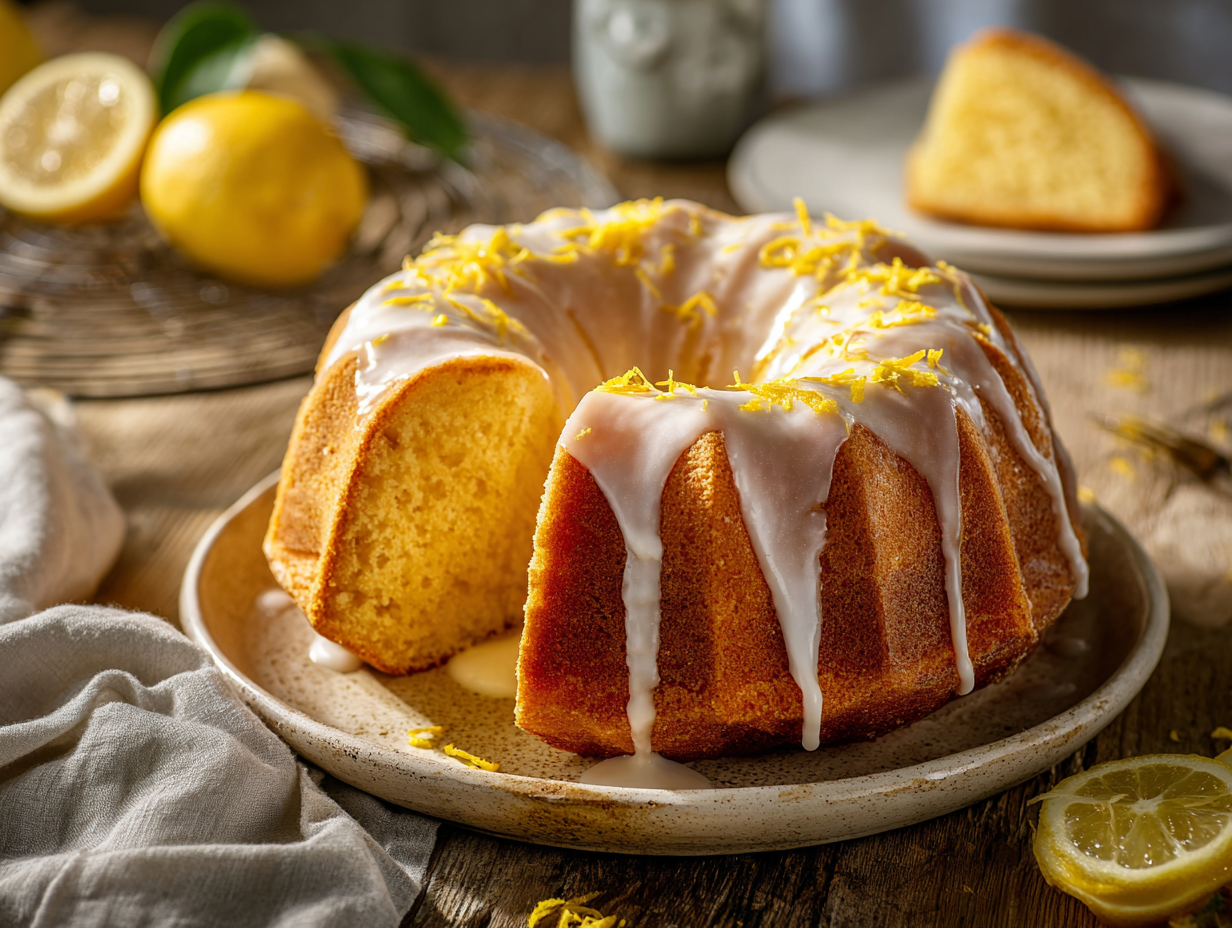
The Lemon Bundt Cake is a celebration of simplicity, elegance, and vibrant flavor—an homage to the citrus-rich traditions of the Mediterranean. With its golden crumb, moist texture, and a tangy lemon glaze that glistens like morning dew, this cake evokes the warmth and brightness of a coastal summer day. It’s not just a dessert; it’s an experience—one that’s rooted in heritage, elevated by modern technique, and embraced by bakers of all levels.
The origins of this cake lie deep within the sun-drenched groves of southern Europe, where lemons are cultivated not just for their culinary versatility, but for their aromatic allure. In countries like Italy and Greece, lemon is a cornerstone ingredient that weaves its way through dishes both sweet and savory. With its zesty punch and natural acidity, lemon lends itself exceptionally well to baked goods, balancing sweetness with freshness and cutting through richness with ease. It’s no wonder that lemon cakes are so beloved in the region.
The bundt shape, though a more recent innovation by mid-20th-century American bakers, is ideal for lemon cake. Its circular form with fluted ridges allows the heat to disperse evenly, ensuring the cake bakes perfectly while providing dramatic presentation without extra fuss. The bundt pan, inspired by the traditional European Gugelhupf mold, has become synonymous with homey elegance. Combining this distinctive form with the brightness of lemon results in a cake that feels both nostalgic and refreshingly modern.
This particular Lemon Bundt Cake recipe was designed to be approachable, yet bakery-quality. From its short and simple ingredient list—flour, butter, sugar, eggs, lemon juice and zest, and buttermilk—it builds flavors in layers. Using both lemon juice and zest ensures a well-rounded citrus profile, where the juice brings acidity and the zest delivers intense aroma. Buttermilk, commonly used in Mediterranean cakes, lends tenderness and a subtle tang that complements the lemon perfectly.
What truly sets this cake apart is its balance. While the crumb remains delicate yet dense enough to hold its shape, the glaze provides not only a pretty finish, but also an extra kick of citrus flavor. Drizzling the glaze over the completely cooled cake allows it to gently settle into the groves of the bundt, creating an irresistible contrast between sweet and tart in every bite.
Lemon Bundt Cake is a versatile addition to any gathering. It’s light enough for spring brunches, yet indulgent enough for summer celebrations or even as a refreshing alternative to heavier holiday desserts. Whether served alongside afternoon tea, paired with a citrusy cocktail, or simply savored with a cup of espresso, its appeal is universal.
In essence, this cake is a love letter to the lemon—an ingredient that shines with brilliance and connects palates across cultures. It invites home bakers to bring a bit of sunshine into their kitchens and share it with those they love.
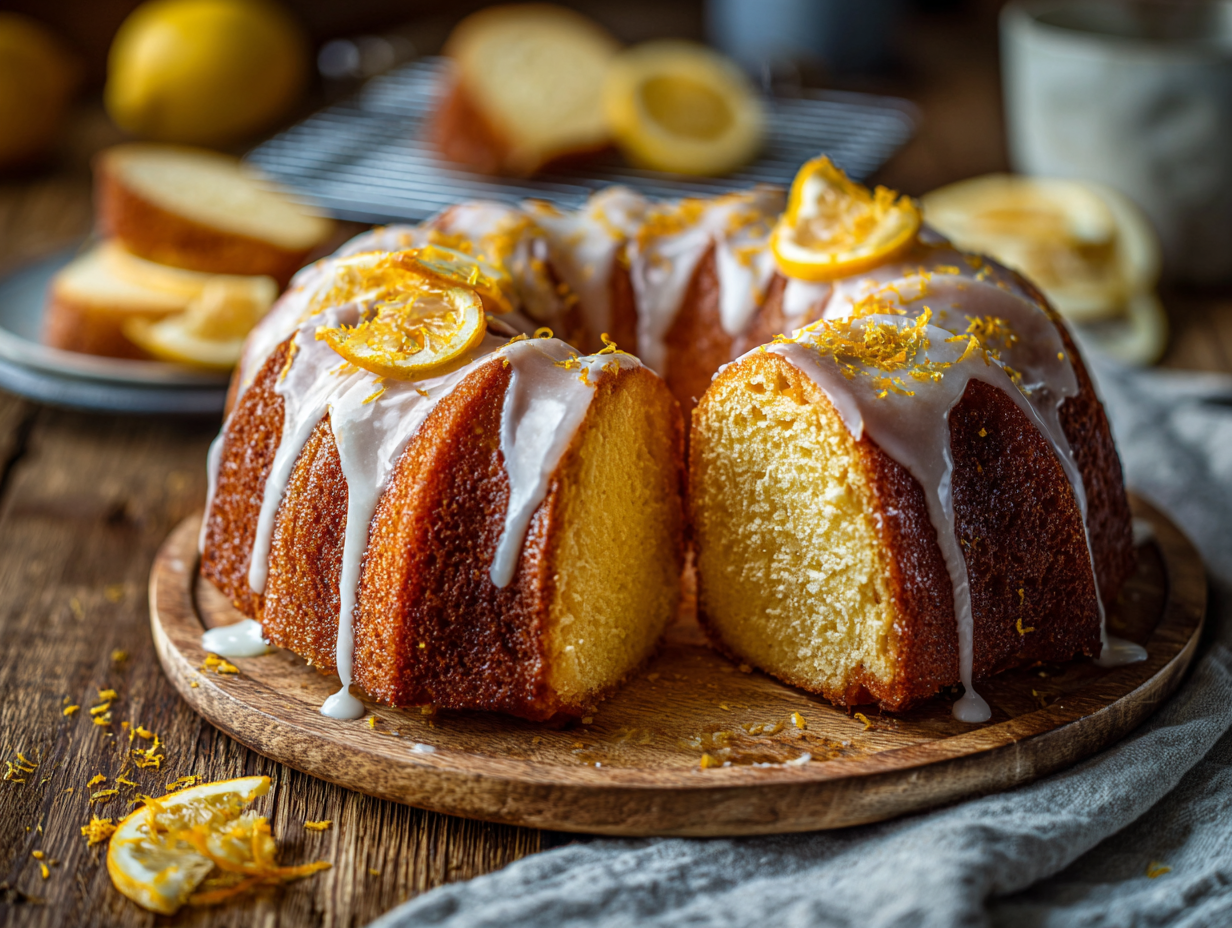
Lemon Bundt Cake

Equipment
- Bundt pan
- Mixing Bowls
- Electric Mixer
- Grater for zesting
- Spatula
- Cooling Rack
- Whisk
- Measuring cups and spoons
Ingredients
For the Cake:
- 2 ½ cups all-purpose flour sifted
- 2 tsp baking powder
- ½ tsp salt
- 1 cup unsalted butter room temperature
- 1 ¾ cups granulated sugar
- 4 large eggs room temperature
- ¼ cup fresh lemon juice from about 2 large lemons
- 1 tbsp lemon zest finely grated
- 1 cup buttermilk room temperature
For the Glaze:
- 1 ½ cups powdered sugar sifted
- 2 tbsp fresh lemon juice
- 1 tbsp milk
Instructions
- Preheat your oven to 350°F (175°C). Grease and flour a Bundt pan thoroughly to prevent sticking.
- In a medium mixing bowl, whisk together the flour, baking powder, and salt. Set aside.
- In a large mixing bowl, beat the butter and sugar together using an electric mixer on medium speed until the mixture is light and fluffy, about 3-5 minutes.
- Add the eggs one at a time, beating well after each addition. Continue by mixing in the lemon juice and lemon zest, ensuring they are well incorporated.
- With the mixer on low speed, alternately add the flour mixture and buttermilk to the butter mixture, beginning and ending with the flour. Mix until just combined and the batter is smooth.
- Pour the batter into the prepared Bundt pan and smooth the top with a spatula.
- Bake for 45-50 minutes, or until a skewer inserted into the center of the cake comes out clean.
- Allow the cake to cool in the pan for 15 minutes, then carefully invert it onto a wire rack to cool completely.
- For the glaze, whisk together the powdered sugar, lemon juice, and milk until smooth. Drizzle over the cooled cake and let it set before serving.
Notes
Tammy’s Tips:
- For an extra burst of flavor, consider incorporating poppy seeds into the batter.
- To make the cake more moist, try adding a tablespoon of Greek yogurt into the batter.
- If you prefer a dairy-free version, substitute the buttermilk with almond milk mixed with a teaspoon of lemon juice.