

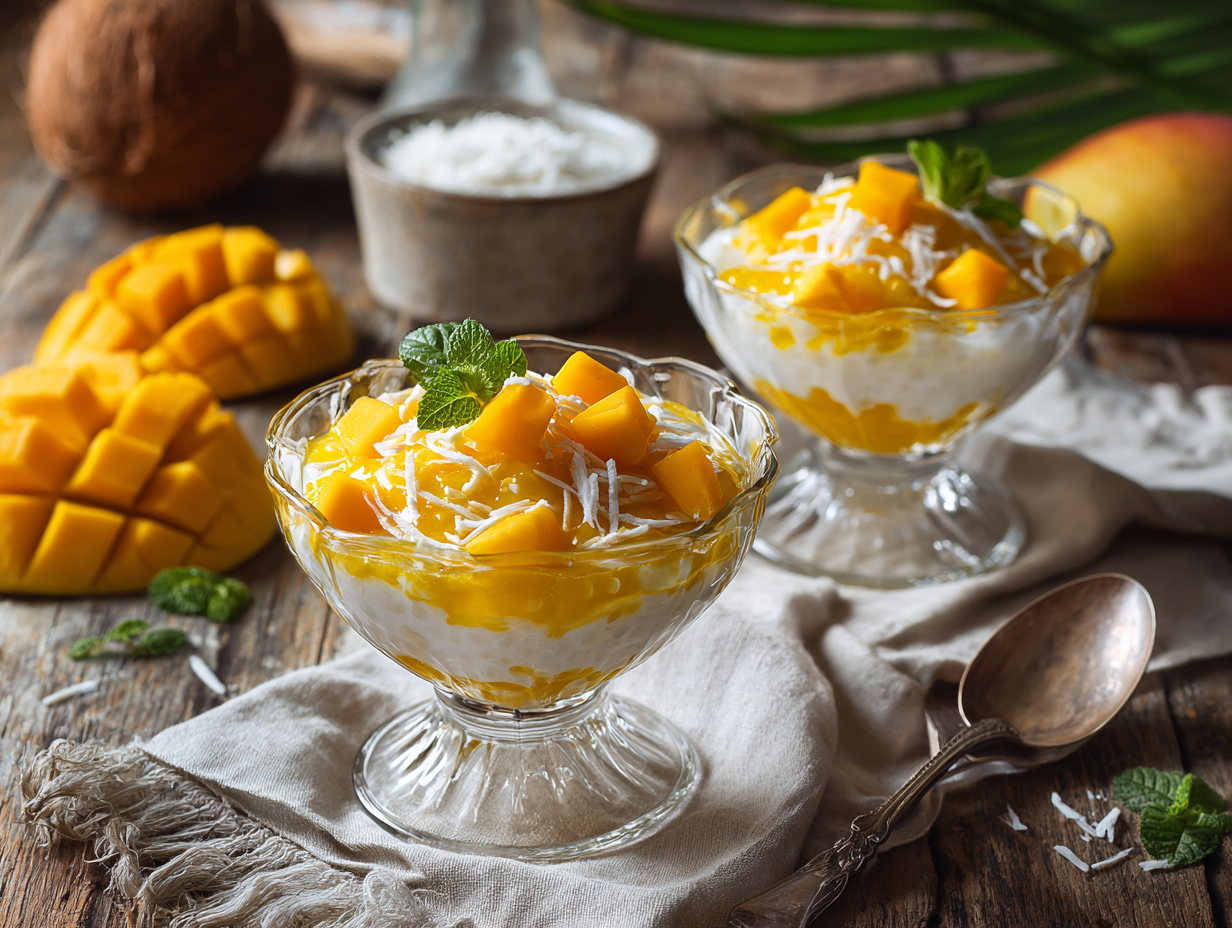
Mango sago is a chilled dessert made from blended fresh mango, full-fat coconut milk, and small tapioca pearls cooked until soft and slightly chewy. There is no baking, no special equipment beyond a blender and a saucepan, and the whole thing comes together in under an hour. The honest reason to make it: it is genuinely refreshing, it feeds four people easily, and it looks far more impressive than the effort involved.
What makes this version work
Two things matter here. First, cooking the sago correctly — you boil the pearls for 15 minutes, then drain and rinse them immediately under cold running water. That rinse stops the cooking and washes off the excess starch that would otherwise make the whole dessert gluey. Second, splitting the mango between a smooth purée and reserved whole cubes gives you two textures in the bowl instead of one. If you skip the reserved cubes and blend everything, the dessert becomes flat and uniform. Keep some mango back before you blend — it makes a real difference.
Substitutions that actually work
- Sago vs. tapioca pearls: Small tapioca pearls (the kind used for bubble tea) work as a direct swap. Look for the small variety, not the large boba size — those take much longer to cook and have a different texture in this dessert.
- Canned mango pulp: It works, but brands vary a lot in sweetness. Taste it before adding any sugar — you may need none at all, or very little.
- Light coconut milk: You can use it, but the dessert will be noticeably thinner and less creamy. Full-fat is worth it here.
- Sugar alternatives: Honey or agave dissolve easily into the cold purée and work fine. Palm sugar adds a slight caramel note if you want something a little different.
Make-ahead notes
This dessert is actually better made ahead — the flavors settle and the texture firms up after a couple of hours in the fridge. You can make the full mixture up to 24 hours in advance and keep it covered in the refrigerator. Beyond that, the sago pearls start to harden and lose their soft chew, so do not push it to two days. The sago and mango purée can be prepared separately and combined up to a day ahead, but add the coconut milk just before serving if you want the cleanest, creamiest result. This dessert does not freeze well — the sago pearls turn grainy and the texture breaks down.
Common problems and fixes
- Sago pearls are hard or chalky in the center: They needed more time. If there is still a solid white dot after 15 minutes, keep boiling in 2-minute increments and check again. The pearls should be almost fully translucent before you drain them.
- The dessert is too thick after chilling: Stir in a splash of coconut milk or cold water, a tablespoon at a time, until it loosens to the consistency you want. Chilling thickens it noticeably.
- The dessert is watery or separated: This usually means the sago was not drained thoroughly enough. After rinsing, shake the sieve well and let the pearls sit for a minute before adding them to the bowl.
- The mango purée tastes flat: Your mangoes were not quite ripe enough. A small squeeze of lime juice — even just a teaspoon — sharpens the flavor fast. Skip the garnish mint entirely if you are short on time; it adds nothing to the taste and just means an extra thing to wash.
- The mixture is too sweet or not sweet enough: Always taste the mango purée before adding sugar. Mango ripeness varies a lot, and the recipe’s quarter cup is a starting point, not a fixed amount.
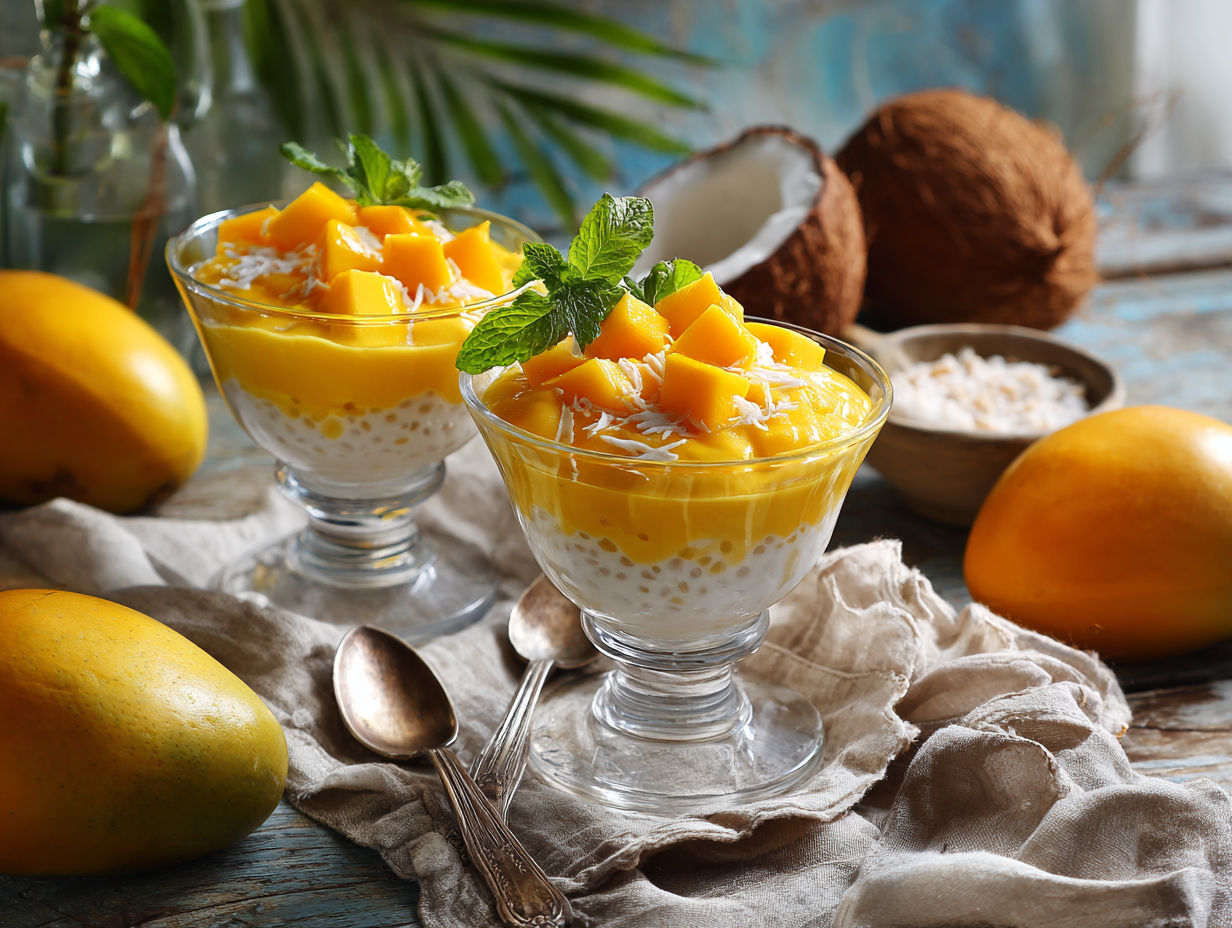
Mango Sago Dessert

Equipment
- Saucepan
- Mixing Bowl
- Blender
- Fine Mesh Sieve
Ingredients
Sago Pearls
- 1 cup sago pearls small variety
Main Ingredients
- 2 cups fresh mangoes peeled and diced
- 1 cup coconut milk full-fat for a creamy texture
- ¼ cup sugar adjust to taste depending on mango sweetness
Garnish
- 1 tablespoon mint leaves fresh, for garnishing
Instructions
- Prepare the sago by bringing a saucepan of water to a boil. Add sago pearls, stirring occasionally, and boil for about 15 minutes until translucent, with a hint of white in each center. Drain through a fine mesh sieve and rinse under cold running water to stop cooking.
- Blend the diced mangoes until smooth, reserving a few cubes for garnish. Adjust sweetness by tasting the puree and mix with sugar until dissolved.
- In a mixing bowl, combine the cooked sago, mango puree, and coconut milk. Stir gently until well combined and creamy.
Notes
Lori’s Tips
For a bit of twist, add a squeeze of fresh lime juice to the mango puree for an extra zesty kick. If you are unable to source fresh mangoes, canned mango pulp can be a substitute but check for sweetness intensity.Serving Suggestions
Serve chilled in individual bowls or glasses. Garnish with reserved mango cubes and a fresh mint leaf. Pair with a light jasmine tea for an elegant finish.Nutrition
Your questions, answered
Can I use large tapioca pearls instead of small sago pearls?
Small pearls are strongly recommended for this recipe. Large boba-size pearls take significantly longer to cook — sometimes 30 to 45 minutes — and their texture is much chewier and denser, which throws off the balance of the dessert.
How do I know when the sago pearls are done cooking?
They are ready when they are almost fully translucent, with only a faint white dot remaining in the center — that dot disappears completely during the rinse and resting time. If the pearls are still mostly white after 15 minutes, keep boiling and check every 2 minutes.
My mangoes are not very ripe. Can I still use them?
You can, but the purée will taste sharp and thin rather than sweet and full. If that is what you have, canned mango pulp will actually give you a better result than underripe fresh fruit.
Can I make this dairy-free or vegan?
It already is — coconut milk contains no dairy, and the recipe uses no animal products. No substitutions needed.
The sago pearls are clumping together into a solid mass. What went wrong?
They were not rinsed thoroughly enough after draining, or they sat too long before being mixed into the dessert. Rinse them well under cold running water, toss them gently in the sieve, and combine them with the mango and coconut milk while they are still slightly warm — they are much easier to separate at that stage.
More sweet things to bake
- Tropical Coconut Cardamom Ice Cream
- Tropical Lime Bars with Toasted Coconut Crunch
- Elegant Black Tea Panna Cotta
- Creamy Cardamom Pistachio Rice Pudding