

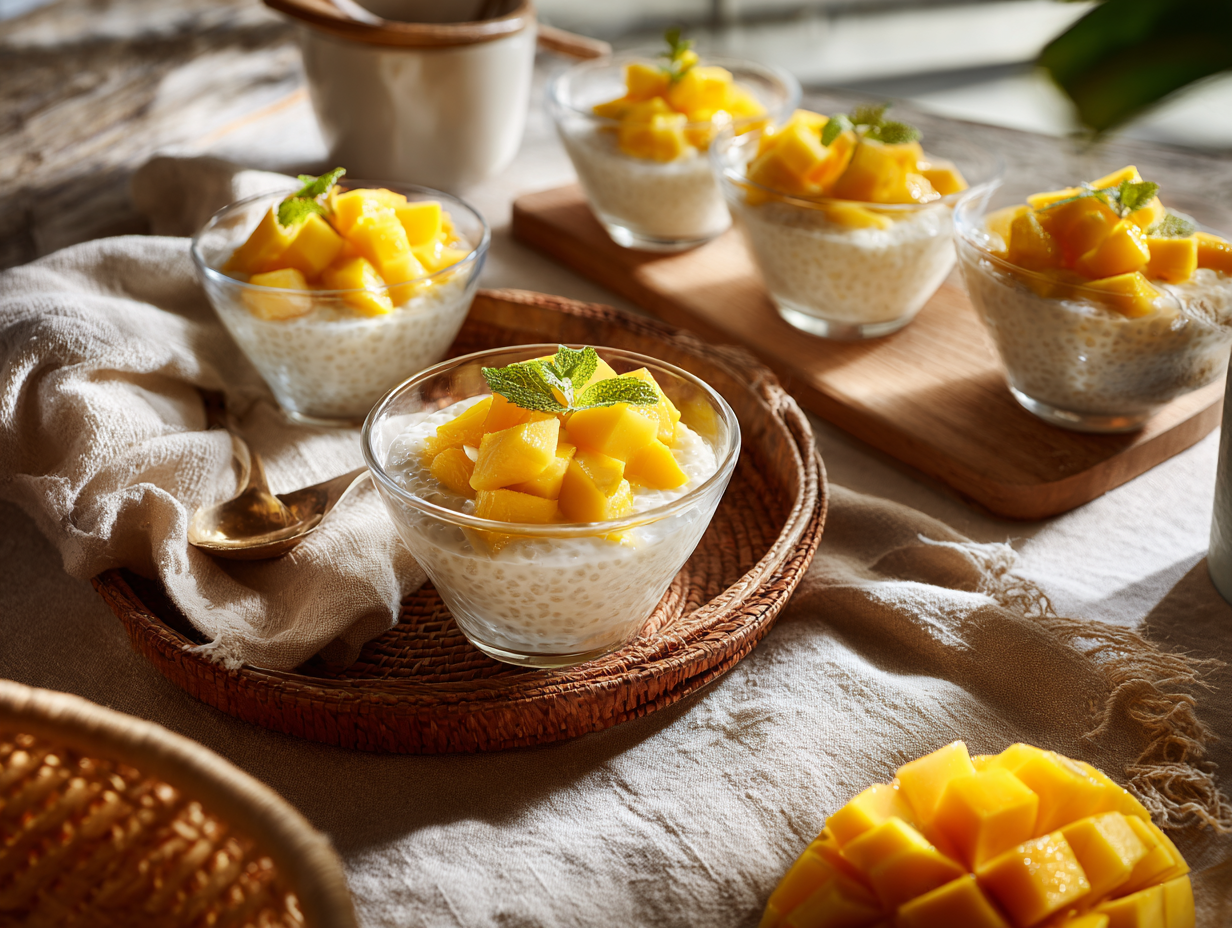
Mango sago is a chilled dessert made with cooked tapioca pearls, coconut milk, and fresh mango — cold, creamy, and ready in about 35 minutes of active work. It needs only five real ingredients, most of which keep well in the pantry, and it serves four without any baking or special equipment.
Before you start
The one technique that determines whether this dessert works is how you handle the sago pearls after cooking. Once they’re strained, rinse them immediately and thoroughly under cold running water — this stops the cooking, removes excess starch, and keeps the pearls separate rather than clumped into a single gummy mass. The second thing worth knowing: the coconut milk base is sweetened to taste before the pearls go in, so whisk and taste it first. Full-fat coconut milk varies in richness between brands, and a thinner can may need slightly less cold water to keep the texture from going watery.
What can go wrong
- Pearls turn hard or chalky in the center: This means they were undercooked. Sago should be fully translucent all the way through before you strain them. If a few still look white in the middle after 15 minutes, give them another 2–3 minutes and check again.
- The mixture sets too thick after chilling: Sago absorbs liquid as it sits. If the chilled dessert is stiffer than you’d like, stir in a splash of coconut milk or plain cold water before serving — it loosens easily.
- Mango tastes flat or fibrous: Underripe or off-season mangoes won’t carry this dessert. If fresh mangoes aren’t good right now, frozen mango chunks (thawed and drained) work well and are often sweeter and cheaper than mediocre fresh ones.
- Coconut milk separates into liquid and solids: This is normal, especially with full-fat cans. Shake or stir the can well before measuring, and whisk the base mixture until smooth before adding the pearls.
- Dessert tastes bland after chilling: Cold mutes sweetness. Taste the coconut milk base before refrigerating and make it slightly sweeter than you think you need — it will taste right once cold.
Make-ahead notes
The sago and coconut milk base can be combined and refrigerated up to 24 hours ahead — beyond that, the pearls keep absorbing liquid and the texture gets noticeably thick and dense. Keep the cubed mango separate in a covered container in the fridge and add it just before serving; mango sitting in the coconut milk overnight turns soft and loses its clean flavor. Freezing the finished dessert is not recommended — sago pearls turn grainy and unpleasant once frozen and thawed. If you’re working ahead for a gathering, the base is the part to prep the night before; the mango takes about two minutes to cube on the day.
Mango Sago Dessert

Equipment
- Medium saucepan
- Mixing Bowl
- Whisk
- Fine mesh strainer
Ingredients
- 1 cup small sago pearls available in Asian supermarkets
- 2 cups water
- 1 cup coconut milk preferably full-fat for richness
- ¼ cup sugar to taste
- 2 cups ripe mangoes cubed
- 1 teaspoon vanilla extract pure vanilla preferable
- ¼ cup cold water
Instructions
- Bring 2 cups of water to a boil in a medium saucepan. Add the sago pearls and cook for 10-15 minutes until translucent, stirring occasionally to prevent sticking.
- Once cooked, strain the sago pearls using a fine mesh strainer and rinse under cold water. Set aside.
- In a mixing bowl, combine the coconut milk, sugar, vanilla extract, and 1/4 cup of cold water. Whisk until fully dissolved and well mixed.
- Fold the cooked sago pearls into the coconut milk mixture and stir gently to combine.
- Chill the mixture in the refrigerator for at least 1 hour for flavors to meld.
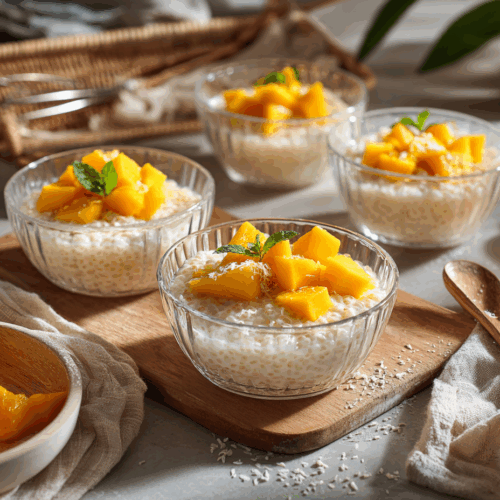
- Before serving, divide the chilled sago mixture into four bowls and top each with a generous amount of cubed mangoes.
Notes
- For a twist, add a splash of lime juice for a hint of tanginess or substitute sweetened condensed milk for a richer taste.
- To make vegan, ensure all ingredients are plant-based, as some sugars are refined with bone char.
Nutrition
Frequently asked questions
Can I use tapioca pearls instead of sago pearls?
Yes — small tapioca pearls are the most practical substitute and behave almost identically in this recipe. They’re sold in most grocery stores and Asian supermarkets, often more widely than true sago, and the cooked texture is nearly the same: soft, slightly chewy, and translucent.
Can I use light coconut milk to cut calories?
You can, but the base will be noticeably thinner and less creamy. To compensate, reduce the added cold water from ¼ cup to just a tablespoon or skip it entirely, which keeps the consistency closer to what full-fat coconut milk produces.
My sago pearls clumped together after cooking — can I fix it?
Run them under cold water again and break them apart gently with a spoon or your fingers. The clumping happens when excess starch isn’t fully rinsed off or when the pearls sit too long before being added to the coconut milk base, so move quickly after straining.
Can I sweeten this with honey or maple syrup instead of sugar?
Both work fine — use the same quantity by volume and whisk well, since liquid sweeteners take a moment longer to fully incorporate into cold coconut milk. Skip the garnish of condensed milk if you go this route; the flavor is already rounded and adding it makes the dessert too sweet.
What to bake next
- Tropical Coconut Cardamom Ice Cream
- Toasted Coconut Custard Pie
- Creamy Cardamom Pistachio Rice Pudding
- Caramelized Banana Tart