

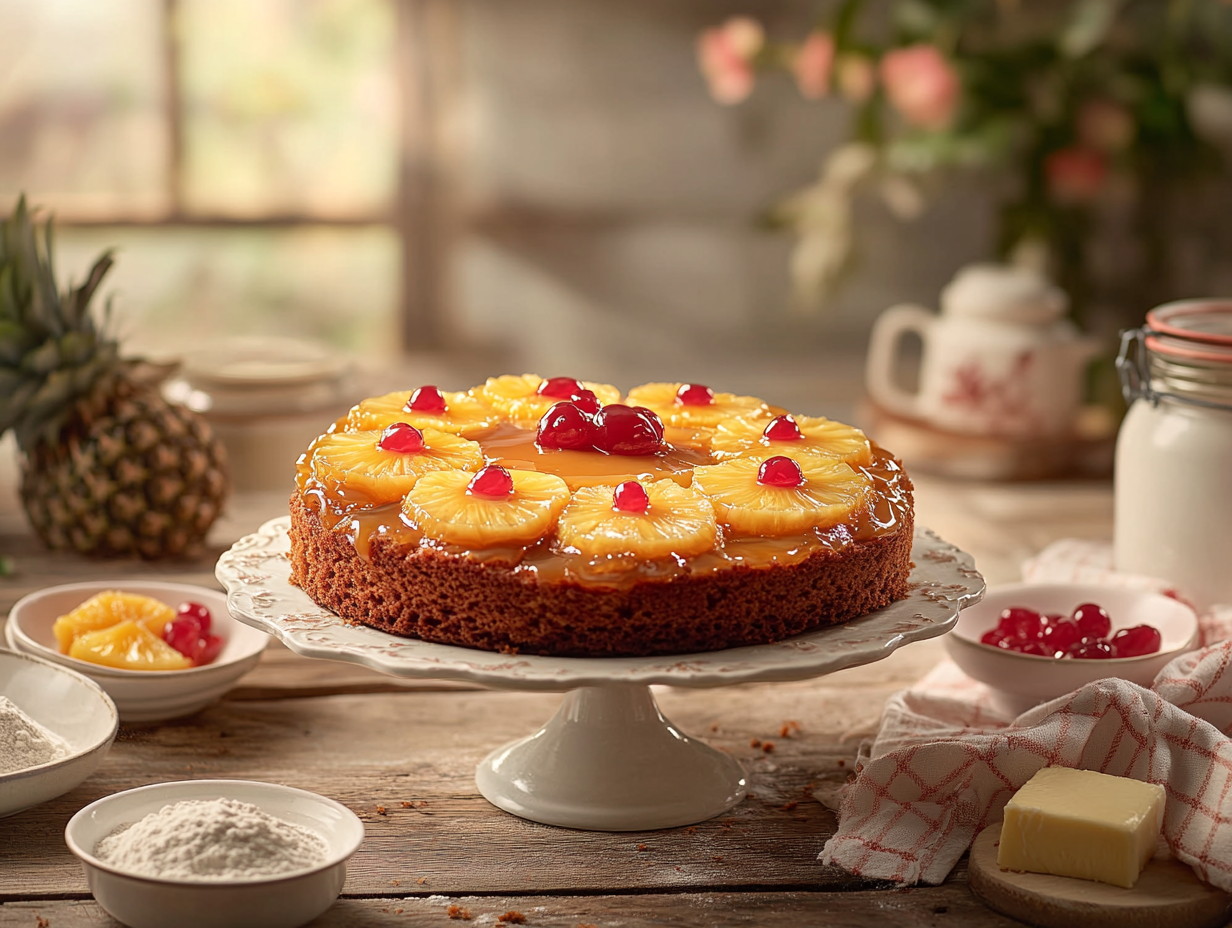
Pineapple upside-down cake is a single-layer butter cake baked over a brown sugar and pineapple base, then flipped so the caramelized fruit becomes the top. The whole thing takes just over an hour, uses one can of pineapple, and comes out of the pan looking far more impressive than the effort involved. It’s a genuinely good cake — moist, not too sweet, and easy to pull off on your first try.
Shopping notes
- Canned pineapple slices: Buy the slices, not chunks or crushed — you need the rings for the pattern. An 8-ounce can gives you roughly 4–5 rings, which fits a 9-inch pan. Reserve the juice from the can before you drain it; you need half a cup for the batter.
- Maraschino cherries: These are optional and purely decorative. Skip the garnish — not worth the extra dish. If you do use them, pat them dry with a paper towel so they don’t bleed pink into the brown sugar layer.
- Brown sugar: Light or dark both work. Dark brown sugar gives a slightly deeper, more molasses-forward caramel layer. Either is fine.
- Whole milk: Don’t substitute skim here. The fat content matters for the crumb texture. Full-fat buttermilk also works and adds a mild tang.
What makes this version work
Two things matter most. First, the melted butter goes directly into the pan before the brown sugar — don’t stir them together. As the cake bakes, they fuse into a thin, sticky caramel that clings to the fruit and soaks into the bottom of the batter. If you mix them in a bowl first, the caramel can seize up and turn grainy instead of glossy. Second, the batter uses both reserved pineapple juice and whole milk as the liquid, added in alternating additions with the dry ingredients. This keeps the gluten from overdeveloping, which is what gives the cake its tender crumb rather than a tough or rubbery texture. Mix only until the last streak of flour disappears — a few lumps are fine.
Troubleshooting
- The topping sticks to the pan when you flip it: You didn’t wait long enough. Ten minutes of cooling is the minimum — the caramel needs to firm up slightly so it releases cleanly. Run a thin knife around the edge of the pan before inverting, and flip it decisively rather than slowly.
- The caramel layer is watery or pooled: The pineapple slices weren’t drained well enough. Press them between paper towels before arranging them in the pan. Excess moisture prevents the caramel from setting.
- The cake is dense or gummy in the center: The batter was overmixed, or the oven temperature was off. Use an oven thermometer if you’re unsure — many home ovens run 15–25°F low. A toothpick should come out with no wet batter, just a few moist crumbs.
- The fruit pattern slides when you flip: The cherries or pineapple shifted during baking. Press the fruit gently but firmly into the brown sugar layer before pouring the batter. The batter should be spooned over carefully, not poured from height.
- The edges are browning too fast: Your pan may be dark-colored, which absorbs more heat. Tent loosely with foil after 30 minutes and continue baking until the toothpick test passes.
Storage and make-ahead
The cake keeps well at room temperature, covered loosely, for up to two days — the caramel layer actually improves overnight as it settles into the crumb. After that, refrigerate it for up to four more days; bring individual slices back to room temperature for 20–30 minutes before serving, or warm them briefly in a microwave for about 15 seconds. For make-ahead baking, you can freeze the fully cooled, inverted cake (caramel side up) wrapped tightly in plastic and then foil for up to two months. Thaw overnight in the refrigerator. The caramel layer may look dull after freezing, but a few minutes at room temperature restores the sheen.

Classic Pineapple Upside-Down Cake

Ingredients
- ¼ cup unsalted butter melted
- ¾ cup packed brown sugar light or dark
- 1 can pineapple slices drained, 8 ounces
- 8-10 handful maraschino cherries optional
- 1 and ¾ cups all-purpose flour
- 2 teaspoons baking powder
- ¼ teaspoon salt
- ½ cup unsalted butter softened
- 1 cup granulated sugar
- 2 large eggs room temperature
- 1 teaspoon vanilla extract pure
- ½ cup pineapple juice reserved from can
- ½ cup whole milk room temperature
Instructions
- Preheat the oven to 180°C (350°F). Grease a 9-inch (23cm) round cake pan.
- Pour the melted butter into the prepared pan, then sprinkle evenly with the brown sugar. Arrange the pineapple slices and cherries in a decorative pattern atop the brown sugar layer.
- Whisk together the flour, baking powder, and salt in a medium bowl. Set aside.
- In a large bowl, beat the softened butter with the granulated sugar on high speed until creamy, about 2 minutes. Add eggs and vanilla, mixing until combined.
- Alternately add the dry ingredients and the combined pineapple juice and milk, starting and ending with the dry ingredients. Mix on low speed until just combined; do not overmix.
- Pour the batter evenly over the pineapple layer, smoothing it with a spatula.
- Bake for 40–45 minutes, or until a toothpick inserted into the center of the cake comes out clean.
- Allow the cake to cool in the pan for 10 minutes, then carefully invert onto a serving plate. Cool for at least 30 minutes before serving warm or at room temperature.
Notes
Nutrition
FAQ
Can I use fresh pineapple instead of canned?
Fresh pineapple works, but it introduces more moisture and can make the caramel layer watery. If you use it, slice the rings about a quarter-inch thick, pat them very dry, and note that you’ll need to substitute the pineapple juice in the batter with an equal amount of whole milk or store-bought pineapple juice.
How do I know when the cake is actually done?
A toothpick inserted into the center of the cake — not into the fruit layer — should come out clean or with just a couple of moist crumbs. The top of the batter will also look set and spring back lightly when pressed. If the edges are done but the center is still wet, reduce the oven to 325°F and bake in 5-minute increments.
Do I need a stand mixer for this?
No — a hand mixer works perfectly well, and the creaming step only takes about two minutes. You can even do it by hand with a wooden spoon if your butter is properly softened, though your arm will know about it.
Can I make this in a different pan size?
A 9-inch round pan is strongly recommended for this recipe as written. A smaller pan risks overflow since the batter fills it close to the top, and a larger pan produces a thinner cake that overbakes quickly. If you want to use an 8-inch pan, reduce the batter by about a quarter and expect a slightly longer bake time.
What to bake next
- Caramelized Banana Tart
- Tropical Coconut Tres Leches Cake
- Nostalgic Malted Milk Chocolate Cake
- Autumn Spiced Pear and Almond Cake