

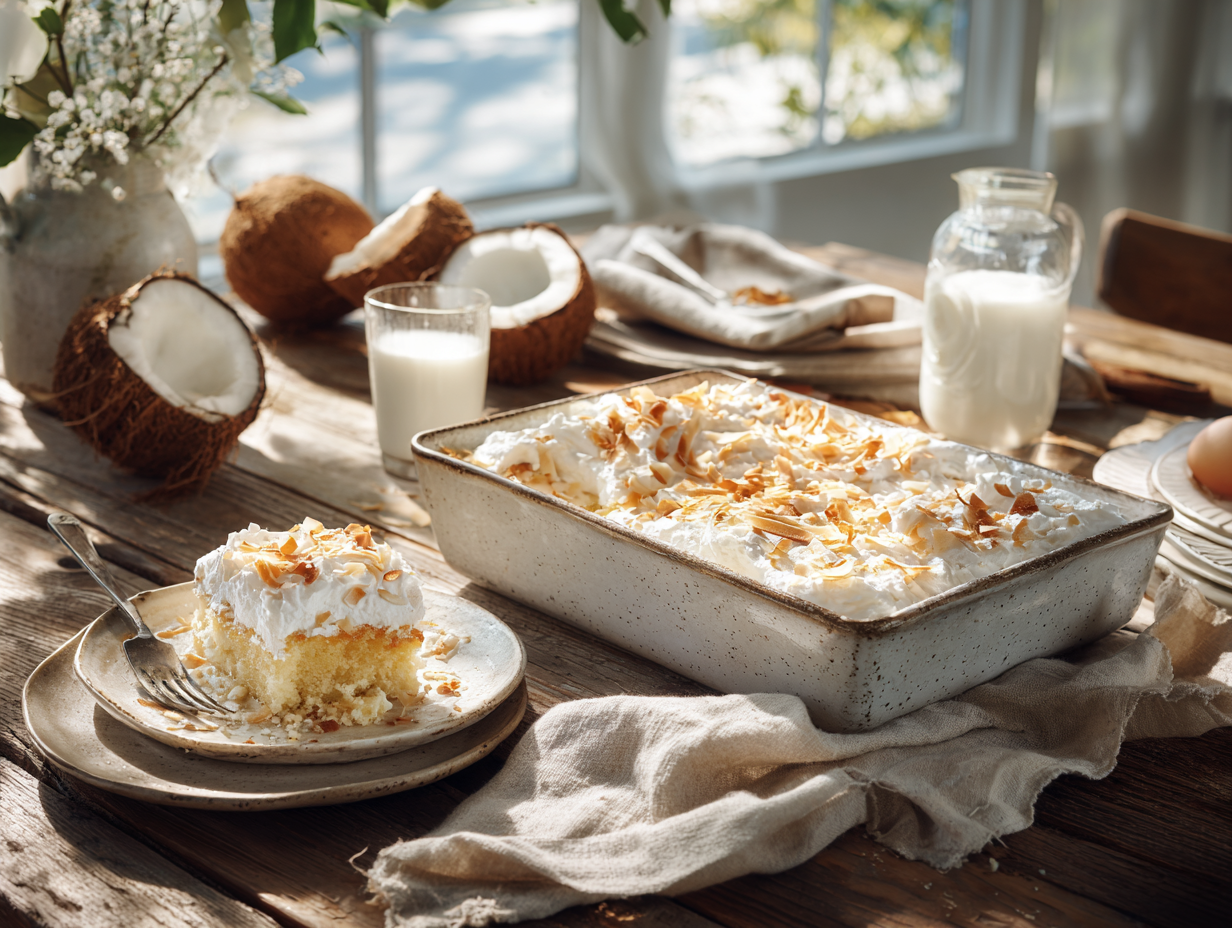
Coconut tres leches is a sheet cake soaked in a three-milk mixture — coconut milk, sweetened condensed milk, and evaporated milk — until it is thoroughly saturated, then topped with whipped cream and toasted coconut flakes. The honest reason to make it: it is one of the few cakes that actually gets better the longer it sits in the fridge, which means you can bake it the day before and serve it without any last-minute stress. The texture is unlike a standard layer cake — dense with moisture, almost pudding-like, in the best possible way.
The short version of why this works
Two things make or break this cake. First, the sponge has to be fully cool before you pour on the milk mixture — pour it warm and the cake compresses into a gummy layer instead of absorbing evenly. Second, pierce the cake aggressively and all the way to the bottom of the pan. A fork works, but a skewer or chopstick gets you deeper holes and faster absorption. Pour the milk mixture slowly, in stages if needed, and let it sit for a few minutes between pours so the liquid actually travels down rather than pooling on top. Those two steps are the whole secret.
Troubleshooting
- Milk mixture is sitting on top and not soaking in: The holes are too shallow or too few. Use a skewer and go all the way to the pan floor. Pour in thirds, waiting two minutes between each pour.
- Cake tastes bland after soaking: Full-fat coconut milk is essential here — light coconut milk does not carry enough flavor or fat to come through once diluted by the other two milks. Check the can before you start.
- Whipped cream weeps or slides off: The cake was not cold enough when you spread the topping. Refrigerate the soaked cake for at least two hours first, and make sure your cream is well chilled before whipping.
- Cake sticks to the pan when serving: Tres leches is always served directly from the baking dish — do not attempt to unmold it. Run a thin spatula around the edges before cutting and scoop portions out with a wide spatula or large spoon.
- Edges are drier than the center: The edges absorb the soak faster and can dry out if the cake over-bakes. Pull it at the first clean toothpick reading and do not wait for the edges to pull away from the pan.
Storage and freezing
Cover the finished cake tightly with plastic wrap and refrigerate — it keeps well for up to four days, and the flavor genuinely improves between day one and day two as the milk mixture settles into the crumb. If you want to get ahead, bake and soak the cake up to two days before serving, then add the whipped cream topping on the day you plan to serve it. Skip the garnish — toasted coconut flakes go soft in the fridge overnight, so they are not worth adding until right before the cake hits the table. Freezing the fully assembled cake is not recommended because the whipped cream breaks on thawing, but you can freeze the plain baked sponge (before soaking) for up to one month; thaw it overnight in the fridge, then proceed with the milk soak.
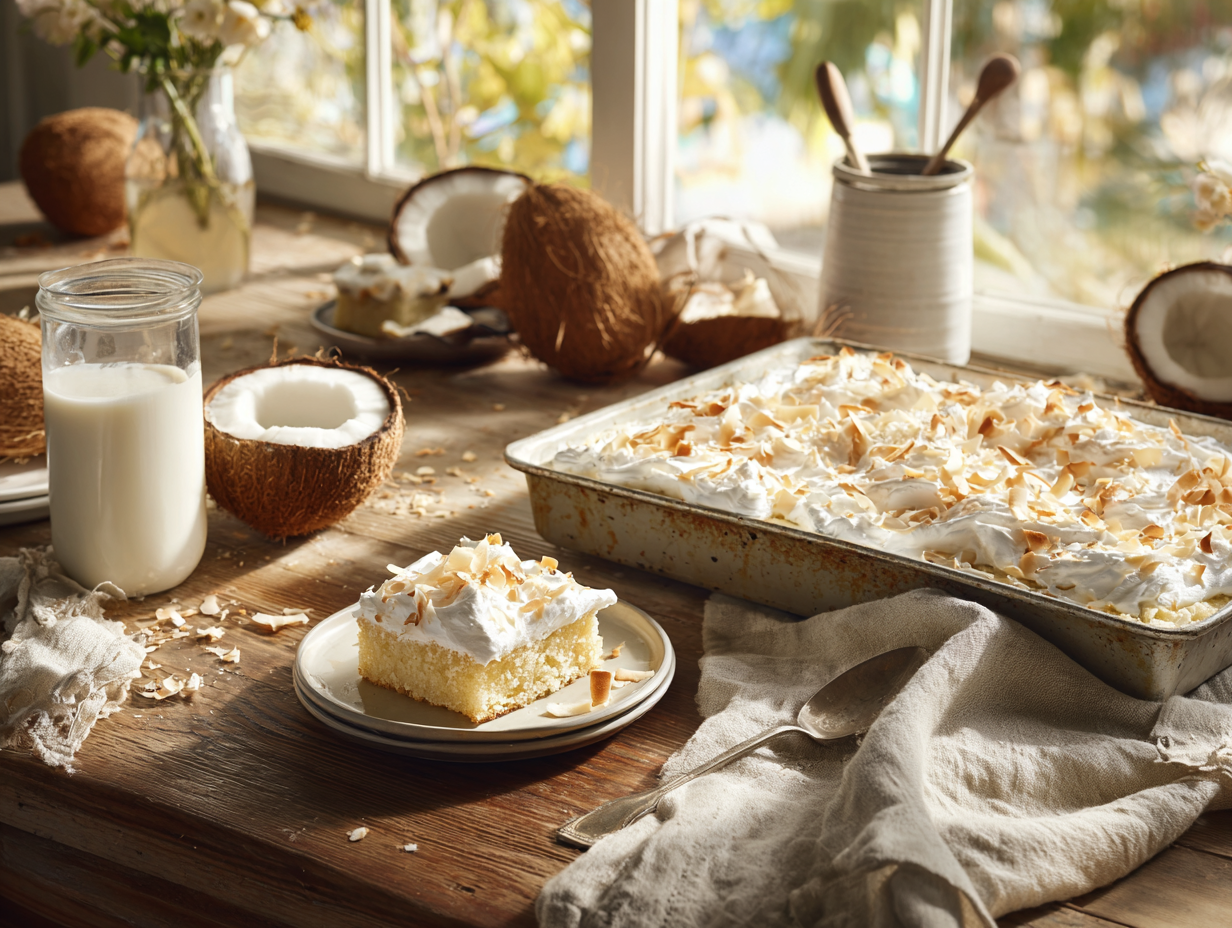
Coconut Tres Leches Cake

Equipment
- 9x13 inch baking dish
- Electric Mixer
- Mixing Bowls
- Spatula
Ingredients
For the Cake:
- 1 cup all-purpose flour sifted
- 1 ½ teaspoons baking powder
- ¼ cup unsalted butter softened
- 1 cup granulated sugar
- 5 large eggs at room temperature
- 1 teaspoon vanilla extract
For the Milk Mixture:
- 1 cup coconut milk full-fat for best results
- 1 cup sweetened condensed milk
- 1 cup evaporated milk
For the Topping:
- 1 ½ cups heavy whipping cream
- 2 tablespoons confectioners’ sugar
- ½ cup toasted coconut flakes for garnish
Instructions
- Preheat your oven to 350°F (175°C). Grease a 9x13 inch baking dish.
- In a mixing bowl, combine the flour and baking powder. Set aside.
- Using an electric mixer, cream the butter and sugar until pale and fluffy. Add eggs one at a time, mixing well after each addition. Stir in the vanilla extract.
- Gradually fold in the flour mixture until combined. Pour the batter into the prepared baking dish and spread evenly.
- Bake for 25-30 minutes, or until a toothpick inserted comes out clean. Let it cool completely.
- In a medium bowl, whisk together the coconut milk, sweetened condensed milk, and evaporated milk.
- Once the cake is cool, pierce it thoroughly with a fork. Slowly pour the milk mixture over the cake, letting it absorb.
- For the topping, whip the heavy cream and confectioners’ sugar until soft peaks form. Spread over the cake and top with toasted coconut flakes.
Notes
- To accentuate the coconut flavor, you can add a teaspoon of coconut extract to the milk mixture.
- If you prefer a dairy-free version, substitute the condensed and evaporated milk with coconut cream and sweetened almond milk.
Nutrition
FAQ
Can I make this cake the night before?
Yes, and it is actually the best approach. The soak needs at least two hours of refrigeration to fully absorb, and overnight gives you an even better result. Just hold off on the whipped cream topping until the day you serve it.
My cake looks very wet after pouring the milk mixture — is that normal?
Yes, it is normal and expected. The liquid will look like it is sitting on top at first; give it at least 30 minutes at room temperature and then refrigerate — it continues absorbing as it chills. If there is still a small amount of unabsorbed liquid at the bottom of the pan after chilling, that is fine.
Do the eggs need to be at room temperature?
Room-temperature eggs incorporate into the batter much more smoothly than cold ones, which helps the sponge stay light. Take them out of the fridge about 30 minutes before you start, or set them in a bowl of warm water for 10 minutes if you forgot.
What does ‘soft peaks’ mean for the whipped cream?
Soft peaks means the cream holds a shape when you lift the beaters but the tip of the peak folds over gently rather than standing straight up. Stop there — if you keep going the cream gets grainy and stiff, which makes it harder to spread over the wet cake surface.
Can I use light coconut milk instead of full-fat?
It will work structurally, but the coconut flavor will be noticeably weaker. Full-fat coconut milk has the fat content needed to carry the flavor through the soak — light versions are mostly water and will taste thin.
How do I know when the sponge is done baking?
Insert a toothpick into the center of the cake — it should come out clean or with just a dry crumb or two. The surface should be set and lightly golden; if it still looks wet or jiggles when you move the pan, give it another three to five minutes and check again.
Try these next
- Tropical Coconut Custard Pie
- Tropical Lime Bars with Toasted Coconut
- Rustic Blackberry Almond Cake
- Creamy Caribbean Coconut Ice Cream