

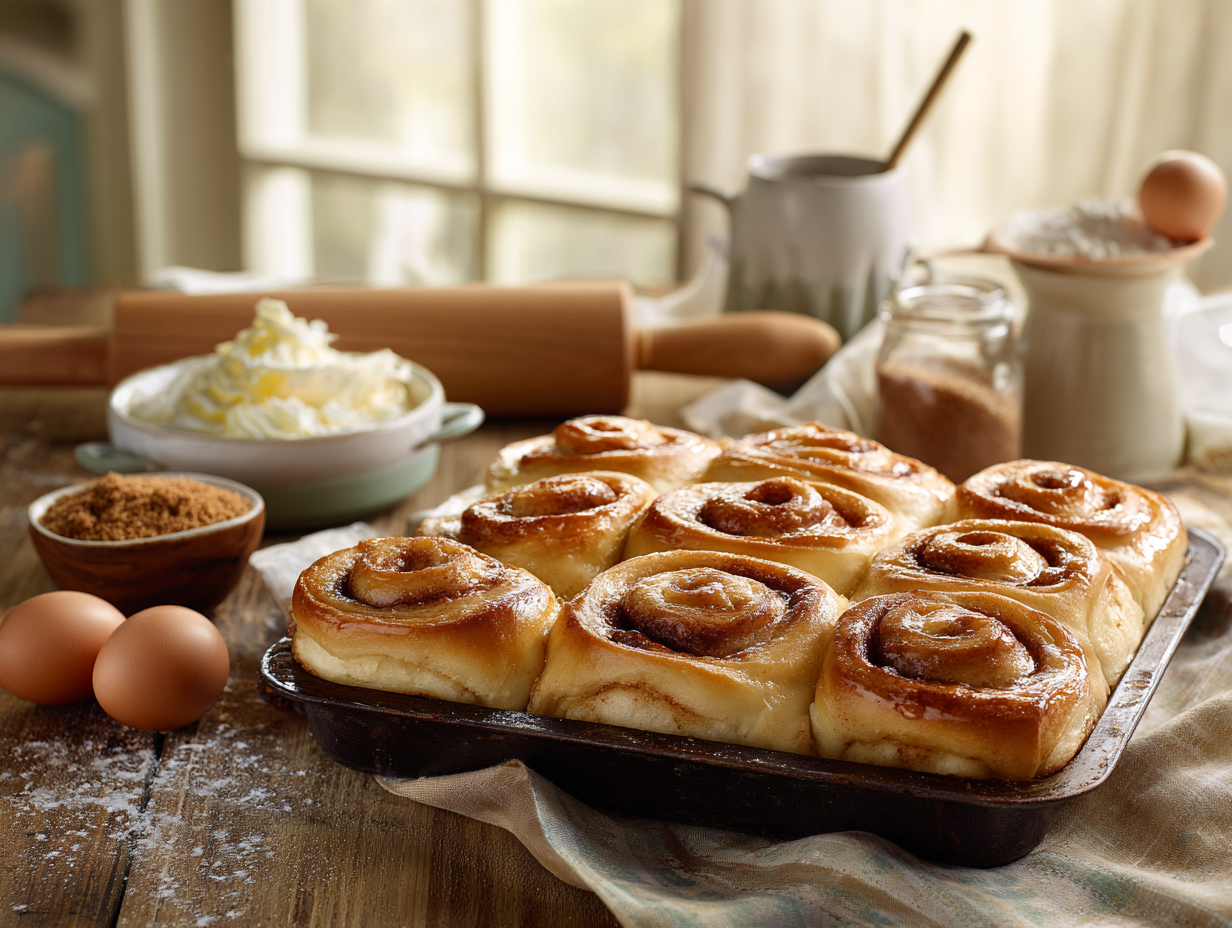
These are yeasted cinnamon-butter rolls with a soft, enriched dough — closer to a classic Southern butter roll than a heavily frosted cinnamon bun. The filling is simple: brown sugar, butter, and cinnamon that melts into the layers as they bake. If you want a from-scratch roll that’s genuinely satisfying without a lot of fuss, this is a solid recipe to keep.
What makes this version work
Two things matter most here. First, the milk temperature when you bloom the yeast — it needs to be warm but not hot, around 100–110°F. Too cool and the yeast won’t activate; too hot and you’ll kill it. A kitchen thermometer takes the guesswork out entirely. Second, the second rise after slicing. Cutting the roll compresses the dough, and that 30-minute rest before baking lets the structure recover so you get a light, open crumb instead of a dense, tight one. Don’t rush it, even if the rolls look ready to go in.
Common problems and fixes
- Filling leaks out onto the pan: The butter in the filling is too soft or you’ve spread it too close to the edges. Leave a half-inch border around the dough before adding the filling, and make sure the butter is softened but not melted.
- Rolls unravel during baking: The dough wasn’t rolled tightly enough from the long side. Use both hands and keep steady, even pressure as you roll. Pinch the seam firmly against the log before slicing.
- Bottoms brown too fast before the centers cook through: Your baking sheet is too thin or too dark. Use a light-colored, heavy-gauge pan, or place a second sheet underneath as a buffer. Check at the 20-minute mark.
- Dough feels sticky and won’t hold shape when rolling out: It probably needs another 5 minutes of kneading, or the dough chilled slightly during the rise. Let it rest uncovered on the counter for 5 minutes before rolling — it relaxes and becomes easier to handle.
- Rolls are dry the next day: They were overbaked. Pull them when the tops are just golden and the internal temperature hits around 190°F. A minute or two over makes a real difference in texture by day two.
Storage and freezing
Store leftover rolls in an airtight container at room temperature for up to 2 days — skip the fridge, which dries them out fast. To reheat, wrap a roll loosely in a damp paper towel and microwave for 20–25 seconds. For longer storage, freeze the baked rolls individually wrapped in plastic, then sealed in a zip bag; they keep well for up to 6 weeks. Thaw at room temperature for an hour or reheat straight from frozen in a 300°F oven for about 12 minutes. You can also freeze the unbaked sliced rolls on a sheet pan, transfer to a bag once solid, and bake from frozen — add 10–12 minutes to the bake time and let them proof at room temperature for 45 minutes first. Skip glazing before freezing — not worth the extra dish.
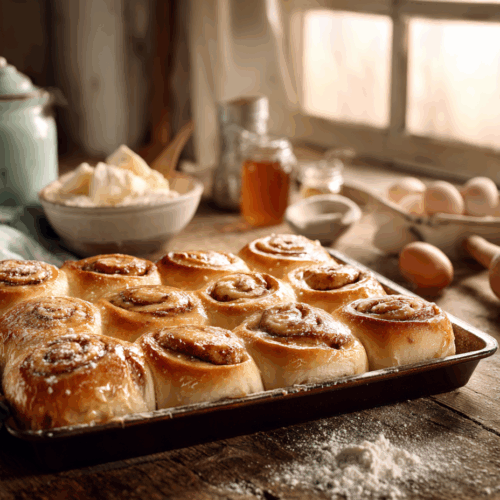
Heavenly Butter Rolls

Equipment
- Mixing Bowl
- Measuring cups and spoons
- Rolling pin
- Baking sheet
- Pastry brush
Ingredients
For the Dough:
- 4 cups all-purpose flour sifted
- 1 package active dry yeast
- 1 cup whole milk warmed
- ½ cup unsalted butter melted
- ½ cup granulated sugar
- 1 teaspoon salt
- 2 large eggs room temperature
For the Filling:
- ¼ cup brown sugar packed
- ½ cup unsalted butter softened
- 1 teaspoon cinnamon
Instructions
- In a mixing bowl, dissolve the yeast in warm milk and let it sit until foamy, approximately 5-10 minutes.
- Add the melted butter, sugar, salt, and eggs to the yeast mixture. Mix until well-blended.
- Gradually add the sifted flour, beating well until a soft dough forms.
- Knead the dough on a floured surface for about 10 minutes until smooth and elastic.
- Place the dough in a greased bowl, cover, and let rise in a warm place until doubled in size, roughly 1-2 hours.
- Preheat oven to 350°F (175°C).
- Once the dough has risen, punch it down and roll it out to a 12x18-inch rectangle.
- Spread the softened butter over the dough, sprinkle with brown sugar, and dust with cinnamon.
- Roll up the dough tightly from the long side, then slice into 8 equal pieces.
- Place slices on a greased baking sheet, brush with additional melted butter, and let them rise for an additional 30 minutes.
- Bake for 20-25 minutes until golden brown. Serve warm.
Notes
Tammy’s Tips:
- Allow the butter and eggs to come to room temperature to ensure they incorporate smoothly with the dry ingredients.
- For a hint of citrus, add a teaspoon of orange or lemon zest to the filling.
- For a sweeter roll, increase the sugar in the dough by an additional 1/4 cup.
Nutrition
Frequently asked questions
Can I use instant yeast instead of active dry yeast?
Yes, instant yeast works as a direct swap at the same quantity. You can mix it straight into the flour without blooming it in the milk first, though blooming it anyway doesn’t hurt anything.
How do I know when the dough has risen enough?
The dough should roughly double in size and feel puffy when you gently press it. Do the poke test — press a floured finger about half an inch into the dough; if the indent springs back slowly and partially, it’s ready.
Can I make the dough the night before?
Yes — after the first rise, punch the dough down, cover it tightly, and refrigerate overnight. The next day, let it sit at room temperature for about 30 minutes before rolling it out, then continue with the filling and second rise as normal.
My rolls came out dense. What went wrong?
Most likely the yeast wasn’t fully active before you added the other ingredients, or the dough didn’t get enough kneading. Make sure the yeast mixture is visibly foamy before proceeding, and knead the full 10 minutes — the dough should feel smooth and spring back when poked.
If you liked this one
- Southern Maple Bourbon Bread Pudding
- Chocolate Babka (Swirled Sweet Bread)
- Luxurious Almond Croissant Bread Pudding
- Gourmet Homemade Pop-Tarts