

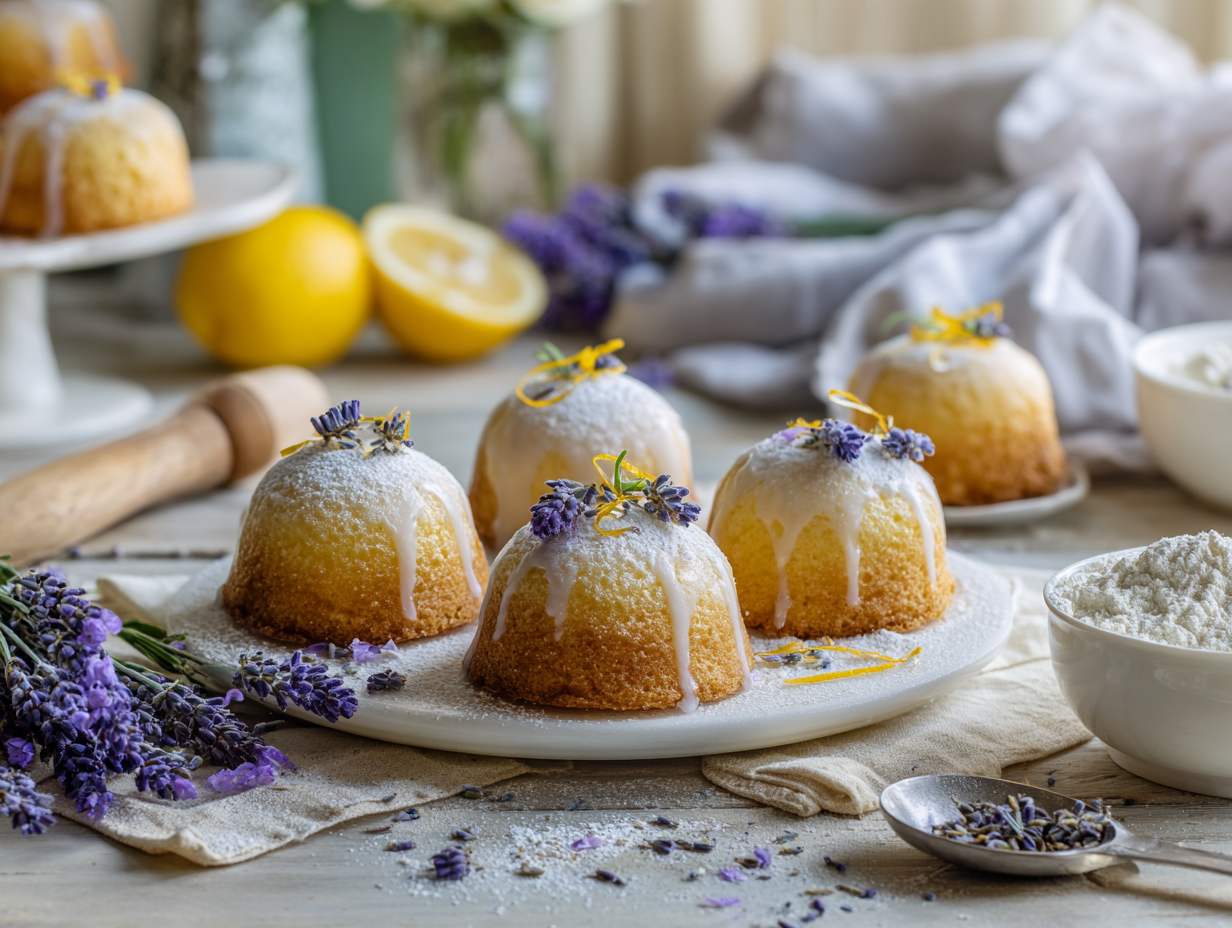
These are small, individually portioned sponge cakes flavored with lemon zest and a measured amount of ground culinary lavender. The batter comes together in about 20 minutes, bakes in 20 more, and makes 8 cakes — enough for a dessert spread or an afternoon tea without a lot of fuss. If you have butter, eggs, flour, and a lemon on hand, you are most of the way there.
The short version of why this works
Two things matter most here. First, creaming the butter and sugar until genuinely light and fluffy — not just combined — builds the air into the batter that gives these small cakes their lift. Mini cakes have less volume than a full-size cake, so they rely on that trapped air more than a larger bake would. Second, alternating the dry ingredients and milk rather than adding them all at once keeps the batter from going dense or curdling. Start and end with the flour mixture, and add the milk in two small pours. That is all the technique this recipe asks for.
Troubleshooting
- Cakes stick to the pans even after greasing: Greasing alone is sometimes not enough with mini pans, which have more surface area relative to batter. Line the bottoms with small circles of parchment after greasing, then flour the sides. This takes an extra two minutes and prevents a lot of frustration.
- Lavender flavor tastes soapy or harsh: This almost always means the lavender was not ground finely enough, or too much was used. Measure after grinding, not before — whole buds pack differently than ground. If you are using a mortar and pestle, keep going until it is a fine powder with no whole pieces remaining.
- Cakes dome unevenly or one side rises higher: Your oven likely has a hot spot. Rotate the pan halfway through baking, around the 10-minute mark. This is worth doing with any mini cake pan regardless of oven age.
- Batter curdles when eggs are added: This happens when the eggs are colder than the butter. Room temperature means it — set them out 30 minutes ahead. If the batter does look broken, add a tablespoon of your measured flour and beat briefly; it usually pulls back together.
- Cakes are dry after cooling: They were likely overbaked by a few minutes. At the 18-minute mark, check with a toothpick — a moist crumb or two clinging to it is fine. These are small cakes and carry-over heat continues cooking them in the pan during the 5-minute rest, so pull them just before they look fully done.
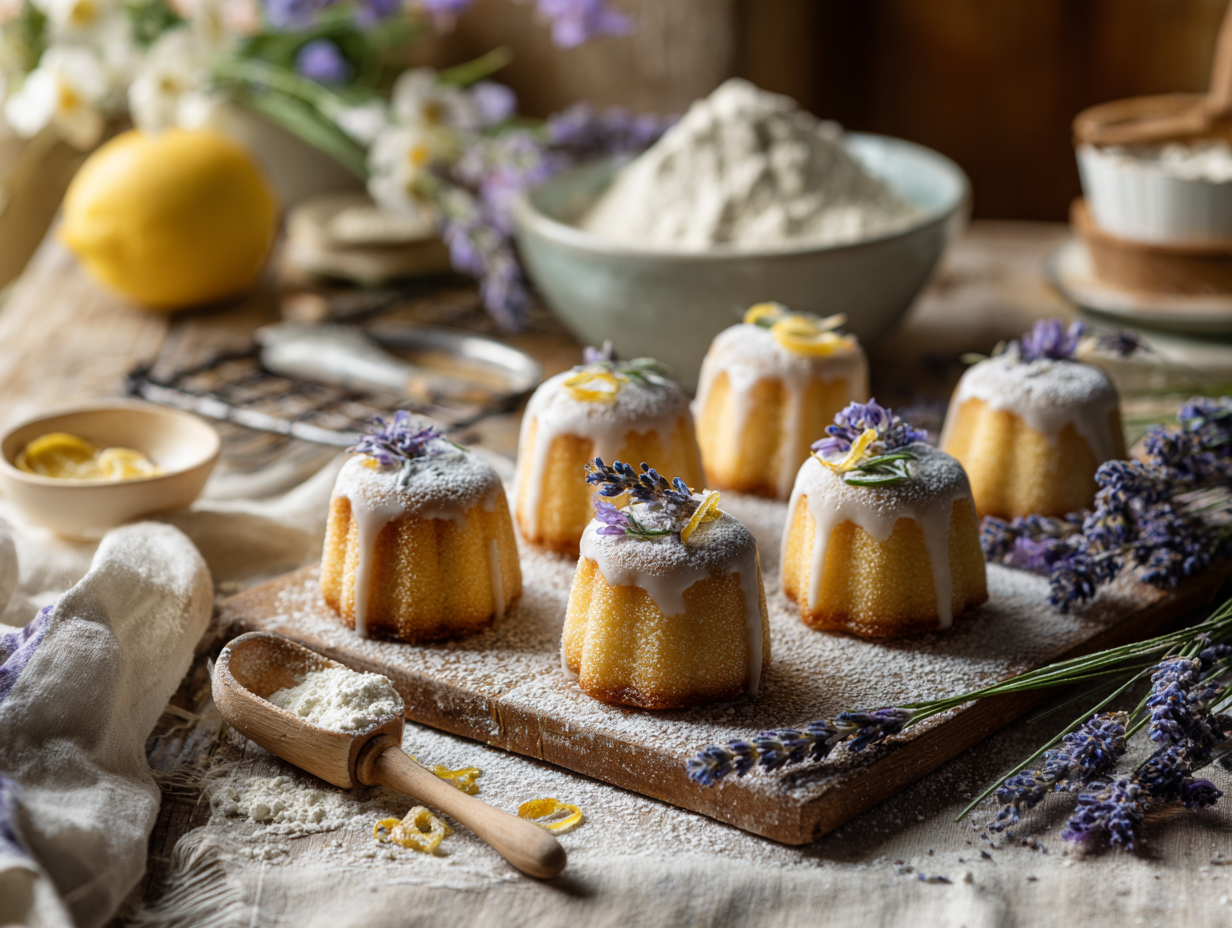
Lemon Lavender Mini Cakes

Equipment
- Mixing Bowls
- Whisk
- Mini cake pans
- Oven
- Cooling Rack
- Microplane for zesting
Ingredients
- 1 cup all-purpose flour sifted
- 1 tsp baking powder
- ¼ tsp salt
- ½ cup unsalted butter softened
- ¾ cup granulated sugar
- 2 large eggs room temperature
- 1 tbsp lemon zest freshly grated
- ¼ cup whole milk room temperature
- 1 tsp culinary lavender finely ground
- 1 tsp vanilla extract
Instructions
- Preheat your oven to 350°F (175°C). Grease and lightly flour your mini cake pans.
- In a mixing bowl, whisk together the flour, baking powder, and salt. Set aside.
- In another bowl, cream the softened butter and granulated sugar together until light and fluffy.
- Beat in the eggs one at a time, ensuring each is fully incorporated before adding the next. Mix in the lemon zest and vanilla extract.
- Gradually add the dry ingredients to the wet, alternating with the milk. Begin and end with the dry mix. Fold in the ground lavender gently to maintain a light batter.
- Divide the batter evenly among the prepared mini cake pans.
- Bake for 18-20 minutes, or until a toothpick inserted into the center comes out clean. The cakes should be golden and fragrant.
- Allow to cool in pans for 5 minutes, then transfer to a cooling rack to cool completely.
Notes
- For a brighter lemon flavor, add 1 tbsp of lemon juice to the batter.
- Lavender can be omitted if unavailable or not preferred.
Nutrition
Frequently asked questions
Can I use dried lavender from a grocery store herb section instead of culinary lavender?
Only if the label says food-safe or culinary grade. Lavender sold for potpourri or sachets is often treated with oils or preservatives that are not meant to be eaten — skip the garnish aisle and check the spice or tea section instead.
I don’t have mini cake pans. What else can I use?
A standard 12-cup muffin tin works well and is the most common substitute. Fill each cup about two-thirds full and start checking for doneness at 15 minutes, since the shallower cups bake faster than dedicated mini cake molds.
Can I use salted butter instead of unsalted?
Yes. Just leave out the quarter teaspoon of salt called for in the recipe. The flavor difference in a small batch like this is minimal, and salted butter is what a lot of home bakers keep on hand.
What can I use instead of whole milk?
2% milk works without any adjustment. Plant-based milks like oat or almond also work in the same quantity — the small amount used here means the swap does not noticeably change the texture.
How should I store these, and how long do they keep?
Store them in an airtight container at room temperature for up to two days, or refrigerate for up to four. If you refrigerate them, let them sit out for 15 minutes before serving — cold sponge cake is noticeably denser and drier than it is at room temperature.
If you liked this one
- Provence-Inspired Lavender Honey Panna Cotta
- Provence-Inspired Blackberry Lavender Crumble
- Mediterranean Sunshine Lemon Crumble Bars
- Zesty Lemon Thyme Shortbread Bars