

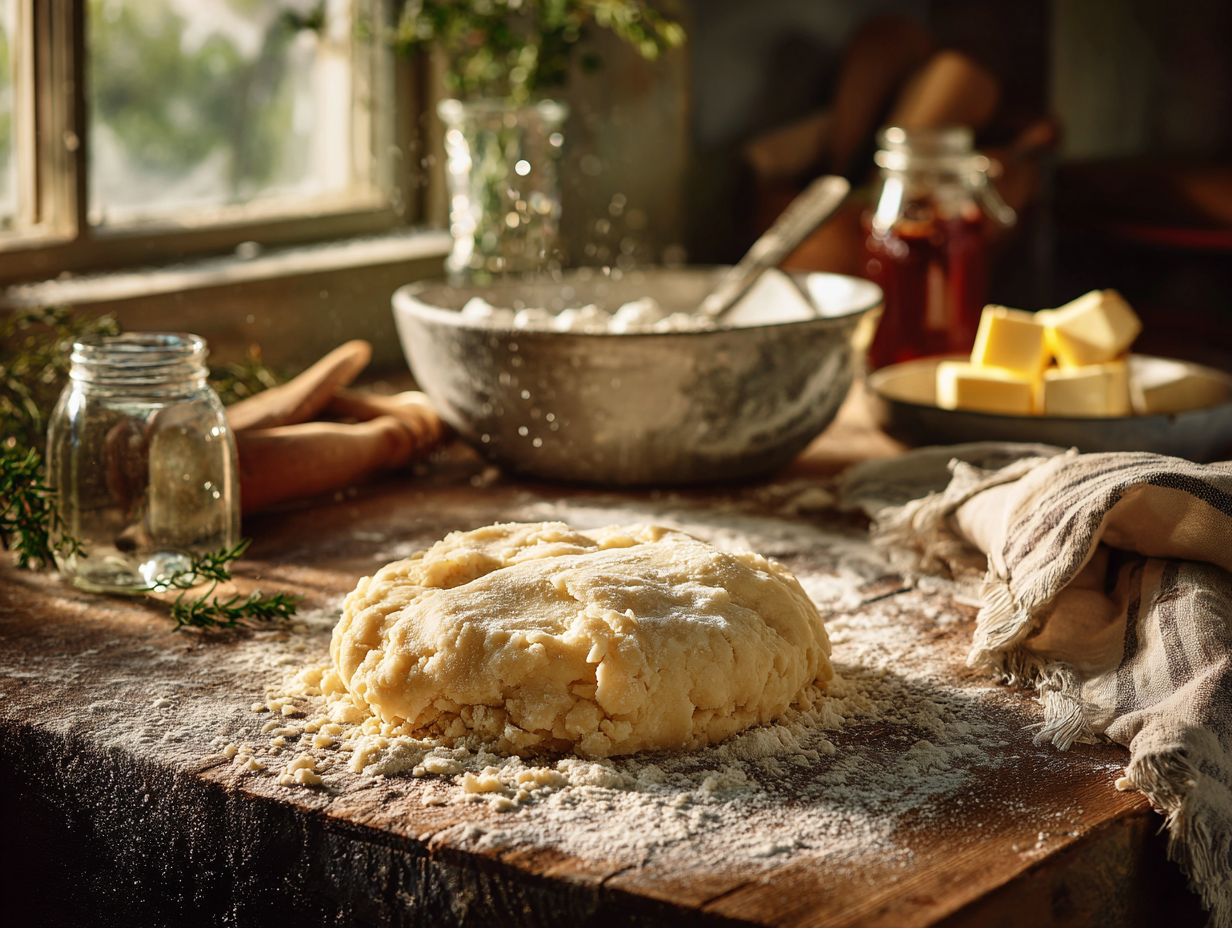
This is a single-crust, all-butter pie crust made from four ingredients: flour, butter, salt, and ice water. It takes about 15 minutes of hands-on work, then an hour in the fridge before it’s ready to roll. If you’ve been buying pre-made crusts because homemade seemed too fussy, this recipe is worth trying — the texture is noticeably better and the process is more forgiving than most instructions suggest.
What makes this version work
Two things actually matter here, and everything else is secondary. First, the butter has to stay cold — not cool, genuinely cold. Cut it into cubes and put it back in the freezer for 10 minutes before you start if your kitchen runs warm. When you cut cold butter into the flour and leave visible pea-sized pieces, those chunks create distinct layers as the crust bakes; the water in the butter turns to steam and pushes the dough apart. If the butter softens and blends in completely, you get a crumbly, dense crust instead. Second, stop mixing earlier than feels right. The dough should look shaggy and rough when you tip it out — not smooth. It will come together properly once it’s wrapped and rested. Overworking it develops gluten, which makes the finished crust tough and hard to roll without shrinking.
Make-ahead notes
This dough is genuinely better made ahead. After shaping it into a disk and wrapping it tightly in plastic wrap, it keeps in the refrigerator for up to 2 days — the rest time also relaxes the gluten, which makes rolling easier and reduces shrinkage during baking. For longer storage, freeze the wrapped disk for up to one month. Thaw it overnight in the refrigerator, not on the counter; a fast thaw softens the butter unevenly and you lose the flakiness you worked for. You can also roll the crust out, fit it into the pie plate, and freeze the whole unbaked shell for up to 3 weeks — just cover it well with plastic wrap. Bake it straight from frozen; no need to thaw first.
Common problems and fixes
- The dough tears when you try to roll it: It’s too cold. Let the disk sit at room temperature for 5 to 8 minutes before rolling. Dough that cracks at the edges when you press it with your finger needs more time to warm slightly.
- The crust shrinks badly in the pan during baking: The dough wasn’t rested long enough, or it was stretched to fit the pan instead of laid in loosely. Always lift and drape the dough rather than pulling it. A full 30-minute minimum chill after fitting it into the pan — before it goes in the oven — helps significantly.
- The bottom crust comes out soggy: Bake on the lowest oven rack, which puts the pan closer to the heat source. For wet fillings like custard or fruit, brush the unbaked shell with a thin layer of beaten egg white and let it dry for a few minutes before adding the filling — this creates a light barrier. Skip the egg wash step for blind-baked shells; it’s not worth the extra dish.
- The dough sticks to the counter while rolling: Use a light, even dusting of flour on both the counter and the top of the dough, and rotate the dough a quarter turn every few rolls. If it sticks mid-roll, slide a bench scraper or thin spatula underneath to release it before it tears.
- The crust has no flakiness at all — it’s dense and cracker-like: The butter was too warm when it was worked in, or the dough was mixed until smooth. There’s no fix once it’s baked, but for next time, chill your mixing bowl in the freezer for 15 minutes before you start, and pull the dough together with your hands as little as possible.
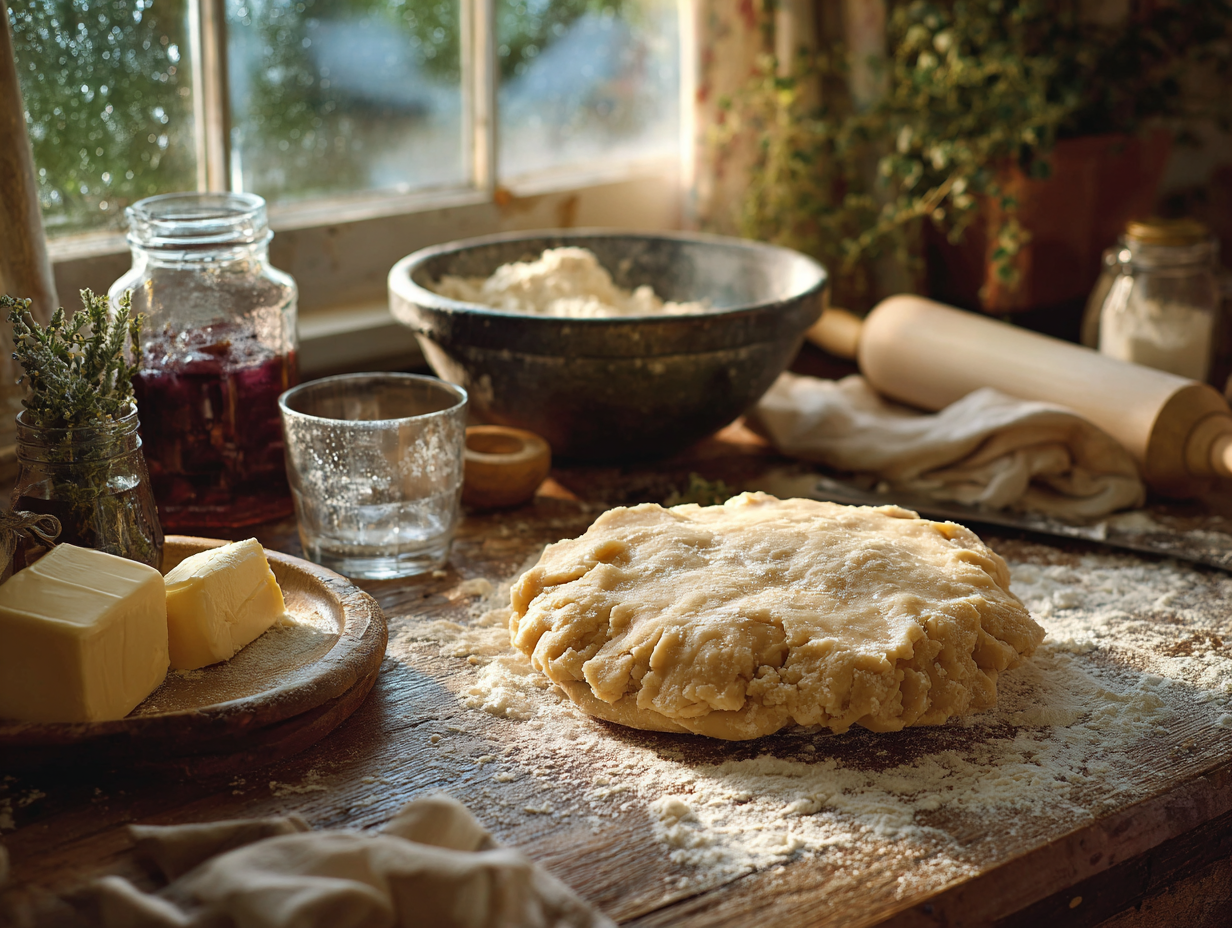
Flaky Pie Crust

Equipment
- Mixing Bowl
- Pastry Cutter
- Rolling pin
- Plastic wrap
Ingredients
- 1 ¼ cups all-purpose flour preferably unbleached
- ½ teaspoon salt
- ½ cup unsalted butter chilled and cubed
- 3-4 tablespoons ice water
Instructions
- In a mixing bowl, combine 1 1/4 cups of all-purpose flour and 1/2 teaspoon of salt. Mix until thoroughly combined.
- Add 1/2 cup of chilled, cubed unsalted butter to the flour mixture. Using a pastry cutter, cut the butter into the flour until the mixture resembles coarse crumbs, with pea-sized bits of butter visible.
- Sprinkle 3-4 tablespoons of ice water over the flour-butter mixture. Gently mix until the dough just comes together, being careful not to overwork it. The dough should hold together when pinched, but should not be sticky.
- Shape the dough into a disk, wrap it tightly with plastic wrap, and refrigerate for at least 30 minutes before rolling out.
Notes
- For an even more tender crust, substitute half of the butter with chilled lard.
- This pie crust can be made ahead and stored in the refrigerator for up to 2 days or frozen for up to a month.
Nutrition
FAQ
Do I really need a pastry cutter, or can I use my hands?
You can use your hands, but work fast. The heat from your palms softens the butter quickly, so use your fingertips only and stop the moment pea-sized pieces form. A pastry cutter or even two butter knives give you more control and keep the butter colder longer.
How do I know when I’ve added enough ice water?
Pinch a small amount of dough between your fingers — if it holds together without crumbling, you have enough water. Add the water one tablespoon at a time; most batches need 3 tablespoons, but humidity and flour brand affect this, so go slowly on the last tablespoon.
Can I use salted butter instead of unsalted?
Yes, but leave out the added salt in the recipe. Salted butter varies in sodium content by brand, so unsalted gives you more consistent results, but it’s not a reason to abandon the recipe if that’s what you have on hand.
My dough feels sticky after mixing — did I ruin it?
Not necessarily, but don’t add more flour directly to the bowl. Lightly flour your hands, shape it into a disk quickly, wrap it, and refrigerate it — the cold rest firms the butter back up and the dough usually becomes much easier to handle. If it’s still very sticky after an hour in the fridge, the dough had too much water added and will be harder to roll without tearing.