

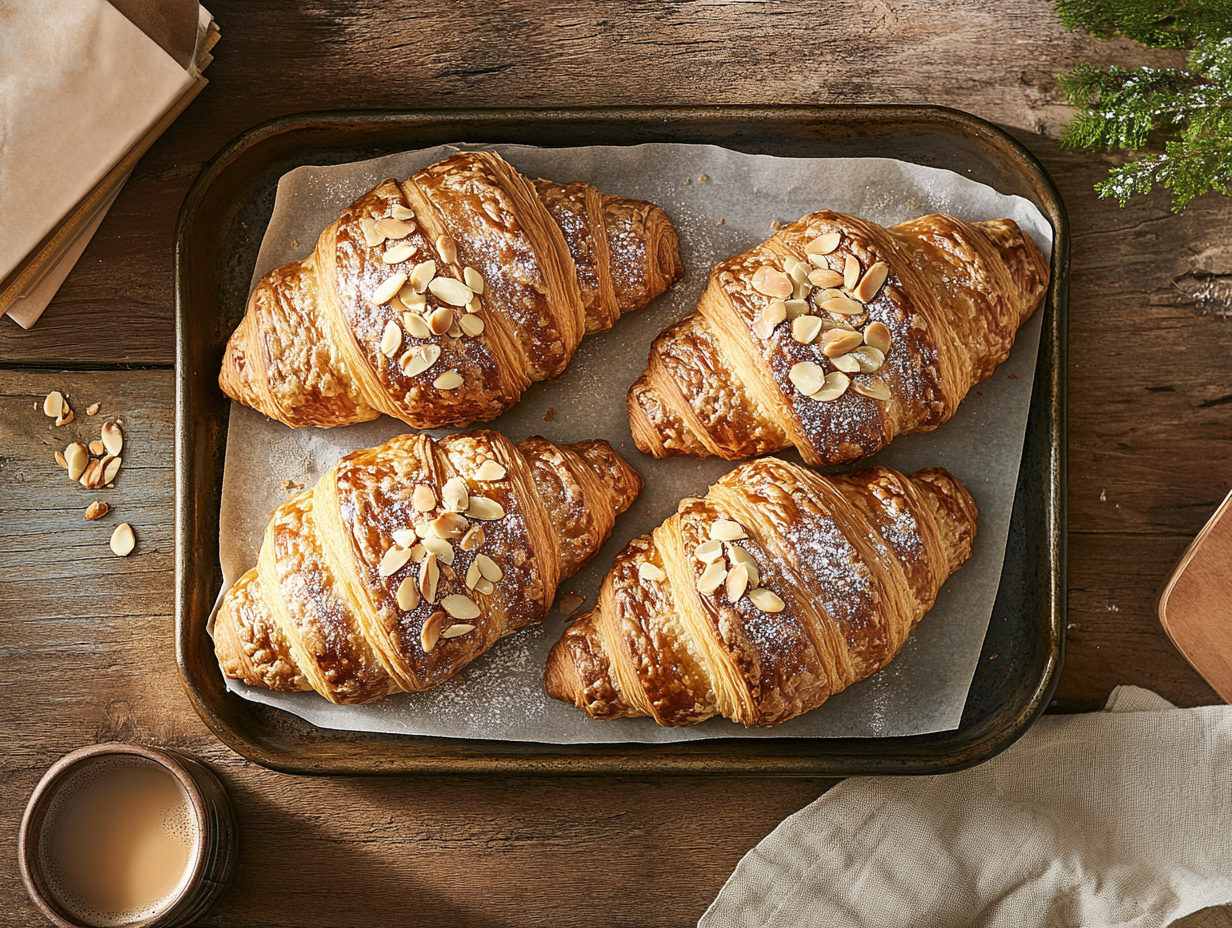
Almond croissants are day-old croissants sliced open, filled with a buttery almond cream, topped with sliced almonds, and baked until golden. The real reason to make them at home is that they cost a fraction of what a bakery charges, and the whole process takes about 30 minutes of active work. If you have croissants that are a day old and going stale, this is exactly what to do with them.
What makes this version work
Two things matter most here. First, starting with stale croissants — not fresh ones. A day-old croissant is drier and firmer, so it holds its shape when you slice it and absorbs the almond cream without turning soggy. A fresh croissant will collapse and go gummy. Second, the almond cream needs to be spread both inside and on top of each croissant before baking. The interior layer stays soft and moist while baking; the exterior layer crisps up and toasts the sliced almonds directly onto the surface. Skip one of those two applications and you lose the contrast that makes these worth making.
About the ingredients
- Almond flour: Use blanched almond flour, not almond meal. Almond meal is ground with the skins on and gives the filling a speckled, coarser texture. Blanched almond flour keeps the filling pale, smooth, and tender.
- Croissants: Bakery croissants work better than supermarket ones here. Supermarket croissants are often made with shortening rather than butter and don’t have the same layered structure, so the final result is denser. If that’s what you have, it still works — just manage expectations.
- Rum or almond liqueur (optional): A tablespoon stirred into the almond cream adds depth. If you’re skipping alcohol entirely, a drop of almond extract does something similar — use it sparingly, no more than a quarter teaspoon, or it turns medicinal.
Common problems and fixes
- Almond cream is too runny to spread: Your butter was probably too warm and melted rather than softened. Chill the finished cream in the fridge for 15 minutes before assembling. It should be thick enough to hold a shape when spooned.
- Filling leaks out during baking: You’ve overfilled the croissant or the slit is too wide. Use about two tablespoons of filling per croissant inside, and don’t cut all the way through — leave the back edge attached so the croissant stays closed in the oven.
- Sliced almonds burn before the croissant is done: Your oven runs hot, or the almonds are piled too thick. Tent the baking sheet loosely with foil after the first 10 minutes if the almonds are browning too fast.
- Croissants come out dry rather than moist inside: This usually means they were overbaked or the filling was spread too thin. Pull them at 15 minutes and check — the filling should look set but still have a slight give when you press the top gently.
- Powdered sugar disappears immediately: Dust it on just before serving, not while the croissants are still warm. Heat melts it straight into the surface. Skip the garnish if you’re serving them right out of the oven — not worth the extra dish.
Storage and freezing
Almond croissants are best eaten the day they’re baked, ideally within a few hours. If you have leftovers, store them uncovered at room temperature for up to one day — covering them traps steam and softens the crust. To refresh them, put them in a 325°F oven for 5 to 8 minutes. They don’t keep well in the fridge; the cold makes the pastry tough. For make-ahead purposes, the almond cream can be made up to three days ahead and refrigerated in a sealed container — just bring it back to room temperature before spreading. You can also freeze the fully assembled, unbaked croissants on a tray, then transfer to a bag once solid; bake from frozen at 350°F for about 25 minutes.

Croissant aux Amandes

Equipment
- Baking sheet
- Parchment Paper
- Mixing Bowls
- Whisk
- Spatula
- Oven
Ingredients
Croissant Dough
- 6 large Croissants Stale or day-old, preferably homemade or from a good bakery
Almond Cream Filling
- ½ cup Unsalted butter Softened
- ½ cup Granulated sugar
- 1 large Egg Room temperature
- 1 cup Almond flour
- 1 teaspoon Vanilla extract
- ¼ teaspoon Salt
Topping
- ¼ cup Sliced almonds
- 1 tablespoon Powdered sugar For dusting
Instructions
Prepare the Almond Cream Filling:
- In a mixing bowl, whisk together 1/2 cup of softened unsalted butter and 1/2 cup of granulated sugar until creamy.
- Add the large egg, blending until smooth. Mix in 1 cup of almond flour, 1 teaspoon of vanilla extract, and 1/4 teaspoon of salt. The mixture should be light and fluffy with a slight almond aroma.
Assemble the Croissants:
- Preheat your oven to 350°F (175°C). Line a baking sheet with parchment paper.
- Carefully slice each croissant open, leaving one edge attached. Spread a generous amount of almond cream filling inside each croissant.
- Spread a thin layer of almond cream on top of the croissants and sprinkle with 1/4 cup of sliced almonds for a delightful crunch.
Bake:
- Place filled croissants onto the baking sheet and bake in the preheated oven for 15-20 minutes, or until they are golden brown and the almonds are toasted.
Final Touch:
- After removing from the oven, allow them to cool slightly. Dust with 1 tablespoon of powdered sugar before serving.
Notes
Lori’s Tips
- For a richer flavor, add a tablespoon of rum or almond liqueur to the almond cream mixture.
- If you prefer a less sweet version, reduce the sugar in the almond cream.
- Ensure the croissants are stale or day-old for easier handling and better absorption of flavors.
Nutrition
Common questions
Can I use fresh croissants instead of day-old ones?
It’s better not to. Fresh croissants are too soft and moist, so the filling makes them soggy and they lose their shape when sliced. If you only have fresh ones, leave them out uncovered on a wire rack overnight or dry them in a 275°F oven for 10 minutes, then let them cool completely before using.
Do I need to make a simple syrup to brush on the croissants first?
This recipe skips the syrup step and it works fine. Some bakeries brush croissants with a light sugar syrup before filling to add moisture and a little sweetness, but with a generous almond cream filling the croissants stay moist enough without it.
My almond flour has a strong bitter taste — is that normal?
No, good blanched almond flour should taste mildly nutty and slightly sweet, not bitter. A bitter taste usually means the flour is old or was stored improperly. Check the expiration date and smell it before using — stale almond flour smells faintly rancid.
Can I make the almond cream without a mixer?
Yes, a bowl and a sturdy whisk or wooden spoon work fine. The key is that the butter is properly softened — it should give easily when pressed but not be greasy or melted. If the butter is soft enough, the whole cream comes together by hand in about two minutes.
How do I know when they’re done baking?
The croissants are done when the exterior is deep golden brown and the sliced almonds on top are toasted and fragrant, usually between 15 and 20 minutes at 350°F. The almond cream inside will look set rather than wet if you peek at the edge — it firms up as it cools slightly.
What to bake next
- Luxurious Almond Croissant Bread Pudding
- Pear and Almond Cake
- French Brown Butter Chocolate Tart
- Mediterranean Pistachio Cream Éclairs