

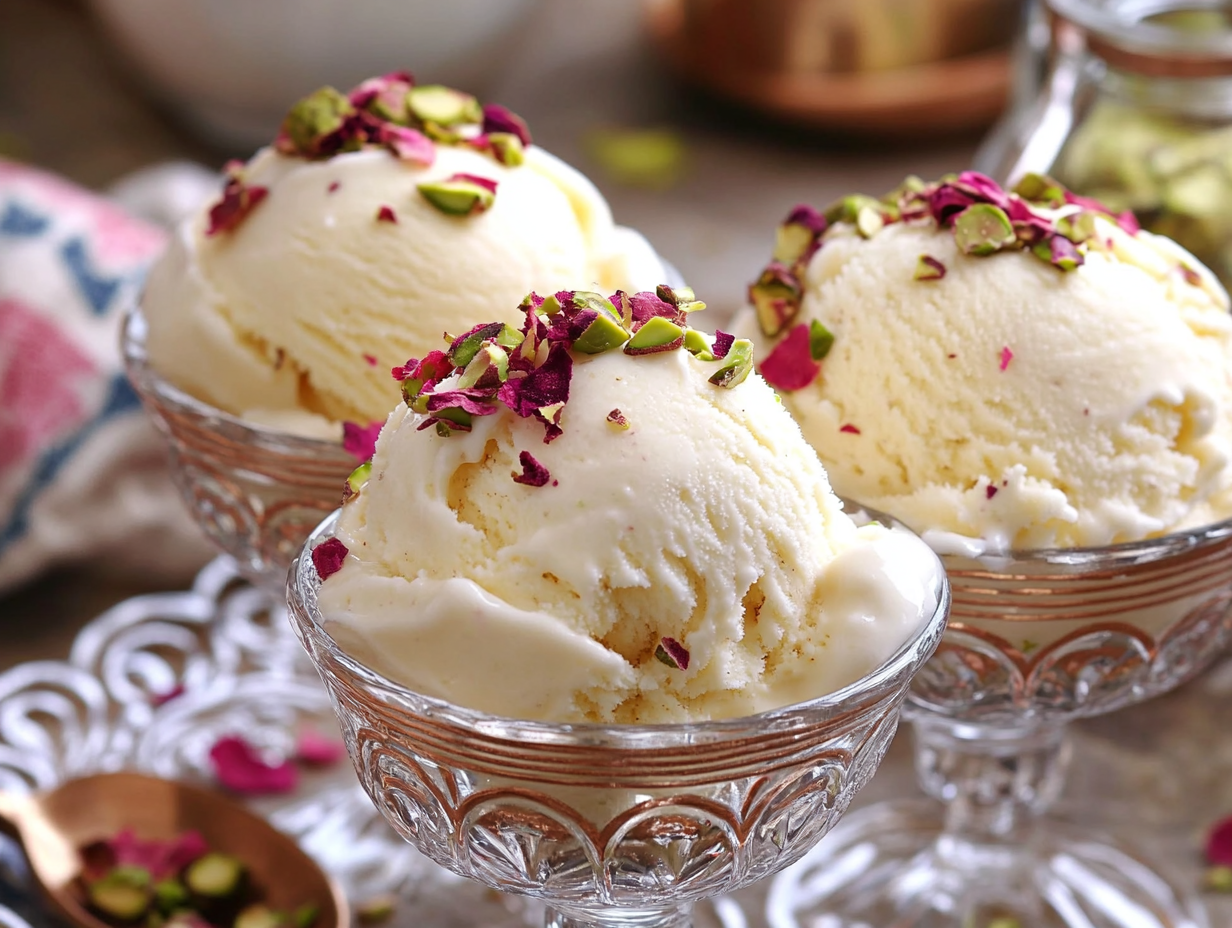
Rosewater ice cream is a custard-based frozen dessert flavored with rosewater — floral, cold, and genuinely different from anything vanilla or chocolate can offer. It uses six ingredients you likely already have, plus one bottle of rosewater that costs a few dollars and lasts for months. If you own an ice cream maker and want something that takes almost no active effort but looks impressive in a bowl, this is a good one to have in your rotation.
What makes this version work
Two things actually matter here. First, tempering the egg yolks properly — adding the hot cream slowly and whisking constantly — is what keeps the custard smooth instead of scrambled. Rushing that step is the only way to genuinely ruin this recipe. Second, rosewater goes in after the heat is off. Cooking it into the custard drives off the volatile compounds that give it its character, leaving you with something that tastes faintly soapy and flat. Pull the pan, then stir it in. Those two steps done right, and the rest is just patience while things chill.
If something goes sideways
- Custard looks curdled or grainy: You cooked it too hot or too fast. Strain it immediately through a fine-mesh sieve — this catches most of the cooked egg bits and often saves the batch entirely.
- Ice cream is icy and hard rather than creamy after freezing: The custard probably wasn’t chilled cold enough before churning. It needs to be fully cold — not just cool — before it goes into the machine. A warm base churns into ice crystals, not cream.
- Flavor is too faint after freezing: Freezing dulls flavors. If the custard tasted right before churning, add an extra half-teaspoon of rosewater to the warm custard next time. Cold suppresses aroma more than most people expect.
- Ice cream won’t firm up after churning: It came out of the machine too warm, or the freezer bowl wasn’t frozen solid. Most ice cream maker bowls need at least 24 hours in the freezer — 12 is usually not enough.
- Flavor tastes soapy or medicinal: You used too much rosewater, or the brand you have is very concentrated. Different brands vary significantly in strength. Start at 1.5 tablespoons next time and taste the custard before adding more.
About the ingredients
Rosewater is the only ingredient here that might require a special trip. Middle Eastern grocery stores carry it cheaply and reliably — often cheaper than specialty food shops. In a pinch, orange blossom water works as a direct swap and produces a slightly more citrusy result that’s equally good. If you’re out of heavy cream, a mix of half-and-half and full-fat coconut cream can stand in; the texture will be slightly less rich but still scoopable. Skip the edible rose petal garnish — it wilts fast, adds nothing to the flavor, and means washing an extra prep bowl.
Storage and freezing
Once churned and transferred to a lidded container, the ice cream keeps well in the freezer for up to three weeks before ice crystals start to affect the texture noticeably. Press a piece of plastic wrap directly onto the surface before putting the lid on — this reduces freezer burn significantly. After about two weeks the rosewater aroma does fade slightly, so this is best eaten within the first ten days if you want the flavor at its strongest. The custard base (before churning) can be made up to two days ahead and kept covered in the fridge, which makes this easy to plan around a dinner party or a busy week.
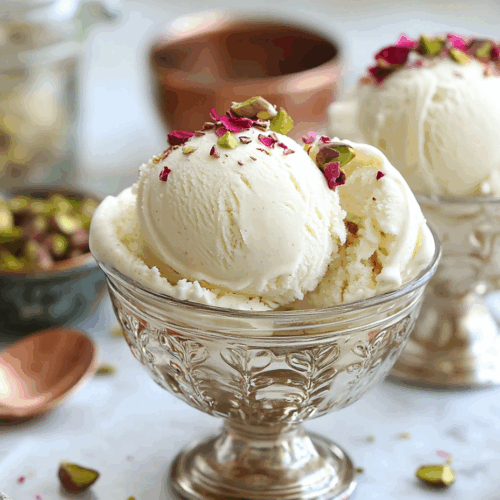
Rosewater Ice Cream

Equipment
- Ice Cream Maker
- Medium saucepan
- Mixing Bowl
- Whisk
Ingredients
Ice Cream Base
- 1 cup heavy cream Preferably organic
- 1 cup whole milk Preferably organic
- 0.75 cup granulated sugar
- 3 large egg yolks Free-range if possible
- 2 tablespoons rosewater Add more for a stronger flavor if desired
- 1 pinch salt To balance sweetness
Instructions
- Preparing the Base: In a medium saucepan over medium heat, combine the heavy cream, whole milk, and half of the sugar. Stir frequently until the sugar has dissolved completely and the mixture begins to steam, but do not boil.
- Tempering the Eggs: In a mixing bowl, whisk together the egg yolks and the remaining sugar until the mixture becomes pale and slightly thickened. Gradually add a ladle of the warm cream mixture to the egg yolks, whisking constantly to prevent curdling.
- Combining and Cooking the Custard: Pour the tempered egg yolks back into the saucepan with the rest of the cream mixture. Cook over low heat, stirring continually with a wooden spoon until the mixture thickens enough to coat the back of the spoon, about 8-10 minutes.
- Infusing the Rosewater: Remove the saucepan from heat and stir in the rosewater and a pinch of salt. Allow the custard base to cool to room temperature, then cover and refrigerate until fully chilled.
- Churning the Ice Cream: Pour the chilled custard into your ice cream maker and churn according to the manufacturer's instructions, usually about 20 minutes, until a soft-serve consistency is achieved.
- Freezing the Ice Cream: Transfer the churned ice cream into a lidded container and freeze for at least 2 hours or until firm. If you prefer a softer texture, serve after 1 hour.
Notes
- For an extra floral touch, garnish with edible rose petals or a drizzle of rose syrup.
- Substitute almond milk for a dairy-free version. Serve with pistachio cookies for an enhanced textural experience.
Nutrition
FAQ
Do I really need an ice cream maker for this recipe?
Yes, for the best texture you do. Without a machine, the ice cream freezes into a solid, icy block rather than a creamy scoop. If you don’t own one, you can try the no-churn method — whip one cup of the heavy cream to stiff peaks, fold it into the cooled custard with the rosewater, and freeze — but the result will be denser and icier than the churned version.
Where do I buy rosewater, and does the brand matter?
Middle Eastern grocery stores are the most reliable and affordable source — look for it near the baking extracts or in the international foods aisle. Brand strength varies a lot, so taste your custard before churning and adjust; some brands are two to three times more concentrated than others.
Can I make this without egg yolks?
You can, but the result will be noticeably less creamy and will freeze harder. A cornstarch-based ice cream (about 2 tablespoons of cornstarch whisked into the cold milk before heating) is the most practical egg-free swap and produces a reasonably smooth texture.
My custard didn’t thicken much on the stove — is that normal?
Yes. The custard thickens more in the freezer than it does on the stove, so don’t keep cooking it hoping for a pudding-thick result. It’s ready when it coats the back of a spoon and a line drawn through it holds — that’s thin enough to seem underdone but it’s correct.
Can I double the recipe?
Yes, but check your ice cream maker’s capacity first — most home machines max out at 1 to 1.5 quarts. If doubling takes you over that limit, churn in two separate batches rather than overfilling, which prevents proper aeration.
The ice cream came out of the freezer rock solid — how do I serve it?
Let it sit at room temperature for 8 to 10 minutes before scooping. Homemade custard ice cream freezes harder than store-bought because it lacks the stabilizers commercial brands use, so a short rest on the counter is always part of the process.
What to bake next
- Creamy Cardamom Pistachio Rice Pudding
- Tropical Coconut Cardamom Ice Cream
- Delicate Pistachio Rose Shortbread
- Orange Blossom Olive Oil Cake