

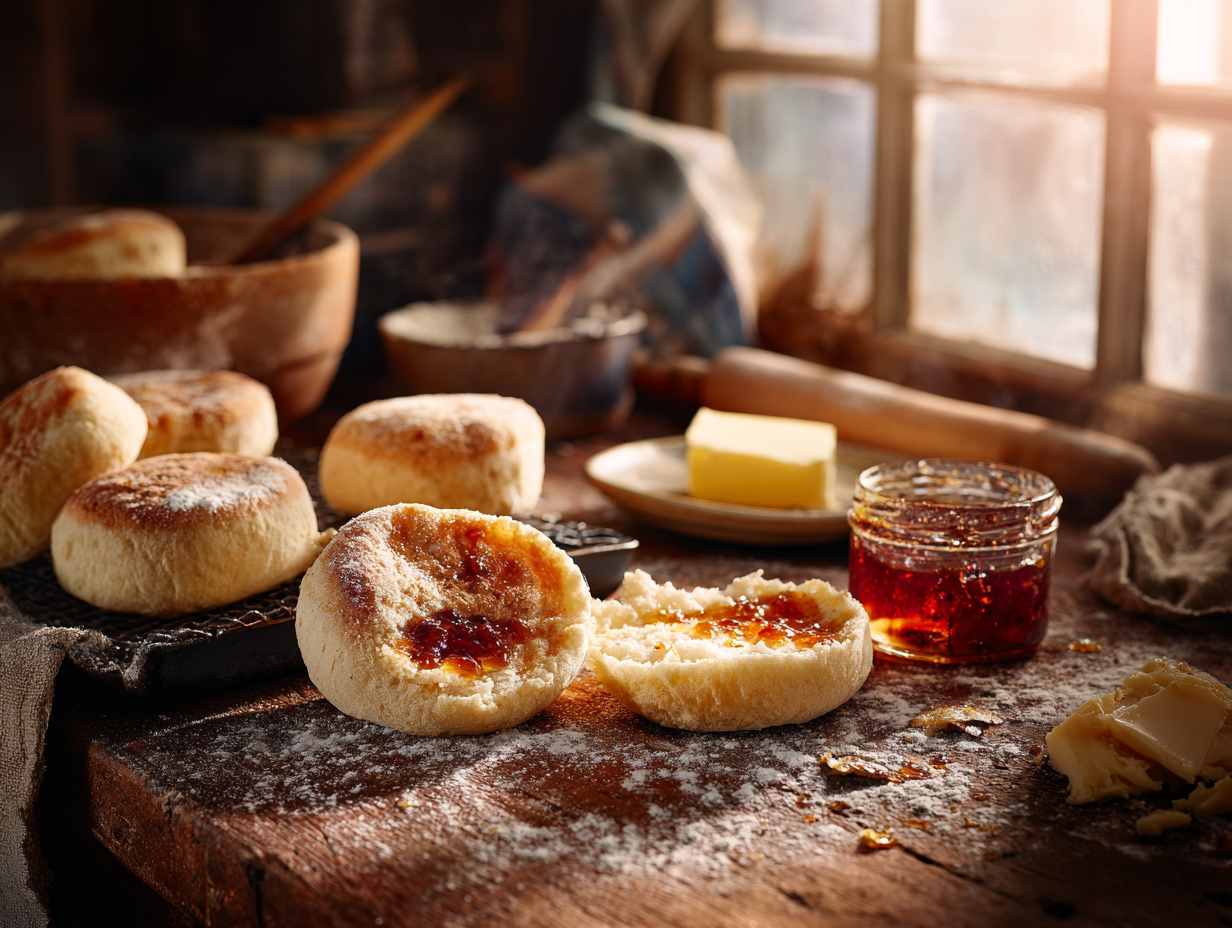
English muffins are a griddle-cooked yeast bread with a soft, open crumb that soaks up butter or jam far better than anything from a bag. Making them at home takes about two hours start to finish, and the result is noticeably fresher and chewier than store-bought. They also freeze well, so one batch covers a lot of mornings.
Shopping notes
- Active dry yeast: One standard packet (2¼ tsp) is exactly what this recipe needs. Check the expiration date — old yeast is the most common reason a dough refuses to rise.
- Whole milk: The recipe calls for whole milk specifically. Lower-fat milk produces a slightly less tender crumb, so it’s worth using the real thing here.
- Cornmeal: Any plain yellow cornmeal works. Fine or medium grind are both fine; skip anything labeled “corn flour” — it’s too fine and won’t give you the right texture on the crust.
The short version of why this works
Two things actually drive the result here. First, the yeast gets activated in warm milk (aim for 105–110°F — too hot kills it, too cool and it won’t foam). That foam after five minutes tells you the yeast is alive before you’ve committed to the whole dough. Second, cooking on a low-heat griddle rather than in an oven is what creates the characteristic crust and forces the interior to cook through slowly without burning the outside. Medium-low heat is not a suggestion — higher heat browns the surface before the center is done, and you end up with doughy middles.
Mistakes to avoid
- Skipping the second rise: The 30-minute rest after shaping is what gives the muffins their open, airy interior. Cut it short and the crumb will be dense and tight.
- Rolling the dough too thin: If you go under ½ inch, the muffins won’t have enough height to develop proper nooks inside. Use a ruler the first time if you’re unsure.
- Crowding the pan: Muffins need space to expand. Cook in batches of three or four max — pressing them together traps steam and makes the edges gummy instead of golden.
- Cutting with a knife after cooking: Always fork-split your muffins. A knife gives a smooth cut that seals the crumb; a fork tears it open and creates the rough surface that actually holds butter and toppings.
- Checking doneness only by color: The outside can look done while the inside is still raw. Tap the bottom — a cooked muffin sounds hollow. If in doubt, an instant-read thermometer should read around 190°F in the center. Skip the tap test and just use the thermometer — not worth guessing.
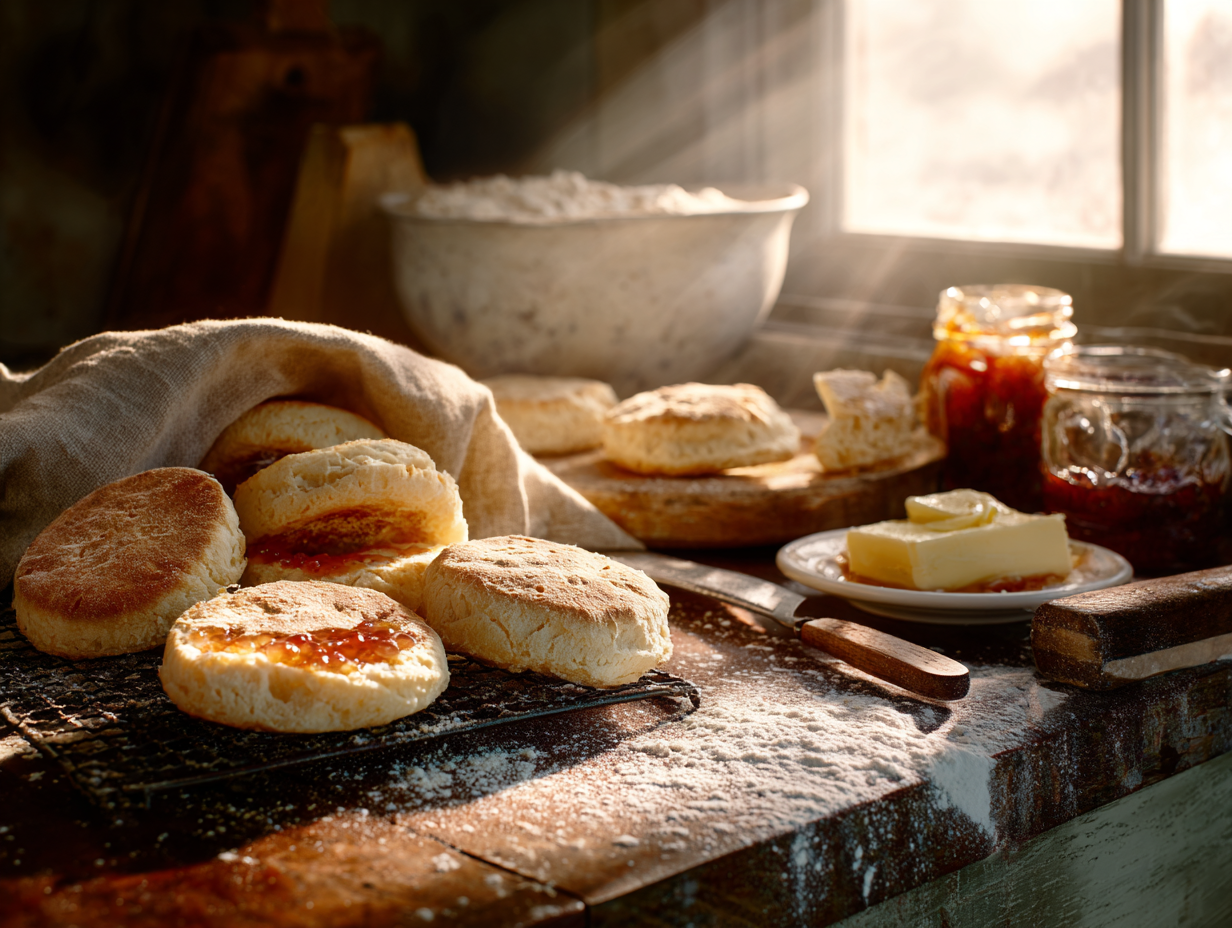
Classic Homemade English Muffins

Equipment
- Mixing Bowls
- Stand mixer with dough hook
- Rolling pin
- 3-inch cookie cutter
- Skillet or griddle
Ingredients
- 1 cup milk whole, warmed to 110°F
- 2 tbsp butter unsalted, melted
- 2 tbsp granulated sugar
- 1 package active dry yeast approximately 2 and 1/4 teaspoons
- 4 cups all-purpose flour plus more for dusting
- 1 tsp salt
- ½ cup cornmeal for dusting
Instructions
- Prepare the Dough: In a small bowl, combine warm milk, melted butter, and sugar, stirring until the sugar dissolves. Sprinkle yeast over the mixture, letting it sit for about 5 minutes until it becomes foamy.
- Mix the Dough: In a large mixing bowl, combine 2 cups of flour and salt. Add the yeast mixture and stir together to form a sticky dough. Gradually add in additional flour, 1/2 cup at a time, until the dough begins to come together.
- Knead the Dough: Transfer the dough to a floured surface and knead for 5-7 minutes until it's smooth and elastic. Alternatively, use a stand mixer fitted with a dough hook for 4-5 minutes.
- First Rise: Place the dough in a lightly oiled bowl, turning it to coat. Cover with a damp towel and allow to rise in a warm place for about 1 to 1.5 hours, or until doubled in size.
- Shape the Muffins: Punch down the risen dough and roll it to 1/2 inch thickness on a floured surface. Using a 3-inch cookie cutter, cut out circles. Dip each in cornmeal to coat both sides.
- Second Rise: Arrange the dough circles on a baking sheet, cover with a damp towel, and allow them to rest for another 30 minutes.
- Cook the Muffins: Heat a skillet or griddle over medium-low heat. Cook the muffins for about 7-8 minutes on each side until golden brown and cooked through. Ensure not to overcrowd the pan.
Notes
- For a unique twist, consider incorporating whole wheat flour for a nuttier taste.
- For those avoiding dairy, substitute almond milk and vegan butter.
Nutrition
Frequently asked questions
How do I know if my yeast is actually working?
After 5 minutes in the warm milk mixture, the yeast should look visibly foamy and smell slightly yeasty. If it’s flat and the liquid looks the same as when you started, the yeast is dead — don’t continue, or the dough won’t rise at all.
Can I make the dough the night before?
Yes. After kneading, place the dough in an oiled bowl, cover it tightly with plastic wrap, and refrigerate overnight instead of doing the first rise at room temperature. The next morning, let it sit at room temperature for 30–45 minutes before shaping, then proceed with the second rise as normal.
My muffins are golden on the outside but doughy in the middle — what went wrong?
The heat was too high. Medium-low is slower than it feels like it should be, but it’s necessary to cook the center through before the crust over-browns. Lower your heat and extend the cooking time by a couple of minutes per side.
Do I need a stand mixer, or can I knead by hand?
Hand kneading works fine. Knead for 5–7 minutes on a lightly floured surface until the dough is smooth and springs back when you poke it. If it tears instead of stretching, keep going — it just needs more time.
How should I store and reheat leftovers?
Once fully cooled, store muffins in an airtight bag at room temperature for up to 3 days, or freeze them for up to 3 months. Reheat straight from frozen in the toaster — no need to thaw first.