

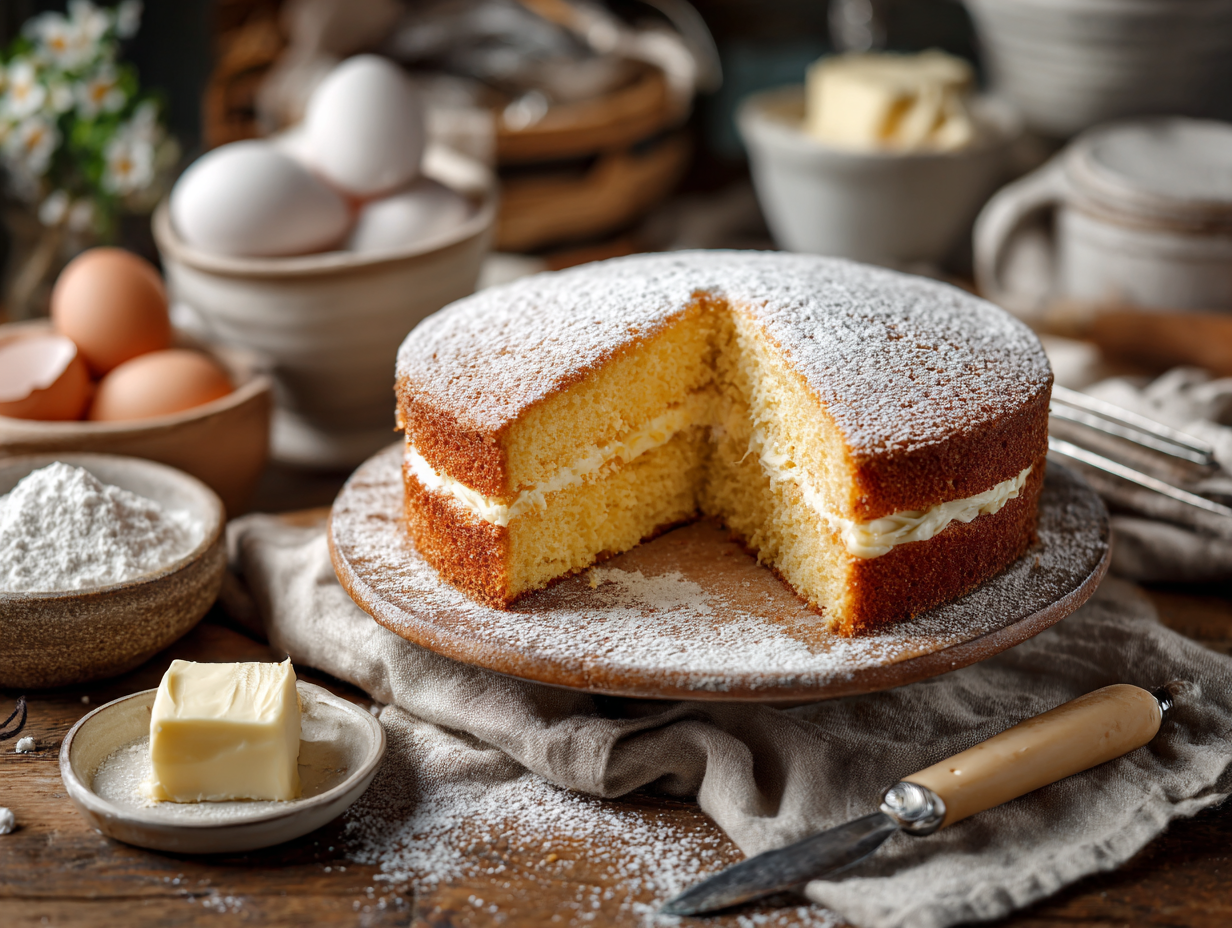
This is a two-layer vanilla cake with a fine, tender crumb built from pantry staples — flour, butter, eggs, whole milk, and a full tablespoon of vanilla. It bakes in about 35 minutes and comes out of the pan cleanly, which makes it a reliable choice when you need a cake that actually works. Skip the garnish — not worth the extra dish — and let the frosting do the decorating.
What makes this version work
Two things matter most here. First, creaming the butter and sugar for a full 3 to 4 minutes — not just until combined — builds the air pockets that give this cake its lift. Under-cream it and the crumb turns dense. Second, alternating the dry ingredients with the milk (starting and ending with the flour mixture) keeps the batter from breaking and prevents the gluten from overdeveloping. Both steps are straightforward, but skipping or rushing either one is where most flat or rubbery vanilla cakes go wrong.
What can go wrong
- Domed or cracked tops: Your oven is running hot. Use an inexpensive oven thermometer to check — many home ovens read 25°F higher than the dial says. Drop the temperature by 10 to 15°F and the layers will bake more evenly.
- Layers that stick to the pan: Greasing alone isn’t always enough. Line the bottom of each pan with a round of parchment paper after greasing, then flour the sides. The layers will release cleanly every time.
- Batter that looks curdled after adding eggs: This usually means the eggs were too cold. Pull them from the fridge 30 minutes before you start. If it curdles anyway, add a tablespoon of flour and keep mixing — it will come back together.
- Uneven layers: Eyeballing the batter split between two pans leads to lopsided cakes. Weigh the batter on a kitchen scale and divide it equally — it takes 30 seconds and makes stacking much easier.
- Gummy center that tests done too early: A toothpick can come out clean while the very center is still underbaked. Check that the edges have pulled slightly away from the pan sides and that the top springs back when lightly pressed before you pull the pans from the oven.
Storage and make-ahead
Unfrosted layers can be baked up to two days ahead. Wrap each cooled layer tightly in plastic wrap and leave them at room temperature — refrigerating unfrosted cake dries it out faster than it helps. For longer storage, wrap the layers in plastic, then a layer of foil, and freeze for up to two months; thaw overnight on the counter still wrapped. Once frosted, the assembled cake keeps well at room temperature under a cake dome for up to two days. If your kitchen runs warm or the frosting contains whipped cream or cream cheese, refrigerate it and bring individual slices back to room temperature for about 20 minutes before serving.
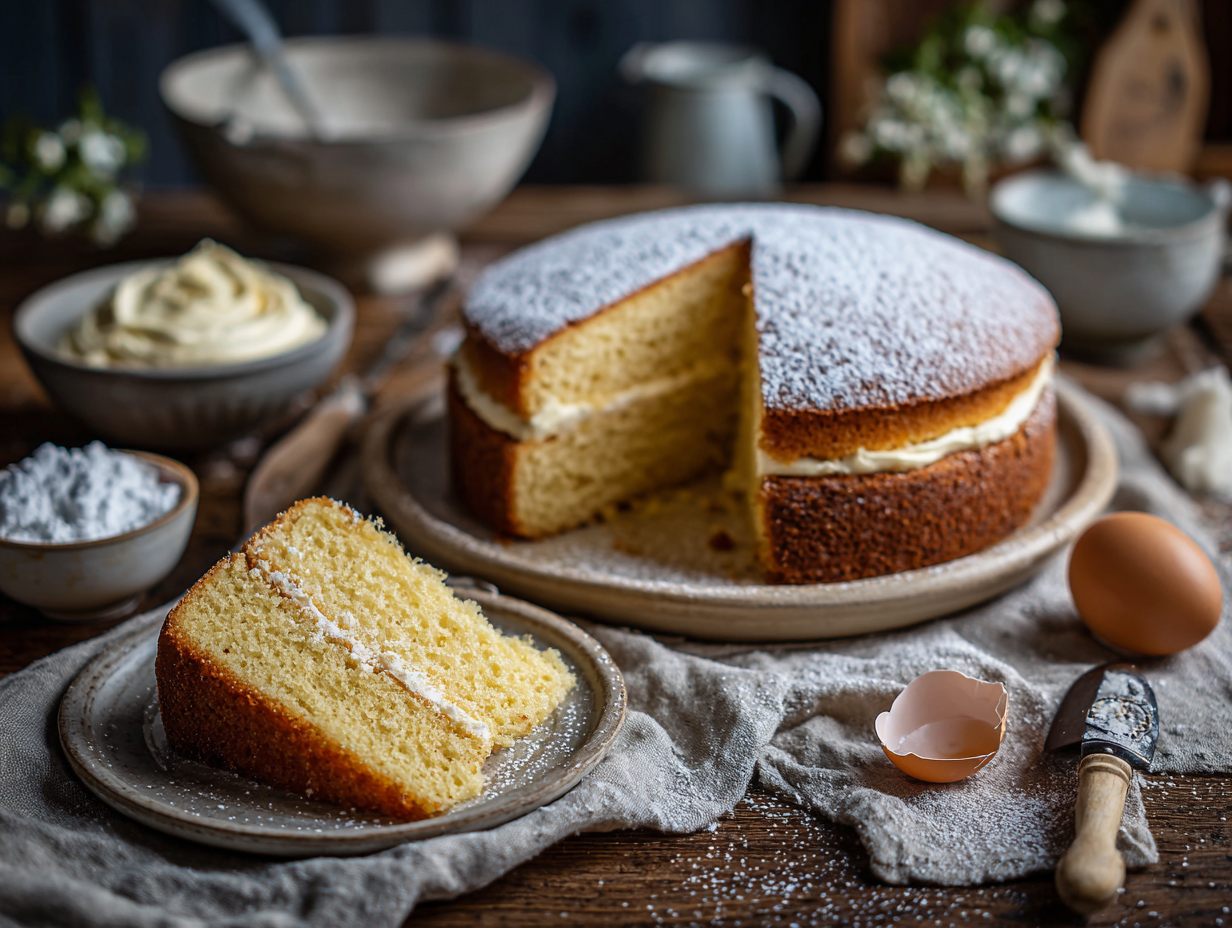
Classic Vanilla Cake

Equipment
- 9-inch round cake pans
- Electric Mixer
- Mixing Bowls
- Cooling Rack
- Measuring cups and spoons
- Rubber spatula
Ingredients
- 2 ½ cups all-purpose flour preferably organic
- 2 ½ teaspoons baking powder
- ½ teaspoon salt
- ¾ cup unsalted butter room temperature
- 1 ½ cups granulated sugar
- 4 large eggs room temperature
- 1 tablespoon pure vanilla extract
- 1 cup whole milk room temperature
Instructions
- Preheat your oven to 350°F (175°C). Grease and flour two 9-inch round cake pans and set them aside.
- In a medium mixing bowl, whisk together the flour, baking powder, and salt. Set aside.
- In a large mixing bowl, using an electric mixer, cream the butter and sugar together at medium speed until light and fluffy, about 3 to 4 minutes.
- Add the eggs one at a time, beating well after each addition. Mix in the vanilla extract.
- Gradually add the dry ingredients to the wet ingredients, alternating with the milk, beginning and ending with the dry ingredients. Mix until just combined.
- Divide the batter evenly between the prepared cake pans. Smooth the tops with a rubber spatula.
- Bake for 30 to 35 minutes, or until the cakes are golden and a toothpick inserted into the center comes out clean. Allow the cakes to cool in the pans for 10 minutes, then transfer them to a cooling rack to cool completely.
Notes
Tammy’s Tips:
- For a deeper vanilla flavor, use vanilla bean paste instead of vanilla extract.
- To make it dairy-free, substitute with almond milk and a quality dairy-free butter.
Nutrition
Frequently asked questions
Can I use cake flour instead of all-purpose flour?
Yes, and the crumb will be slightly softer and more delicate. Substitute cake flour at a 1:1 ratio by weight, or use 1 cup plus 2 tablespoons of cake flour for every cup of all-purpose flour called for.
Do I really need room-temperature butter and eggs?
Yes — cold butter won’t cream properly and cold eggs can cause the batter to seize. Set both out about 30 to 45 minutes before you start mixing, or speed things up by placing the eggs in a bowl of warm water for 10 minutes.
Can I bake this as a single layer or in a different pan size?
You can bake the full batter in a 9×13-inch pan at 350°F — start checking for doneness at 30 minutes. For two 8-inch round pans, the layers will be slightly thicker and may need an extra 3 to 5 minutes in the oven.
What to bake next
- Nutty Brown Butter Vanilla Bean Cupcakes
- Rustic Blackberry Almond Cake
- Gourmet Vanilla Bean Marshmallows
- Ultimate Chocolate Sheet Cake