

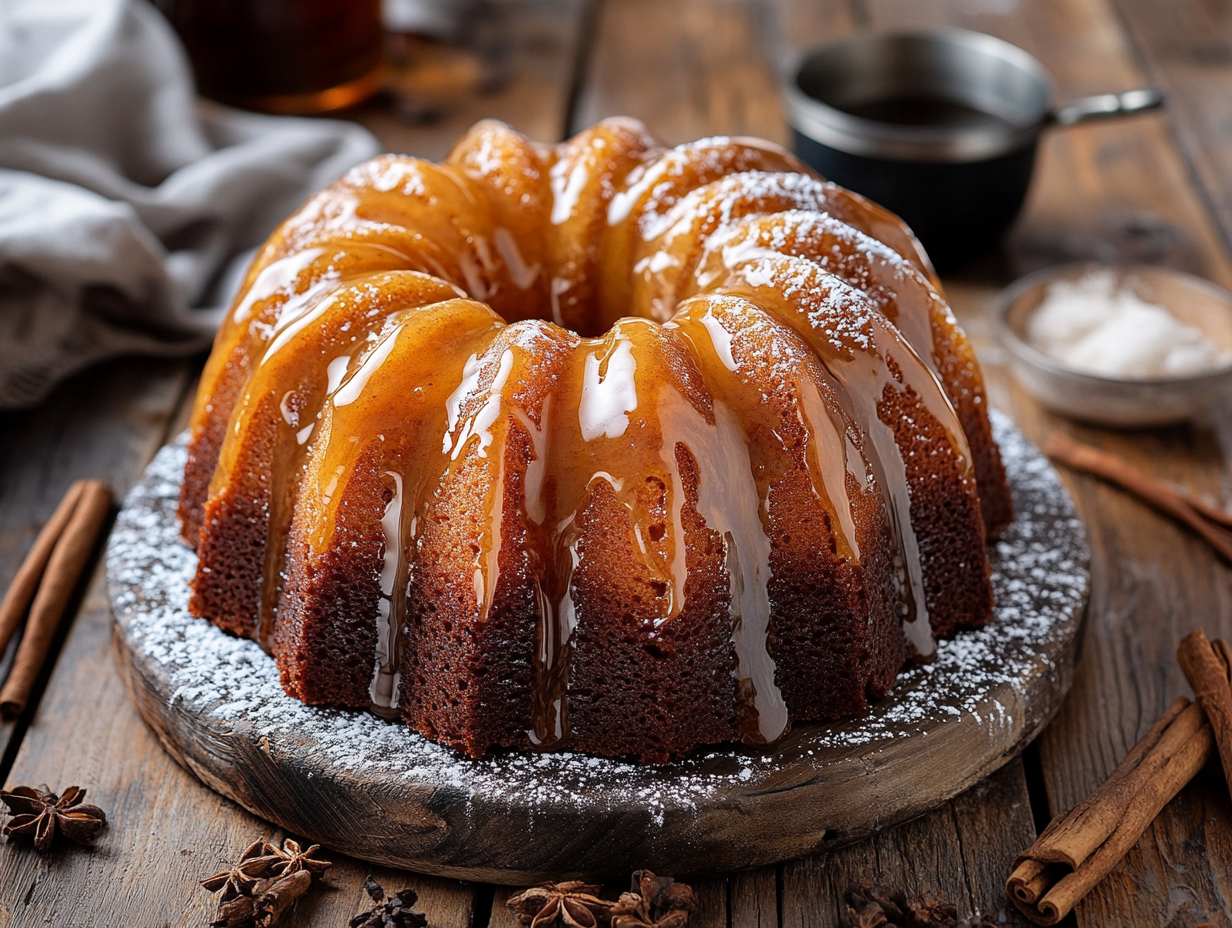
This butter rum bundt cake is a straightforward baked cake with real dark rum in both the batter and a warm glaze that soaks in as the cake cools. The result is a dense, moist crumb with a sticky, buttery finish that holds up well for several days. If you need a make-ahead dessert that actually improves with time, this is a reliable one to have in your back pocket.
Ingredient notes
- Dark rum: The recipe uses it twice — ½ cup in the batter and ¼ cup in the glaze. A mid-shelf bottle works fine here; the baking and boiling process mellows the raw alcohol edge, so there’s no need to spend more. Spiced rum is a reasonable swap if that’s what’s in the cabinet — it adds a bit of warmth from the spice blend.
- Unsalted butter: Used in both components. If you only have salted butter, reduce the ½ teaspoon of salt in the cake batter to ¼ teaspoon and skip any added salt in the glaze.
- Unbleached all-purpose flour: The recipe notes a preference for unbleached, but standard bleached all-purpose flour works without any adjustment to measurements or timing.
- Eggs at room temperature: Cold eggs can cause the butter-sugar mixture to look curdled. If you forgot to pull them ahead of time, set them in a bowl of warm (not hot) water for 10 minutes.
Why this recipe works
Two things drive the texture here. First, creaming the butter and sugar until genuinely light and fluffy — not just combined — builds air into the batter that keeps the crumb tender despite the density of the rum. Rushing this step is the most common reason a bundt comes out heavy. Second, the glaze goes on while the cake is still warm and gets brushed on gradually rather than poured all at once. A warm cake is porous enough to absorb the syrup rather than letting it pool at the bottom. Both steps are simple, but skipping or shortcutting either one changes the final result noticeably.
Common problems and fixes
- Cake sticks to the pan: Bundt pans have a lot of surface area and crevices. Grease every ridge thoroughly — butter plus a light dusting of flour is more reliable than spray alone for a batter this rich. Don’t skip the 15-minute rest in the pan before inverting; pulling it out too soon is the other main cause of sticking.
- Glaze doesn’t absorb and sits on the surface: The cake needs to still be warm, not fully cooled, when you apply the glaze. If it cooled too long, warm individual slices briefly before serving — the glaze will soften back into them.
- Cake is dry in the center: This usually means overbaking. Ovens vary, so start checking at 50 minutes with a toothpick. The cake is done when the toothpick comes out with just a few moist crumbs, not wet batter.
- Batter looks curdled after adding rum: Adding liquid to a creamed butter mixture can cause it to break, especially if the rum is cold. It will come back together once you add the dry ingredients — keep mixing and don’t panic.
- Flat top that domes unevenly: Skip the garnish — not worth the extra dish. A light dusting of powdered sugar is enough to make it look finished, and the glaze already gives it a good sheen.
Storage and freezing
At room temperature in an airtight container, this cake keeps well for up to 4 days — the rum in the glaze genuinely helps it stay moist longer than a standard butter cake would. For longer storage, wrap individual slices tightly in plastic wrap and freeze for up to 2 months; thaw at room temperature for a couple of hours before serving. If you’re making it ahead for a gathering, baking it the day before and letting it sit overnight (covered) gives the glaze time to fully absorb and the flavors to settle, which makes it taste better than it does fresh out of the oven.
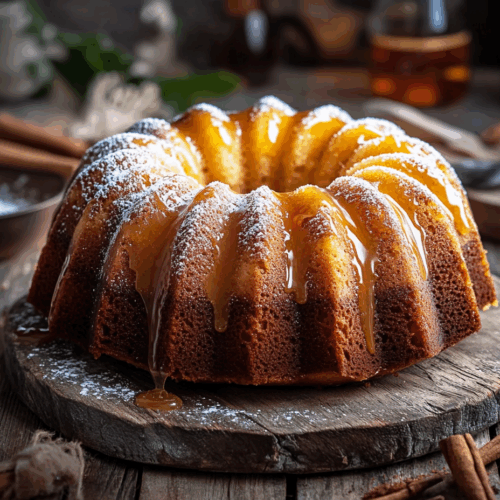
Butter Rum Bundt Cake

Equipment
- Bundt pan
- Electric Mixer
- Mixing Bowls
- Saucepan
- Cooling Rack
Ingredients
For the Cake:
- 2 ½ cups all-purpose flour preferably unbleached
- 1 tablespoon baking powder
- ½ teaspoon salt
- 1 cup unsalted butter softened
- 2 cups granulated sugar
- 4 large eggs room temperature
- 1 teaspoon vanilla extract pure
- ½ cup dark rum
For the Glaze:
- ½ cup unsalted butter cubed
- 1 cup granulated sugar
- ¼ cup dark rum
- ¼ cup water
- ½ teaspoon vanilla extract pure
Instructions
- Preheat your oven to 325°F (165°C) and grease a 10-inch bundt pan generously with butter or a non-stick spray.
- Combine the flour, baking powder, and salt in a bowl. Set aside.
- In a large mixing bowl, beat the softened butter and sugar together on medium speed until light and fluffy.
- Add the eggs one at a time, beating well after each addition, and mix in the vanilla extract and dark rum.
- Slowly add the dry ingredients to the wet mixture, mixing until just combined.
- Pour the batter evenly into the prepared bundt pan and smooth the top with a spatula.
- Bake for 60 minutes, or until a toothpick inserted into the cake comes out clean.
- Prepare the glaze in a small saucepan, melt the butter over medium heat. Stir in the sugar, water, and rum, and bring to a boil. Remove from heat and add the vanilla extract.
- Cool the cake in its pan on a cooling rack for 15 minutes, then invert onto the rack.
- Brush the warm glaze evenly over the cake until it is all absorbed.
Notes
Lori’s Tips:
- For a richer flavor, allow the cake to rest overnight—covered—in an airtight container for the flavors to meld and mature.
Ingredient Substitutions:
- Coconut rum can be used for a tropical twist.
- For a non-alcoholic version, use equal parts of rum extract and water.
Nutrition
Frequently asked questions
Can I make this without alcohol?
Yes — use rum extract in place of the dark rum, substituting 1 teaspoon of extract plus enough water to match the original volume (½ cup for the batter, ¼ cup for the glaze). The flavor will be lighter and less complex, but the texture of the cake won’t change.
Do I really need a bundt pan, or can I use something else?
A standard 10-inch bundt pan is strongly recommended because the center tube helps this dense batter bake through evenly. If you use a regular round or loaf pan, the center will likely be underdone by the time the edges are set — you’d need to significantly reduce the batter volume and adjust the baking time.
My butter and sugar aren’t getting fluffy — what’s wrong?
The butter is probably too cold. It should feel soft enough to leave an indent when you press it with a finger, but not greasy or melted. Cut it into chunks and let it sit at room temperature for 30–45 minutes before you start, and the creaming step will go much faster.
What to bake next
- Nutty Brown Butter Vanilla Bean Cupcakes
- Rustic Blackberry Almond Cake
- Southern Maple Bourbon Bread Pudding
- Tropical Coconut Tres Leches Cake