

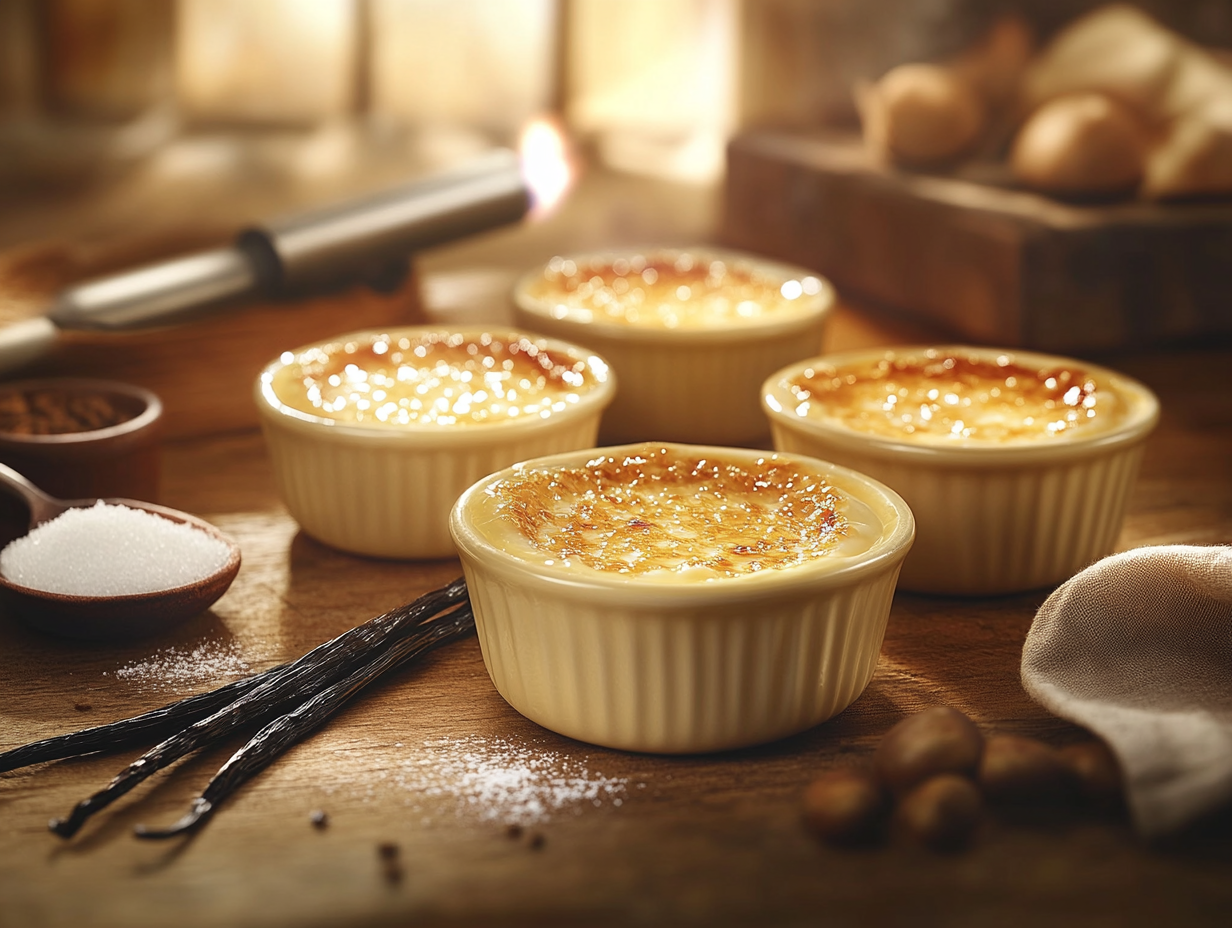
Crème brûlée is a baked vanilla custard topped with a thin layer of caramelized sugar that cracks when you tap it. It takes about an hour of active work, then the fridge does the rest — which makes it one of the most practical desserts you can make when you need something impressive ready ahead of time.
Why this recipe works
Two things determine whether crème brûlée sets properly: tempering and the water bath. Tempering — pouring the warm cream into the yolks slowly while whisking — keeps the eggs from scrambling before the custard even reaches the oven. The water bath then surrounds the ramekins with gentle, even heat so the custard firms up gradually rather than curdling around the edges while the center stays liquid. Skip either step and you get scrambled eggs or a rubbery, uneven set. Do both correctly and the custard comes out smooth all the way through, every time.
Ingredient notes
- Heavy cream: This is not the place for half-and-half or light cream. The high fat content is what gives the custard its dense, spoonable texture. Lower-fat substitutes produce a thinner, less stable set.
- Vanilla bean vs. extract: A whole vanilla bean steeped in the warm cream gives you visible flecks and a slightly deeper flavor. Pure vanilla extract works well and is the easier call — just avoid imitation vanilla, which turns bitter when baked.
- Egg yolks only: The recipe uses six yolks and no whites. Whites would make the custard firm and bouncy rather than creamy. Don’t be tempted to use whole eggs to reduce waste — save the whites for meringue or freeze them.
If something goes sideways
- Custard is still liquid after 45 minutes: Oven temperatures vary. Give it another 5–10 minutes and check again — you want the edges set and the center to wobble as one unit, not slosh. A digital thermometer reading 170–175°F in the center confirms it’s done.
- Surface has bubbles or a skin: Bubbles usually mean the cream was too hot when it hit the yolks, or you whisked too vigorously. Straining through a fine-mesh sieve catches most of this. A skin forms if the custards cool uncovered — loosely lay plastic wrap directly on the surface before refrigerating.
- Sugar won’t caramelize evenly: The custard surface needs to be completely dry before you add the sugar. Pat it gently with a paper towel if there’s any condensation. Move the torch in slow, steady circles rather than holding it in one spot, and use fine granulated sugar — coarser crystals melt unevenly. Skip the garnish of fresh fruit or mint on top before torching — not worth the extra dish, and it gets in the way.
- Custard weeps or looks curdled after chilling: This usually means it was overbaked. Pull it from the oven earlier next time. A slightly underdone custard will finish setting in the fridge; an overbaked one won’t recover.
- Caramel crust softens before serving: The sugar layer absorbs moisture from the custard and from the air. Torch the tops no more than 30 minutes before you serve them — caramelizing the night before guarantees a soggy crust by the time guests arrive.
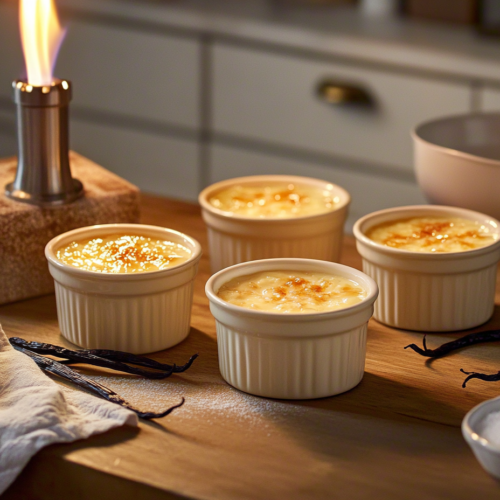
Classic Crème Brûlée

Equipment
- 1 Mixing Bowl
- 1 Whisk
- 1 Fine Mesh Sieve
- 1 Ramekins
- 1 Baking dish
- 1 Kitchen torch
Ingredients
- 2 cups heavy cream Use high-quality cream for the best texture
- 1 whole vanilla bean Split and scraped or 1 tbsp of pure vanilla extract
- 6 large egg yolks Preferably organic
- ½ cup granulated sugar Fine sugar works best
- ¼ cup sugar For caramelizing the top
Instructions
- Preheat your oven to 325°F (160°C).In a medium saucepan, combine the heavy cream and vanilla bean (or vanilla extract). Heat over medium heat until it is just about to boil, then remove from heat and cover. Let it infuse for about 15 minutes.
- In a mixing bowl, whisk together the egg yolks and 1/2 cup of granulated sugar until the mixture becomes pale in color.
- Slowly pour the warmed cream into the egg yolk mixture, whisking continuously to prevent cooking the eggs.
- Strain the mixture through a fine-mesh sieve into a clean bowl to remove the vanilla bean and any cooked egg bits.
- Divide the mixture into four ramekins placed in a baking dish.
- Pour hot water into the baking dish until it reaches halfway up the sides of the ramekins.
- Bake in the preheated oven for 45 minutes, or until the custard is set but still jiggly in the center.
- Remove the ramekins from the water bath and let them cool, then refrigerate for at least 2 hours.
- Before serving, evenly sprinkle about 1 tablespoon of sugar on top of each custard. Use a kitchen torch to caramelize the sugar to a crisp brown crust.
Notes
Lori’s Tips
- For a deeper vanilla flavor, infuse the cream overnight in the refrigerator before proceeding with the recipe.
- Carefully watch the sugar while caramelizing to avoid burning.
Nutrition
Your questions, answered
How far in advance can I make crème brûlée?
You can bake and refrigerate the custards up to three days ahead — just don’t add the sugar topping until shortly before serving. This makes crème brûlée genuinely useful for dinner parties or holidays: the oven work is done days in advance, and all you do at the last minute is torch the tops.
Do I need a kitchen torch, or can I use the broiler?
A broiler works, but it’s harder to control. Set the ramekins on a baking sheet as close to the broiler element as possible, watch them constantly, and rotate the pan if your broiler has hot spots — the sugar can go from pale to burnt in under a minute. A kitchen torch gives you much more precision and is worth buying if you plan to make this more than once.
Why did my custard turn out grainy or eggy-tasting?
Graininess almost always means the eggs got too hot too fast — either the cream was at a full boil when you added it, or the oven ran hot and the custard overbaked. Next time, pull the cream off the heat just before it boils, add it to the yolks gradually, and start checking the custards at the 40-minute mark rather than waiting the full 45.
Try these next
- Chocolate Chai Pots de Crème
- Lavender Honey Panna Cotta
- Toasted Coconut Custard Pie
- Dark Chocolate Espresso Tartlets