

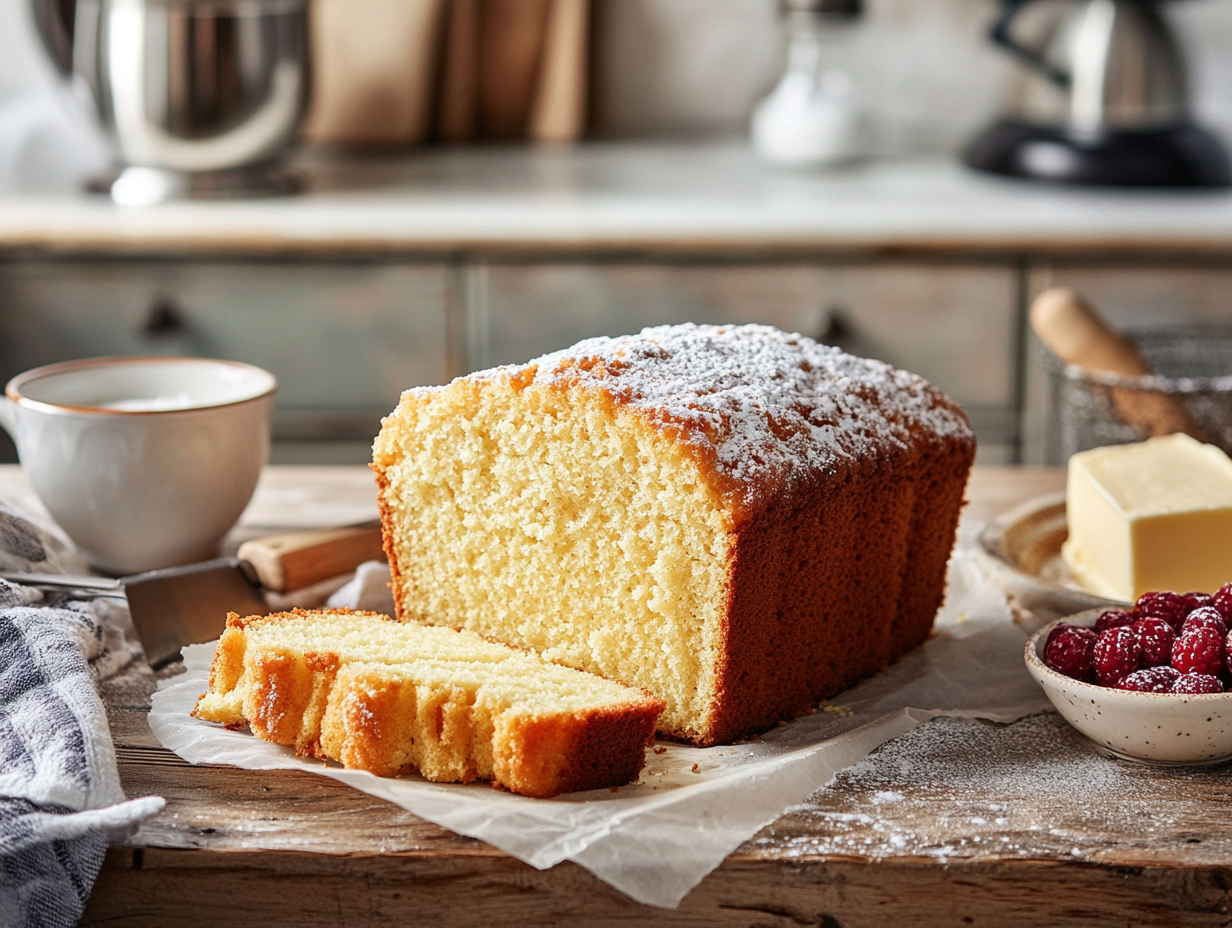
Pound cake is one of the most straightforward cakes you can bake — butter, sugar, eggs, flour, and about an hour in the oven. This version uses a small amount of baking powder and whole milk to keep the crumb tender without losing the dense, close texture that makes pound cake worth making in the first place. If you want a reliable loaf that slices cleanly, keeps well, and tastes better the next day, this is it.
About the ingredients
- Butter: Use unsalted so you control the salt level. It must be genuinely softened — press a finger in and it should leave an indent without resistance. Cold butter will not cream properly.
- Eggs: Room temperature eggs incorporate into the batter without breaking the emulsion. Take them out of the fridge at the same time as the butter.
- Whole milk: The fat in whole milk matters here. Skim or 1% will give you a slightly drier crumb. If you only have 2%, it will work fine.
- All-purpose flour: Spoon it into the measuring cup and level it off — don’t scoop directly from the bag, or you’ll pack in too much and end up with a heavy loaf.
The short version of why this works
Two things determine whether this cake succeeds or not. First, creaming the butter and sugar long enough — the full 4 to 5 minutes — traps air that gives the crumb its lift and fine texture; stopping at 2 minutes because it looks combined is the most common reason pound cake turns out dense and gummy. Second, adding the eggs one at a time and beating well after each one keeps the batter emulsified, which means the fat and liquid stay bound together rather than separating into a greasy, curdled mess that bakes up uneven. Everything else in the method is just cleanup work.
Mistakes to avoid
- Opening the oven before 50 minutes: The batter needs time to set its structure. Opening the door early causes the center to sink. Check for doneness at 55 minutes, not before.
- Skipping the pan prep: Butter and flour the pan, or use a nonstick spray with flour in it. A plain greased pan often sticks on the bottom edge where the crust forms thickest.
- Overmixing after adding the flour: Once the dry ingredients go in, mix only until the flour disappears. Overworking develops gluten and makes the cake tough with a rubbery texture.
- Cutting into it too soon: Slicing while the cake is still warm compresses the crumb and makes it look underbaked. Give it at least 45 minutes on the rack after it comes out of the pan.
- Trusting your oven’s dial: Home ovens run hot or cool by 25°F or more. An oven thermometer — listed in the equipment — is genuinely worth using here because even 15 degrees too high will crack the top and dry out the edges before the center is done. Skip the powdered sugar garnish — not worth the extra dish when the crust is already golden and attractive on its own.
Keeping it fresh
Pound cake actually improves after the first day as the moisture redistributes through the crumb. Wrapped tightly in plastic wrap, it keeps at room temperature for 3 days. For longer storage, wrap individual slices in plastic, then foil, and freeze for up to 2 months — thaw at room temperature for about an hour and they taste freshly baked. If you want to make it ahead for an event, bake it the day before and leave it wrapped on the counter overnight; it will slice more cleanly and taste better than a same-day cake.
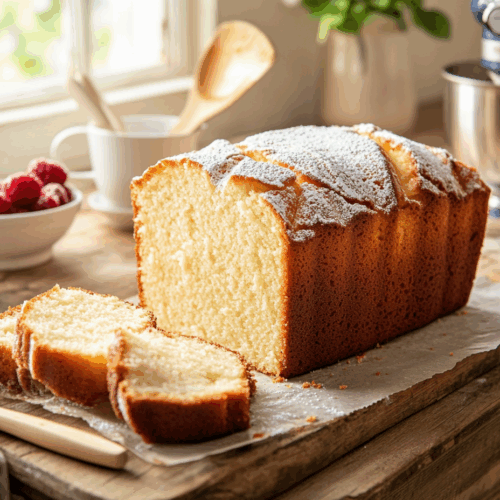
Classic Butter Pound Cake

Equipment
- 1 Stand Mixer
- 1 9x5 inch loaf pan
- 1 Pastry brush
- 1 Large Mixing Bowl
- 1 Spatula
- 1 Oven Thermometer
Ingredients
- 1 cup unsalted butter softened at room temperature
- 1 cup granulated sugar
- 4 large eggs at room temperature
- 2 teaspoons pure vanilla extract
- ¼ cup whole milk at room temperature
- 2 cups all-purpose flour
- 1 teaspoon baking powder
- ½ teaspoon salt
Instructions
- Preheat Oven: Preheat your oven to 350°F (175°C). Ensure it reaches the desired temperature with the help of an oven thermometer for precision.
- Cream Butter and Sugar: In a stand mixer fitted with a paddle attachment, cream the softened butter and sugar on medium speed until light and fluffy, about 4-5 minutes.
- Incorporate Eggs and Vanilla: Add the eggs one at a time, beating well after each addition. Stir in the vanilla extract until well blended.
- Combine Milk: With the mixer on low, gradually add the milk, incorporating fully into the batter.
- Mix Dry Ingredients: In a separate bowl, whisk together the flour, baking powder, and salt. Gradually add to the butter mixture, mixing on low speed until just combined. Use a spatula to scrape down the sides as necessary.
- Prepare Pan and Bake: Grease a 9x5 inch loaf pan with butter or nonstick spray. Pour the batter into the pan and use a spatula to spread it evenly. Bake for 60 minutes, or until a toothpick inserted into the center comes out clean.
- Cool and Serve: Allow the pound cake to cool in the pan for about 10 minutes, then remove to a wire rack to cool completely. Slice and serve with a dusting of powdered sugar or fresh berries.
Notes
- For an extra moist cake, consider adding a tablespoon of sour cream to the batter.
- Substitute almond extract for vanilla for a nutty flavor twist.
- The cake can be wrapped tightly in plastic wrap and kept at room temperature for up to 3 days, or refrigerated for a week.
Nutrition
FAQ
Can I use salted butter instead of unsalted?
Yes, but reduce the added salt in the recipe to a pinch. Different brands of salted butter contain different amounts of sodium, so the result may vary slightly, but it won’t ruin the cake.
Why did my pound cake sink in the middle?
The most likely cause is underbaking — the center wasn’t fully set when it came out of the oven. Make sure the toothpick comes out completely clean, not just mostly clean, and avoid opening the oven door in the first 50 minutes.
My batter looks curdled after adding the eggs. Is it ruined?
No, it will almost always come back together once the flour is added. This usually happens when the eggs are too cold — next time, bring them to room temperature before you start.
Can I bake this in a different pan — like a bundt or two smaller loaf pans?
A standard bundt pan works, but reduce the baking time and start checking at 45 minutes since the thinner walls bake faster. Two smaller loaf pans will bake in roughly 35 to 40 minutes.
Do I really need a stand mixer, or can I use a hand mixer?
A hand mixer works perfectly well for this recipe. The key is maintaining medium speed for the full creaming time — a hand mixer just means you’re holding it for 4 to 5 minutes, which is easy enough to hand off to a helper.
Try these next
- Nutty Brown Butter Vanilla Bean Cupcakes
- Pistachio Raspberry Loaf Cake
- Pear and Almond Cake
- Zesty Mediterranean Lemon Yogurt Loaf with Syrup