

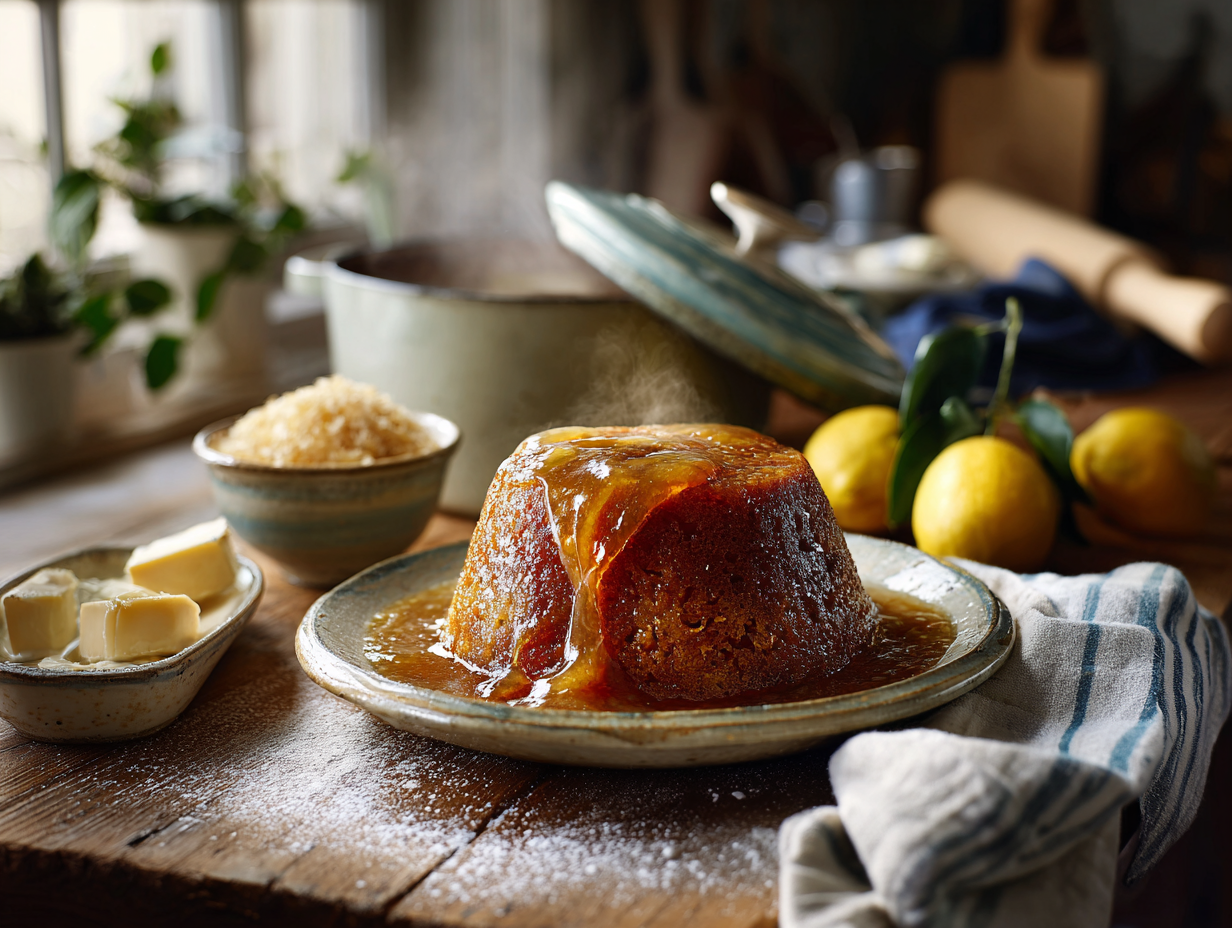
Sussex Pond Pudding is a British steamed suet pudding: a thick pastry shell filled with butter, brown sugar, and whole pierced lemons that cook down into a sharp, buttery sauce over 2.5 hours. When you turn it out, that sauce floods the plate — that’s the pond. It’s a genuinely unusual dessert, and it’s worth making because the result tastes nothing like anything you can buy.
What makes this version work
Two things matter most here. First, the seal. If the pastry lid isn’t pinched firmly against the lining, the sauce leaks into the steaming water and you end up with a dry, disappointing interior — so take an extra minute to press and crimp those edges properly. Second, keeping the water level steady throughout the steam. The pot needs a check every 30–40 minutes; if the water drops too low, the bottom of the basin scorches and the pastry toughens. Use boiling water from a kettle when you top it up, not cold tap water, so the temperature inside the pot doesn’t drop and stall the cook.
About the ingredients
- Suet: In the US, packaged shredded beef suet (sold in some butcher shops and online) works well. Atora is a widely available shelf-stable brand. Vegetable suet is a direct swap and easier to find in American grocery stores — it produces a slightly less rich crust but works fine.
- Self-rising flour: If you only have all-purpose flour, add 1.5 teaspoons of baking powder and 0.25 teaspoon of salt per cup of flour.
- Lemons: Use unwaxed lemons if you can find them, since the whole rind goes into the pudding. If yours are waxed, scrub them well under hot water before piercing.
- Light brown sugar: Dark brown sugar works but makes the sauce more molasses-forward. Either is fine — just know what you’re getting.
Mistakes to avoid
- Rolling the pastry too thin: Aim for about 5mm thickness. Too thin and the base tears when you try to unmold, spilling the sauce before it reaches the plate.
- Not greasing the basin thoroughly: Get into the curve at the bottom. A pudding that sticks is hard to recover gracefully — use softened butter and coat every surface.
- Skipping the saucer under the basin: The basin needs to sit off the pot floor so heat circulates underneath. Without it, the base of the pastry can become dense and gummy.
- Lifting the lid too often: Every time you open the pot you lose steam and add time. Check the water level by tilting the lid slightly rather than removing it fully.
- Cutting into it immediately: Let the pudding rest for 5 minutes after unmolding. The sauce is extremely hot and will run everywhere if you serve it straight from the pot — and you risk burning yourself.
Keeping it fresh
This pudding is best eaten the day it’s made, while the pastry is still soft and the sauce is fluid. Leftovers keep in the fridge for up to 2 days — cover the basin or transfer to an airtight container. Reheat individual portions in a microwave with a splash of water to loosen the sauce, about 90 seconds on medium power. Freezing is possible but not ideal; the pastry texture suffers once thawed. If you want to get ahead, you can assemble the uncooked pudding in its covered basin up to 24 hours in advance and refrigerate it, then steam straight from cold — add 15 minutes to the cooking time.

Sussex Pond Pudding

Equipment
- Steaming basin
- Sieve
- Mixing Bowl
- Rolling pin
- Steaming pot
Ingredients
- 1.5 cups self-rising flour sifted
- 0.5 cups suet shredded
- 0.5 cups cold water for mixing
- 0.75 cups unsalted butter diced
- 0.75 cups light brown sugar packed
- 2 whole lemons pierced several times
Instructions
- Begin by greasing a steaming basin. This will ensure that the pudding releases easily once cooked.
- In a mixing bowl, sift the self-rising flour and add the shredded suet. Gradually mix in cold water until a soft dough forms, kneading lightly by hand.
- Roll out two-thirds of the dough on a floured surface to an even round large enough to line the basin. Place it in the basin, ensuring there are no gaps.
- Layer the butter and light brown sugar into the basin, followed by the pierced lemons, to be seated snugly.
- Roll out the remaining dough to create a lid for the filling. Moisten the edges and pinch to seal tightly, preventing any escape of steam.
- Cover the basin with a double layer of greaseproof paper and kitchen foil, tied securely with kitchen string.
- Place the basin on an upturned saucer in a large pot, filling the pot with boiling water reaching halfway up the basin's side.
- Cover with a lid and steam for approximately 2.5 hours, ensuring the water maintains its level by topping up as necessary.
- Once finished, carefully remove and let the pudding cool slightly before turning it out onto a serving plate. The warm aroma of caramelized sugar and softened lemons will greet you.
Notes
Lori’s Tips:
- For a lighter lemon flavor, you can use just one lemon.
- Experiment with orange for a sweeter, citrusy variation.
- For a pastry cream filling, consider adding a touch of vanilla essence.
Nutrition
Frequently asked questions
Can I use a regular bowl instead of a steaming basin?
Yes — a heatproof Pyrex or ceramic bowl of roughly the same volume works fine. Make sure it has straight or slightly flared sides so the pudding can release cleanly, and that it fits inside your pot with at least an inch of clearance on all sides.
Do I really need to steam it for the full 2.5 hours?
Yes. The long steam is what softens the whole lemons through to the rind and builds the sauce. Pull it early and you’ll have undercooked pastry and a lemon that’s still firm and bitter rather than soft and syrupy.
What if I can’t find suet — can I use butter instead?
Cold grated butter is the most practical substitute. Use the same quantity and keep it as cold as possible when mixing. The crust will be slightly shorter and less spongy than suet pastry, but it holds together and tastes good.
How do I know when the pudding is done?
After 2.5 hours, press the foil cover gently — it should feel firm and spring back slightly. You can also insert a skewer through the foil and pastry lid; it should come out clean with no raw dough on it.
What should I serve it with?
Clotted cream or plain pouring cream both work well — skip the custard, it competes with the lemon sauce rather than complementing it. A small spoonful of cream per portion is enough; the pudding is already very rich.
If you liked this one
- Tropical Lime Bars with Toasted Coconut Crunch
- Zesty Lemon Thyme Shortbread Bars
- Luxurious Almond Croissant Bread Pudding
- A Delightful English Summer Dessert: Strawberry Elderflower Fool