

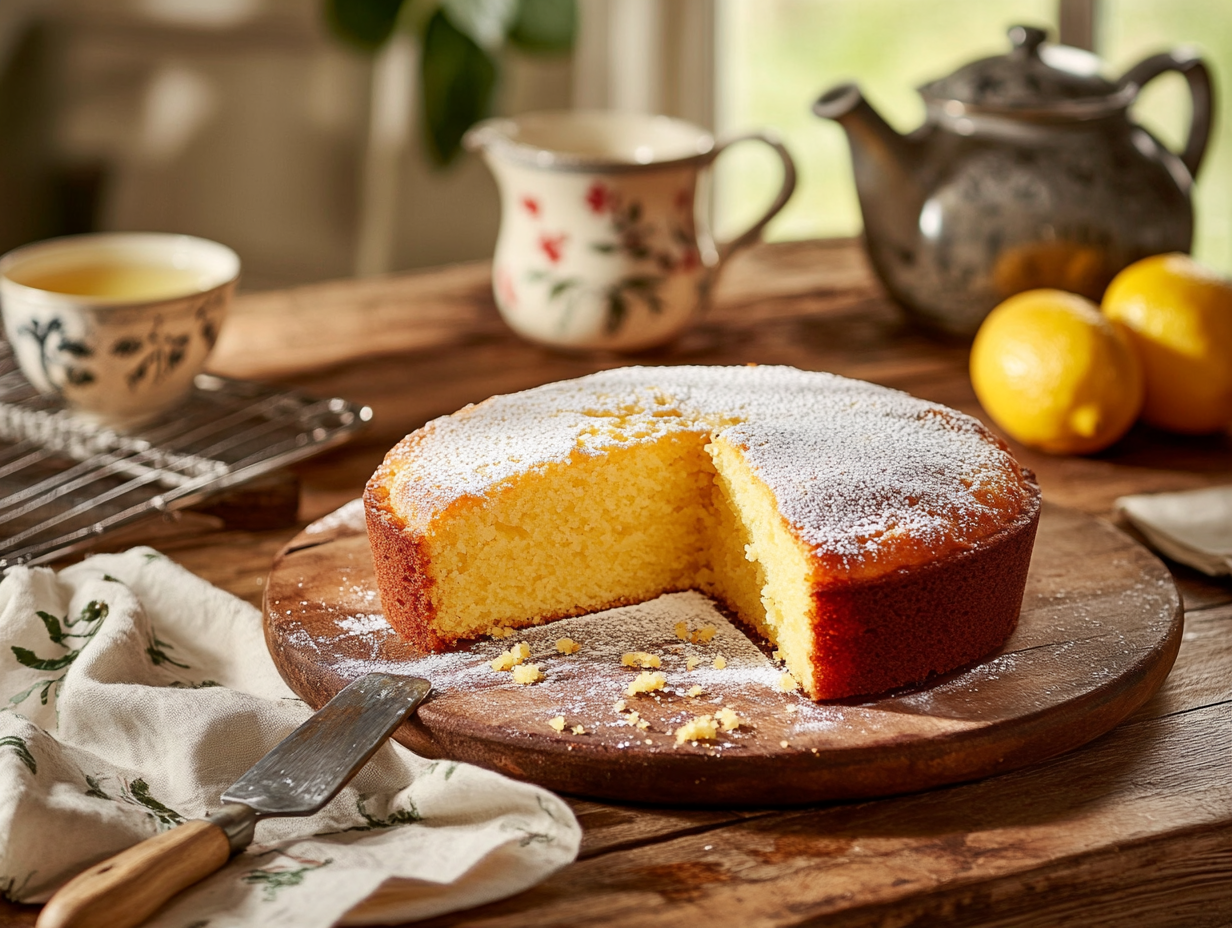
Madeira cake is a dense, fine-crumbed British butter cake flavored with lemon zest and vanilla, topped with a thin sugar crust that forms during baking. It uses pantry staples and takes about 75 minutes start to finish. The honest reason to make it: it stays moist and sliceable for days, which makes it genuinely useful when you need a reliable cake that doesn’t require last-minute effort.
Before you start
Two things determine whether this cake works. First, your butter, eggs, and milk must all be at room temperature before you begin — cold butter won’t cream properly, and cold eggs added to creamed butter will cause it to curdle, which produces a denser, uneven crumb. Pull everything out at least an hour ahead. Second, stop mixing the moment the flour disappears into the batter. Madeira cake gets its tight, even crumb from minimal gluten development; an extra minute of mixing after the flour goes in is enough to make the finished cake noticeably tough.
About the ingredients
- Butter: Use unsalted butter with a fat content of at least 80%. Lower-fat spreads or margarine release more water during baking and will affect the crumb texture.
- Lemon zest: Zest only the bright yellow outer layer — the white pith underneath is bitter. An organic lemon is worth it here since you’re using the skin.
- Topping sugar: Regular granulated sugar works fine for the crust. Skip the garnish — not worth the extra dish. The sugar baked directly on top gives you all the crust you need.
- Milk: Whole milk keeps the batter the right consistency. Lower-fat milk can be used in a pinch but the crumb will be slightly less tender.
Make-ahead notes
This cake is genuinely better on day two, once the crumb has settled and the lemon flavor has deepened, so baking ahead is a real advantage rather than a compromise. Wrapped tightly in plastic wrap and stored at room temperature, it keeps well for up to four days. For longer storage, wrap the fully cooled cake in plastic wrap, then a layer of foil, and freeze for up to two months — thaw overnight at room temperature still wrapped so condensation forms on the outside of the foil rather than on the cake. If you’re baking for an event, bake two days out, wrap, and leave it at room temperature; it will be in perfect condition when you need it.
What can go wrong
- Sunken center: This usually means the oven door was opened before the cake had set — the structure collapses when cold air hits it too early. Don’t open the oven before the 45-minute mark.
- Pale, soft top with no crust: The sugar topping needs direct dry heat to form a crust. If your oven runs cool or you used a dark pan that absorbed heat from the sides, the top may not color properly. Check with an oven thermometer and move the rack up one position next time.
- Cake pulls away from the sides but is wet in the middle: The outside is browning faster than the inside can cook through, which happens in an oven that runs hot. Tent the top loosely with foil after 35 minutes and continue baking until the toothpick test passes.
- Eggs curdling into the butter mixture: If the batter looks broken and grainy after adding eggs, add a tablespoon of the measured flour and beat briefly — it will usually bring the mixture back together before you add the rest of the dry ingredients.
- Flat, dense loaf with little rise: Check the age of your baking powder. Baking powder loses potency over time; if yours has been open for more than six months, test it by dropping a teaspoon into hot water — it should bubble vigorously. If it doesn’t, replace it before baking.
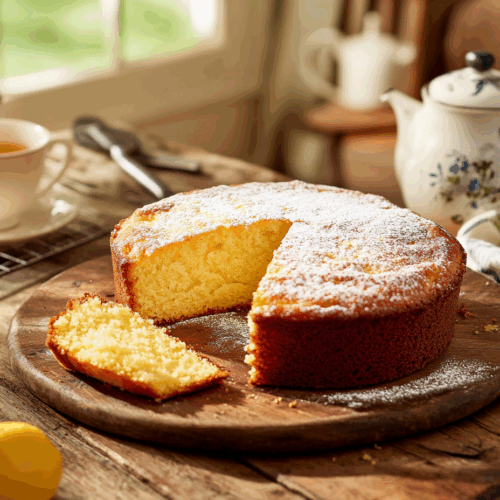
Classic Madeira Cake

Equipment
- Mixing Bowl
- Electric Mixer
- 9-inch round cake pan
- Cooling Rack
- Zester
- Measuring cups and spoons
Ingredients
- 1 cup unsalted butter at room temperature
- 1 cup granulated sugar fine quality
- 3 large eggs at room temperature
- 2 cups all-purpose flour sifted
- 2 teaspoons baking powder
- ¼ teaspoon salt
- 1 tablespoon lemon zest freshly grated from an organic lemon
- 1 teaspoon vanilla extract pure
- ¼ cup whole milk
- 2 tablespoons granulated sugar for topping
Instructions
- Preheat your oven to 350°F (175°C). Grease the cake pan and line the bottom with parchment paper, ensuring an easier release.
- In a mixing bowl, cream the butter and granulated sugar together using an electric mixer on medium speed until light and fluffy, approximately 3 to 5 minutes. The batter should become pale and airy.
- Gradually add the eggs one at a time, beating well between each addition until fully incorporated.
- In a separate bowl, whisk together the sifted flour, baking powder, and salt. Slowly add the dry ingredients into the creamed mixture, alternating with the milk. Begin and end with the flour mixture.
- Stir in the lemon zest and vanilla extract, mixing until just combined. Avoid overmixing to ensure the cake remains tender.
- Transfer the batter to the prepared cake pan, smoothing the top with a spatula. Sprinkle 2 tablespoons of sugar evenly over the surface to create a delightful crust.
- Bake in the preheated oven for 50 to 55 minutes, or until a toothpick inserted into the center comes out clean and the top is golden.
- Allow the cake to cool in the pan for 10 minutes before transferring to a cooling rack to cool completely.
Notes
Tammy’s Tips:
- The batter can be flavored with a hint of almond extract for a subtle twist.
- For a citrusy variation, orange zest can replace the lemon zest.
- Using room temperature ingredients ensures a smoother batter and better rise.
Nutrition
Common questions
Can I bake this in a loaf pan instead of a round pan?
Yes, a standard 9×5-inch loaf pan works well. Start checking for doneness at 50 minutes, as the shape affects how heat moves through the batter — a loaf can take a few minutes longer than a round pan.
Do I really need to sift the flour?
Sifting matters here more than in many recipes because Madeira cake has a fine, even crumb and no mix-ins to hide lumps. Unsifted flour can clump when it hits the wet batter, and working out those lumps means more mixing, which toughens the cake.
Can I double the recipe for a larger crowd?
You can double the ingredients, but bake in two separate pans rather than one larger one. A single oversized cake will take significantly longer to cook through and the center often stays underdone by the time the edges are done.
My cake domed and cracked on top — did something go wrong?
No, a crack along the top is normal and expected for Madeira cake. It happens because the outer crust sets before the center finishes rising; it’s a sign the cake baked correctly, not a problem to fix.
How do I know when the cake is fully baked and not just browned on top?
The toothpick test is the most reliable method — insert it into the very center and it should come out clean with no wet batter clinging to it. The top being golden is a good sign, but color alone isn’t enough, since the sugar topping can brown before the interior is done.
What to bake next
- Pear and Almond Cake
- Zesty Mediterranean Lemon Yogurt Loaf
- Strawberry Elderflower Fool
- Nutty Brown Butter Vanilla Bean Cupcakes