

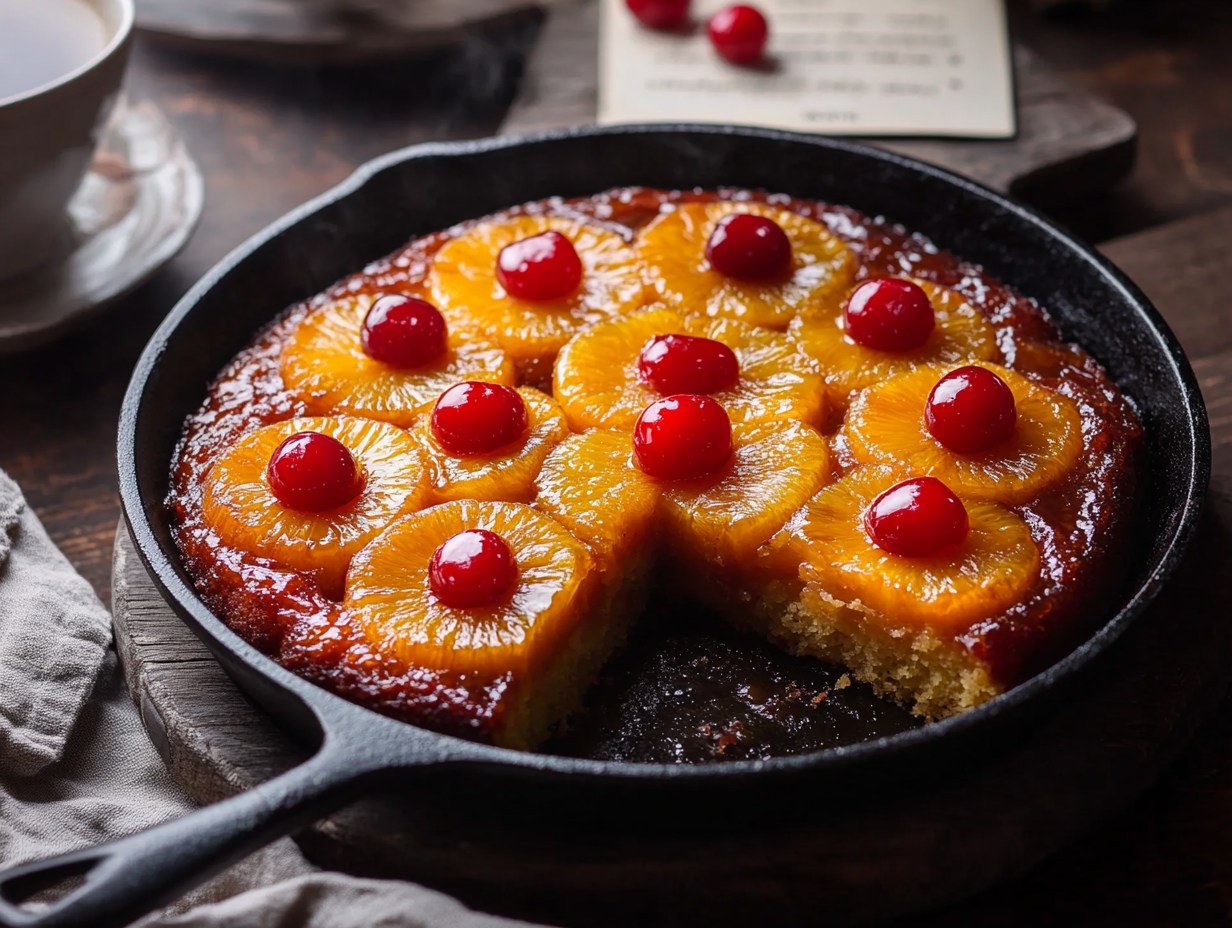
Pineapple upside-down cake is a single-layer skillet cake where brown sugar and butter caramelize around pineapple rings and cherries during baking, then become the glossy top once you flip it out. It serves 8, takes just over an hour start to finish, and the whole thing bakes in one pan — which makes cleanup fast and the result genuinely impressive for the effort involved.
About the ingredients
- Canned pineapple slices: Use slices packed in juice, not syrup — syrup adds sweetness you don’t need on top of a full cup of brown sugar. Reserve the juice from the can; it’s useful for brushing the warm cake if the top looks dry after flipping.
- Maraschino cherries: Drain them well and blot with a paper towel before placing. Excess liquid can thin the caramel layer and prevent it from setting properly.
- Light brown sugar: Dark brown sugar works too and gives a deeper, more molasses-forward caramel. Either is fine — just don’t substitute white sugar, which won’t caramelize the same way in the skillet.
- Whole milk vs. coconut milk: Coconut milk (the canned, full-fat kind — not the carton) makes the crumb noticeably richer and adds a mild tropical note that works well here. Skip the garnish of toasted coconut on top — not worth the extra dish.
The technique that matters
The caramel base is the step that determines whether the topping looks good after the flip. Melt the butter and brown sugar together in the skillet over medium heat and stir until the sugar is fully dissolved and the mixture looks smooth — if you pour the batter over a grainy, separated base, the topping will be uneven and may stick in patches. Once the pineapple slices go in, press them gently into the caramel so there are no gaps underneath. When the cake comes out of the oven, let it rest in the skillet for exactly 5 minutes before inverting — long enough for the caramel to begin setting so it clings to the fruit, but short enough that it hasn’t hardened and bonded to the pan.
If something goes sideways
- Fruit sticks to the skillet after flipping: Use a thin offset spatula to gently lift any stuck pieces and press them back into place on the cake. The caramel is still soft enough to hold them.
- Caramel pools and runs off the sides after flipping: The skillet wasn’t level in the oven, or the batter was too thin. Next time, check that your oven rack is level before baking.
- The center is underbaked but the edges are done: Cast iron holds heat unevenly if it was cold when it went into the oven. Start the skillet on the stovetop to melt the butter and sugar as the recipe directs — this pre-warms the pan and helps the cake bake more evenly from the edges inward.
- The caramel layer is too thin and the topping looks pale: Make sure you’re using packed brown sugar, not loosely spooned. A full, firmly packed cup makes a significant difference in the thickness of the caramel.
- The cake domes in the center and cracks: The batter was overmixed after adding the flour. Once the dry ingredients go in, mix only until just combined — a few streaks of flour are fine at that point.
Make-ahead notes
This cake holds up well, which makes it a practical choice for holidays or gatherings. Baked and flipped, it keeps at room temperature covered loosely with foil for up to 2 days — the caramel actually improves slightly as it settles into the crumb overnight. For longer storage, refrigerate for up to 4 days; bring it back to room temperature for at least 45 minutes before serving, or warm individual slices in a 300°F oven for 8–10 minutes. The baked cake also freezes well: wrap it tightly in plastic wrap, then foil, and freeze for up to 6 weeks. Thaw overnight in the refrigerator still wrapped, then bring to room temperature before serving. If you want to prep even further ahead, the dry ingredients can be sifted and stored in an airtight container for up to a week, cutting down your day-of work to about 15 minutes of active prep.
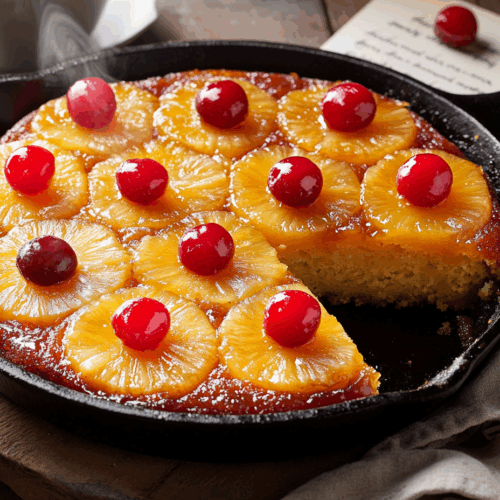
Pineapple Upside-Down Cake

Equipment
- 10-inch cast iron skillet
- Mixing Bowls
- Sifter
- Spatula
- Whisk
- Oven mitts
Ingredients
For the Topping:
- ½ cup unsalted butter cut into cubes
- 1 cup light brown sugar packed
- 12 slices pineapple canned preferred, reserve juice
- 1 jar maraschino cherries about 10-12 cherries
For the Cake:
- 1 ½ cups all-purpose flour
- 1 teaspoon baking powder
- ½ teaspoon salt
- ½ cup unsalted butter softened
- 1 cup granulated sugar
- 2 large eggs room temperature
- 1 teaspoon vanilla extract pure
- ½ cup whole milk or substitute with almond milk
Instructions
- Preheat your oven to 350°F (175°C). While it heats, melt 1/2 cup of butter in a 10-inch cast iron skillet over medium heat.
- Once melted, add the brown sugar and stir until dissolved. Arrange the pineapple slices over the sugar layer, then place a cherry in the center of each slice.
- In a separate mixing bowl, sift together the flour, baking powder, and salt.
- In another bowl, cream together the softened butter and sugar until light and fluffy, about 3 minutes. Beat in the eggs, one at a time, mixing well. Stir in the vanilla extract.
- Gradually add the dry ingredients to the creamed mixture, alternating with milk, beginning and ending with flour.
- Pour the batter over the arranged pineapple and cherries in the skillet.
- Bake in the preheated oven for 40-45 minutes, or until a toothpick inserted into the center comes out clean and the cake is golden brown.
Notes
- Consider using fresh pineapple for a more natural taste, but the classic canned version imbues the cake with its nostalgic flavor.
- Replace whole milk with coconut milk for a tropical variation.
Nutrition
FAQ
Can I use a regular cake pan instead of a cast iron skillet?
Yes — a 9-inch round cake pan works, though the caramelization won’t be quite as deep. Grease the pan well, line the bottom with parchment, then add the butter and brown sugar mixture; you’ll need to melt the butter separately first since you can’t heat a cake pan on the stovetop.
How do I know when the cake is actually done?
A toothpick inserted into the center of the cake — not through a pineapple slice — should come out clean or with just a couple of dry crumbs. The edges will also have pulled slightly away from the sides of the skillet, which is a reliable secondary sign.
Do I have to flip it right away, or can I wait?
Flip it within 5 to 10 minutes of coming out of the oven — no longer. If the caramel cools completely in the pan, it hardens and the cake will tear when you try to invert it; you’d need to briefly reheat the skillet on the stovetop to loosen it.
More sweet things to bake
- Caramelized Banana Tart
- Tropical Coconut Tres Leches Cake
- Nostalgic Malted Milk Chocolate Cake
- Autumn Pear and Almond Cake