

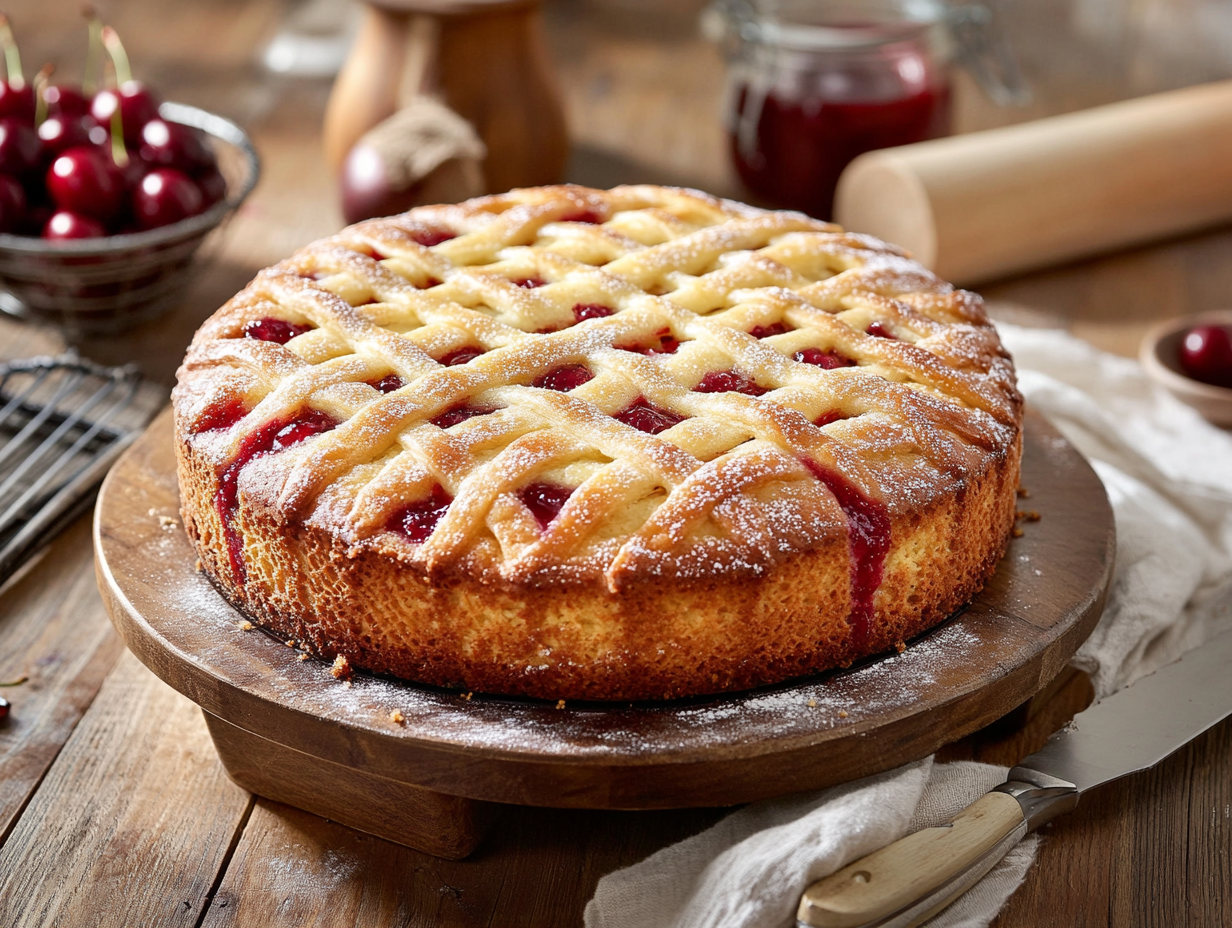
Gâteau Basque is a thick, buttery pastry cake filled with either vanilla pastry cream or black cherry jam, baked until the crust is golden and slightly crisp. The dough behaves more like a stiff cookie dough than a pie crust, which makes it easier to handle than it looks. It slices cleanly, keeps well, and tastes better the day after baking — which makes it one of the more practical cakes you can add to your repertoire.
Before you start
The single technique that determines whether this cake works is keeping the dough cold. After mixing, the dough must rest in the fridge for at least 30 minutes — skip this and it will stick, tear, and refuse to roll cleanly. If your kitchen runs warm, chill the rolled-out dough rounds on a baking sheet for 10 minutes before assembling; this prevents the bottom layer from going soft before the filling goes on. The second thing worth knowing: the egg wash is not optional decoration. A thorough, even coat of yolk and milk is what gives the top crust that deep amber color and slight sheen — brush it all the way to the edges so the crust doesn’t look pale and raw at the rim.
Common problems and fixes
- Filling leaks out the sides during baking: The edges weren’t sealed firmly enough. After placing the top layer of dough, press the edges together with your fingers, then run a fork around the rim to crimp and seal before applying the egg wash.
- Top crust cracks or splits: The dough was too cold and stiff when you scored the crosshatch. Let the assembled, egg-washed cake sit at room temperature for 5 minutes before scoring — the surface should be slightly tacky, not firm.
- Soggy bottom layer: Pastry cream that’s too loose is usually the cause. Your pastry cream should be thick enough to hold a firm mound on a spoon before it goes into the cake. If it’s store-bought or homemade and still warm, chill it fully before assembling.
- Cake won’t release from the pan: Even with a springform pan, the butter in the dough can stick if the pan wasn’t greased well. Use softened butter to coat the base and sides, or line the base with a parchment round.
- Uneven bake — golden top, pale underside: Move the pan to the lower third of the oven for the last 15 minutes of baking. This helps the bottom crust catch up without over-browning the top.
About the ingredients
The filling is where you have a real choice. Pastry cream gives a richer, denser result; black cherry jam gives a sharper, fruitier one. If you use jam, choose a thick, low-sugar variety — a runny jam will make the bottom layer soggy. Skip the garnish of powdered sugar that some recipes suggest; it dissolves into the crust within an hour and isn’t worth the extra dish. For the dough, unbleached all-purpose flour is worth using if you have it — it produces a slightly more tender crumb than bleached. The butter must be genuinely softened, not melted or cold from the fridge; it should leave an indent when pressed but not feel greasy.
Make-ahead notes
This cake is built for making ahead. The dough can be wrapped tightly and refrigerated up to 2 days before assembly, or frozen for up to 1 month — thaw overnight in the fridge before rolling. The fully assembled, unbaked cake can be refrigerated overnight and baked straight from the fridge the next day; add 5 minutes to the bake time. Once baked and fully cooled, the cake keeps at room temperature under a cake dome for up to 3 days, and the flavor and texture actually improve on day two as the crust softens slightly against the filling. For longer storage, wrap individual slices in plastic wrap and freeze for up to 6 weeks; thaw at room temperature for about 2 hours before serving.
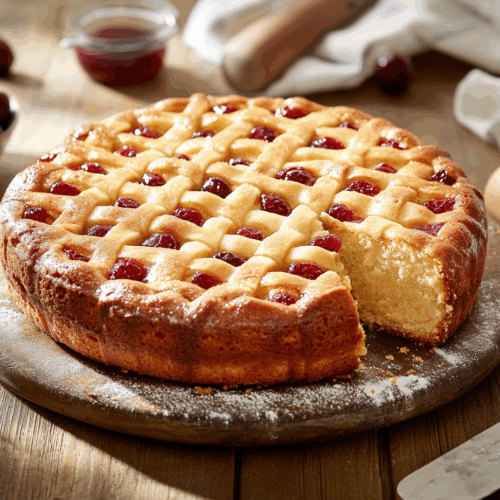
Gâteau Basque

Equipment
- Mixing Bowls
- Electric Mixer
- 9-inch Springform Pan
- Rolling pin
- Pastry brush
Ingredients
For the Dough:
- 2 cups all-purpose flour preferably unbleached
- 0.5 teaspoon baking powder fresh for best results
- 1 cup unsalted butter softened to room temperature
- 1 cup granulated sugar
- 2 large eggs preferably organic
- 1 teaspoon vanilla extract pure recommended
- 0.25 teaspoon salt
For the Filling:
- 1.5 cups pastry cream or cherry jam depending on preference
For Assembly:
- 1 large egg yolk for egg wash
- 1 tablespoon milk
Instructions
- In a large mixing bowl, sift together the flour and baking powder. Set aside.
- In another bowl, cream the softened unsalted butter and granulated sugar with an electric mixer until light and fluffy.
- Add the eggs one at a time, beating well after each addition. Add the vanilla extract and salt, continuing to mix until well combined.
- Gradually incorporate the flour mixture into the wet ingredients, mixing just until a dough forms. Divide the dough into two equal portions, wrap in plastic wrap, and refrigerate for at least 30 minutes.
- Preheat your oven to 350°F (175°C) and lightly grease a 9-inch springform pan.
- Roll out one portion of the dough on a floured surface to fit the bottom of the pan. Place it into the pan and gently press the edges.
- Spread the pastry cream or cherry jam evenly over the base.
- Roll out the second portion of the dough and place it over the filling. Seal the edges gently and trim any excess.
- Mix the egg yolk with milk and use a pastry brush to apply the egg wash over the top of the dough. Use a fork to create a crosshatch pattern on the surface for a traditional look.
- Bake in the preheated oven for 50 minutes, or until the top is golden brown and the edges are crisp. Allow to cool before removing from the pan.
Notes
- For a unique twist, consider adding a tablespoon of almond flour to the dough for a nutty flavor.
- If you prefer a less sweet version, reduce the sugar by ¼ cup.
Nutrition
Common questions
Can I use store-bought pastry cream instead of homemade?
Yes, but check the consistency before using it. It needs to be thick enough to hold its shape in the cake — if it’s pourable, cook it down in a saucepan over medium heat, stirring constantly, until it firms up, then chill it completely before assembling.
Do I need a springform pan, or can I use a regular cake pan?
A springform pan makes unmolding much easier and is strongly recommended. If you only have a regular 9-inch cake pan, line it with parchment and grease the sides well, but be prepared for the first slice to be a little rough getting out.
How do I know when it’s fully baked?
The top should be a deep, even amber — not pale gold. The edges will feel firm and slightly crisp when you press them gently, and the cake should not wobble at all when you shake the pan. At 50 minutes in a properly preheated oven, most ovens will get there, but check at 45 minutes if yours runs hot.
Can I make this with gluten-free flour?
A 1-to-1 gluten-free baking flour blend can work, but the dough will be more fragile and harder to roll without tearing. Chill it longer — at least 45 minutes — and patch any tears directly in the pan with your fingers rather than trying to re-roll.
More sweet things to bake
- Burnt Basque Cheesecake
- French Brown Butter Chocolate Tart
- Rustic French Countryside Fig Cake
- Toasted Coconut Custard Pie