

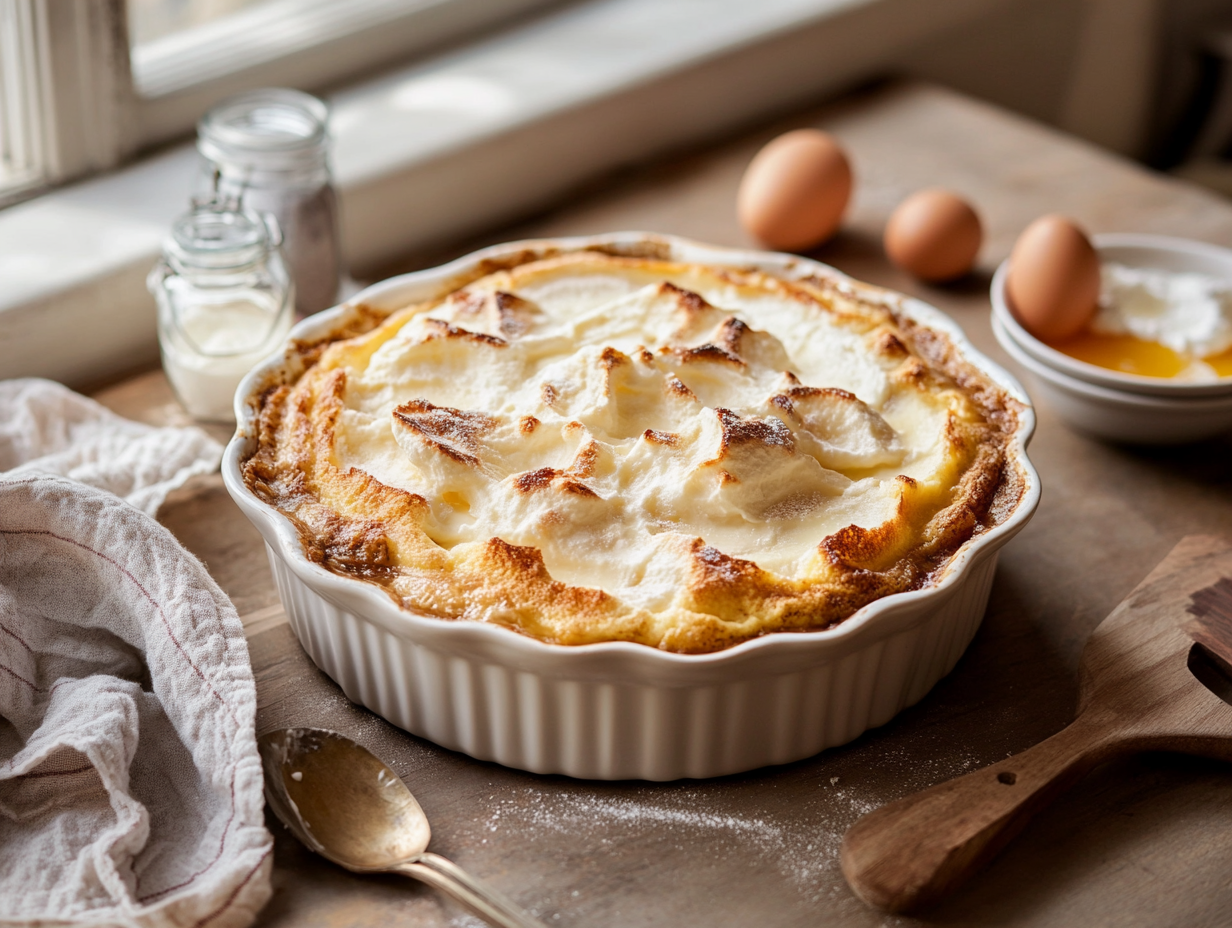
Diplomat pudding is a baked, layered dessert built from custard, sponge cake, and stewed fruit — straightforward to assemble and genuinely impressive once it comes out of the oven. It serves eight, holds well in the fridge, and travels better than most custard-based desserts, which makes it a smart choice when you need something that can be made ahead and shared. The custard is the whole point here, so the recipe keeps it simple and lets the fruit do the flavoring work.
What makes this version work
Two things matter most. First, tempering the egg yolks properly — adding the warm milk slowly while whisking constantly — is what keeps the custard smooth instead of scrambled. Rush that step and you’ll have sweet, lumpy eggs. Second, letting the custard cool slightly before layering means it won’t immediately soak into the sponge and turn everything to mush before it even hits the oven. Those 10 minutes of patience make a real difference in the final texture, giving you distinct layers rather than a uniform, soggy mass.
Smart swaps
- Sponge cake: Day-old sponge or ladyfingers both work well. Slightly stale cake is actually better here — it absorbs the custard without falling apart completely.
- Stewed fruit: Jarred cherries, canned apricots (drained), or a simple plum compote all work. Avoid very watery fruit or the custard won’t set cleanly — pat it dry if needed.
- Whole milk: The recipe note suggests swapping half for heavy cream for a richer custard. That’s worth doing if you want a firmer, sliceable result that holds its shape when portioned for gifting or transport.
- Vanilla extract: A split vanilla bean steeped in the warming milk and then removed gives a noticeably cleaner flavor, though extract is perfectly fine.
Troubleshooting
- Custard hasn’t set after 45 minutes: Oven temperatures vary. Check that the center jiggles only slightly, like a set gelatin, not like liquid. Give it 5–10 more minutes and tent loosely with foil if the top is browning too fast.
- Watery layer at the bottom: This usually means the fruit wasn’t drained well enough, or the custard was poured over hot fruit. Cool both components before assembling.
- Custard curdled during cooking: The heat was too high. Next time, keep it on the lowest setting and stir constantly. You can try blending a curdled custard smooth before baking, but the texture won’t be ideal.
- Sponge layer is completely dissolved: The cake pieces were too small or too fresh. Cut them larger — closer to 1.5 inches — and use cake that’s at least a day old.
- Whipped cream weeping after a few hours: Skip the garnish — not worth the extra dish. Dust with powdered sugar just before serving instead, or add the cream only when you’re ready to serve rather than storing it on top.
Storage and freezing
Once baked and cooled, the pudding keeps well covered in the fridge for up to 3 days — the texture actually improves after the first night as the layers settle together. Add the whipped cream topping only when you’re ready to serve. If you’re packaging it to give away or transport, leave it in the baking dish with a tight layer of plastic wrap pressed directly onto the surface to prevent a skin from forming on the custard. This pudding does not freeze well; the custard turns grainy and the sponge becomes waterlogged on thawing. Make it 1–2 days ahead and keep it cold — that’s the better strategy.
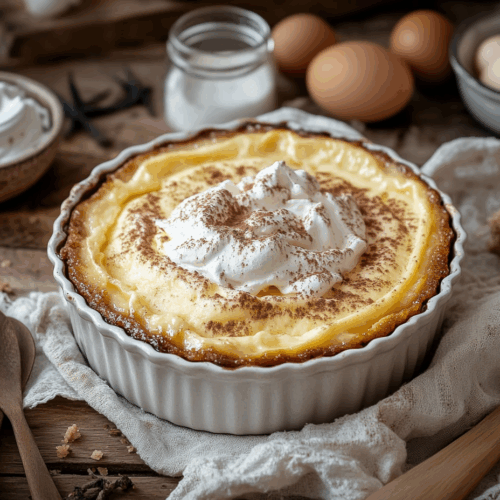
Diplomat Pudding

Equipment
- Mixing Bowl
- Whisk
- Saucepan
- 9-inch Baking Dish
- Oven
- Spatula
Ingredients
Custard Base
- 2 cups whole milk
- 4 large egg yolks free-range preferred
- ½ cup granulated sugar
- 1 teaspoon vanilla extract pure
Assembly
- 10 ounces sponge cake cut into 1-inch cubes
- 1 cup stewed fruit any preferred seasonal variety
- 1 cup heavy cream whipped to soft peaks
Instructions
- Preheat your oven to 350°F (175°C).In a saucepan, warm the milk over medium heat until small bubbles form around the edge. Do not let it boil.
- In a mixing bowl, whisk the egg yolks and sugar until pale and thick.
- Temper the yolk mixture by slowly adding the warm milk, whisking continuously.
- Transfer the mixture back to the saucepan and cook on low heat, stirring constantly, until it thickens enough to coat the back of a spoon. Remove from heat and stir in vanilla extract. Allow to cool slightly.
- In a 9-inch baking dish, layer half of the sponge cake cubes, followed by a layer of custard, then stewed fruit. Repeat the layers, finishing with the remaining custard.
- Bake in the oven for 45 minutes until set and slightly golden on top.
- Let the pudding cool, then top with whipped cream before serving.
Notes
- For a richer flavor, substitute half of the milk with heavy cream in the custard base.
- For an alcoholic twist, drizzle a tablespoon of Grand Marnier over each layer of sponge cake.
- Remember to adjust the sugar quantities if your stewed fruit is exceptionally sweet.
Nutrition
Your questions, answered
Can I assemble this the night before and bake it the next day?
It’s better to bake it the night before rather than assemble and hold it unbaked. An unbaked assembly will have the sponge absorbing too much custard overnight, which throws off the texture. Bake it, cool it, refrigerate it covered, and it’ll be in great shape the next day.
How do I know when the custard is thick enough before baking?
It should coat the back of a spoon and hold a clear line when you draw your finger through it. If it’s still very runny after several minutes on low heat, give it another 2–3 minutes — just don’t walk away, because it can go from underdone to curdled quickly.
Can I make individual portions instead of one large dish?
Yes — ramekins work well and reduce the bake time to roughly 25–30 minutes. Individual portions are easier to package and serve, and they unmold cleanly if you run a thin knife around the edge before inverting onto a plate.
More sweet things to bake
- Toasted Coconut Custard Pie
- Almond Croissant Bread Pudding
- Southern Maple Bourbon Bread Pudding
- Lavender Honey Panna Cotta