

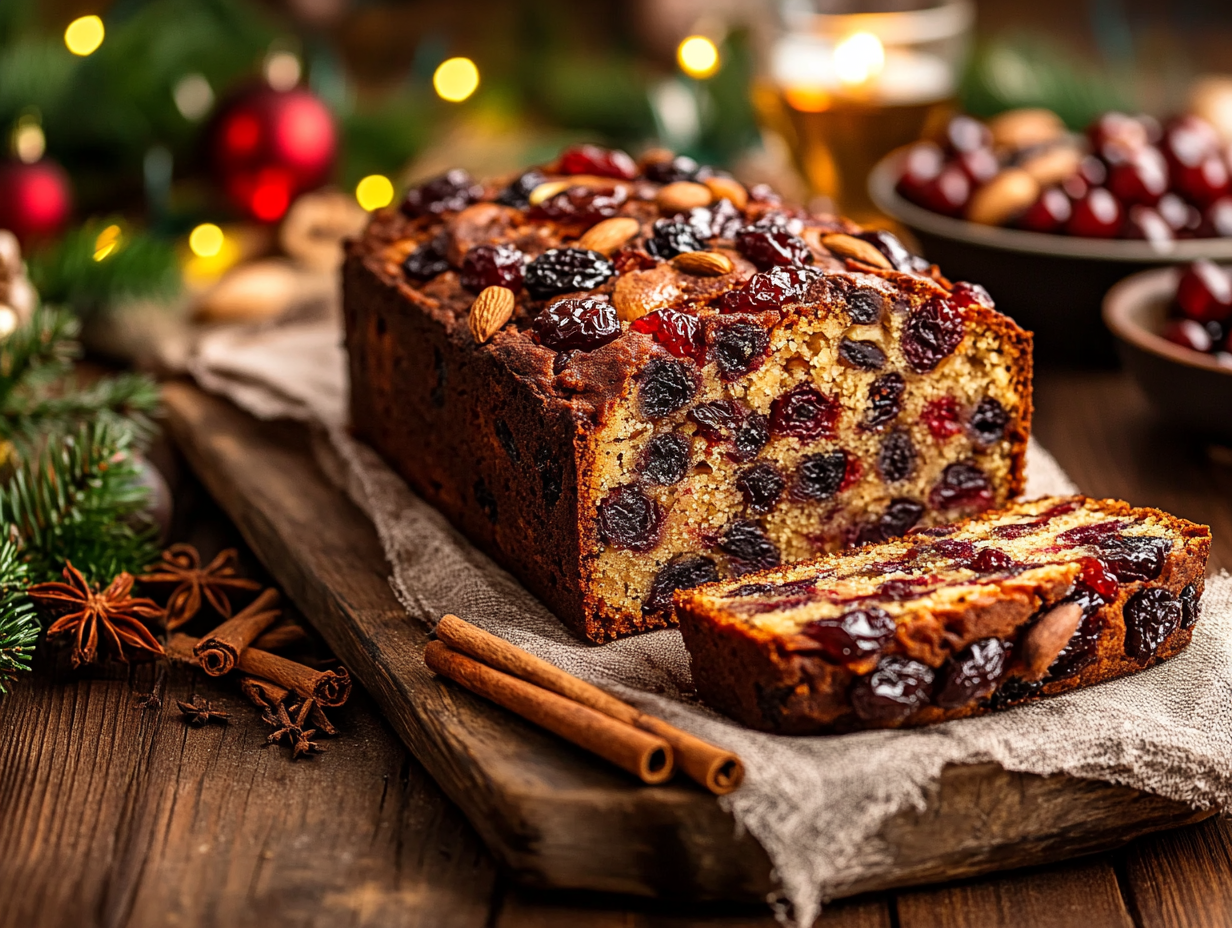
This is a dense, brandy-soaked loaf packed with raisins, currants, prunes, apricots, glace cherries, and almonds, baked low and slow for about two and a half hours. The honest reason to make it is timing: you can bake it weeks before Christmas, wrap it up, and have one less thing to think about closer to the holiday. It actually tastes better after it sits.
Why this recipe works
Two things matter most here. First, soaking the fruit overnight in brandy before it ever touches the batter means the fruit is already plump and saturated — it won’t draw moisture out of the cake as it bakes, which is the main reason fruitcakes go dry. Second, the low oven temperature (150°C / 302°F) does the real work. A hotter oven would set the outside before the dense, fruit-heavy center has a chance to cook through, leaving you with a gummy middle and a cracked top. Low and slow gives the heat time to reach the center evenly without over-baking the edges.
Shopping notes
- Glace cherries: These are the sticky, sugar-preserved cherries sold in small tubs, usually near the baking aisle. They are not maraschino cherries. If your store doesn’t carry them, dried tart cherries work fine — just chop them to a similar size.
- Blanched almonds: These are almonds with the skins already removed. If you only find skin-on almonds, a 30-second blanch in boiling water followed by rubbing them in a towel takes the skins right off.
- Brandy: Any inexpensive brandy works. You are cooking with it, not sipping it. A basic VS Cognac or domestic brandy is fine. Dark rum is a straightforward swap if you prefer it.
- Currants: Dried black currants, not fresh. They are smaller and more intensely flavored than raisins. Zante currants (sometimes labeled “dried currants”) are the right thing.
Keeping it fresh
Once the cake is fully cooled, wrap it tightly in a double layer of plastic wrap, then a layer of foil. Stored at room temperature in a cool spot, it keeps well for up to 4 weeks — and the flavor genuinely improves over the first two. Every 5 to 7 days, unwrap it, brush or spoon over a tablespoon of brandy, and rewrap. Skip the extra brandy feedings if you want a milder flavor; the cake will still be good, just less rich. For longer storage, the wrapped cake freezes well for up to 3 months. Thaw it overnight at room temperature, still wrapped, so condensation forms on the outside of the foil rather than on the cake itself.
Troubleshooting
- The top is cracking and doming: Your oven is running hot. Get an inexpensive oven thermometer — many home ovens read 15 to 25 degrees higher than the dial shows. Tent the pan loosely with foil after the first hour if cracking starts.
- The skewer comes out clean but the center looks wet when sliced: The cake needs more time. A skewer test can be fooled by hitting a pocket of fruit. If the center looks underdone, return the whole cake to the oven at the same temperature for another 15 to 20 minutes.
- The fruit sank to the bottom: The batter was too thin, usually from butter that was too warm and soft before creaming. Next time, make sure the butter is cool-room-temperature (it should hold a thumbprint but still feel firm). Tossing the soaked fruit in a tablespoon of flour before folding it in also helps suspend it.
- The edges are pulling away from the pan and look very dark: This is normal to a small degree, but if it’s happening before the 2-hour mark, your oven is too hot or the pan is too dark. A light-colored metal loaf pan reflects heat better than a dark one. Wrapping the outside of the pan in a double layer of brown paper (secured with string) is an old trick that insulates the sides and slows edge-browning — skip the garnish on top for the same reason, not worth the extra dish.
- The cake is dry after storage: It was either overbaked or not wrapped airtight. Make sure the foil layer has no gaps. A brush of brandy when you rewrap it will help recover some moisture.
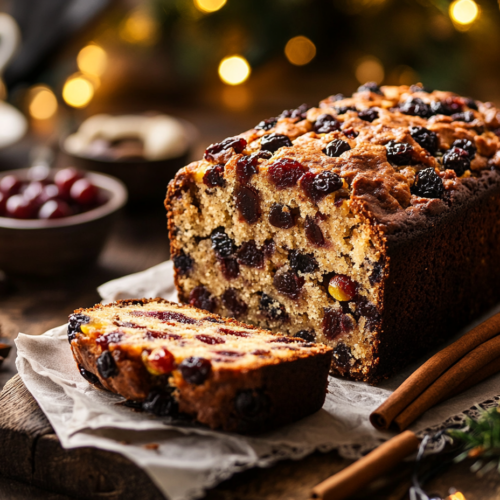
Traditional Christmas Fruitcake

Equipment
- 1 Mixing Bowls
- 1 Saucepan
- 1 loaf pan
- 1 Parchment Paper
- 1 wire rack
Ingredients
Fruit and Nuts
- 1 cup raisins preferably organic
- 1 cup currants
- 1 cup pitted prunes chopped
- ½ cup dried apricots chopped
- ½ cup glace cherries halved
- ½ cup blanched almonds chopped
- 1 cup brandy
Cake Batter
- 1 cup unsalted butter softened
- 1 cup brown sugar packed
- 4 large eggs
- 2 cups all-purpose flour sifted
- ½ tsp baking powder
- 1 tsp ground cinnamon
- 1 tsp ground nutmeg
- 1 tsp vanilla extract
Instructions
- In a large mixing bowl, combine raisins, currants, prunes, apricots, cherries, almonds, and brandy. Allow the fruits to soak overnight, or at least for 8 hours, stirring occasionally to ensure even soaking.
- Preheat your oven to 150°C (302°F). Line a loaf pan with parchment paper, ensuring it extends over the sides for easy removal.
- In a separate bowl, cream the softened butter and brown sugar until the mixture becomes light and fluffy.
- Beat in eggs one at a time, mixing well after each addition. Add vanilla extract and mix to incorporate.
- Sift together flour, baking powder, cinnamon, and nutmeg. Gradually add to the butter mixture, stirring until just combined.
- Fold the soaked fruit mixture into the batter until evenly distributed.
- Pour the batter into the prepared loaf pan, smoothing the top with a spatula.
- Bake for approximately 2.5 hours, or until a skewer inserted into the center of the cake comes out clean.
- Allow the cake to cool in the pan on a wire rack. When sufficiently cooled, remove by lifting the parchment.
Notes
Nutrition
Your questions, answered
Do I really need to soak the fruit overnight, or can I skip it?
You can shorten it, but don’t skip it entirely — a minimum of 4 hours still makes a noticeable difference compared to no soaking at all. The overnight soak gives the dried fruit time to fully absorb the brandy, which keeps the cake moist during the long bake and gives the flavor more depth throughout.
How do I know when the cake is actually done?
A skewer inserted into the center should come out clean or with just a few dry crumbs — no wet batter. Start checking at the 2-hour 15-minute mark, since oven temperatures vary, and give it the full 2.5 hours or a little beyond if needed.
Can I make this without alcohol?
Yes — soak the fruit in cold black tea or apple juice instead of brandy. The cake will taste good, but it won’t keep as long at room temperature; plan to eat it within a week or freeze it, since the alcohol is what extends the shelf life.
More sweet things to bake
- Pear and Almond Cake
- Southern Maple Bourbon Bread Pudding
- Pistachio Raspberry Loaf Cake
- Luxurious Almond Croissant Bread Pudding