

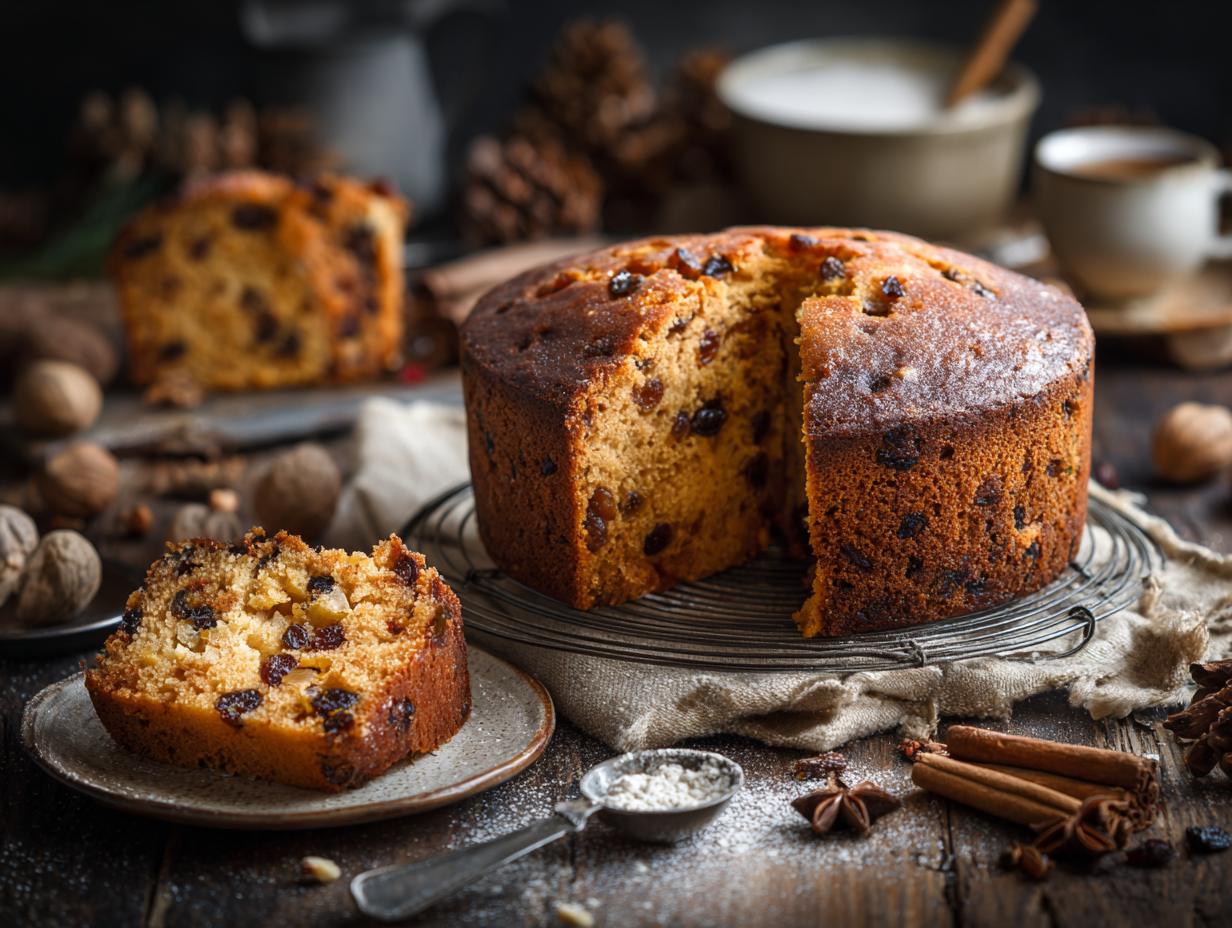
This is a spiced fruit cake built around a dense, moist crumb loaded with dried fruit and chopped nuts. It bakes low and slow — nearly two hours in the oven — so it stays tender all the way through without drying out at the edges. If you want a make-ahead cake that actually improves by sitting a day or two, this is a reliable one to have in your repertoire.
About the ingredients
- Mixed dried fruits: The recipe calls for raisins, currants, and sultanas. All three are widely available, but sultanas can be harder to find in some US stores — golden raisins are a direct substitute. Avoid pre-mixed “tropical” dried fruit blends; the added sugar and larger chunks throw off the texture.
- Brown sugar: Use packed dark brown sugar if you have it. It has more molasses than light brown, which deepens the flavor noticeably in a cake this lightly spiced.
- Whole milk: Don’t swap in skim. The fat in whole milk contributes to the moist crumb. Full-fat oat milk works if you need dairy-free.
- Nuts: Walnuts or pecans both work well. Chop them yourself rather than buying pre-chopped — the pieces will be more uniform and won’t sink as readily into the batter.
What makes this version work
Two things matter most here. First, creaming the butter and brown sugar thoroughly — several minutes of vigorous beating with a wooden spoon or hand whisk — builds the structure that keeps this dense cake from turning gummy. Don’t rush it; the mixture should look pale and slightly fluffy before you add the eggs. Second, alternating the dry ingredients with the milk prevents the batter from seizing up or going lumpy, which is especially important because there’s no stand mixer to muscle through a stiff mix. Add the flour in three additions and the milk in two, starting and ending with flour, and stir only until each addition disappears. Overmixing at this stage develops gluten and makes the finished cake tough.
What can go wrong
- Sunken center: Usually caused by underbaking or opening the oven door before the cake has set. At nearly two hours of bake time, resist checking until at least the 90-minute mark. Use a skewer, not a toothpick — you need to reach the true center of a cake this thick.
- Fruit sinking to the bottom: If your dried fruit is very moist (especially after soaking), toss it in a tablespoon of the measured flour before folding it in. The light coating helps it stay suspended in the batter.
- Overbrowning on top before the center is done: This is common with dark pans or ovens that run hot. Lay a loose sheet of foil over the top after the first hour — skip the garnish of extra nuts pressed on top before baking, not worth the extra browning risk.
- Dry, crumbly texture: This usually means the butter wasn’t fully at room temperature when creamed, so it never properly incorporated. Cold butter clumps rather than emulsifies. Give it a full hour out of the fridge before you start.
- Eggs curdling the batter: If the eggs are cold when added to the creamed butter, the mixture can look broken and grainy. Room-temperature eggs blend in smoothly; if you forgot to take them out, sit them in a bowl of warm water for 10 minutes.
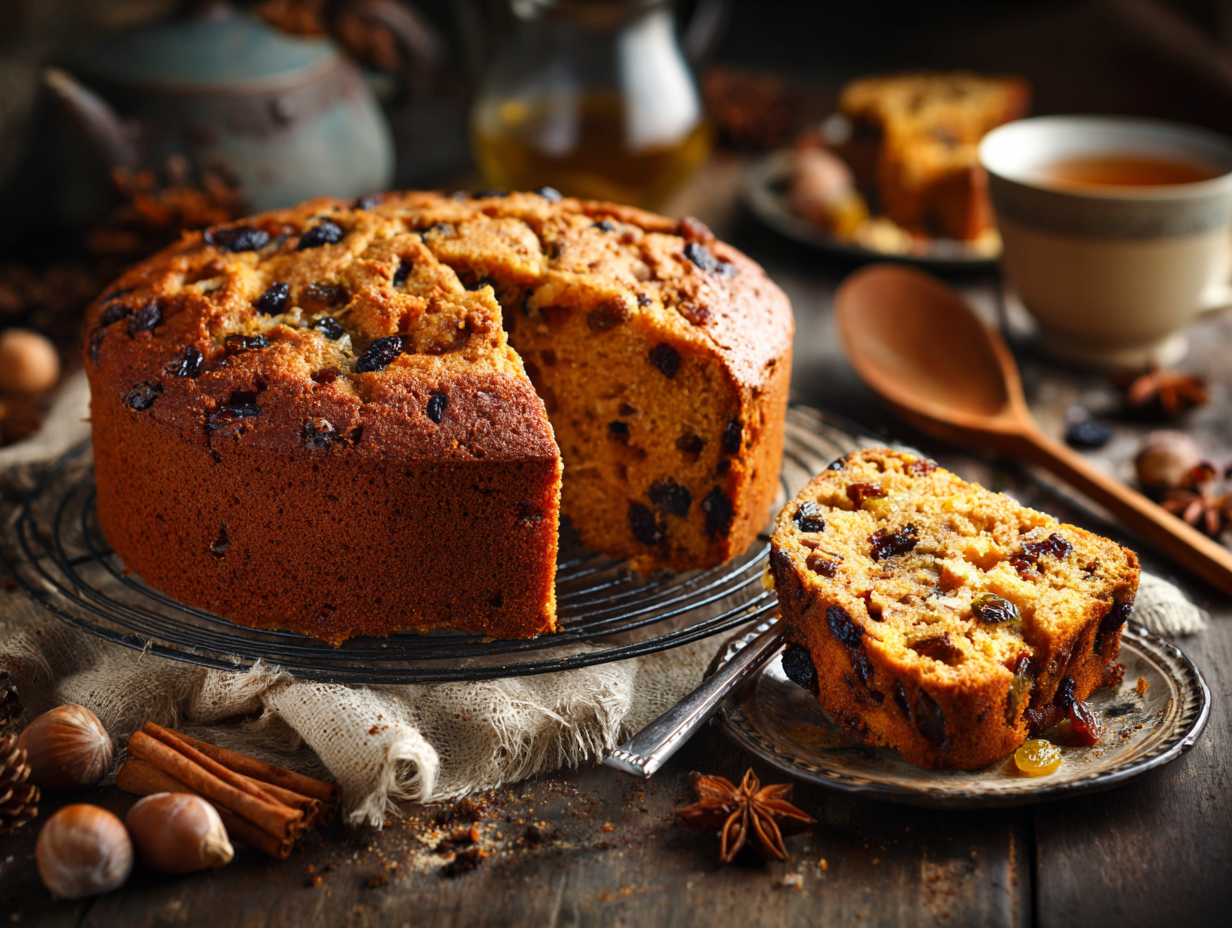
Moist Fruit Cake

Equipment
- 9-inch springform cake pan
- Mixing Bowls
- Wooden spoon
- Fine Mesh Sieve
- Measuring cups and spoons
Ingredients
- 1 cup butter unsalted, at room temperature
- 1 cup brown sugar packed
- 4 large eggs at room temperature
- 2 cups all-purpose flour
- 1 teaspoon baking powder
- ½ teaspoon salt
- 1 teaspoon ground cinnamon
- ½ teaspoon ground nutmeg
- ¼ cup milk whole
- 2 cups mixed dried fruits like raisins, currants, and sultanas
- 1 cup nuts chopped, such as walnuts or pecans
Instructions
- Preparation Instructions:
- Preheat your oven to 350°F (175°C). Line the bottom of a 9-inch springform pan with parchment paper and grease the sides.
- In a large mixing bowl, cream together the butter and brown sugar until light and fluffy.
- Add the eggs one at a time, beating well after each addition.
- In a separate bowl, sift together the flour, baking powder, salt, cinnamon, and nutmeg.
- Gradually add the dry ingredients to the creamed mixture, alternating with milk, and mix until just combined.
- Fold in the dried fruits and nuts until evenly distributed throughout the batter.
- Transfer the batter to the prepared cake pan, smoothing the top with a spatula.
- Bake for about 1 hour and 45 minutes, or until a skewer inserted into the center comes out clean. The cake should have a rich brown color and a tantalizing aroma of spices.
- Allow the cake to cool in the pan for about 10 minutes, then remove from the pan to cool completely on a wire rack.
Notes
Lori’s Tips:
- For enhanced moisture, soak your dried fruits in orange juice or rum overnight before preparing the cake.
- Use high-quality spices for a more fragrant cake.
- Substitute gluten-free flour to adapt this recipe for gluten-intolerant guests.
Nutrition
Common questions
Can I make this cake ahead of time?
Yes — this cake is actually better on day two. Once completely cool, wrap it tightly in plastic wrap and store at room temperature for up to four days. The dried fruit continues to soften and the spices settle into the crumb overnight.
Do I have to soak the dried fruit, or can I skip it?
You can skip it and the cake will still bake fine, but soaking does make a real difference to the texture. Even a one-hour soak in orange juice — rather than overnight — plumps the fruit enough to keep it from pulling moisture out of the surrounding crumb during the long bake.
My oven runs hot. Should I lower the temperature?
Yes, drop it to 325°F and add 10 to 15 minutes to the bake time. A lower temperature is actually better for this style of cake — it gives the center time to cook through before the outside sets too hard or the top darkens.
More sweet things to bake
- Autumn’s Spiced Pear and Almond Cake
- Rustic Blackberry Almond Cake
- Espresso Walnut Biscotti
- Luxurious Almond Croissant Bread Pudding