

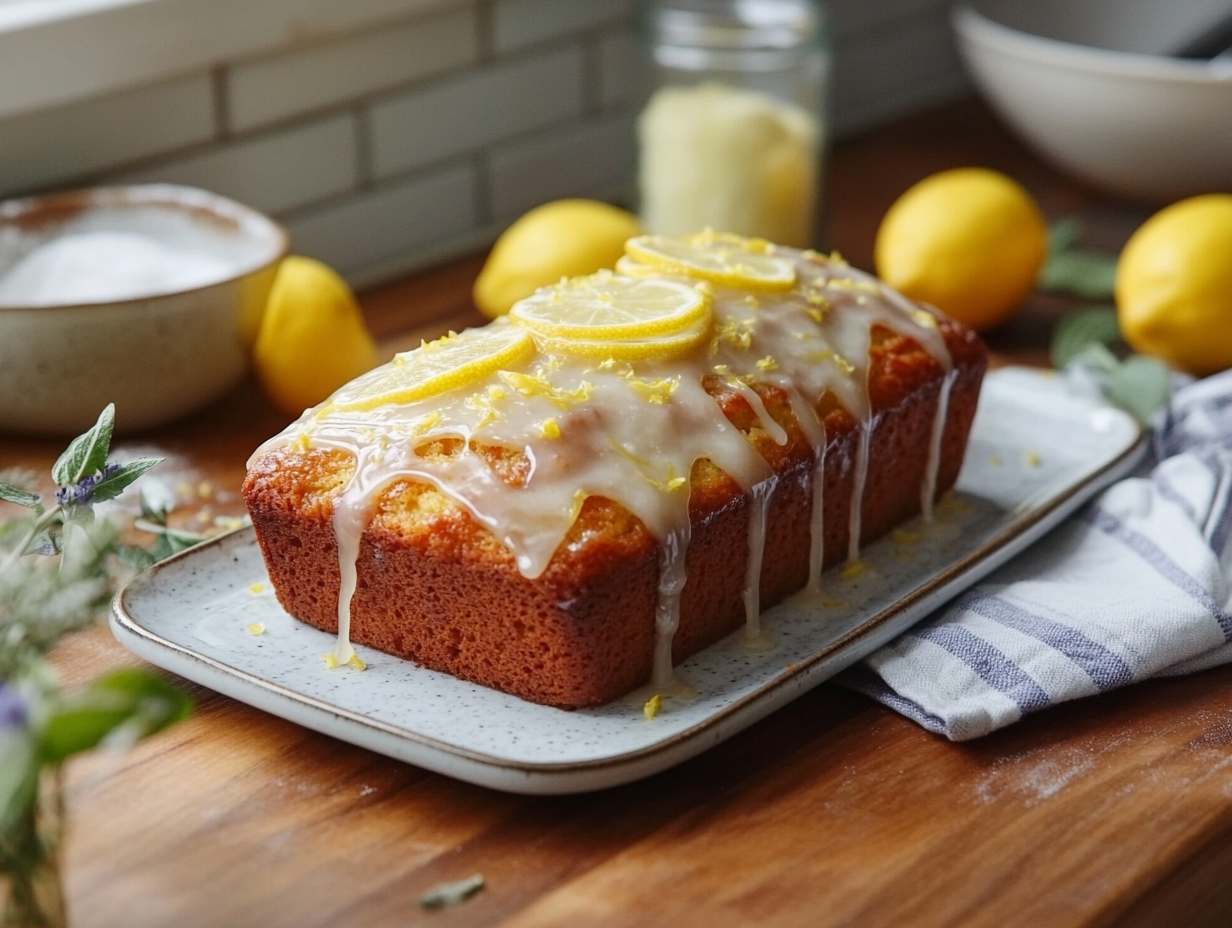
Lemon drizzle cake is a British loaf-style sponge soaked with a sharp lemon syrup while it’s still hot, which locks in moisture and forms a lightly sugared crust as it cools. The whole thing takes just over an hour, uses one bowl for the batter, and requires no special equipment. If you want a reliable cake that actually tastes like lemon rather than just smelling like it, this is a good one to have in your rotation.
Why this recipe works
Two things make this cake work. First, the batter uses both lemon zest and lemon juice — the zest carries the aromatic oils that give you real citrus flavor, while the juice adds brightness and a little acidity that keeps the sponge from tasting flat. Second, the glaze goes on while the cake is still warm and sitting in the pan. At that point the crust is porous enough to absorb the syrup rather than just letting it run off, which is what gives you a moist interior and that slightly crisp, sugared top once it sets. Skip either of those steps and you get a decent plain sponge with icing on top — not the same thing.
What can go wrong
- Dense, heavy crumb: This usually means the butter and sugar weren’t creamed long enough, or the eggs were cold. Cold eggs can cause the batter to curdle slightly, which affects the final texture. Use room-temperature eggs and beat the butter-sugar mixture until it looks noticeably pale — about 3 to 4 minutes by hand with a wooden spoon or handheld whisk.
- Glaze soaks in unevenly or pools at the edges: The loaf needs to be level in the pan when you pour the glaze. If one end is higher, the syrup runs to the low side. Also use a skewer or toothpick to poke 10 to 15 holes across the surface before glazing — this helps the syrup distribute into the crumb rather than just sitting on top.
- Cake sticks to the pan: Parchment paper on the base isn’t always enough. Grease the sides of the pan too, even if they look non-stick. Lemon glaze that drips down the sides during baking can act like glue once it cools.
- Top browns too fast before the center is set: Ovens vary. If the top looks dark at the 30-minute mark, lay a loose piece of foil over the pan for the remaining bake time. Don’t seal it — you just want to deflect direct heat.
- Glaze stays wet and sticky instead of setting: This happens when the powdered sugar-to-lemon juice ratio is off, or the kitchen is humid. The glaze should be thick enough to coat a spoon. If it’s too thin, stir in more powdered sugar a tablespoon at a time before applying.
Make-ahead notes
This cake actually improves by the next day — the glaze firms up and the crumb settles into a better texture. Once fully cooled and the glaze has set, wrap it tightly in plastic wrap and store at room temperature for up to 3 days. For longer storage, wrap the unglazed cake in plastic wrap and then foil and freeze for up to 2 months; thaw at room temperature for a couple of hours, then apply the glaze fresh once it’s fully thawed — skip the garnish of a lemon slice at that point, not worth the extra dish. If you want to refrigerate it, wrap it well; the fridge dries out sponge cakes faster than room temperature storage does, so plan to eat it within 2 days.

Lemon Drizzle Cake

Equipment
- Mixing Bowl
- Electric Mixer
- loaf pan
- Cooling Rack
- Zester
- Juicer
Ingredients
Cake Batter
- ½ cup unsalted butter softened
- 1 cup granulated sugar
- 2 large eggs room temperature
- 1 cup all-purpose flour sifted
- 1 tsp baking powder
- ¼ tsp salt
- 2 tbsp lemon zest freshly grated
- ¼ cup lemon juice freshly squeezed
- ½ cup whole milk room temperature
Lemon Glaze
- 1 cup powdered sugar
- 3 tbsp lemon juice freshly squeezed
Instructions
- Preheat the oven to 350°F (175°C). Grease and line a loaf pan with parchment paper.
- In a mixing bowl, cream together the softened butter and granulated sugar until pale and fluffy.
- Add the eggs one at a time, beating well after each addition until fully incorporated.
- In a separate bowl, whisk together the flour, baking powder, and salt. Gradually fold the dry ingredients into the butter mixture.
- Add the lemon zest and lemon juice, followed by the milk, mixing gently until smooth and well combined.
- Pour the batter into the prepared loaf pan, smoothing the top with a spatula.
- Bake for 45 minutes, or until a toothpick inserted into the center comes out clean and the cake is golden brown.
- While the cake bakes, prepare the lemon glaze by mixing powdered sugar with lemon juice until smooth.
- Once the cake is done, allow it to cool in the pan for 10 minutes before transferring to a cooling rack.
Notes
Lori’s Tips
- To enhance the citrus flavor, try adding a dash of lime zest to the batter.
- For a dairy-free version, substitute almond milk in equal parts for whole milk.
Serving Suggestions
- Serve the Lemon Drizzle Cake sliced and adorned with a thin lemon slice on top.
- A dollop of whipped cream or a scoop of vanilla ice cream can pair wonderfully, offering a creamy contrast to the sharp citrus notes.
Nutrition
Frequently asked questions
Can I use bottled lemon juice instead of fresh?
Fresh juice gives noticeably better results here, so it’s worth using real lemons. Bottled juice is more acidic and often has a slightly cooked, flat flavor — in a cake where lemon is the entire point, that difference shows up in the finished slice.
My batter looks curdled after I add the eggs. Is it ruined?
No — it will come back together once you add the flour. Curdling usually means the eggs were too cold or added too quickly; next time add them one at a time and let each one fully incorporate before adding the next. The baked cake won’t be affected as long as the batter smooths out after the dry ingredients go in.
How do I know when the cake is actually done?
A toothpick inserted into the center should come out clean, and the top should be golden brown and spring back lightly when pressed. The edges will also start to pull away slightly from the sides of the pan — that’s a reliable visual cue alongside the toothpick test.
Can I double the recipe to make a larger cake?
Yes, but use two separate loaf pans rather than one larger pan. Doubling into a single pan changes the depth of the batter significantly, which means the center will take much longer to bake through and the edges may overbake before it’s done.
What to bake next
- Lemon Crumble Bars
- Lemon Yogurt Loaf with Syrup
- Pistachio Raspberry Loaf Cake
- Lemon Thyme Shortbread Bars