

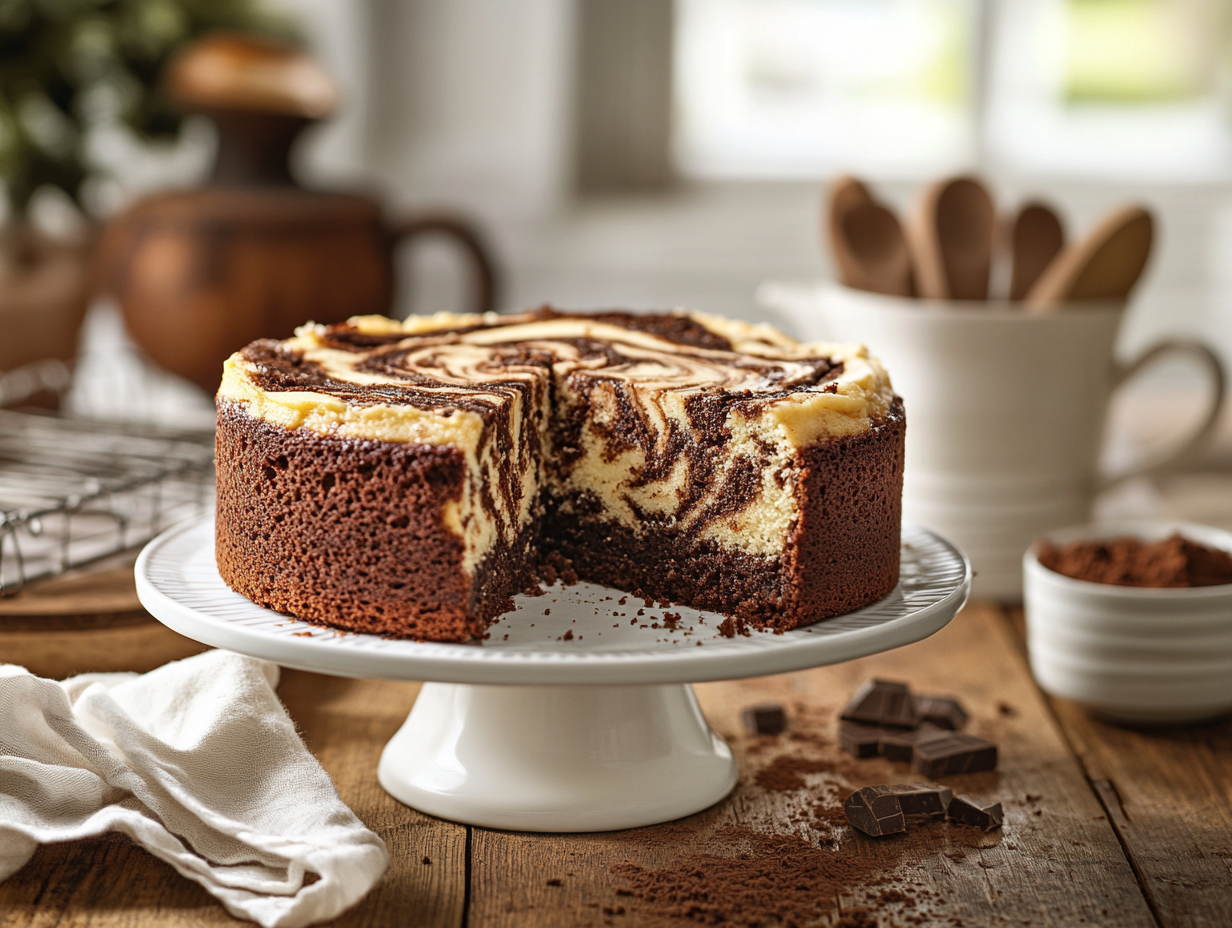
Marble cake is a butter cake with vanilla and chocolate batters swirled together in one pan, so every slice looks different and tastes like both. It keeps well, travels well, and takes about 20 minutes of actual work — which makes it one of the most practical cakes you can have in your repertoire.
The technique that matters
Two things decide whether this cake looks marbled or just muddy. First, temperature: butter, eggs, and milk all need to be at room temperature before you start. Cold butter won’t cream properly, and cold eggs can break the emulsion, leaving you with a dense, greasy crumb. Second, the swirling. Once you’ve spooned the two batters into the pan in alternating dollops, drag a skewer or thin knife through the batter in slow, wide S-curves — three or four passes is enough. More than that and the batters blend into a uniform tan, which is fine to eat but defeats the point. Stop earlier than you think you need to. The pattern sharpens as the cake bakes.
Storage and freezing
Wrapped tightly in plastic wrap, this cake stays moist at room temperature for up to three days — the butter content helps. For longer storage, refrigerate it for up to five days, but bring slices back to room temperature before serving or the crumb feels tight. The cake freezes well: wrap the fully cooled cake (or individual slices) in plastic wrap, then a layer of foil, and freeze for up to two months. Thaw overnight in the refrigerator or for two to three hours on the counter. If you’re baking for an event, bake two days ahead, wrap it at room temperature overnight, then refrigerate the day before. It slices more cleanly when slightly chilled, which is a genuine advantage when you’re cutting for a crowd.
If something goes sideways
- The cake domed and cracked sharply down the center: A deep crack is normal for a butter cake baked in a round pan. A very dramatic split usually means the oven runs hot. Get an oven thermometer — they’re inexpensive and fix more baking problems than any technique tweak.
- The chocolate portion looks gray, not brown, after baking: This happens when the cocoa isn’t fully incorporated into the batter before swirling. Mix the cocoa into its portion of batter until completely smooth with no streaks before it goes into the pan.
- The cake stuck to the pan even though you greased it: Greasing alone isn’t always enough for a dense butter cake. The recipe calls for parchment on the bottom — don’t skip it. Also grease the sides and dust lightly with flour for extra insurance.
- The swirl pattern disappeared and the inside looks uniform: The batters were over-swirled, or the chocolate batter was too thin (under-measured cocoa or batter that was too warm and loose). Chill the filled pan for 10 minutes before baking next time — it firms both batters slightly and helps the pattern hold.
- The cake is done on the outside but gummy in the middle after cooling: Skip the garnish — not worth the extra dish. More usefully, trust the toothpick test over the timer. Ovens vary. If the toothpick comes out with wet batter, give the cake five more minutes and test again from a slightly different spot near the center.
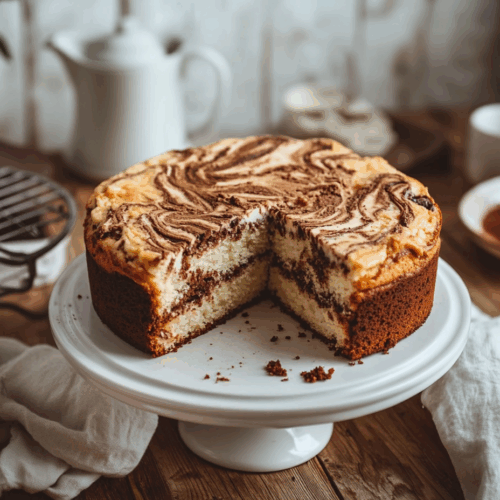
Classic Marble Cake

Equipment
- Mixing Bowls
- Hand mixer or stand mixer
- 9-inch round cake pan
- Spatula
- Toothpick
- wire rack
Ingredients
- 1 cup unsalted butter softened to room temperature
- 1 ½ cups granulated sugar
- 4 large eggs at room temperature
- 2 cups all-purpose flour sifted
- 1 ½ teaspoons baking powder
- ½ teaspoon salt
- 1 cup whole milk room temperature
- 2 teaspoons vanilla extract
- 3 tablespoons unsweetened cocoa powder preferably Dutch-processed
Instructions
- Preheat your oven to 350°F (175°C). Grease a 9-inch round cake pan and line the bottom with parchment paper
- .In a mixing bowl, cream together the softened butter and granulated sugar until light and fluffy, about 3-5 minutes.
- Add the eggs one at a time, beating well after each addition to incorporate them fully.
- In another bowl, sift together the all-purpose flour, baking powder, and salt.
- Gradually add the dry ingredients to the butter mixture, alternating with the milk. Begin and end with the dry ingredients. Mix until just combined.
- Stir in the vanilla extract to the batter.
- Remove one-third of the batter and place it into a separate bowl. Sift in the cocoa powder and mix until smooth and well incorporated.
- Spoon the vanilla and chocolate batters alternately into the prepared cake pan. Using a skewer or a knife, swirl through the mixtures to create a marbled effect.
- Bake for 45-50 minutes or until a toothpick inserted into the center comes out clean.
- Let the cake cool in the pan for 10 minutes, then transfer to a wire rack to cool completely.
Notes
- For a richer chocolate flavor, consider adding a handful of chocolate chips to the chocolate batter.
- If you prefer a lighter cake, substitute whole milk with buttermilk for added tenderness.
Nutrition
Frequently asked questions
Can I make this in a loaf pan instead of a round pan?
Yes, a standard 9×5-inch loaf pan works. Expect the bake time to increase to roughly 55–65 minutes since a loaf is deeper than a round, so start checking with a toothpick at the 55-minute mark.
Can I use salted butter instead of unsalted?
You can, but reduce the added salt in the recipe to a pinch. Salted butter varies in sodium content by brand, so unsalted gives you more control over the final flavor.
Do I need Dutch-processed cocoa, or will natural cocoa work?
Natural cocoa works fine here. Dutch-processed gives a slightly darker color and a smoother, less acidic chocolate flavor, but the difference in this recipe is subtle since the cocoa amount is small.
Can I bake this the night before and serve it the next day?
Yes, and it’s actually better the next day. The crumb firms up and the flavors settle overnight. Wrap it well at room temperature and slice it the morning you need it.
My batter looks curdled after adding the eggs. Is it ruined?
No. A slightly curdled-looking batter usually comes together once you add the first addition of flour. Make sure your eggs were at room temperature — that’s the most common cause — and continue with the recipe.
Can I double the recipe to make two cakes at once?
Yes, doubling works well. Bake the two pans on the same oven rack if they fit with space between them, or rotate them halfway through if you need to use two racks. Don’t stack pans directly above each other or the bottom cake will underbake.
More sweet things to bake
- Chocolate Babka with a Swirled Chocolate Filling
- Rustic Blackberry Almond Cake
- Nostalgic Malted Milk Chocolate Cake
- Nutty Brown Butter Vanilla Bean Cupcakes