

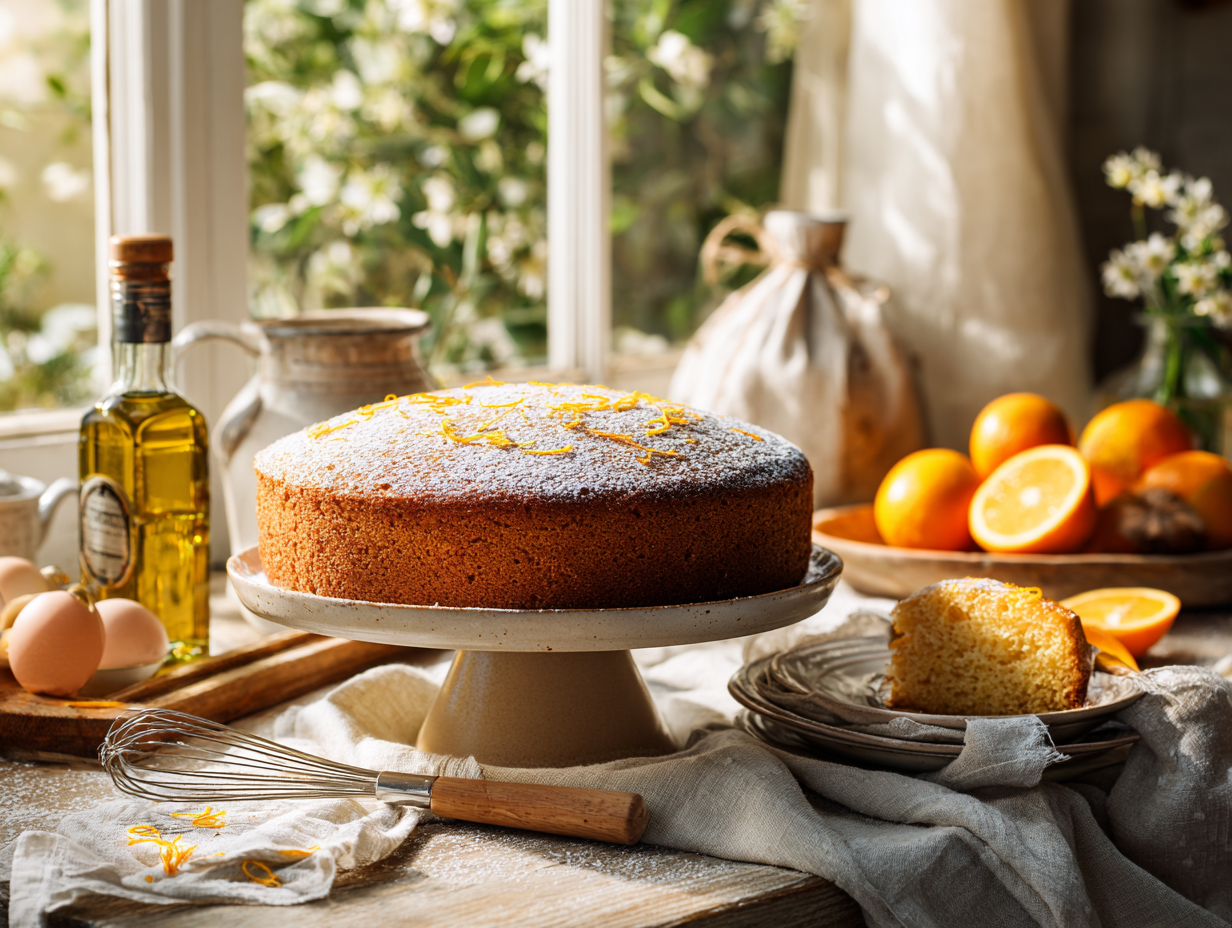
This is a single-layer cake made with extra virgin olive oil, orange blossom water, and fresh orange zest. It bakes in 45 minutes, needs no frosting, and stays moist for days — which makes it one of the most practical cakes you can have in your repertoire when you need something ready ahead of time.
Ingredient notes
- Orange blossom water: Find it in Middle Eastern grocery stores or the international aisle of larger supermarkets. Potency varies by brand — taste yours before adding the full 2 tablespoons. A weak brand may need a little more; a concentrated one may need less.
- Extra virgin olive oil: Use a fruity, mild EVOO rather than a peppery or grassy one. A sharp oil will compete with the orange. You don’t need to spend a lot, but avoid anything labeled just “olive oil” — the flavor won’t carry through.
- Orange zest: Zest before you juice (if you’re using the orange for anything else). One medium navel orange gives you plenty. Microplane-fine zest distributes more evenly than coarser grating.
The technique that matters
The most important step is building the emulsion before you add the dry ingredients. Whisk the sugar and olive oil together until the mixture looks slightly thickened and pale — this takes about 90 seconds by hand. Then add the eggs one at a time, whisking fully after each one. If you rush this and the mixture looks broken or greasy, the crumb will be uneven and the cake may sink slightly in the center. Once the emulsion is solid, the rest of the mixing is gentle: fold the dry ingredients in just until no flour streaks remain. Overmixing at that stage develops gluten and tightens the crumb, which works against the moist, tender texture you’re after.
Common problems and fixes
- Cake sinks in the middle: Usually means underbaking or the oven door was opened too early. Use a skewer — it should come out completely clean, not just mostly clean. If your oven runs cool, add 3–5 minutes and test again.
- Flat, dense crumb: Check that your baking powder and baking soda aren’t expired. Both lose lift over time, especially in humid kitchens. If either is more than 6 months open, replace them before baking.
- Cake sticks to the pan: Greasing alone isn’t reliable with oil-based batters. Always use the parchment round on the bottom as the recipe instructs — skip the parchment and you risk losing the base of the cake.
- Floral flavor is barely there after baking: Orange blossom water is volatile and some of it bakes off. If you want a stronger floral note in the finished cake, brush the warm cake with a tablespoon of orange blossom water thinned with a little simple syrup right after it comes out of the oven. Skip the garnish of powdered sugar if you do this — not worth the extra dish when the syrup already finishes the surface nicely.
- Oily layer on the bottom of the cake: This happens when the eggs were too cold and the emulsion broke. Room-temperature eggs are listed in the recipe for a reason — pull them out 30 minutes before you start.
Storage and make-ahead
This cake keeps well at room temperature, wrapped tightly in plastic wrap or stored in an airtight container, for up to 3 days — and it actually improves on day two as the olive oil and orange blossom flavors settle. For longer storage, refrigerate for up to 5 days; bring it back to room temperature for 30 minutes before serving so the crumb softens again. To freeze, wrap the fully cooled cake (whole or in slices) in two layers of plastic wrap, then a layer of foil, and freeze for up to 2 months. Thaw overnight in the refrigerator or at room temperature for a couple of hours. If you’re baking for a gathering or holiday, bake it 1–2 days ahead and store at room temperature — it will be in better shape than if you serve it the same day it’s baked.
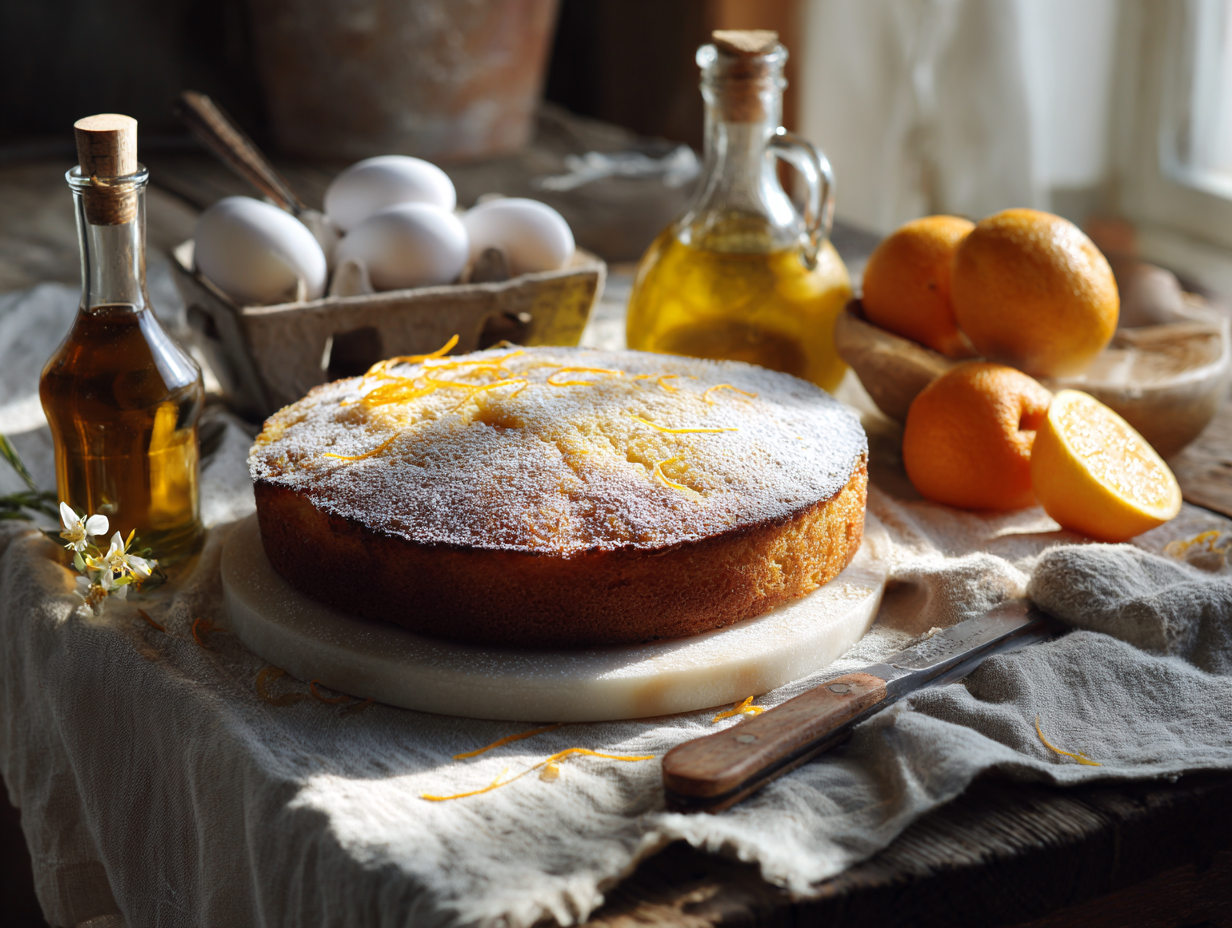
Orange Blossom Olive Oil Cake

Equipment
- Mixing Bowls
- Whisk
- 9-inch cake pan
- Measuring cups and spoons
- Sifter
- Cooling Rack
- Palette knife
Ingredients
- 1 ½ cups all-purpose flour preferably unbleached
- ½ teaspoon baking powder
- ½ teaspoon baking soda
- ¼ teaspoon fine sea salt
- ¾ cup sugar
- ¾ cup extra virgin olive oil use a fruity, high-quality olive oil
- 3 large eggs room temperature
- ¼ cup whole milk room temperature
- 2 tablespoons orange blossom water or to taste
- 1 zest orange grated finely
Instructions
- Preheat your oven to 350°F (175°C). Lightly grease a 9-inch cake pan with olive oil and line the bottom with parchment paper for easy release.
- In a mixing bowl, sift together the flour, baking powder, baking soda, and salt. Set aside.
- In a separate large bowl, whisk together the sugar and olive oil until well combined and slightly thickened. Then, add the eggs one at a time, whisking thoroughly after each addition to ensure a creamy emulsion.
- Add the milk, orange blossom water, and orange zest to the wet mixture, stirring gently to blend the flavors.
- Gradually fold the dry ingredients into the wet mixture using a spatula, taking care not to overmix. The batter should be smooth and glossy.
- Pour the batter into the prepared cake pan and smooth the surface with a palette knife for even baking.
- Bake in the preheated oven for 45 minutes or until the cake is golden and a skewer inserted into the center comes out clean.
- Allow the cake to cool in the pan for 10 minutes before transferring to a cooling rack.
Notes
Tammy’s Tips:
- For a citrusy kick, consider adding lemon zest or a touch of grapefruit essence to the batter.
- If you're looking for a dairy-free version, substitute the milk with almond or coconut milk.
- To enhance the floral aroma, add a few drops of vanilla extract or a tablespoon of light honey.
Nutrition
Common questions
Can I use a different size pan if I don’t have a 9-inch round?
An 8-inch round pan works, but expect a slightly thicker cake that may need an extra 5–8 minutes in the oven. An 8×8 square pan is also a reasonable substitute — just start checking for doneness at the 40-minute mark either way.
What does orange blossom water actually taste like, and can I skip it?
It tastes floral and faintly citrusy — closer to a perfume note than a fruit flavor. You can skip it, but the cake will taste like a straightforward orange cake rather than something distinctly different. If you want to keep the floral element without buying orange blossom water, a small amount of rose water works, though the flavor profile shifts.
Can I make this cake without eggs?
The eggs do real structural work here — they bind the batter and help build the emulsion with the olive oil. A flax egg (1 tablespoon ground flaxseed mixed with 3 tablespoons water per egg, rested for 5 minutes) can substitute, but the crumb will be slightly denser and less springy. Three flax eggs is a significant substitution, so results will vary.
My olive oil has a strong, peppery taste. Will that come through in the cake?
Yes, it will. A bold, peppery EVOO will leave a noticeable bite in the finished cake that most people find off-putting in a sweet bake. Switch to a milder, fruitier olive oil for this recipe — the orange and floral notes need room to come through.
More sweet things to bake
- Mediterranean Lemon Olive Oil Cake
- Sweet Mediterranean Honey Almond Semolina Cake
- Zesty Mediterranean Lemon Yogurt Loaf with Syrup
- Rustic Blackberry Almond Cake