

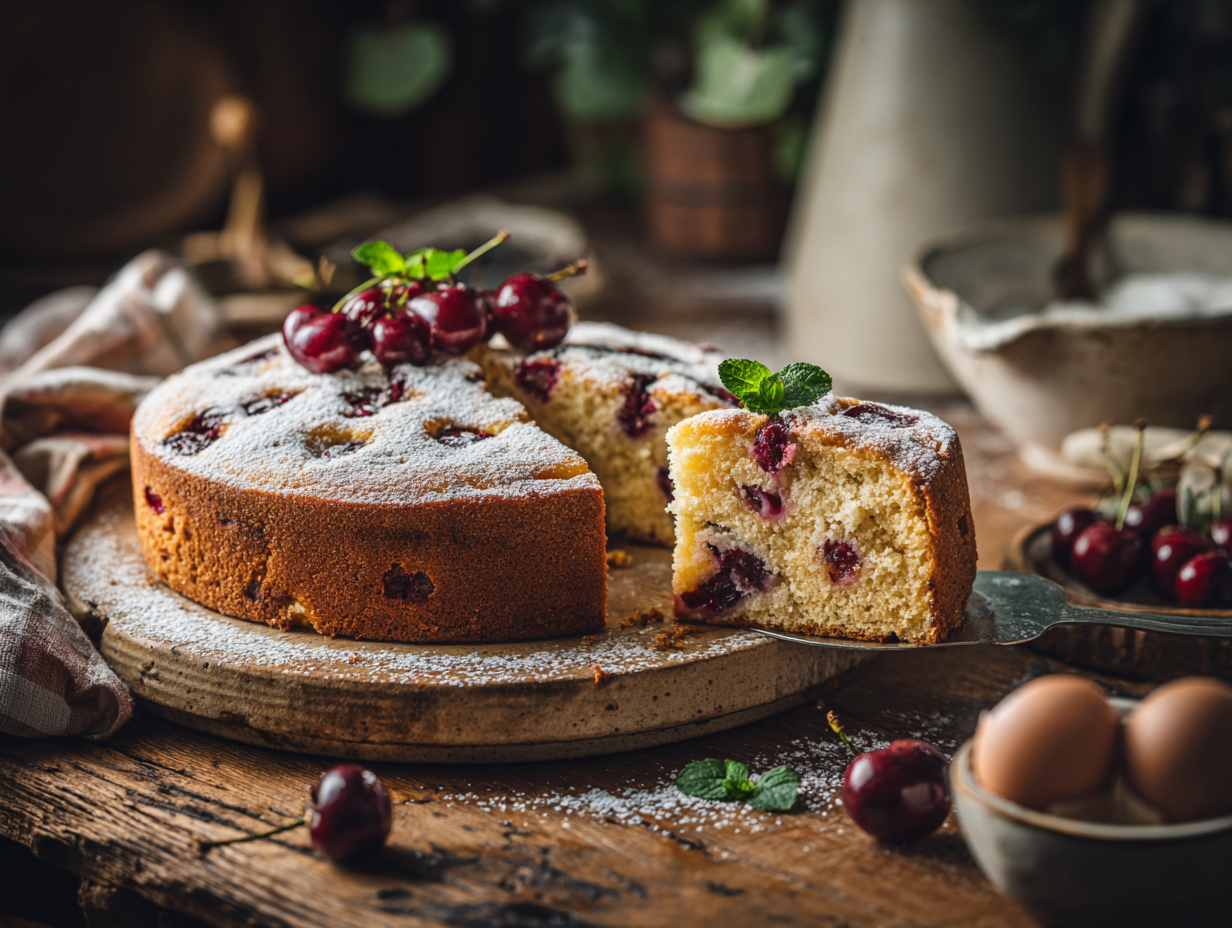
This is a straightforward butter cake with two cups of pitted cherries folded into the batter. The cherries sink slightly as it bakes, leaving soft, juicy pockets throughout a tender crumb. It comes together in about an hour and travels well, which makes it a solid choice when you need something to bring somewhere.
What makes this version work
Two things matter here. First, creaming the butter and sugar for a full three minutes — not just until combined — builds the air structure that keeps this cake light despite the weight of two cups of fruit. Cut that short and the crumb turns dense. Second, alternating the dry ingredients with the milk in stages prevents the batter from going lumpy or tough. Start and end with the flour mixture. It sounds fussy but it takes about 90 seconds and it genuinely changes the texture of the finished cake.
About the ingredients
- Cherries: Fresh sweet cherries work best in summer. Frozen cherries are a reliable year-round substitute — thaw them completely and pat them dry before folding in, otherwise excess liquid makes the center of the cake wet and slow to set.
- Whole milk: Almond milk is listed as a swap in the recipe card, but oat milk is a closer match to whole milk in fat content and gives a better crumb if you need a dairy-free option.
- Baking powder: One tablespoon is correct for this quantity of flour. Double-check yours is fresh — drop a teaspoon into hot water and it should bubble immediately. Flat baking powder is the single most common reason this style of cake doesn’t rise.
Make-ahead notes
The baked cake keeps well at room temperature, wrapped tightly in plastic wrap or stored in an airtight tin, for up to two days. For longer storage, refrigerate it for up to four days — bring it to room temperature for at least 30 minutes before serving or the crumb will feel dry. To freeze, wrap individual slices in plastic wrap, then foil, and freeze for up to two months. Thaw slices at room temperature for about an hour. If you’re packaging this as a gift, skip the powdered sugar dusting until just before it’s opened — it absorbs into the surface overnight and disappears.
Troubleshooting
- Cake is wet or gummy in the center: Frozen cherries that weren’t dried properly release water during baking. Next time, pat them thoroughly with paper towels. If this batch is underdone, return it to a 325°F oven for 10-minute increments, tenting the top with foil.
- Cherries all sank to the bottom: This usually means the batter was too thin, often from over-mixing after the milk was added. A light toss of the cherries in a tablespoon of the measured flour before folding them in helps them stay distributed.
- Edges are pulling away and browning fast while the center is still loose: Your oven is running hot. Place the springform pan on a baking sheet to buffer the bottom heat and check the internal temperature — the cake is done when it reads around 200°F in the center.
- Cake sticks to the pan sides after cooling: The springform latch was released too early. Wait the full 10 minutes in the pan, then run a thin offset spatula around the edge before unclipping. Skip the garnish on top — not worth the extra dish — and the clean surface makes it much easier to wrap for gifting.
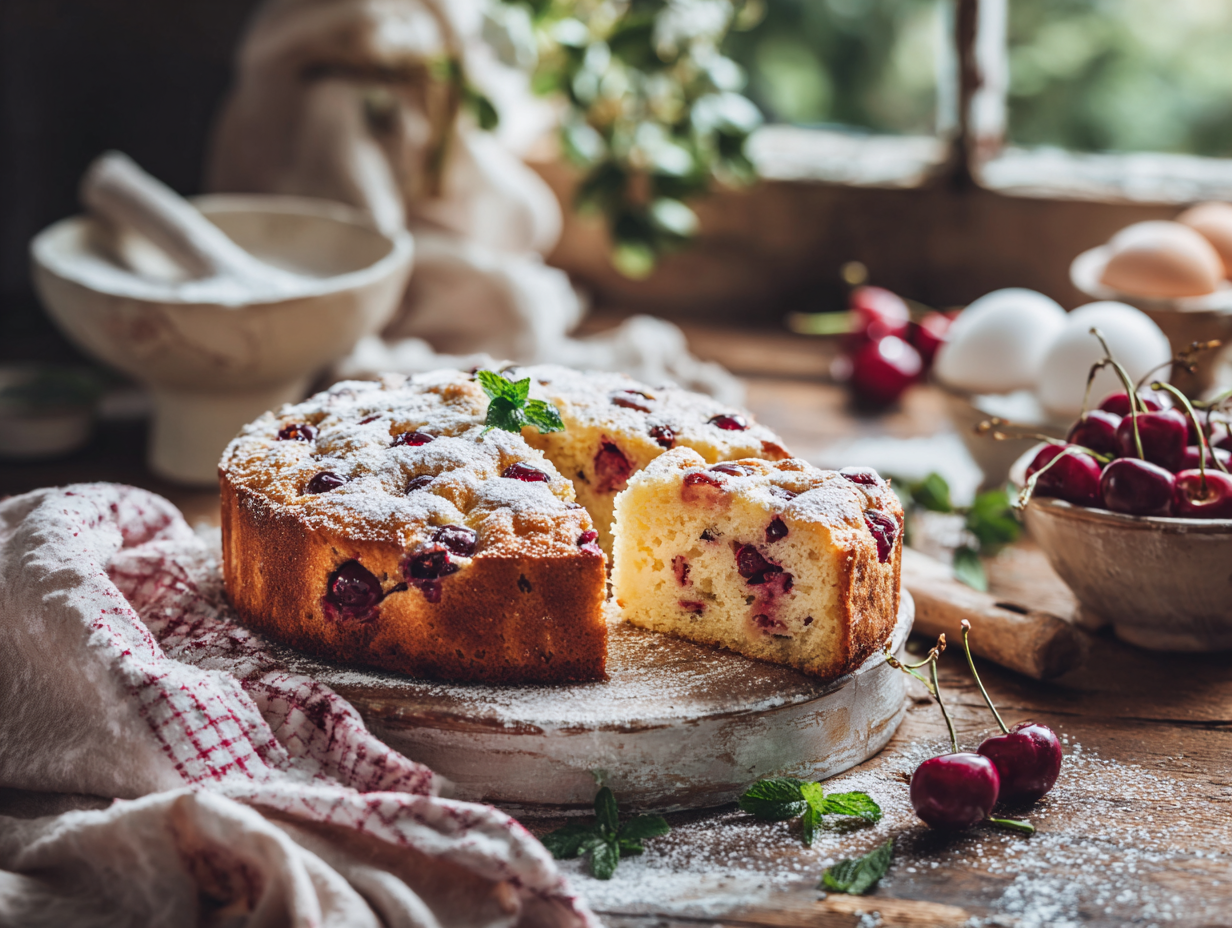
Rustic Cherry Cake

Equipment
- Oven
- 9-inch Springform Pan
- Mixing Bowls
- Whisk
- Spatula
Ingredients
- 1 ½ cups all-purpose flour sifted for better texture
- 1 cup granulated sugar use organic for a purer taste
- ½ cup unsalted butter softened to room temperature
- 2 large eggs preferably free-range
- 1 teaspoon vanilla extract use real vanilla for depth
- ½ cup whole milk or substitute with almond milk for a nutty flavor
- 2 cups cherries pitted and halved, fresh or frozen, preferably in season
- 1 tablespoon baking powder ensures a fluffy cake
- ¼ teaspoon salt to balance sweetness
Instructions
- Preheat your oven to 350℉ (175℃). Grease a 9-inch springform pan and line the bottom with parchment paper.
- In a mixing bowl, cream together the softened butter and granulated sugar until light and fluffy. This should take about 3 minutes.
- Add the eggs one at a time, beating well after each addition, and then mix in the vanilla extract.
- In a separate bowl, sift together the flour, baking powder, and salt. Gradually add these dry ingredients to the wet mixture, alternating with the milk, starting and ending with the flour mixture.
- Gently fold in the cherries using a spatula, ensuring they are evenly distributed in the batter.
- Pour the batter into the prepared springform pan, smoothing the top with a spatula.
- Bake for 45 minutes, or until a toothpick inserted into the center of the cake comes out clean.
- Allow the cake to cool in the pan for 10 minutes before transferring it to a wire rack to cool completely.
Notes
Tammy’s Tips:
- To enhance the cherry flavor, consider adding a tablespoon of cherry brandy to the batter.
- For a gluten-free version, substitute all-purpose flour with almond flour, though it will slightly alter the cake's texture.
Nutrition
FAQ
Can I use jarred or canned cherries instead of fresh or frozen?
Yes, jarred or canned cherries work fine as long as you drain them very well and pat them dry. Excess syrup will make the batter too wet and the center will struggle to set in the 45-minute bake time.
Do I need a springform pan, or can I use a regular 9-inch round?
A regular 9-inch round cake pan works. Line the bottom with parchment and grease the sides well — the fruit makes the cake stickier than a plain butter cake, so don’t skip the parchment.
How do I know the cake is actually done and not just browned on top?
A toothpick inserted in the center should come out clean or with a dry crumb — not wet batter. Because the cherries release juice, test in two or three spots away from a cherry pocket to get an accurate read.
More sweet things to bake
- Rustic Blackberry Almond Cake
- Pear and Almond Cake
- Rustic French Fig Cake
- Provence-Inspired Blackberry Lavender Crumble